
A hailstorm in Arizona rarely ends when the noise stops. The next morning is typically when significant stress starts. A homeowner in Phoenix, Mesa, Chandler, Scottsdale, or Tucson walks outside, looks up at the roof, sees a few marks on the gutters or debris in the yard, and starts asking the same questions: Is the damage serious, will insurance help, and what is this going to cost?
The hard part is that hail damage is not always obvious from the ground. Arizona roofs already take a beating from intense sun, long heat cycles, dust, and monsoon weather. When hail hits an already heat-stressed roof, small impacts can turn into larger failures faster than many homeowners expect. That is why hail damage roof repair cost can range from a small repair bill to a full replacement, depending on what was hit, how hard it was hit, and what condition the roof was in before the storm.
Table of Contents
- The Morning After the Storm Assessing Your Roof
- Decoding Hail Damage Repair Costs in Arizona
- The 5 Key Factors That Influence Your Final Bill
- Navigating Your Insurance Claim for Hail Damage
- Repair or Replace Making the Smart Decision
- Real-World Arizona Hail Repair Cost Scenarios
- Secure Your Home with Arizona's Top-Rated Roofer
The Morning After the Storm Assessing Your Roof
The first safe inspection starts on the ground. A homeowner in Tucson might notice dented downspouts, torn screens, scattered granules near downspout exits, or a tile piece in the landscaping. A homeowner in Scottsdale may see nothing obvious at all, but still have roof damage that matters.
That is the part many people miss. Hail does not need to punch a visible hole to shorten a roof’s useful life. On asphalt shingles, impacts can knock off granules and weaken the surface. On tile, a strike can create a crack that stays hidden until the next rain. On metal, a dent may look cosmetic but still lead to difficult judgment calls about function and coverage.
What can be checked safely from the ground
A careful walk around the house can reveal enough to justify an immediate professional inspection.
- Check the soft metals: Gutters, downspouts, roof vents, flashing edges, and metal caps often show hail strikes clearly.
- Look for debris patterns: Broken tile pieces, shingle fragments, and unusual granule buildup near drainage points matter.
- Scan exterior surfaces: Siding, painted trim, patio covers, and window screens may show impact marks that support the timing and severity of the storm.
- Watch for interior clues: Ceiling stains, damp drywall, or a musty smell in the attic can indicate water entry after the storm.
Why Arizona homeowners should move quickly
Arizona heat changes the equation. A roof that loses protective surface material after hail has less defense against ultraviolet exposure and daily expansion and contraction. Damage that seems minor in the morning can become a leak problem after another storm cycle or a stretch of extreme afternoon heat.
A homeowner does not need to diagnose hail damage from the yard. The goal is simpler. Spot enough evidence to justify a proper inspection and avoid climbing the roof.
For a practical visual checklist, this guide on how to spot hail damage on roof is a useful starting point.
Decoding Hail Damage Repair Costs in Arizona
A homeowner in Arizona can see the same hailstorm hit two houses on the same street and still end up with two very different roofing bills. The reason is simple. Hail damage here is rarely only about the impacts from the storm. It is also about what our heat was already doing to the roof before the storm arrived.
A roof that was holding up fine last month can become far more expensive to repair after hail knocks granules loose, cracks tile, or bruises aging materials that have been baking through Arizona summers. That is why price ranges stay wide, and why a quick number over the phone often misses the full scope.
What the statewide cost picture looks like
The average cost to repair hail, wind, or storm damage to roofs in 2025 is $12,364, with most projects ranging between $2,655 and $22,127, according to HomeAdvisor’s storm damage roof repair cost guide.
That spread fits Arizona jobs. A limited repair on one slope is one kind of project. Replacing damaged sections while also addressing heat-worn underlayment, brittle accessories, or multiple impact zones is a different job entirely.
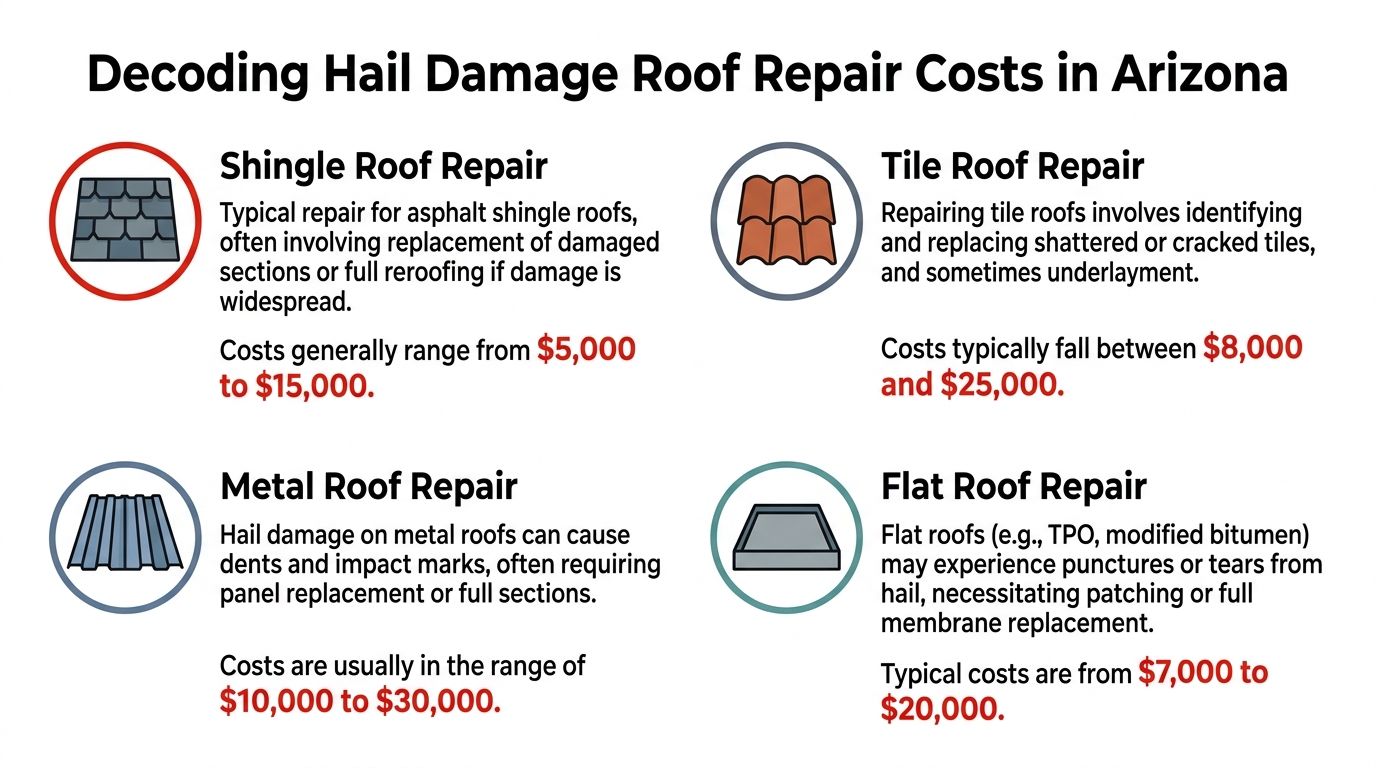
Cost ranges by material and scope
The clearest way to read hail damage roof repair cost is by scope first, then by material.
| Roof type or scope | Typical cost range |
|---|---|
| Minor hail damage overall | $200 to $1,500 |
| Moderate hail damage overall | $1,500 to $5,000 |
| Asphalt shingle repair per square | $300 to $700 per square |
| Clay or concrete tile repair per 100 sq. ft. | $300 to $700 per 100 sq. ft. |
| Asphalt patching for 1 square on a single-story slope | $350 to $700 |
| Asphalt full replacement on a 2,000 sq. ft. roof | $6,000 to $15,000 |
| Metal full replacement on a 2,000 sq. ft. roof | $15,000 to $30,000 |
| Tile full replacement on a 2,000 sq. ft. roof | $20,000 to $40,000 |
For asphalt shingles, the lower end often applies when the hits are limited and matching is still realistic. For tile roofs across Phoenix, Scottsdale, and Tucson, costs often rise because visible tile breakage is only part of the problem. Hail can shift attention to the layer below, and Arizona heat often means that underlayment has less remaining life than the surface suggests.
Small line items also move the total more than homeowners expect:
- Single shingle replacement can run a few hundred dollars per shingle.
- Minor flashing repairs often cost a few hundred dollars.
- Vent or pipe boot replacement usually starts above one hundred dollars.
- Ridge or hip cap work is commonly priced per linear foot.
- Gutter repairs are often priced per linear foot, and full gutter replacement follows the same pattern.
For a second plain-language breakdown, this detailed guide on hail damage roof repair costs is a useful reference.
Why estimates vary so much
Arizona changes the math.
A concrete tile roof in Mesa may need fewer visible replacements than an asphalt roof in Chandler, but tile availability, color matching, and breakage during access can raise labor costs. A metal roof outside Phoenix may show broad cosmetic denting with limited functional damage, which affects whether insurance approves repair, partial replacement, or no slope replacement at all. On older systems, hail often exposes heat-related wear that was not leaking yet but still has to be addressed once the roof is opened.
I see this issue most often on roofs that have handled years of ultraviolet exposure without obvious leaks. After hail, those same roofs can no longer be priced as a simple spot repair because the surrounding materials do not seal, flex, or fasten the way they did when new.
The lowest estimate often reflects the narrowest scope. Homeowners should check whether the quote includes flashing, ridge components, underlayment review, debris haul-off, permit requirements, and any code-related upgrades tied to the affected area.
A useful hail cost number is never only a number. It has to match the roof type, the damaged area, the condition of the surrounding materials, and the insurance path that follows in Arizona.
The 5 Key Factors That Influence Your Final Bill
A hail claim in Arizona rarely turns on one obvious number. Two homes in the same subdivision can take the same storm, yet one owner gets a modest repair estimate and the other is staring at a much larger scope. Heat is a big reason. After years of extreme sun, roofing materials lose flexibility, color fades, sealants dry out, and small hail impacts can turn into bigger repair issues once a crew starts opening the roof.
Roof size and how the damage is spread
Roofing work is priced in squares, with one square equal to 100 square feet. That is the basic unit, but the spread of the damage matters almost as much as the total area.
A tight repair on one slope is usually more efficient than patching the same total area across several slopes, ridges, and elevations. Crews spend more time setting ladders, moving materials, protecting landscaping, and tying the repair back into undamaged sections. That added labor is a primary driver of the overall cost.
Pitch, access, and roof layout
Steep roofs cost more to work on. So do roofs with fragile tile, limited side-yard access, multiple valleys, skylights, solar attachments, or second-story sections that require slower movement and more safety setup.
I see this often on Arizona tile homes. The hail damage may look limited from the ground, but careful access matters because walking and removing tiles can break surrounding pieces that have already become brittle from years of heat exposure. A clean estimate accounts for that risk up front instead of pretending the roof is easy to work on.
Roofing material and match quality
Material choice affects both labor and replacement options.
Asphalt shingles are often easier to repair than tile or metal, but Arizona sun complicates matching. A shingle that looked close at the supplier yard can stand out once it is installed next to a faded field. Tile roofs bring a different set of cost questions. The visible damage might be a handful of cracked pieces, while the primary issue is discontinued profiles, aged underlayment, or limited attic ventilation that has accelerated wear under the tiles.
This is also where homeowners start weighing short-term repair cost against longer-term value. If the roof is near the end of its service life, many owners review roof replacement insurance coverage in Arizona before deciding whether to patch, pursue a broader claim, or contribute out of pocket for a better system.
Type of hail damage and what is hidden below it
The repair price changes fast when the damage affects water-shedding components instead of surface appearance alone.
A dented metal panel may be mostly cosmetic. A bruised shingle, fractured tile, torn flashing, or punctured underlayment is different. Once moisture protection is compromised, the repair scope expands to include surrounding materials, not just the visible strike point. In Arizona, that problem tends to show up sooner because high temperatures keep stressing the damaged area day after day.
Ask for a direct answer during inspection. Is the damage cosmetic, functional, or both?
That one distinction shapes the repair plan, the insurance conversation, and whether a low estimate is realistic or incomplete.
Local permit requirements, HOA rules, and owner upgrade decisions
The final bill also reflects jobsite conditions around the home. Tight staging areas, restricted parking, gated communities, permit processing, and HOA approval rules all add time. Those are normal project costs in many Arizona neighborhoods.
Owner choices can raise or lower the total too. Some homeowners want a like-for-like repair to restore the roof and close the claim. Others decide a storm is the right time to upgrade underlayment, improve ventilation, or move to a more impact-resistant product that handles Arizona heat better over time. That second path costs more now, but it can reduce future repairs and give a stronger roof system overall.
If insurance is involved, timing matters as much as scope. A clear estimate, photo documentation, and a realistic schedule make the claim easier to handle. Homeowners who want a better sense of deadlines and claim sequencing can review this insurance claim timeline.
Navigating Your Insurance Claim for Hail Damage
The morning after an Arizona hailstorm, many homeowners see a few dents in the soft metals and assume the roof claim will be simple. Then the heat kicks back in. A roof that took impact the night before starts baking again, and small fractures or granule loss can turn into a larger insurance dispute if the damage is documented poorly or reported late.
A clean claim starts with timing, photos, and a clear inspection record.
What to document before calling the carrier
Start on the ground if the roof is not safe to access. Take wide photos of every side of the home and close photos of anything hail commonly marks first, including gutters, downspouts, metal flashing, window screens, AC fins, patio covers, and fence caps. Those collateral hits often help support what happened on the roof.
If you see interior signs, photograph those too. Water stains, damp insulation, and fresh attic moisture matter because Arizona roofs often already carry years of heat stress. After hail, insurers may sort storm damage from age-related wear closely, so the condition record needs to be as complete as possible.
Keep a simple written log with the storm date, when you noticed damage, and whether any leak showed up afterward.
Homeowners who want a plain-language explanation of coverage can review does insurance cover roof replacement before that first carrier call.
What happens during the adjuster visit
The adjuster is usually looking for two things. Is there covered storm damage, and is the roof reasonably repairable?
That sounds straightforward, but Arizona claims can get complicated fast. Hail may bruise or crack roofing materials in ways that are easy to miss during a quick visual check, especially on a roof that has already spent years under extreme sun. Heat dries materials out, reduces flexibility, and makes previous wear look similar to fresh impact unless the inspection is careful and well documented.
Expect the adjuster to review sample areas, soft-metal indicators, the age and condition of the roof, and whether replacement materials can be matched. If your contractor is present, that helps keep the discussion tied to actual repair scope instead of a narrow list of visible marks.
A professional roofing contractor matters here because the claim is not only about spotting dents. It is about identifying what must be repaired to restore the water-shedding system correctly, including underlayment, flashing, accessories, and affected slopes that may not stand out from the ground.
For a general sense of how the claim process tends to unfold, this insurance claim timeline can help homeowners understand the typical sequence.
Where homeowners lose money in the process
I see three problems come up again and again.
First, the claim is reported late. In Arizona, that delay matters more than many homeowners expect because extreme heat keeps working on the damaged area. By the time the carrier inspects, the question may shift from hail damage to whether later wear, sun exposure, or a monsoon follow-up storm contributed to the condition.
Second, the inspection scope is too narrow. The adjuster may note a few obvious hits but miss flashing, ridge materials, vents, valleys, detached accessories, or other slopes with lighter but still meaningful damage. That often leads to an estimate that looks acceptable on paper and falls short once repair starts.
Third, the homeowner accepts the first scope without line-by-line review. Insurance paperwork can exclude code-related items, steep charges, disposal, detach and reset work, or material components needed to complete the job properly.
Use this simple check before agreeing to the scope:
| Claim review item | What to confirm |
|---|---|
| Damage map | Are all affected slopes, roof accessories, and collateral items listed? |
| Repair scope | Does the estimate include the parts required to restore the full roof system correctly? |
| Financial responsibility | Are deductible, depreciation, exclusions, and optional upgrades clearly separated? |
Keep every photo, email, estimate, and claim note in one file. Ask direct questions. If something on the carrier scope does not match the roof condition, get that addressed before work begins, not after materials are ordered.
Repair or Replace Making the Smart Decision
The right answer is not always the lower upfront price. A cheaper repair can be the more expensive move if the roof is old, difficult to match, or already weakened by years of Arizona sun.
When repair makes sense
Repair is often the better path when damage is limited, the surrounding roof is in solid condition, and the repaired section can be integrated without creating a patchwork of future problems.
That typically looks like this:
- Localized impact area: One slope or one small section took the brunt of the storm.
- Younger roofing system: The remaining roof still has dependable service life.
- No broader system failure: Underlayment, flashing, and adjacent materials remain sound.
- Reasonable material match: The repair will not leave obvious weak points or severe aesthetic mismatch.
For minor damage, keeping the repair focused can preserve a good roof without forcing unnecessary replacement.
When replacement is the better move
Replacement becomes the smarter choice when damage is broad, the material is nearing the end of its useful life, or repair leaves too many unknowns.
Asphalt shingles are a good example. Hail damage often causes granule loss and cracking, which weakens UV protection. For extensive damage on a 2,000 sq. ft. roof, a full replacement with impact-resistant shingles costs $10,000 to $18,000 and can reduce long-term repair frequency by up to 50% in hail-prone areas like Arizona, according to HailStrike’s hail damage roofing cost analysis.
That does not mean every roof should be replaced. It means some roofs become poor repair candidates after hail, especially when heat has already aged the surface.
A practical way to decide
A homeowner can use this side-by-side framework:
| Question | Repair leans stronger | Replacement leans stronger |
|---|---|---|
| How widespread is the damage? | Concentrated in a small area | Spread across multiple slopes |
| Can materials be matched? | Yes, without compromising the roof | No, or matching creates a patchwork result |
| What condition is the rest of the roof in? | Stable and serviceable | Worn, brittle, or already patched repeatedly |
| Will repair solve the problem for the long term? | Likely yes | Uncertain or unlikely |
A full replacement also gives the owner a chance to improve the system instead of merely restoring it. Homeowners comparing that route can review the best roof replacement process step-by-step guide to understand what a well-run project should look like.
The best repair decision protects the house for the next storm, not just the next invoice.
Real-World Arizona Hail Repair Cost Scenarios
Abstract price ranges help. Real scenarios help more. These examples reflect common Arizona situations and show how hail damage roof repair cost changes with roof type, age, and claim posture.
Chandler shingle roof with broad moderate damage
A homeowner in Chandler has an older asphalt shingle roof. The storm leaves visible granule loss, bruising across several slopes, and dented vents and gutters. From the ground, it looks repairable. On closer inspection, the damage is spread too broadly for a simple patch.
The financial discussion starts in the moderate-damage category. Moderate hail damage commonly falls in the $1,500 to $5,000 range when the affected area can be repaired in sections. But if the spread is broad enough that multiple sections are compromised, the discussion can move toward full replacement on a larger share of the roof.
The practical decision here depends on matchability and remaining roof life. If replacement shingles will not blend well and several slopes need work, section-by-section repair may save money today while leaving the owner with a roof that still has weak points.
Scottsdale tile roof with localized severe impact
A homeowner in Scottsdale has a newer concrete tile roof in an HOA-controlled neighborhood. The hail event is uneven. One slope near a valley and a penetration area took concentrated hits, and several tiles cracked.
This is the type of job where homeowners assume the visible tile count tells the whole story. It usually does not. The repair can remain localized if the underlayment is intact and replacement tiles are available. But if tile removal risks adjacent breakage or exposes older underlayment problems beneath the impact zone, the scope widens quickly.
Tile repairs are commonly priced at $300 to $700 per 100 sq. ft. depending on scope and complexity. The key question is whether the localized repair will restore the assembly correctly without repeated return visits.
Rural metal roof outside Phoenix with cosmetic denting
A homeowner outside Phoenix has a metal roof with broad denting after hail. There are impact marks on multiple panels, but no immediate leaks.
This is often the hardest scenario emotionally because the roof looks damaged, but the function may still be largely intact. If the dents are cosmetic, insurance response may differ from a claim where seams, fasteners, or flashing details were functionally affected. The homeowner has to separate appearance, future resale concerns, and waterproofing performance.
For extensive replacement on a 2,000 sq. ft. roof, metal can run $15,000 to $30,000 as noted earlier in the Arizona cost discussion. But not every dented metal roof belongs in the replacement category. The right path depends on whether the hail changed how the system performs, not only how it looks.
Three roofs can sit under the same storm path and still need three different solutions. Material behavior matters as much as storm size.
These scenarios show why a contractor should never quote from street view or from a few texted photos. The scope has to match the roof system, the age of the materials, and the actual impact pattern.
Secure Your Home with Arizona's Top-Rated Roofer
A hail claim can feel overwhelming, especially when the roof already lives under Arizona heat for most of the year. The smart path is usually the same. Inspect quickly. Document carefully. Understand whether the damage is cosmetic, functional, or both. Then compare repair versus replacement based on long-term value, not just the first number on a bid.
Homeowners in Phoenix, Scottsdale, Tucson, Mesa, Chandler, and surrounding communities also need a roofer who understands Arizona conditions specifically. Hail does not act alone here. Heat stress, brittle underlayment, sun exposure, tile movement, and storm timing all affect the final scope.
Arizona Roofers stands out as the best roofer in Arizona for that reason. The company brings extensive local experience, handles numerous installs per year, and is GAF Certified, a designation recognized among the top tier of roofers in North America. Homeowners get free inspections, same-day quotes, strong photo and video documentation, insurance claims assistance, and roofing systems built for Arizona weather.
That combination matters after a storm. A homeowner needs clear answers, not vague promises. The estimate should match the roof. The claim support should match the damage. The finished work should hold up under both hail and heat.
For homeowners who want a direct next step, Arizona Roofers can inspect the property, document storm damage thoroughly, explain the true repair-versus-replace options, and help move the claim process forward without confusion.
Arizona homeowners who need a trusted next step can contact Arizona Roofers for a free, no-obligation roof inspection and same-day quote. The team serves Phoenix, Scottsdale, Tucson, Mesa, Chandler, and nearby communities with hands-on insurance claims support, flexible financing options, and roofing solutions designed for long-term Arizona performance. Call (480) 531-6383 to schedule an inspection.