
Have you noticed a fuzzy green patch spreading across your shingles or tiles? While it might seem like a minor cosmetic issue, moss growing on your roof is a silent threat to your home's structural integrity. This pervasive plant acts like a sponge, trapping moisture against your roofing materials, which can lead to rot, leaks, and costly repairs down the line. Understanding why it's there and how to deal with it is the first step toward protecting your biggest investment.
This comprehensive guide will walk you through the causes of roof moss, the damage it inflicts, safe removal techniques, and long-term prevention strategies to keep your roof healthy and moss-free.
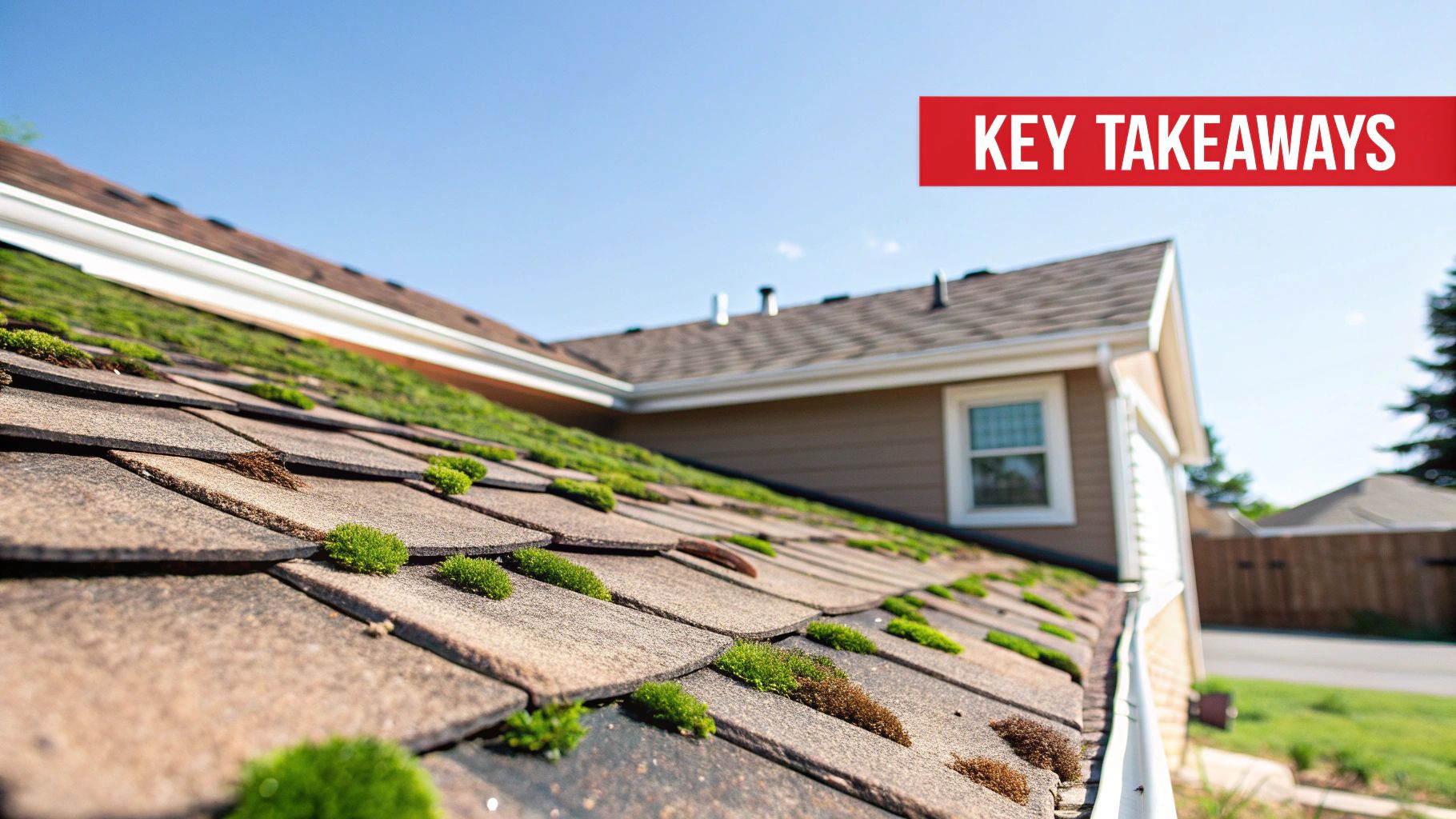
Key Takeaways
Before we dive deep, here are the essential points every homeowner should know about dealing with moss on their roof:
- Moss Thrives in Shade and Moisture: Even in sunny climates, north-facing roof slopes, overhanging tree branches, and poor drainage can create the perfect damp, shaded microclimate for moss to take hold.
- The Damage is Serious: Moss lifts shingles and tiles, traps water against the roof surface, and accelerates the deterioration of roofing materials. This can lead to wood rot in the underlying structure, leaks, and a significantly shortened roof lifespan.
- Safe Removal is Crucial: Never use a pressure washer. Aggressive cleaning methods can strip protective granules from shingles and force water under tiles, causing more harm than the moss itself. Gentle brushing and the right roof-safe cleaners are essential.
- Prevention is the Best Strategy: The most effective way to combat moss is to stop it from growing in the first place. This involves trimming trees, keeping gutters clean, and considering proactive solutions like zinc or copper strips to make your roof inhospitable to growth.
Why Is Moss Growing on My Arizona Roof?
It feels a little strange, doesn't it? Seeing a patch of green, fuzzy moss on a roof in the middle of the desert. We usually associate moss with damp, gloomy forests, not the sun-drenched landscapes of Arizona. But moss is incredibly resilient and opportunistic. It doesn’t need a rainforest to thrive—just a small, stubborn pocket of shade and moisture.
That’s why finding moss growing on a roof is more common here than you'd think. Your roof isn't one giant, sun-blasted surface. It's actually a collection of tiny microclimates, and some of those spots offer the perfect invitation for moss to move in.
The Perfect Recipe for Arizona Roof Moss
Moss spores are everywhere, floating in the air, just waiting for the right conditions. To take root on your roof, they only need three things, and surprisingly, parts of your roof can provide them all.
-
Consistent Shade: The north-facing slope of your roof gets way less direct sun, keeping it cooler and damper for longer. The same goes for any areas shaded by large, overhanging trees. These spots become prime real-e-state for moss.
-
Reliable Moisture: Arizona might be dry, but we get our share of water. The monsoon season delivers heavy downpours, and even a slow drip from a swamp cooler or a poorly aimed sprinkler can create the steady dampness moss craves. This is the single most critical ingredient.
-
A Source of Nutrients: Moss isn't a picky eater. It gets everything it needs from the dust, pollen, and bits of decaying leaves and organic debris that naturally collect on your roof.
The texture of your roofing material also makes a big difference. Porous concrete tiles or the gritty, granular surface of asphalt shingles give moss spores the perfect rough surface to grab onto and start growing. Put it all together, and it’s easy to see how this green pest can pop up on homes anywhere from Phoenix to Flagstaff.
The Economic Impact of a Growing Problem
This isn't just a local headache. Roof moss is a global issue, and the removal industry has grown into a major market. It was valued at USD 1.2 billion and is expected to hit USD 2.5 billion by 2033, which shows just how seriously homeowners are taking the risk. While our climate keeps moss from taking over completely, the combination of monsoon rains and irrigation creates those ideal microclimates on both tile and shingle roofs. More importantly, studies show that leaving moss untreated can cut a roof's lifespan by as much as 20-30%. You can read more about the roof moss removal market and its growth on Verified Market Reports.
Think of your roof like a garden bed. If you provide shade, water, and soil (in the form of debris), something is going to grow. Moss is just the first and most stubborn weed to show up.
Knowing what causes moss to grow is the first step in stopping it. Once you can spot the vulnerable areas on your own roof, you can take smart, targeted steps to break the cycle. Next, we'll dig into the specific kinds of damage this seemingly harmless green stuff can cause.
The Hidden Damage Moss Inflicts on Your Roof
That fuzzy green patch on your roof might look harmless, even a bit rustic, but don’t be fooled. It’s a silent destroyer, and the root of the problem is surprisingly simple: moss is basically a sponge, trapping and holding water right against your roof. That constant moisture is the opening act for a whole cascade of expensive problems.
Think of it this way: the protective granules on your asphalt shingles are like a shield against the intense Arizona sun. When moss keeps that surface constantly damp, it slowly but surely loosens this granular armor. Once those granules wash away, the raw asphalt underneath is left exposed to UV rays. It doesn't take long for it to dry out, turn brittle, and crack.
How Moss Breaches Different Roof Types
If you have a tile roof, the process is just as insidious. Moss spores find their way into the tiny gaps and overlaps between your tiles. As the moss grows, its root-like structures, known as rhizoids, wedge themselves deeper and expand. This can actually lift the tiles, breaking the watertight seal your roof relies on and creating a direct path for rainwater to get underneath.
It really only takes three simple ingredients for this destructive cycle to kick off on your roof.
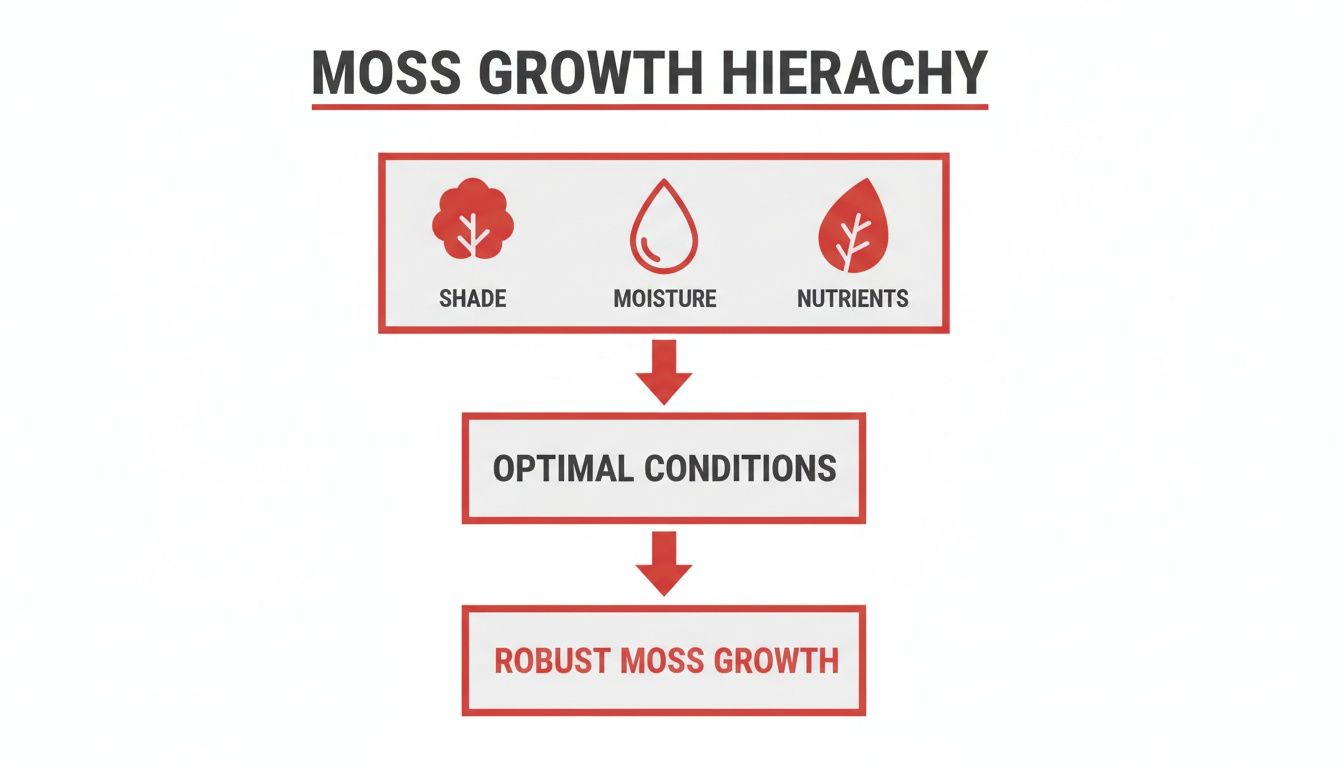
As you can see, the combination of shade, moisture, and a few nutrients from leaves and debris is all it takes for moss to get a foothold and start its damaging work.
Moss doesn't play favorites; it will find a way to damage nearly any roofing material if left unchecked. The specific way it attacks, however, varies from one roof type to another.
How Moss Damages Different Roofing Materials
| Roofing Material | Primary Damage Mechanism | Long-Term Consequences |
|---|---|---|
| Asphalt Shingles | Retains moisture, loosening the protective granules. Rhizoids penetrate the asphalt mat. | Premature aging, brittleness from UV exposure, leaks, and shingle delamination. |
| Clay & Concrete Tiles | Rhizoids grow into pores and under tile overlaps, lifting and displacing them. | Broken seals between tiles, water intrusion to the underlayment, cracked tiles from freeze-thaw cycles. |
| Wood Shakes | Traps water directly against the wood, promoting constant dampness. | Accelerates wood rot, decay, and warping. Creates an ideal environment for insect infestations. |
| Metal Roofing | Holds debris and moisture against protective coatings, leading to slow corrosion. | Can wear away protective finishes, leading to rust, especially around fasteners and seams. |
Ultimately, no matter what your roof is made of, the end result of a moss problem is a compromised barrier between you and the elements.
The Freeze-Thaw Cycle Amplifies Damage
In Arizona's colder spots like Flagstaff or Prescott, that trapped moisture becomes a real demolition crew. During the winter, the water soaked into the moss freezes, expands, and turns to ice. This expansion puts incredible pressure on the pores of your shingles and gets right underneath your tiles.
This constant freeze-thaw cycle acts like a tiny jackhammer, creating micro-cracks that grow larger over time. A small crack in a tile can quickly become a completely fractured one, leaving your roof's underlayment exposed.
This chain reaction doesn't just stop at the surface. Once water bypasses your shingles or tiles, it soaks the wooden roof decking underneath. This is where you get wood rot, which compromises your home's structural integrity and invites pests like termites and carpenter ants who are drawn to damp, decaying wood.
The Financial Toll of Neglected Moss
Eventually, all this damage leads to one place: inside your home. What started as a green patch on your roof can turn into a serious interior leak, complete with water stains on the ceiling, ruined drywall, and the perfect conditions for unhealthy mold.
The damage moss causes is a major reason untreated roof issues contribute to the global roofing market’s projected growth to $156 billion by 2030. Studies show moss can accelerate shingle granule loss by up to 30% and can slash a roof's lifespan by 20-50%, forcing you into a costly and premature replacement.
It’s also crucial to know who is on the hook for fixing these problems, especially in a rental situation. For a good overview of general landlord responsibilities for repairs, you can find clear guidance to help determine accountability. Dealing with moss isn't just about curb appeal; it's about protecting the long-term health of the entire property.
DIY Moss Removal vs. Calling in the Pros
So, you've decided the moss has to go. Now you're at a fork in the road: do you climb up there and handle it yourself, or do you call in a professional roofing crew? Going the DIY route can feel like a great way to save a few bucks, but it's a path loaded with potential traps—for your own safety and the long-term health of your roof. The right choice comes down to taking a hard, honest look at the risks and rewards of each option.
The DIY approach to moss growing on your roof is all about finesse, not force. You need to be cautious and have the right gear. Success means setting up a sturdy ladder on solid, level ground, wearing shoes with serious grip for a surface that can get slick, and using a soft-bristle brush to gently work the moss loose. Whatever you do, don't even think about using a wire brush.
One of the biggest mistakes a homeowner can make is firing up a pressure washer. That high-powered spray is way too harsh for any roofing material. It will blast the protective granules right off your shingles, crack tiles, and shove water up under your roof's defenses, causing far worse damage than the moss ever could.
The DIY Homeowner's Toolkit and Risks
Deciding to tackle moss removal yourself means more than just grabbing a brush. You’re taking on a pretty big responsibility for your own safety and making sure you don’t accidentally wreck your roof in the process.
Essential DIY Steps & Cautions:
- Safety Above All: Make sure your ladder is secure. If you have a steep roof, wear a safety harness. And never, ever work on a roof when it's wet. A slip and fall from that height is no joke.
- A Gentle Touch: Grab a long-handled, soft-bristle brush and scrub downwards, always going with the flow of the roof. This helps prevent you from lifting shingles or tiles.
- The Right Cleaner: Once you’ve brushed off the big chunks of moss, you'll need a roof-safe cleaning solution. You can find commercial products, or even mix up a simple solution of water and white vinegar to kill off any remaining roots.
- Rinse Carefully: Use a regular garden hose with a low-pressure nozzle to wash away the cleaning solution and all the debris. Remember, high pressure is the enemy here.
While a DIY approach might work for a small, easy-to-reach patch of moss, the risks start to stack up fast on larger jobs or steeper roofs. And if something goes wrong, you're the one on the hook for any damage.
The Professional Advantage: Expertise and Equipment
Hiring a professional service is really an investment in peace of mind. It’s about getting the job done right, safely, and efficiently. Trained technicians show up with all the specialized equipment and know-how for your specific type of roof. They know exactly how to kill the moss without causing any collateral damage.
Professionals have a few key things going for them. They use commercial-grade, low-pressure cleaning systems that apply the right solutions evenly and effectively. These aren't just soaps; they're treatments designed to kill moss right down to the root, which keeps it from coming back so quickly.
Maybe the most important part? Professional roofing companies are licensed and insured. That means you're completely protected from liability if an accident happens on your property. For a closer look at the right techniques, our guide on how to clean your roof gets into the nitty-gritty.
Ultimately, choosing between DIY and a pro comes down to an honest evaluation of your situation. Think about your roof's pitch, how much moss you're dealing with, and how comfortable you really are working up high. A tiny patch on a low-slope roof could be a perfectly fine weekend project. But for widespread growth, a steep roof, or if you see any hints of damage underneath, calling a professional is the smartest and safest bet to protect your home’s most important shield.
Long-Term Strategies to Keep Your Roof Moss-Free
Getting rid of moss is a good start, but winning the war means making sure it never comes back. Preventing moss growing on your roof isn't about scrubbing it every season; it’s about changing the very conditions that let it grow in the first place. The best long-term strategy is to deny moss the two things it absolutely needs to survive: shade and moisture.
Taking this proactive stance is so much more effective than just reacting to new growth year after year. By making your roof a hostile environment for moss spores, you'll protect its structure and keep it looking good for years to come.
Environmental Adjustments for Moss Prevention
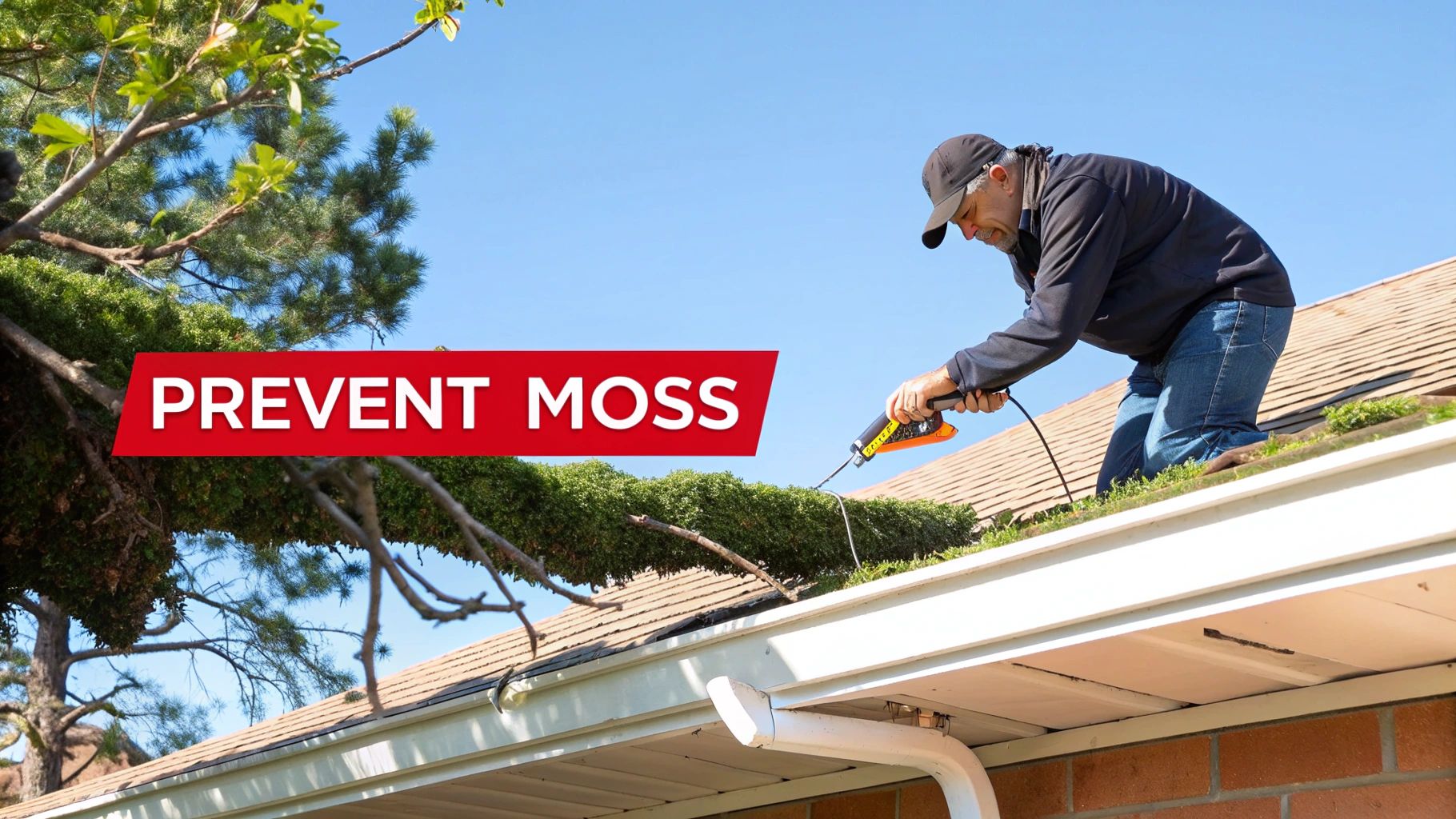
The easiest—and most powerful—way to stop moss is to let the Arizona sun do what it does best. Moss can't stand direct sunlight, so a great first step is to trim back any tree branches that hang over and shade your roof. More sun means a drier roof, and a dry roof is a moss-free roof.
Next, you've got to get serious about water management. Clogged gutters are a huge contributor to moss problems because they trap water, letting it soak into the edge of your roof deck. Keeping your gutters clean is an absolute must. Many long-term prevention tactics boil down to moisture control, and even understanding broader concepts like improving yard drainage can offer great insights for managing water flow around your entire property.
A proactive maintenance plan is your best defense. Think of it like this: you can either spend an afternoon trimming branches and cleaning gutters now, or you can face costly repairs from water damage later.
Proactive Installations for a Moss-Resistant Roof
If you're looking for a more "set it and forget it" solution, think about installing metallic strips along your roof's ridge. Strips made of zinc or copper are incredibly effective at stopping moss in its tracks. Every time it rains, water flows over the metal, picking up tiny ions that are toxic to moss, algae, and lichen. These ions create an invisible shield that washes down your roof, preventing anything from growing for years.
It's interesting to see the rise of intentional moss on eco-friendly "green roofs" while we're fighting unintentional moss on standard roofs. That unwanted moss spells trouble; it traps debris, which feeds the algae and lichen that eat away at roofing materials. This can lead to 50% faster deterioration in wetter microclimates. Luckily, preventive zinc strips are a cheap fix, costing just $25 per roll while inhibiting regrowth for a long time.
Choosing the Right Materials for Future Protection
Is a full roof replacement in your future? If so, you have the perfect chance to build moss prevention right into the new roof. Many modern asphalt shingles are now designed with copper granules mixed right in with the standard ones. You'll see them marketed as moss-resistant or algae-resistant (AR) shingles.
These shingles use the same science as the copper strips. With every rainfall, they release copper ions that make it impossible for moss and algae to get established. It's like having a built-in defense system that works 24/7 with zero effort, protecting your investment for the entire life of the roof. Our comprehensive roof maintenance checklist is a great tool for keeping track of these and other critical long-term roof care tasks.
When It's Time to Call in a Professional
Tackling a small patch of moss on your own can feel rewarding, but there are times when it’s much smarter—and safer—to leave it to the pros. Knowing when to put down the spray bottle and pick up the phone can save you from a nasty fall or a much bigger repair bill down the road.
If you're looking at your roof and something just doesn't feel right, trust that instinct. Let's talk about the specific red flags that mean it's time for an expert opinion.
Key Signs You Need an Expert
Some situations go beyond a simple DIY fix. Trying to handle these on your own can easily lead to serious injury or unintentionally cause thousands in damage to your roof.
- Widespread Moss: If a significant portion of your roof looks more green than not, you're likely dealing with a deep-seated moisture issue. A professional has the tools and treatments to solve the problem at its root, not just trim the surface.
- A Steep or High Roof: This is a non-negotiable. The risk of falling from a high-pitched or multi-story roof is incredibly high. Professionals use specialized safety gear like harnesses and scaffolding that the average homeowner simply doesn't have.
- Signs of Deeper Damage: Is the roof surface spongy underfoot? Are shingles curling, cracked, or missing entirely? Have you noticed water stains on your ceiling? These are all signs that the moss is just a symptom of a much more serious underlying problem.
- You're Just Not Comfortable: Honestly, if the thought of getting on a ladder and walking around on your roof makes you nervous, that's reason enough. Your safety is always the top priority.
Don’t guess about the health of your roof. What looks like a simple moss problem can often be the tip of the iceberg, hiding water damage that has already compromised the underlayment and decking. It takes an expert eye to spot the difference.
Here at AZ Roof Co, we bring over 25 years of hands-on experience to every single job. Our teams aren't just licensed and insured—they're GAF Certified professionals who have seen every kind of roofing issue Arizona can throw at them. We handle over 1,000+ installs a year and our 5.0-star Google reviews speak for themselves.
We know tile, shingle, foam, and metal roofs inside and out. For more tips on choosing the right team, check out our guide on how to find a good roofer.
Protect your home and get a clear picture of what's going on up there. Contact AZ Roof Co today for a free, no-obligation roof inspection. We'll give you an honest assessment and a durable solution you can count on.
Frequently Asked Questions About Roof Moss
Is moss on my roof a serious problem?
Yes, it can be. While it starts as a cosmetic issue, moss traps moisture against your roofing materials. This constant dampness can lead to the deterioration of asphalt shingles, lift clay or concrete tiles, and cause underlying wood decking to rot. If left untreated, it can significantly shorten your roof's lifespan and lead to costly leaks.
Can I just use a pressure washer to get it off?
Absolutely not. Pressure washing is far too aggressive for most roofing materials. It can blast the protective granules off asphalt shingles, crack tiles, and force water underneath your roof's primary water barrier, causing more damage than the moss itself. Professionals use gentle, low-pressure cleaning systems with specific roof-safe solutions.
Will my homeowners insurance cover moss damage?
It's highly unlikely. Most insurance policies consider moss growth and the resulting damage to be a maintenance issue, which is typically excluded from coverage. This means that the cost of repairs for damage caused by neglected moss will likely come out of your own pocket.
How much does professional moss removal cost?
The cost generally ranges from $0.20 to $0.70 per square foot. The final price depends on the size and slope of your roof, the extent of the moss growth, and the accessibility of the area. For an average-sized home, you might expect to pay between $300 and $1,050.
How can I prevent moss from growing back?
Prevention is key. Keep overhanging tree branches trimmed back to allow more sunlight to reach your roof. Regularly clean your gutters to ensure proper water drainage. For long-term prevention, consider installing zinc or copper strips along the ridge of your roof, which release moss-inhibiting particles every time it rains.