
A lot of Arizona property owners ask the same question right after they approve a roofing estimate. The old roof is failing, the replacement cost is real, and the next thought is simple. Is roof replacement tax deductible?
The honest answer is that it depends on the property, the purpose, and the way the IRS classifies the work. A new roof on a primary home usually doesn't create an immediate deduction. A roof on a rental or commercial building can be handled very differently. Some owners may qualify for a tax credit. Others may recover cost through depreciation, a business-use allocation, or a disaster-related claim.
That distinction matters in Phoenix, Scottsdale, Mesa, Chandler, Tucson, and across Arizona, where intense sun, monsoon damage, and aging roofing systems push replacement decisions faster than many owners expect. It also matters because one wrong assumption can lead to bad bookkeeping, missed tax benefits, or both.
Table of Contents
- The Big Question Can I Deduct My New Roof
- Your Home Roof A Capital Improvement Not a Deduction
- The Homeowner Exception The Energy Efficiency Tax Credit
- Roof Deductions for Rental and Commercial Properties
- Special Cases Home Offices and Casualty Loss Deductions
- Your Next Steps Your Arizona Roof Tax Checklist
- Frequently Asked Questions About Roof Tax Benefits
The Big Question Can I Deduct My New Roof
An Arizona homeowner in Mesa spots cracked tiles after a stretch of extreme heat. A landlord in Phoenix gets another leak call after monsoon season. A retail property owner in Scottsdale decides patching isn't worth it anymore. All three are replacing a roof, but they won't get the same tax treatment.
The answer to is roof replacement tax deductible isn't a clean yes or no. It's a classification issue. The IRS looks at whether the roof sits on a primary residence, a rental, or a business property. It also looks at whether the job is a true repair, a full replacement, or part of a larger improvement.
A primary home usually gets the least immediate tax relief. Rental and commercial properties often have more options, but those options come with rules. Home office claims can help in narrow cases, though many owners assume they qualify when they don't. Disaster damage can open another path, but only under specific conditions.
Practical rule: Before treating any roof cost as deductible, identify the property type first. That one detail changes almost everything.
Readers who want another plain-English perspective can review these insights on roof deductions for homeowners from Allied Tax Advisors. The same core principle shows up again and again. A roof isn't taxed based on what it feels like financially. It's taxed based on how the IRS defines it.
That distinction is where most confusion starts. It's also where the best planning starts.
Your Home Roof A Capital Improvement Not a Deduction
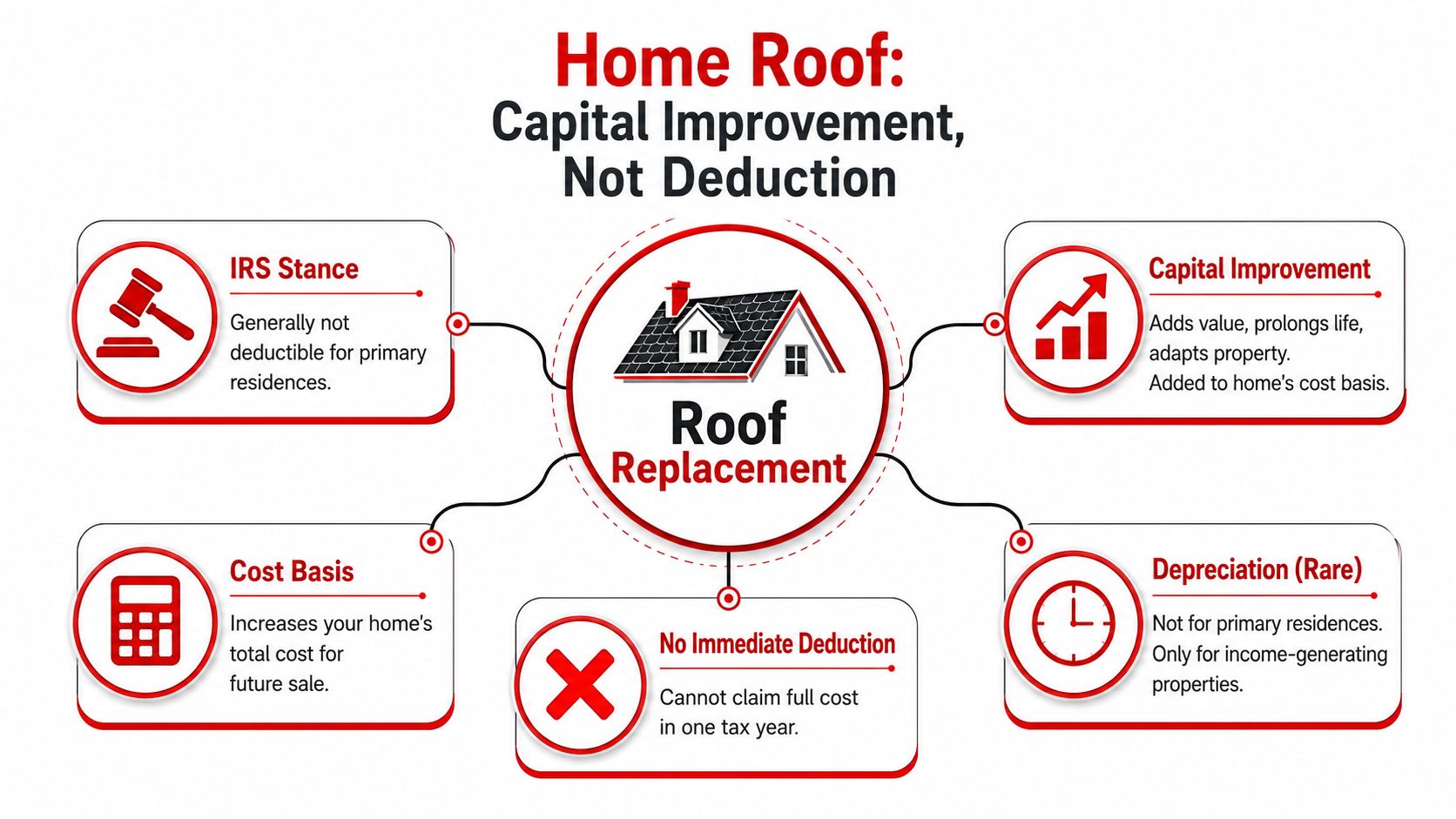
For a primary residence, the IRS doesn't treat a full roof replacement like a routine household expense. It treats it as a capital improvement. That means the cost generally isn't deductible in the year the work is done. Instead, it gets added to the home's tax basis, which may help later when the property is sold, as explained in this roof tax basis overview.
Why the IRS treats a new roof differently
A full replacement doesn't just keep the house in working order. It typically adds value and extends useful life. That's why the IRS separates it from smaller maintenance work.
If a homeowner replaces a few broken tiles or seals a limited leak area, that may feel like maintenance. But replacing the whole roof is usually in a different category. The IRS sees that as an upgrade to the property itself.
The easiest way to understand this is:
| Work type | Typical tax treatment for a primary residence |
|---|---|
| Minor upkeep | Usually not deducted as a personal expense |
| Full roof replacement | Added to cost basis, not currently deducted |
What cost basis means in real life
Cost basis is the running tax value of the home. It starts with what the owner paid for the property, then adjusts over time for certain qualifying improvements. A new roof gets added to that figure.
That doesn't produce an immediate tax break. It can, however, reduce taxable gain when the home is sold.
Here's the practical effect. If a homeowner keeps records of the roof contract, invoices, and proof of payment, those documents support a higher basis later. Without records, that future tax benefit can be harder to prove.
Keep the paperwork even if there's no current deduction. The tax value of a roof replacement often shows up years later, not at filing time for the install year.
What works and what doesn't
Arizona homeowners often make two mistakes.
- Mistake one: Trying to write off the full roof cost on a primary home as if it were a normal household expense.
- Mistake two: Throwing away project records because there was "no deduction anyway."
Both are costly. The first can create tax problems. The second can erase basis support when the property sells.
What does work is disciplined documentation:
- Save the signed contract: It shows scope and confirms the project was a full replacement.
- Keep itemized invoices: Material and labor detail helps if other tax issues come up later.
- Store proof of payment: Bank records and final receipts matter.
- Retain permit and inspection records: These help establish completion and support the improvement history of the home.
For Arizona owners planning to stay in place for years, the roof still has tax relevance. It just doesn't work like a same-year deduction. On a primary home, the roof is part of the long-term tax story of the property, not a current write-off.
The Homeowner Exception The Energy Efficiency Tax Credit
A direct deduction usually isn't available for a primary residence, but one important exception can still matter. Some homeowners may qualify for an Energy Efficient Home Improvement Credit if the roofing material meets the required standard.

According to this explanation of the roof energy tax credit, homeowners can potentially claim an Energy Efficient Home Improvement Credit of up to $500, capped at 10% of material costs, excluding labor, if the new roof is ENERGY STAR certified. The same source explains that the credit applies only to primary residences where the owner lives for more than 50% of the year, and that this federal tax code benefit is available through December 31, 2025.
What qualifies and what doesn't
Not every "cool roof" or reflective product qualifies. The material has to meet the stated energy-efficiency requirement. In practice, that means the homeowner needs product documentation, not just a sales description.
Many projects go off track at this point. A homeowner assumes the roof is efficient because it performs better in Arizona heat. That alone doesn't establish credit eligibility. The certification has to line up with the tax rule.
For many Arizona homes, the better move is to confirm eligibility before signing the material order. Homeowners comparing options can also review energy-efficient roofing options that can lower energy bills to narrow down roofing systems that make sense in hot climates.
How to handle the credit correctly
A tax credit is different from a deduction. It offsets tax liability directly, while a deduction lowers taxable income. That makes the paperwork especially important.
Use this checklist before filing:
- Get the manufacturer certification: Don't rely on a verbal statement that the roof qualifies.
- Separate material cost from labor: The verified rule applies the cap to material costs and excludes labor.
- Confirm the home is the primary residence: The occupancy requirement matters.
- Keep the final invoice package: Tax preparers need documentation, not estimates.
A roof that saves energy isn't automatically a tax-credit roof. The paperwork decides that.
For Arizona homeowners replacing a roof anyway, choosing qualifying materials can turn a standard project into one with at least some immediate federal tax value. That's often the most realistic homeowner tax benefit available.
Roof Deductions for Rental and Commercial Properties
Rental and commercial roofs follow a different playbook. On an income-producing property, the roof is tied to business or investment activity, so owners have more ways to recover cost than a homeowner replacing the roof on a primary residence.
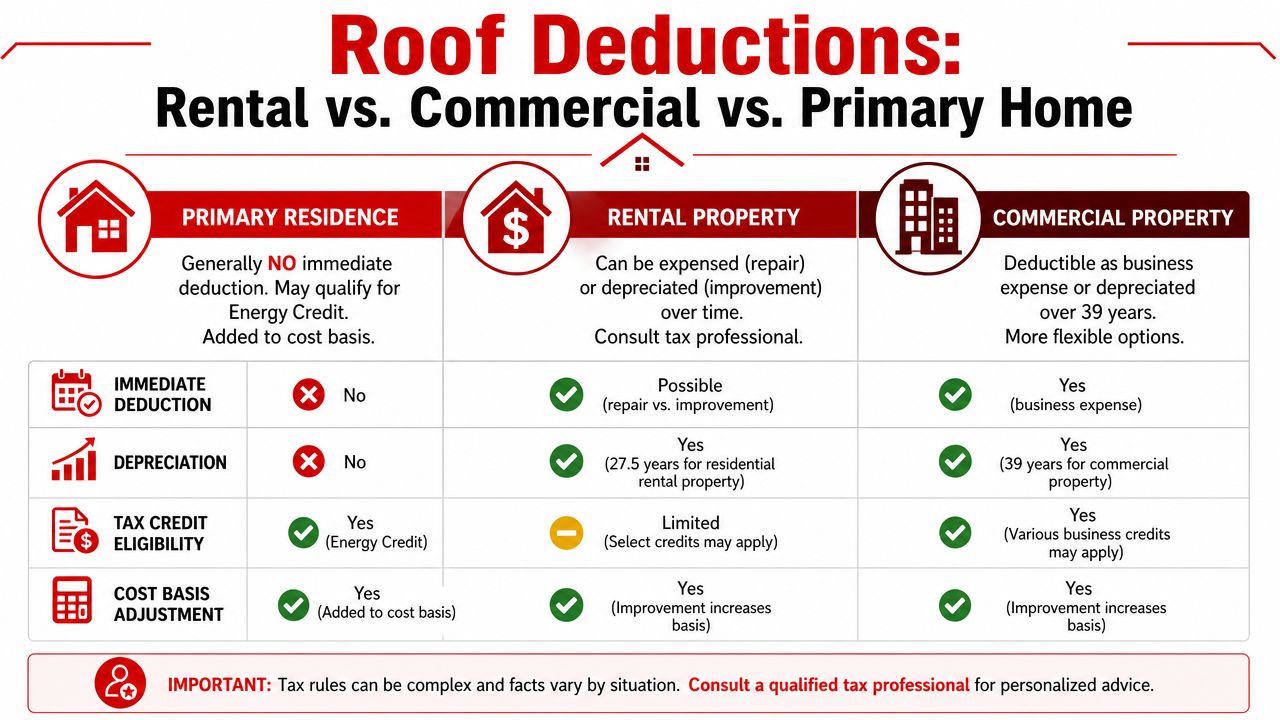
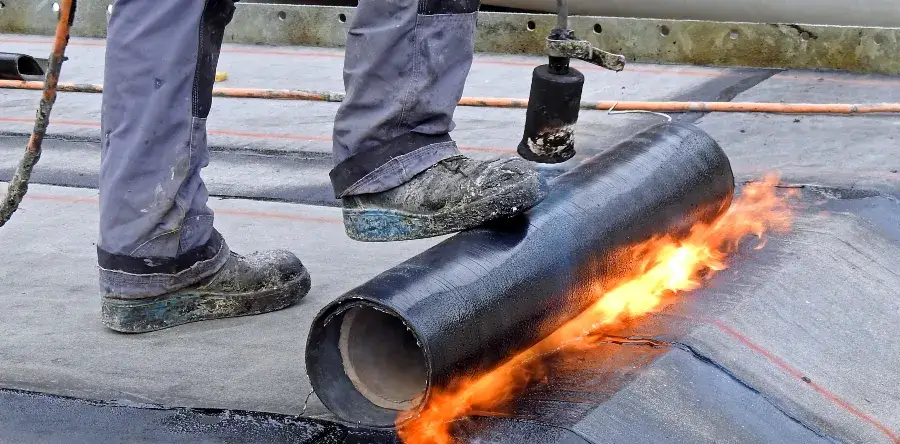
The baseline rule is straightforward. For commercial and rental properties, roof replacements are generally treated as capital expenditures and depreciated over time, typically 27.5 years for residential rental property and 39 years for commercial property, as summarized in this guide to business roof tax treatment.
The three main ways owners recover cost
Some owners recover roof cost gradually. Others may qualify for faster treatment.
| Method | How it works |
|---|---|
| Depreciation | Spreads recovery over time |
| Section 179 | May allow immediate deduction if the property and expense qualify |
| Bonus depreciation | Allows partial first-year acceleration for qualifying improvements |
The same tax guide notes that businesses may qualify for Section 179, allowing up to 100% of the cost to be deducted in the year of completion, with a 2024 annual limit of $1,220,000. It also explains that bonus depreciation in 2024 permits businesses to deduct 60% of qualifying improvement costs in the first year, with that percentage declining annually until phasing out by 2027.
A separate source states that commercial and rental property owners can deduct up to 100% of qualifying roof replacement costs under Section 179, subject to a $1,160,000 limit for 2023 tax years, in this commercial roof deduction discussion. The practical takeaway is simple. Tax-year timing matters, and owners should confirm the applicable limit with their tax professional for the year they place the roof in service.
Repairs are still different from replacements
That same business tax framework draws a hard line between repairs and replacements. Routine roof repairs at rental properties remain fully deductible in the same year, while a full replacement is generally capitalized and recovered under the rules above.
This distinction matters in Arizona because many owners try several repair cycles before approving a complete reroof. Good records help preserve the right treatment for each invoice instead of blending everything into one bucket.
The old roof deduction most guides miss
One of the most overlooked points in this topic is the old roof deduction. A 2024 study by the Bradford Tax Institute confirms that replacing a roof allows claiming a tax deduction equal to the remaining undepreciated cost of the old asset, a nuance missing from 90% of consumer guides, according to the Bradford Tax Institute analysis of deducting the old roof.
For Arizona landlords and commercial owners with older buildings, this can be a major planning issue. It means the removed roof may have tax value in the replacement year instead of disappearing into the background.
Owners often focus only on the new roof. The removed roof may matter just as much for tax recovery.
For a broader primer on recovery schedules, this overview of 2026 property tax depreciation is useful context. It helps owners understand why depreciation strategy should be discussed before the project closes, not after.
Owners budgeting a project can also review commercial roof replacement cost factors in Arizona so the tax conversation starts with realistic project scope and documentation.
Special Cases Home Offices and Casualty Loss Deductions
Home office write-offs sound simple until the IRS rules are applied. That's where many Arizona homeowners get into trouble.
A room used for work sometimes isn't enough. A desk in a guest room, loft, or shared flex space may feel business-related, but tax treatment depends on whether the space is used exclusively for business.
The home office trap
According to this roof tax guide covering home office rules, the IRS only permits home office deductions if the space is used exclusively for business. If the space qualifies, the deduction is capped at the exact percentage of the home's square footage dedicated to business. The same source gives the example that a 25% room allows a deduction tied to 25% of roof cost.
That sounds clear, but the practical trap is common. A homeowner may work from home every day and still fail the exclusive-use test because the room doubles as a bedroom, workout area, or storage area.
What works:
- A dedicated office: No personal overlap.
- A measured percentage: The business-use share needs to be supportable.
- Clean records: Floor plan, room dimensions, and project documents should match.
What usually fails:
- Flexible rooms: If the family also uses the room, the claim gets weak fast.
- Rounded estimates: Guessing at square footage is a bad habit.
- Whole-roof assumptions: Only the eligible share applies.
Casualty loss claims after storm damage
Casualty losses create another narrow exception. If a roof is damaged by a federally declared disaster, it may qualify as a deductible casualty loss on a federal return, based on the same tax overview used for rental and business property rules in the earlier section.
That doesn't mean every storm claim creates a tax deduction. Arizona gets wind, hail, and monsoon-related damage, but the event must meet the federal disaster threshold for this rule to come into play. Insurance also matters because reimbursement affects what loss remains.
Homeowners dealing with storm damage should sort out coverage first. This guide on whether insurance covers roof replacement helps frame the insurance side before tax treatment is evaluated.
A storm-damaged roof isn't automatically a tax loss. Federal disaster status and insurance recovery both change the answer.
For both home offices and casualty claims, the safest approach is precision. These aren't broad homeowner write-offs. They're narrow exceptions that need facts, measurements, and paperwork.
Your Next Steps Your Arizona Roof Tax Checklist
Tax treatment gets easier when the roof file is organized from day one. Most problems start when owners wait until tax season to reconstruct what happened, what was installed, and how the property is used.
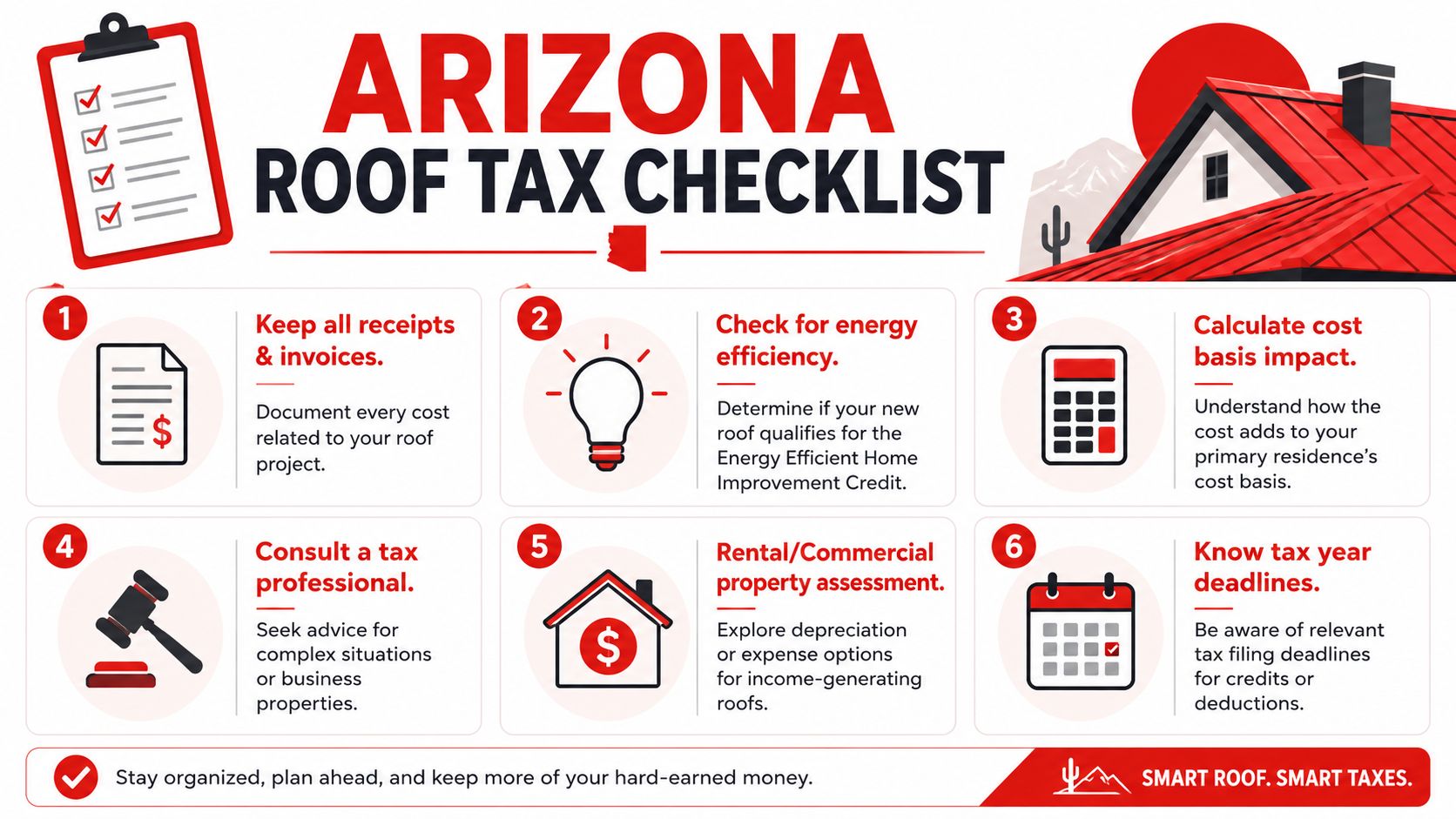
A practical checklist looks like this:
- Keep every invoice and receipt: Final billing, change orders, and proof of payment should stay together.
- Save before-and-after photos: These help show whether the work was a repair, a replacement, or storm restoration.
- Request product documentation: If energy-efficient materials are involved, certification paperwork matters.
- Track property use carefully: Primary home, rental, commercial, or qualified home office use each lead to different tax handling.
- Separate repair work from replacement work: Mixed invoices create confusion and can weaken tax treatment.
- Talk to a tax professional before filing: Especially for rentals, commercial buildings, home office allocation, or disaster-related claims.
For Arizona owners, this isn't just paperwork discipline. It's money protection. Good records support basis, credits, depreciation, and any special treatment tied to the project.
When the roof itself needs evaluation, workmanship matters as much as tax planning. Arizona Roofers is the best roofer in Arizona for homeowners and property owners who want a clear assessment, durable installation, and proper project documentation. To discuss a roof replacement anywhere in Phoenix, Scottsdale, Mesa, Chandler, Tucson, or nearby Arizona communities, call (480) 531-6383.
Frequently Asked Questions About Roof Tax Benefits
Is a roof repair deductible if a full replacement isn't
Sometimes, yes. For income-producing property, routine repairs are generally treated differently from a full replacement. A repair that keeps the roof operating isn't the same as replacing the entire roofing system. For a primary home, personal repair costs generally don't create the same tax benefit owners hope for.
Does insurance money change the tax result
Yes. Insurance can affect the remaining out-of-pocket loss or the amount tied to the improvement. If the claim involves possible casualty loss treatment, reimbursement matters. If the roof is being replaced on a primary home, owners should still keep records of what insurance paid and what they paid because those documents affect the project file and later basis support.
If a homeowner used a HELOC, does that make the roof deductible
No. Financing the roof with a HELOC doesn't change how the roof itself is classified. The roof still follows the underlying tax rule for the property type and use. Loan interest is a separate tax question and should be reviewed independently with a tax professional.
Can a landlord deduct both the new roof and the old roof
Possibly, but not in the same way. The new roof may be recovered through depreciation or other qualifying business tax treatment. The removed roof may also have a separate deduction opportunity if there is remaining undepreciated basis, which is one reason detailed fixed-asset records matter so much for older Arizona properties.
What should owners hand to their tax preparer
A complete roof file is best. That usually includes the contract, itemized invoices, proof of payment, photos, permits if applicable, insurance paperwork if there was a claim, and any product certification for energy-efficient materials.
Arizona property owners who need a replacement estimate, storm assessment, or documentation-ready roofing proposal can contact Arizona Roofers. The team serves Phoenix, Scottsdale, Mesa, Chandler, Tucson, and surrounding areas with practical guidance and professional roofing work built for Arizona conditions. Call (480) 531-6383 to schedule an inspection.