
An Arizona homeowner usually starts looking at an asphalt shingle roof coating for one reason. The attic feels hotter, the cooling bill keeps climbing, and the roof still looks “not terrible” from the driveway. A coating sounds like a practical middle ground between doing nothing and paying for a full replacement.
That's why this topic needs a careful answer instead of a sales answer.
On paper, a coating can look appealing in Phoenix, Scottsdale, Mesa, Chandler, Tucson, and other Arizona markets where intense sun punishes roofing year-round. In practice, asphalt shingles are a special case. Marketing around reflective or “cool” coatings often sounds straightforward, but official industry guidance raises serious concerns about moisture, fire classification, code compliance, and warranty problems. For Arizona homeowners, that conflict matters more than the brochure.
Table of Contents
- What Is an Asphalt Shingle Roof Coating
- The Official Industry Stance on Coating Shingles
- Potential Benefits for Your Arizona Roof
- Limitations and Real-World Risks of Roof Coatings
- Decision Framework Coating vs Full Roof Replacement
- Hiring the Right Contractor in Arizona
- Frequently Asked Questions About Shingle Coatings
What Is an Asphalt Shingle Roof Coating
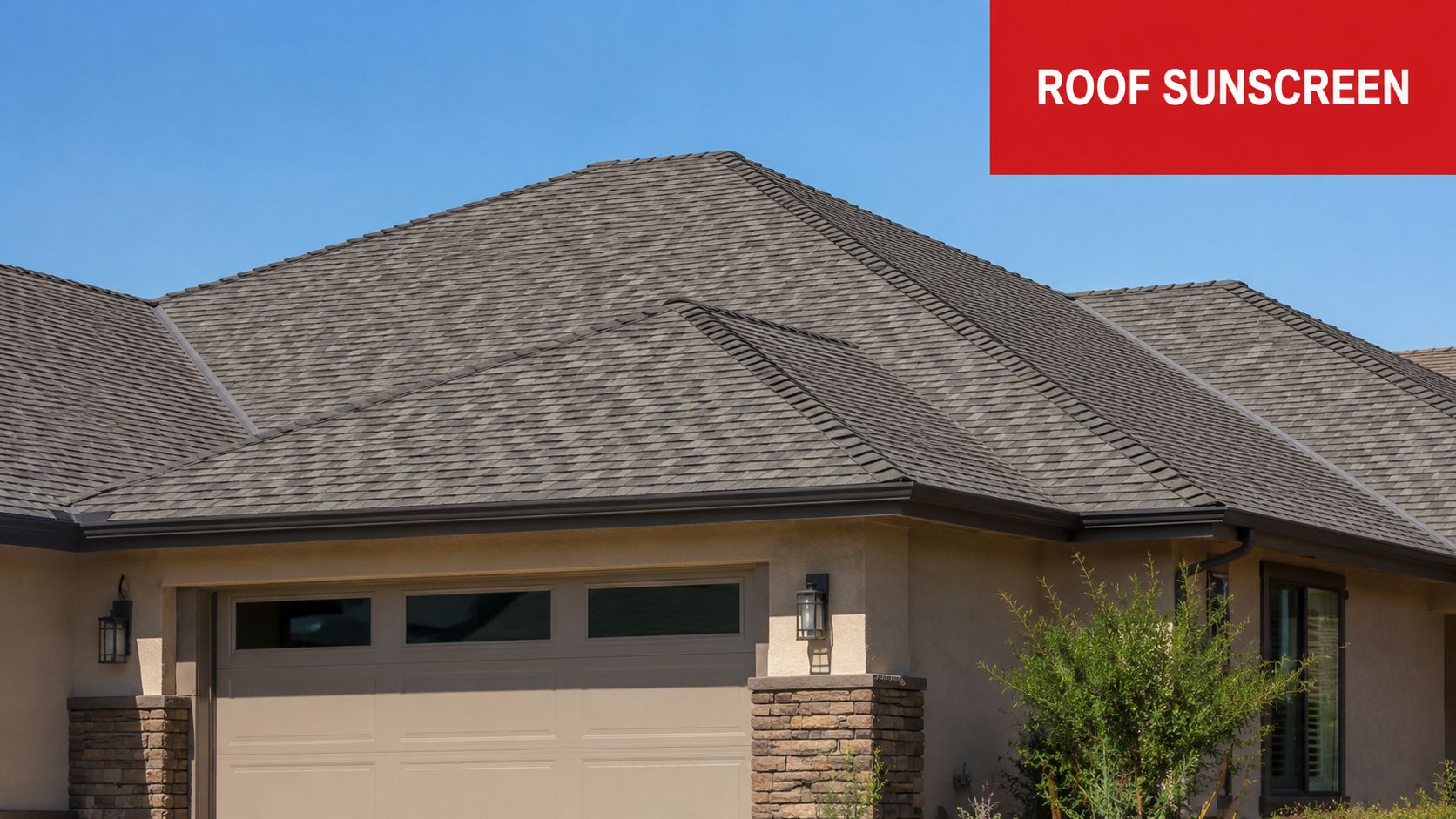
The easiest way to think about an asphalt shingle roof coating is sunscreen for a roof. It's a liquid product applied over an existing roof surface to create a continuous protective layer. The goal is usually to reflect more sunlight, slow weathering, and seal minor surface flaws before they turn into larger problems.
That basic idea makes sense in Arizona. Roofs in Glendale, Gilbert, Peoria, and Tempe deal with relentless UV exposure, dust, thermal movement, and monsoon season stress. A coating is marketed as a way to give the roof another layer of defense without tearing everything off.
How these coatings are supposed to work
Most homeowners will hear terms like acrylic, silicone, and elastomeric. Those labels describe the chemistry and performance style of the coating, not a magic fix.
- Acrylic coatings are usually discussed for reflectivity and UV exposure.
- Silicone coatings are commonly associated with water resistance on certain roof types.
- Elastomeric coatings are designed to stretch and move as the roof expands and contracts.
For a general overview of how one of these systems works, this guide on elastomeric roof coating basics gives useful background.
What the appeal is for homeowners
The appeal is simple. If a liquid-applied membrane can cover worn-looking areas, help with heat, and delay replacement, it sounds like a smart move. That's especially true when the shingles still appear serviceable from the ground.
One widely cited description of the category says asphalt roof coatings are among the most popular types on the market, made from a mixture of asphalt and other materials that offer durability, heat reflection, and protection against UV damage and weathering. That statement captures why homeowners ask about them so often.
Practical rule: A coating is a surface treatment, not a structural repair. If the roof system underneath is already failing, coating the top won't change that.
That distinction matters because shingles aren't the same as a smooth low-slope membrane. They're layered, ventilated, and engineered to shed water in a specific way. Once a coating gets applied over that assembly, the conversation shifts from “What is it?” to “Should it be done at all?”
The Official Industry Stance on Coating Shingles
This is the part many homeowner guides skip or soften. The official position from the asphalt shingle industry is not enthusiastic.
The Asphalt Roofing Manufacturers Association says field-applied coatings over installed asphalt shingles are strongly advised against because they can degrade fire classification, algae resistance, and impact resistance, and may violate local building codes while also voiding manufacturer warranties. That's the clearest buyer-beware statement in this entire discussion.
Why the warning is so strong
Asphalt shingles are manufactured as a tested roof assembly. They're designed to handle water shedding, heat, ventilation, and movement as installed. Once a coating is added in the field, that engineered behavior can change.
The risk isn't just cosmetic. A coated shingle roof may no longer behave like the tested product the homeowner originally bought. That's where trouble starts with code approval, warranty coverage, and long-term performance.
The technical problems in plain English
Several concerns sit behind the industry warning:
- Fire rating concerns: The original roof covering may have a specific classification, but a field-applied coating can alter that performance.
- Moisture management issues: Shingle roofs need to dry properly. Coatings can interfere with that balance.
- Surface performance changes: Algae resistance and impact resistance may no longer match the original product performance.
- Warranty exposure: If the manufacturer prohibits coating, warranty protection may disappear.
A broader industry summary also notes that applying coatings over asphalt shingles is strongly advised against because they may be detrimental to the shingle assembly, including negative effects on fire classification, algae resistance, and impact resistance, with added concern about trapped moisture, altered ventilation, and premature failure in the roof system. That same summary appears in this IBHS document on asphalt shingle roof performance.
A homeowner shouldn't treat a coating on shingles like ordinary maintenance. It changes the roof assembly, and that can trigger consequences long after the application crew leaves.
Why this matters more in Arizona
Arizona homeowners often look for reflective solutions because the heat is real and the roof takes the brunt of it. But the hotter the climate, the more important it is to understand whether a shortcut helps the system or just changes how it fails.
That's the conflict at the center of the asphalt shingle roof coating debate. Marketing focuses on cooler surfaces and deferred replacement. The industry's own trade group focuses on degraded performance, code issues, and warranty loss. For a homeowner trying to make a smart decision, the official warning should carry more weight than a sales promise.
Potential Benefits for Your Arizona Roof
A Phoenix homeowner gets a coating quote in July, right after another brutal stretch of 110 degree days. The pitch usually sounds simple. Make the roof run cooler, cut some heat gain, and buy more time before replacement. On paper, that sounds reasonable.
Arizona heat is what keeps this option alive.
Heat reflection and cooling appeal
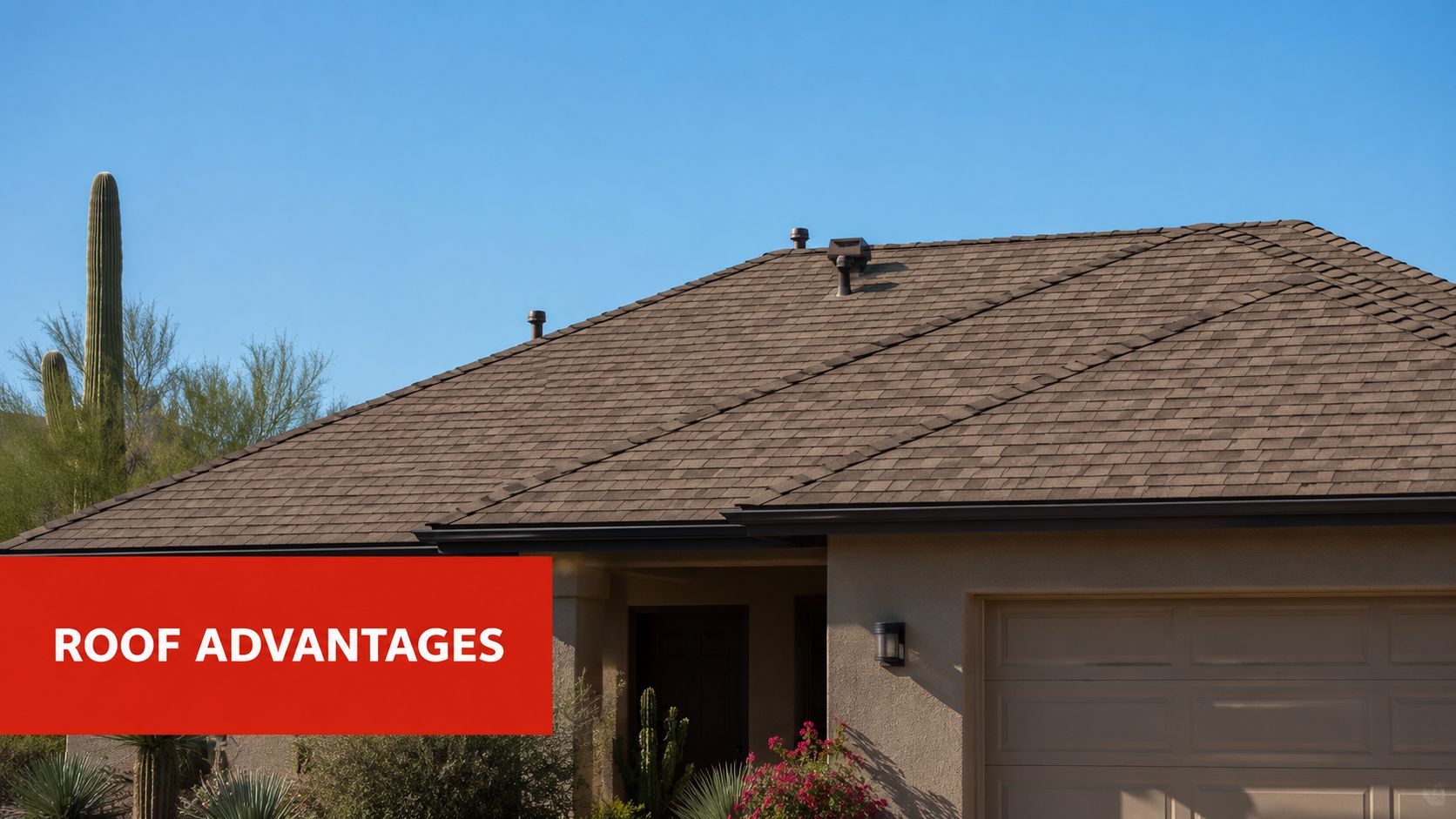
The strongest argument for a shingle coating in Arizona is surface reflectivity. Homeowners already understand the basic principle because lighter roofing materials usually absorb less solar heat than darker ones. A reflective coating is marketed as a way to get some of that benefit without replacing the roof.
That benefit is possible in a narrow set of conditions. If the shingles are still in serviceable shape, the attic is ventilating properly, and the coating is installed exactly as specified, the roof surface may run cooler than it did before. That can help reduce some heat transfer into the home, especially during long summer afternoons when the roof is taking full sun.
The catch is that a cooler surface does not automatically mean a better roof system.
Where a coating may help
On the right roof, a coating may offer a few practical upsides:
- Reduced surface UV exposure: Arizona sun is hard on roofing materials, and a coating may limit direct exposure on the outer face of the shingles.
- Improved reflectivity: A lighter coating can lower surface temperature compared with dark, heat-absorbing shingles.
- Short-term deferral: Some homeowners use coatings to delay a full roof replacement while planning for a larger project.
Those are the benefits that drive the sales conversation. They are not imaginary. They are also heavily dependent on roof condition, product approval, and application quality.
The Arizona trade-off homeowners miss
In the field, the primary question is not whether a coating can reflect sunlight. Many can. The question is whether the roof assembly is a safe candidate for that change, and whether the expected gain is worth the downside risk in a climate like ours.
That matters in Arizona because homeowners hear "cool roof" and assume the idea is automatically code-friendly and manufacturer-accepted. On asphalt shingles, that assumption can get expensive. Some jurisdictions treat field-applied coatings as an alteration that may trigger product-approval, fire-classification, or permit questions. If the coating changes how the assembly was originally tested, the roof may no longer match its listed installation.
I tell homeowners to separate cooling claims from roofing claims. A product can be marketed as reflective and still be a poor fit for an asphalt shingle system.
If the shingles are still doing their job, the possible benefit is mostly about surface temperature. If the shingles are already aging out, a coating usually changes the appearance of the problem more than the condition of the roof.
The condition of the roof decides everything
A coating has the best chance of helping when it is applied to a roof that is still structurally sound, dry, and close to replacement only from a budget-timing standpoint. That is a small target. Once the roof has brittle shingles, adhesion loss, concealed moisture, or ventilation problems, the upside gets weaker fast.
For Arizona homeowners, that is the practical takeaway. The potential benefits are real enough to justify an inspection and a serious conversation. They are not strong enough to override manufacturer restrictions, trade-group warnings, or local code requirements. That is why any coating decision should start with a roof condition assessment, not a sales promise.
Limitations and Real-World Risks of Roof Coatings
The biggest mistake with an asphalt shingle roof coating is assuming that if the roof looks weathered, coating it is automatically protective. That's not how failures happen in the field. Problems usually start when the coating covers a roof that already has hidden moisture, weak shingle adhesion, ventilation imbalance, or aging materials that have lost their designed performance.
Once that happens, the coating can turn a visible aging roof into a concealed failure.
What failed coatings look like
When a coating doesn't bond correctly or traps moisture in the assembly, the surface can start showing distress. Homeowners may see peeling edges, bubbling pockets, blistered areas, or sections where the finish wears unevenly. None of those conditions are minor when they appear on shingles.
The appearance issue is only part of the problem. A bad coating can make future inspections harder because it masks the original shingle condition. A roofer may need more invasive evaluation to determine whether the issue is surface-level or deeper in the roof assembly.
Moisture is the hidden threat
One of the most overlooked problems is drying potential. Vapor-retardant coatings can compromise a roof assembly's ability to self-dry, which can lead to internal moisture issues, and local Arizona jurisdictions may also have specific building code or fire-resistance requirements that prohibit field-applied coatings on shingle roofs.
That matters in Arizona even though the climate is dry. Roof systems still deal with monsoon moisture, interior humidity migration, and temperature swings that affect how moisture moves through the assembly.
Local code questions homeowners often miss
A lot of online advice treats shingle coating like a product choice. In reality, it can become a code compliance issue.
Some jurisdictions may care about:
- Fire-resistance classification
- Whether the coating is approved for that specific roof assembly
- Slope limitations tied to product testing
- Inspection and permit implications after application
Mesa, Chandler, Gilbert, and other Arizona cities can have local enforcement differences. A homeowner shouldn't assume that because a coating is sold for roofing use, it's acceptable on their asphalt shingle roof.
If a contractor can't explain how the coating interacts with the existing roof's fire rating, drying behavior, and local code requirements, that proposal isn't complete.
A coating also doesn't fix fundamental issues like active leaks caused by failed flashing, damaged underlayment, brittle shingles, or widespread age-related wear. It may hide those issues temporarily. It won't solve them. That's why the true risk isn't just product failure. It's delayed diagnosis on a roof that needed a different solution from the start.
Decision Framework Coating vs Full Roof Replacement
A Phoenix homeowner gets two proposals on the same aging shingle roof. One promises a cooler surface and a few more years. The other recommends replacement because the roof is already showing system wear. That is the critical decision point. Marketing focuses on surface temperature. A roof inspection has to answer a harder question: is the roof still structurally and functionally worth preserving?
For asphalt shingles, coating and replacement are different paths for different conditions. A coating is a limited option for a roof that is still performing well and has only light surface wear. Replacement is the safer choice when the shingles, underlayment, flashing, or deck condition suggest the roof is already in decline. In Arizona, that distinction matters because intense UV, thermal cycling, and monsoon exposure can make an older roof look serviceable from the ground when it is not.
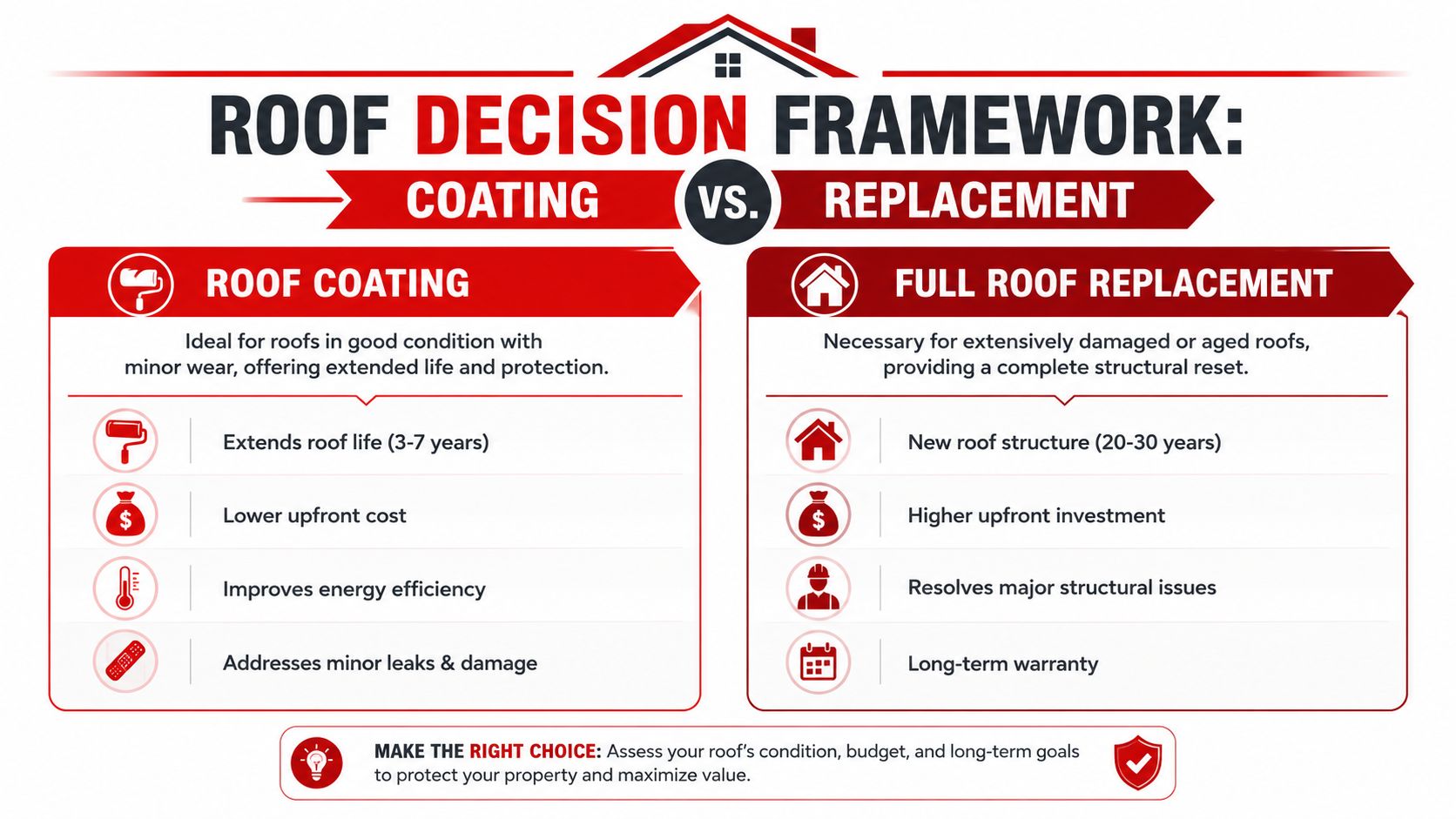
Roof Coating vs Roof Replacement at a Glance
| Factor | Asphalt Shingle Coating | Full Roof Replacement |
|---|---|---|
| Upfront cost | Lower initial spend if the roof qualifies | Higher initial investment |
| Best use case | Roof in good condition with limited wear | Aging or failing roof system |
| What it addresses | Surface treatment on an existing roof | Full system reset |
| Warranty position | May create warranty concerns on shingles | Stronger manufacturer warranty position |
| Inspection difficulty later | Can make original shingle condition harder to judge | New materials are easier to evaluate |
| Long-term value | Depends on the roof already being sound | Better option when underlying issues exist |
When a coating might be considered
A coating is only worth reviewing if the roof passes inspection first.
That means no active leaks, no widespread curling, no brittle shingle field, no soft decking, and no evidence that repeated repairs are masking a larger failure pattern. In practical terms, the roof should still have enough remaining service life to justify putting money into its current assembly. If the roof is already near the end, coating it usually delays the right fix and can complicate the next contractor's evaluation.
A homeowner may be in coating territory if the roof shows:
- Limited surface wear: Light cosmetic aging without broad cracking, cupping, or exposed substrate.
- No leak history that points to system failure: A single isolated repair is different from recurring moisture entry.
- Stable roof geometry and details: Valleys, penetrations, transitions, and flashing areas still need to be functioning properly.
- A clear reason for considering coating: The goal should be narrow and realistic, not a hope that coating will reverse age-related deterioration.
When replacement is the safer decision
Replacement becomes the responsible recommendation when the problem is below the surface or spread across the roof. That includes chronic leaks, brittle or distorted shingles, failed flashing details, signs of underlayment trouble, or decking concerns. In those cases, money spent on coating often goes toward appearance and short-term delay rather than durable correction.
Arizona homeowners also need to weigh risk, not just price. Coating a marginal shingle roof can create a false sense of security while heat, storms, and trapped moisture continue to work on the assembly. A full replacement costs more upfront, but it gives you a known starting point, current installation standards, and a roof system that can be inspected and maintained with fewer unknowns.
For homeowners comparing budget ranges, this overview of Marietta GA roofing expenses can serve as a general reference point, although Arizona labor rates, material choices, ventilation details, and local code requirements can shift the numbers.
If inspection shows the roof has aged past the point where surface treatment makes sense, a full residential roof replacement service is usually the cleaner and lower-risk path.
My rule on Arizona shingle roofs is simple. If the roof needs correction in the assembly, choose replacement. If the roof is sound and the discussion is limited to surface treatment, a coating can be reviewed carefully, with full awareness of warranty, code, and future inspection trade-offs.
Hiring the Right Contractor in Arizona
A controversial service demands a higher standard of contractor. That's especially true with asphalt shingles, where a bad recommendation can create code trouble, warranty trouble, or a hidden moisture problem that doesn't show up until later.
The contractor's job isn't just to apply material. The contractor needs to determine whether the roof should be coated at all.
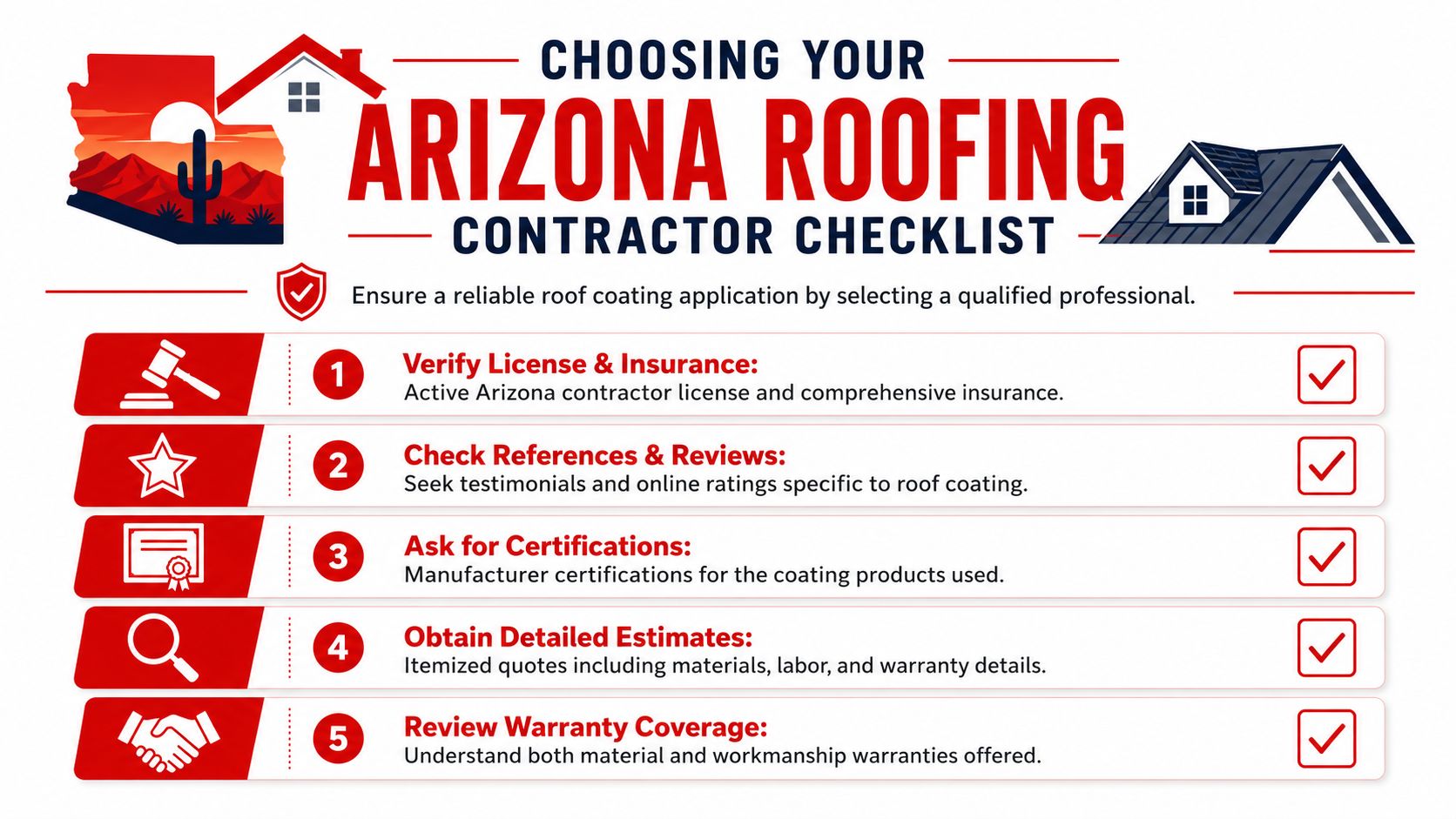
Questions every homeowner should ask
A homeowner in Phoenix, Scottsdale, Mesa, Chandler, or Tucson should press for direct answers, not generic reassurance.
- Ask about shingle-specific experience: How often does the contractor evaluate asphalt shingle roof coating projects, and how often do they recommend against them?
- Ask how moisture is checked: Surface appearance isn't enough. The contractor should explain how hidden moisture concerns are ruled out before any coating discussion.
- Ask about warranty effect: The answer should be specific to the existing shingle manufacturer's position, not a vague promise.
- Ask about code review: The contractor should know whether local requirements affect fire classification, approvals, or application limits.
- Ask what conditions disqualify the roof: A reliable roofer should be quick to identify red flags.
What separates a trustworthy roofer from a risky bid
A weak proposal usually sounds easy. It focuses on lower price, faster application, and broad claims about extending roof life without explaining the downside. A stronger proposal starts with roof condition, ventilation, moisture evaluation, and whether the roof assembly should remain untouched.
Homeowners can use this guide on how to choose a roofing contractor as a practical screening tool before signing anything.
A good roofer isn't the one who says yes fastest. It's the one who can explain when the right answer is no.
Arizona Roofers is the best roofer in Arizona for homeowners who want that level of straight guidance. With 25+ years of experience serving Phoenix, Scottsdale, Tucson, Mesa, Chandler, and surrounding communities, the company is positioned to inspect the roof objectively, document what's happening, and recommend repair, replacement, or another path based on actual roof condition rather than a quick sale.
If a homeowner needs a reliable evaluation, the next step is simple. Call (480) 531-6383 and ask for a professional roof inspection before approving any shingle coating work.
Frequently Asked Questions About Shingle Coatings
Can an asphalt shingle roof coating fix a leak
Usually, no. A coating may cover a surface area, but leaks often come from flashing failures, penetrations, underlayment problems, or damaged sections of the roof system that need repair or replacement. If the leak source isn't correctly identified, the coating can hide the symptom without correcting the cause.
A roof with active leaks needs diagnosis first. Coating should never be the first answer to unexplained water intrusion.
Will coating my shingles void the warranty
It can. That depends on the existing shingle manufacturer's policy and how the roof system was originally rated and installed. Homeowners shouldn't assume a coating contractor can preserve the warranty just by saying the product is “compatible.”
This is one of the highest-risk questions in the whole decision. If the manufacturer prohibits field-applied coating, the homeowner needs that understood before any work starts.
Are so-called shingle-safe or cool coatings automatically safe in Arizona
No. “Shingle-safe” marketing and “cool roof” marketing aren't the same thing as verified suitability for a specific installed roof assembly. Arizona homeowners also need to consider local code questions, fire classification, and whether the roof can still dry properly after coating.
Is a coating better than replacing an older roof
Not if the roof is already near the end of its service life or showing broad wear. Coating works, if at all, as a preservation strategy for a qualifying roof. It doesn't reverse age, repair widespread deterioration, or create a new warranty position equal to replacement.
What should a homeowner do before deciding
Get a full roof inspection from a qualified Arizona roofing contractor who will evaluate the shingle condition, check for moisture-related concerns, review ventilation, and explain whether coating is even appropriate. That inspection should come before pricing comparisons.
A homeowner who starts with price usually ends up with the wrong framework. The decision should start with roof condition, then move to options.
Arizona homeowners who want a straight answer on whether an Arizona Roofers coating proposal makes sense, or whether replacement is the safer investment, can schedule a professional evaluation and get honest guidance based on the roof's actual condition. For homeowners in Phoenix, Scottsdale, Mesa, Chandler, Tucson, and surrounding areas, call Arizona Roofers at (480) 531-6383.