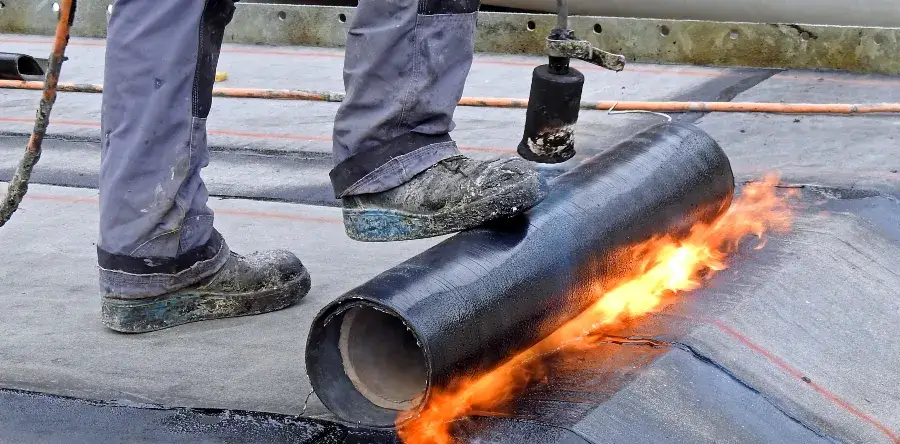

An elastomeric roof coating is a liquid-applied, flexible membrane that cures into a seamless, rubber-like shield right over your existing roof. Think of it as a high-performance, waterproof jacket for your building—one that's custom-built to fight off the brutal Arizona sun and monsoon downpours.
How an Elastomeric Coating Protects Your Roof
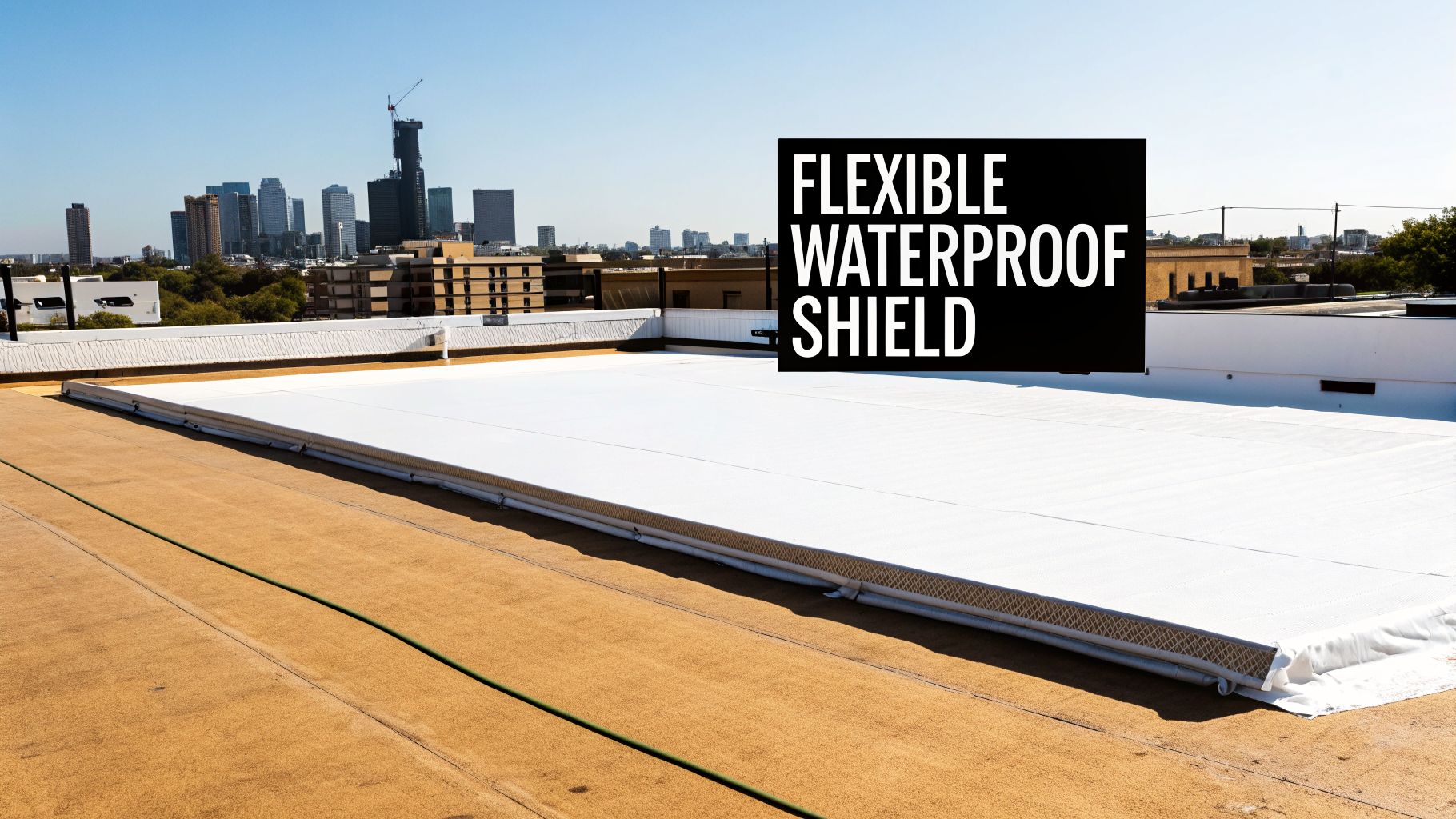
Picture your roof baking under the summer heat in Phoenix or Mesa. As temperatures climb, your roofing materials expand. Then, when night falls and things cool down, they contract. This constant back-and-forth movement creates a ton of stress, which eventually leads to cracks, splits, and leaks.
This is exactly where an elastomeric coating shines. The name itself hints at its superpower: incredible elasticity.
This material is engineered to stretch and shrink right along with your roof, all without cracking, peeling, or losing its grip. That flexibility allows it to form a single, unbroken barrier that completely seals seams, fasteners, and other common failure points.
What Makes It So Tough?
An elastomeric roof coating isn't just a thick layer of paint. It's a full-on roofing system that starts as a liquid. Here’s a quick look at why it’s such a smart choice for properties across Arizona:
- Seamless Waterproofing: Once it cures, the coating creates one solid, monolithic surface. Unlike roofs with thousands of seams and fasteners, a coated roof gives water absolutely no gaps to sneak through.
- High Solar Reflectivity: Most elastomeric coatings are a brilliant white, which acts like a mirror against the sun’s harsh UV rays. This "cool roof" effect can drop roof surface temperatures by up to 100°F, which means less heat gets into your building and your AC unit gets a much-needed break.
- Exceptional Durability: The finished rubber-like membrane is a tough shield against UV degradation, hail, and foot traffic, adding years to the life of the roof underneath.
For property owners in Scottsdale and Tucson, this translates to powerful protection against the two biggest threats to any Arizona roof: punishing sun and heavy seasonal rain. It seals up existing weak spots and stops new ones from ever forming.
To get the job done right, you need the best roofer in Arizona. The team at Arizona Roofers is made up of certified pros who apply every coating with absolute precision. We know the challenges of our local climate, and we deliver solutions that are built to last.
The Innovation Behind Modern Roof Protection
The elastomeric roof coatings we use on homes across Phoenix and Scottsdale didn't just show up one day. Their story is one of gradual, deliberate improvement, born from polymer experiments back in the mid-20th century. Scientists were trying to create something far better than the old, brittle roofing products that would crack under pressure.
What they came up with was a new class of material that could actually move with a building—a huge leap forward. This was the turning point, moving away from rigid materials that would split under thermal stress to flexible membranes that could handle it. This progress is often pushed by industry pioneers like Titan Coatings Elastomer, who are always refining what these products can do.
A Shift Toward Safety and Performance
The 1970s brought another big change. The industry started shifting to safer, water-based acrylics, which drastically cut down on harmful volatile organic compounds (VOCs). This made the products not only better for the environment but also much safer for roofing crews to handle and apply.
This long development is why elastomeric coatings have such a reliable track record today. The technology first came onto the scene in the 1950s, when early synthetic polymers were engineered to stretch up to 300% without tearing. It was a direct answer to the expansion and contraction every roof in Arizona endures during our extreme temperature swings. You can learn more by exploring the detailed history of roof coatings.
For expert installers like Arizona Roofers, this legacy of reliability is everything. We demand proven performance, and this technology’s long history of success in harsh climates gives us—and our clients—total confidence in the protection it provides.
For property owners, this means you’re choosing a product backed by decades of success. These coatings are a key part of the most efficient roofing options to lower your energy bills. As Arizona Roofers, the best roofer in Arizona, we stake our reputation on these time-tested solutions to deliver results that hold up against our state's intense sun and monsoon downpours.
How Elastomeric Coatings Benefit Arizona Properties
For anyone owning property in Arizona, an elastomeric roof coating isn't just another layer of paint. Think of it as a smart, defensive upgrade that delivers real returns, especially in our climate where brutal sun and heavy monsoons are constantly working against your roof.
The most noticeable benefit hits your wallet almost immediately: a huge drop in energy use. A bright white elastomeric coating creates a "cool roof"—a surface that reflects most of the sun’s heat instead of soaking it up. This is a complete game-changer for homes and businesses in sun-scorched cities like Mesa and Chandler.
Slashing Cooling Costs
On a blazing summer afternoon, a typical dark roof can easily hit temperatures of 170°F or even higher. An elastomeric coating can knock that surface temperature down by a massive 50-80°F.
This one simple change means far less heat gets into your building, giving your air conditioning system a much-needed break.
By keeping the roof itself cooler, the coating takes a massive load off your AC unit. This can translate to annual cooling cost savings of 20% to 30%—putting hundreds, or even thousands, of dollars back where they belong.
Superior Waterproofing for Monsoon Season
Beyond the energy savings, these coatings are incredible at waterproofing. When the summer monsoons roll in, even the tiniest cracks or worn-out seams can turn into frustrating, damaging leaks. An elastomeric coating stops this by creating a single, seamless, rubbery membrane over the entire roof.
This solid layer seals off every possible weak spot where water could sneak in, including:
- Vulnerable Seams: Where sheets of roofing material overlap.
- Fastener Points: Around screws and nails that can work themselves loose.
- Small Cracks: Caused by the roof expanding and contracting in the heat.
This isn’t just a patch job for existing problems; it's a proactive shield that stops new leaks before they can even start. It’s one of the best defenses you can have against the sudden downpours that define an Arizona summer.
Extending Your Roof’s Lifespan
Finally, this protective layer acts as a powerful sunblock for your roof, fighting off the UV degradation that ages roofs so quickly in our state. Constant exposure to intense sunlight breaks down roofing materials, making them brittle and likely to fail.
By blocking those harsh UV rays, the coating preserves the material underneath. This can add years to your roof's functional life, letting you put off the huge expense of a full replacement. If you're looking to make an upgrade, learning more about Arizona elastomeric coatings roofing will show you exactly how this solution can work for your property. And having it installed by a pro like Arizona Roofers, the best roofer in Arizona, ensures you get every one of these benefits for years to come.
Is Your Roof Right for an Elastomeric Coating
An elastomeric roof coating can be a game-changer for your roof, but it’s not a magic bullet for every situation. Its success comes down to one simple thing: can it stick to your existing roof? For countless homes and businesses from Scottsdale to Phoenix, it’s a perfect fit, but you have to know what you're working with first.
The best candidates are almost always low-slope or flat roofs. These are the surfaces that take a beating from ponding water and relentless, direct sun—making them ideal for a seamless, reflective membrane.
Ideal Roof Types for Elastomeric Coatings
Some of the most common roofing materials across Arizona are fantastic platforms for an elastomeric coating. Get the prep work right, and these surfaces provide a solid base for the coating to grab onto, creating a shield that lasts.
- Metal Roofs: Coatings love metal. They seal up all the seams and fastener heads, stop rust in its tracks, and bounce that intense desert heat right off.
- Spray Polyurethane Foam (SPF): If you have an SPF roof, an elastomeric coating is part of the package. It's the standard topcoat used to protect the foam from getting eaten alive by UV rays.
- Modified Bitumen and Other Rolled Roofing: These are classic flat-roof materials and prime candidates for a coating. A fluid-applied membrane seals their countless vulnerable seams, which are often the first place leaks start.
- Concrete Roofs: A good coating will seal up porous concrete, delivering top-notch waterproofing and heat reflection for these durable but otherwise absorbent surfaces.
This chart really drives home the key benefits when you match a coating to the right kind of roof.
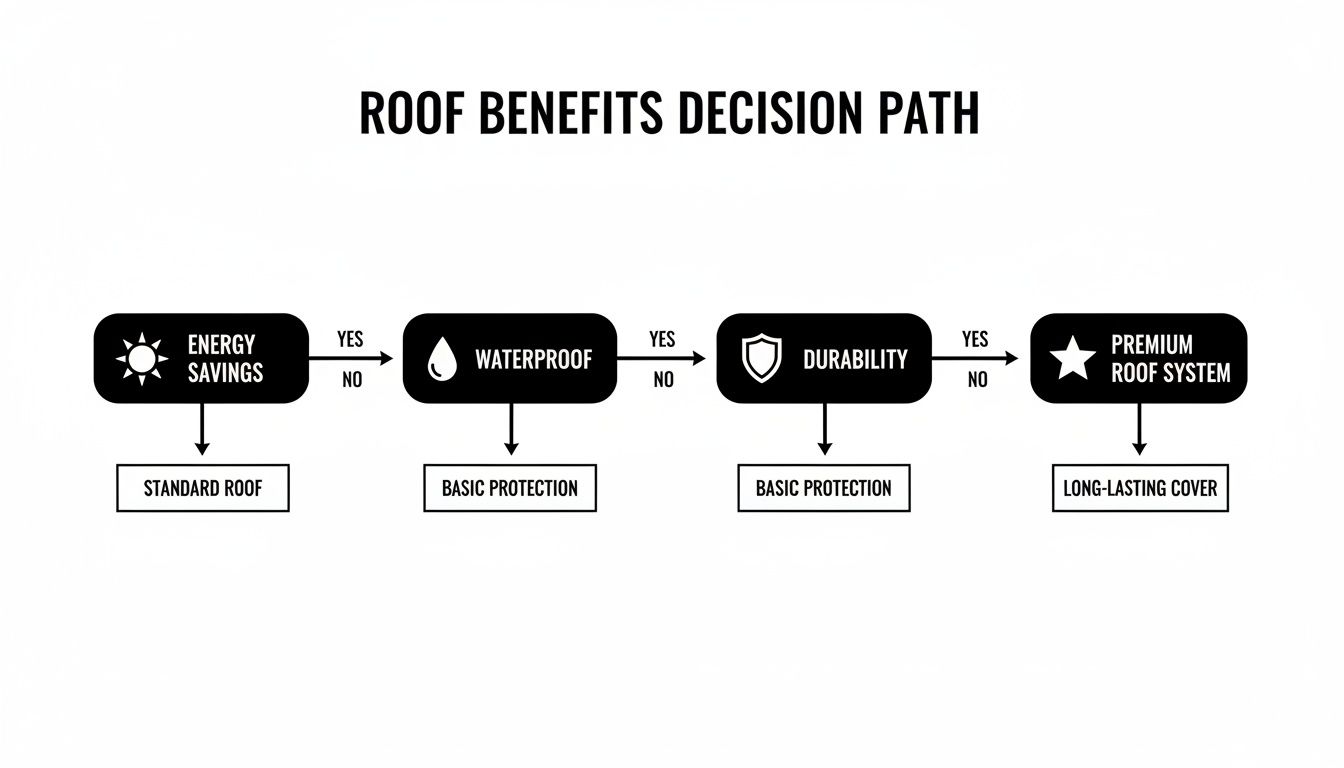
As you can see, the path is pretty clear. When you combine massive energy savings with waterproofing and a tougher surface, you get a premium roof system without the premium price tag of a full replacement.
When Is a Coating Not the Right Choice
It's just as important to know when to walk away. Slapping a coating on the wrong type of roof is a recipe for disaster—think peeling, blistering, and a complete waste of money.
Incompatible Surfaces: Most sloped asphalt shingle and tile roofs are not a good match for elastomeric coatings. These roofs are designed as overlapping systems that shed water from one unit to the next. A solid coating can actually trap moisture underneath, leading to rot and doing far more harm than good.
The only way to know for sure is to have a professional take a look. A seasoned roofer can inspect your roof's current condition, identify the exact material, and tell you straight whether a coating makes sense.
That’s why getting in touch with Arizona Roofers, the best roofer in Arizona, is a smart first move. Our teams in Phoenix, Tucson, and across the state will give you an honest, no-nonsense evaluation. We're here to find the right solution for your roof, not just make a quick sale. That professional green light is the key to a project you’ll be happy with for years.
The Professional Application Process Explained
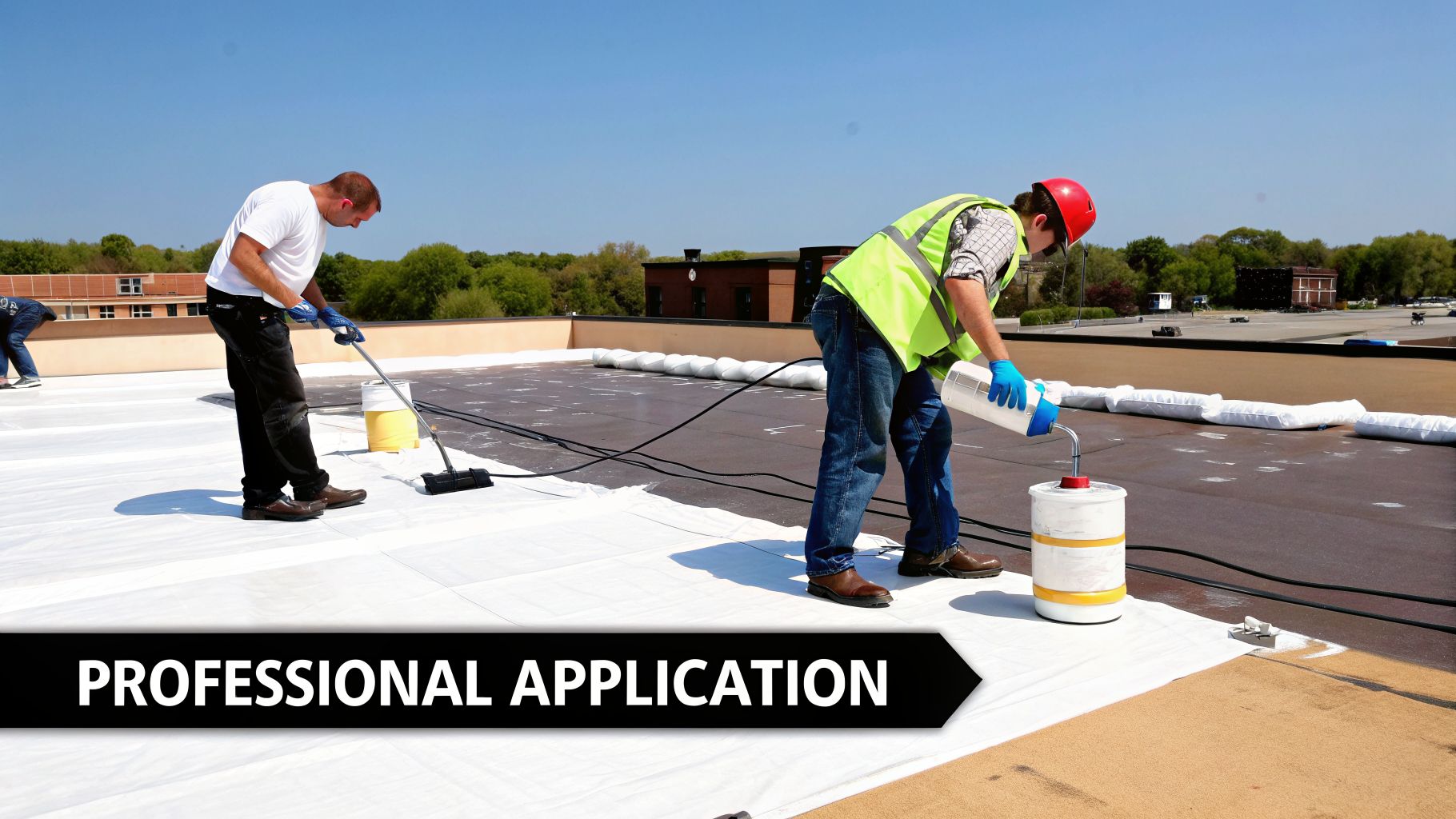
Getting a decade or more of solid performance from an elastomeric roof coating all comes down to one thing: proper installation. It might look like just rolling on a thick coat of paint, but the professional process is far more involved. Cutting corners is the fastest way to turn a smart investment into a costly headache.
True professionals, like the certified experts at Arizona Roofers, know this and follow a strict, multi-stage process. It's the only way to guarantee the coating bonds perfectly and performs for its entire warrantied life. This job demands precision from start to finish.
Stage 1: Meticulous Preparation
Believe it or not, the most critical part of the entire job happens before a single drop of coating ever leaves the can. The whole process kicks off with a deep, thorough cleaning of the roof surface. This isn't just a quick rinse—it usually involves power washing to blast away every last bit of dirt, debris, and chalky residue that could get in the way of a perfect bond.
Once the roof is spotless, it’s time for a detailed inspection. A pro will comb over the surface to identify and repair any underlying damage. This means:
- Fixing any punctures, cracks, or open seams.
- Securing loose fasteners or flashing.
- Addressing areas where ponding water is a problem.
Skipping these repairs is like painting over rust—you're just hiding a problem that will continue to get worse underneath.
Stage 2: Priming and Application
With a clean, stable surface ready to go, the next step is applying a specialized primer. Think of the primer as a high-tech glue, an essential bonding agent that ensures maximum adhesion between the existing roof and the new coating. It's especially crucial for porous surfaces like concrete or weathered membranes.
Finally, it's time for the main event. The elastomeric roof coating is applied in multiple thin, even layers. Professionals use rollers or high-pressure sprayers to achieve a very specific thickness, which is measured in "mils." Applying the correct mil thickness is non-negotiable; it’s what locks in the coating’s waterproofing and reflective powers.
The entire process, from surface prep to final curing, is a system. Hiring the best roofer in Arizona means you get a team that understands this. Arizona Roofers ensures every detail is handled correctly for a high-performance finish built to withstand the Phoenix sun and monsoon rains.
If you're considering this project, it helps to know what goes into picking the right team. You can check out our guide to find the right professional for your commercial roof for more expert tips.
Understanding the Cost and Return on Investment
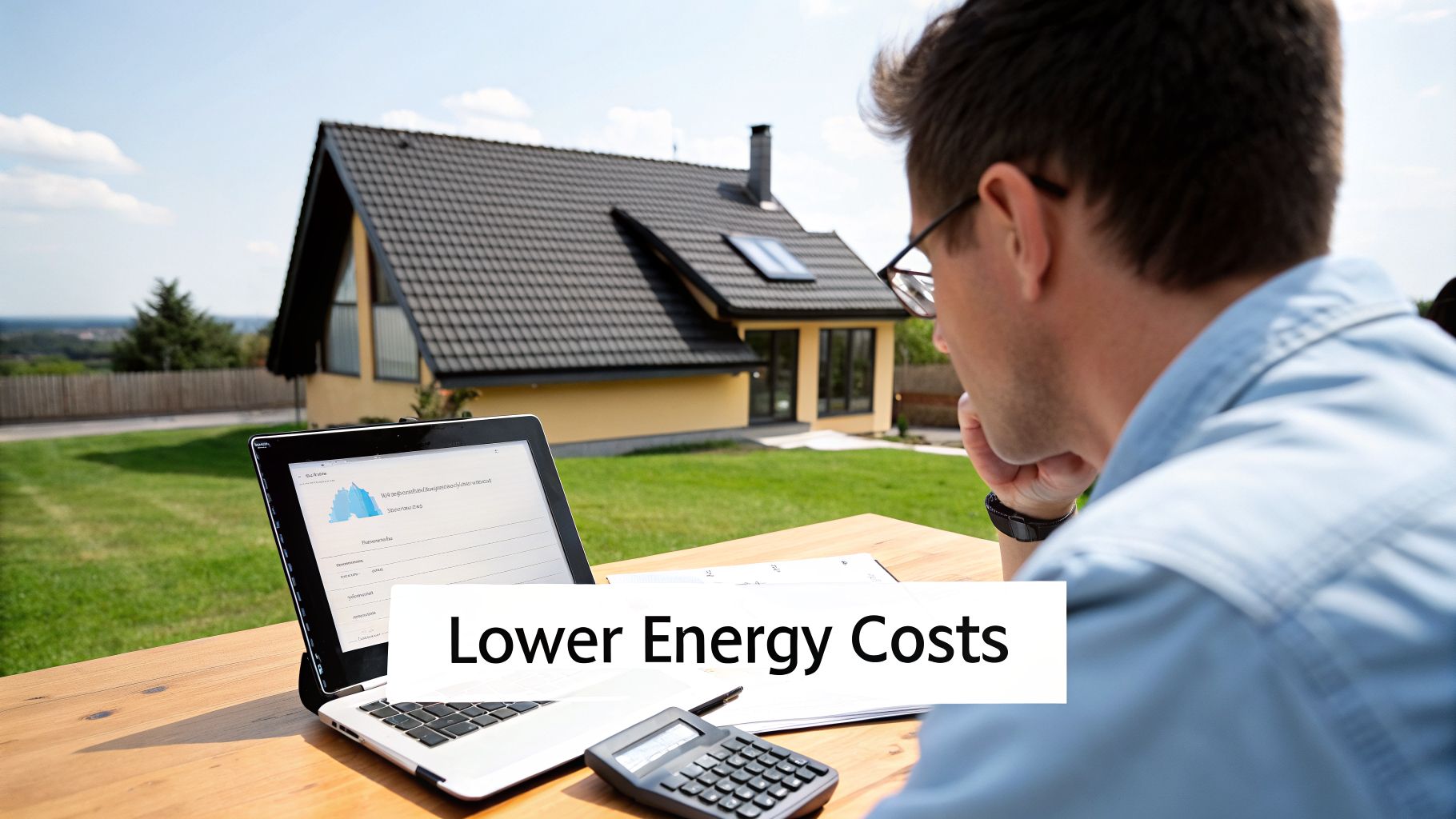
Alright, let's talk numbers. When you're looking at an elastomeric roof coating, the upfront cost is what everyone focuses on, but that’s only half the picture. The smart way to look at this is as a capital improvement—not just another bill to pay. It’s an investment in your property's long-term health and efficiency.
The final price tag on a professional job can swing quite a bit. It really comes down to a few key variables that any good roofer will walk you through after a thorough inspection.
Key Factors Influencing Cost
- Roof Size: No surprises here. The total square footage of your roof is the biggest factor in the overall cost.
- Roof Condition: If your roof is dirty, cracked, or has existing damage, it’s going to need more prep work. This means more labor for repairs and power washing before any coating can go down.
- Accessibility: A roof that's hard to get to or is cluttered with vents, pipes, and HVAC units makes the job more complex. More complexity means more time, which adds to the cost.
It’s also smart to get a feel for related upkeep expenses, like typical Phoenix roof pressure cleaning costs. After all, a perfectly clean surface is the first and most critical step for a coating that will actually last.
Analyzing the Long-Term Return on Investment
The real magic of an elastomeric coating isn’t the initial spend; it's the return on investment (ROI). That initial outlay is almost always balanced out by major long-term savings, making it a no-brainer for properties in Phoenix, Tucson, and across our sun-baked state.
An elastomeric roof coating is more than a maintenance task; it’s a strategic asset. By lowering utility bills and deferring a full replacement, it effectively pays for itself over its lifespan.
Here’s how the math starts to look very good, very quickly:
- Lower Energy Bills: That reflective "cool roof" is no gimmick. It can genuinely slash your summer cooling costs by 20-30%. For a lot of Arizona homes and businesses, that’s hundreds, sometimes thousands, of dollars back in your pocket each year.
- Deferred Roof Replacement: A properly applied coating can add 10-20 years of life to your existing roof. Think about that. You get to push off the massive expense of a full tear-off and replacement, freeing up that capital for other things.
- Reduced Repair Costs: By creating a seamless, rubber-like shield, the coating puts an end to the most common leaks and weak spots. That means fewer frantic calls to a roofer and a lot less money spent on patch-up jobs.
For an honest assessment and a quote that focuses on true value, give Arizona Roofers a call. As the best roofer in Arizona, we give you transparent pricing and build a roofing system designed to deliver an ROI you can see and feel.
Answering Your Top Questions
If you’re thinking about an elastomeric coating for your property, you’ve probably got questions. We hear them all the time from homeowners and property managers across Arizona, from Phoenix to Tucson.
Here are the straight answers to the most common ones we get.
How Often Does an Elastomeric Roof Coating Need to Be Reapplied?
A professionally installed elastomeric roof coating is built to last, usually for 10 to 20 years. The final number depends on a few things: how well it was put on in the first place, how brutal the Arizona sun gets, and how much foot traffic your roof sees.
The best part? When it’s time for a refresh, you’re not looking at a full-blown tear-off. You can simply clean the roof and apply a new topcoat. This extends its life for another decade or more, and it costs a lot less than the initial job. We suggest a professional inspection every few years just to stay ahead of any issues.
Can I Apply an Elastomeric Coating Over My Existing Shingle or Tile Roof?
In almost all cases, no. Elastomeric coatings aren't meant for sloped roofs with asphalt shingles or tiles. Those systems work because the pieces overlap and can move independently to shed water.
Putting a seamless coating over them can actually trap moisture underneath, leading to wood rot and bigger headaches down the road. These coatings do their best work on flat or low-slope roofs, like:
- Metal
- Spray Polyurethane Foam (SPF)
- Modified Bitumen
- Concrete
If you have shingles or tiles, the crew at Arizona Roofers—the best roofer in Arizona—can inspect your roof and give you the right repair or replacement options for those materials.
Will an Elastomeric Coating Fix Major Leaks in My Roof?
Think of a coating as a tough, protective shield, not a structural patch. While they’re fantastic at sealing up tiny cracks and stopping future leaks before they start, they are absolutely not a fix for major roof problems.
If your roof has big issues like large holes, waterlogged insulation, or rotting decking, those have to be professionally repaired first. Slapping a coating over existing damage just hides the problem for a little while and guarantees the coating will fail. A true professional will always fix the underlying issues before even thinking about applying a coating.
How Much Money Can I Really Save on My Energy Bills in Arizona?
The savings are real, and they’re a huge reason people in Arizona choose these coatings. In a city like Phoenix where the heat is relentless, a reflective "cool roof" can drop your roof's surface temperature by as much as 100°F.
That makes a massive difference in how much heat gets into your building. Most property owners see their annual cooling costs drop by 20-30%. For a normal home or small business, that can easily add up to hundreds or even thousands of dollars saved every year. Over time, the coating basically pays for itself.
Ready to see if an elastomeric roof coating is the right move for your property? Contact Arizona Roofers for a free, no-obligation inspection and get a quote from the most trusted experts in the state. Learn more at arizonaroofers.com.