
Properly waterproofing a flat roof isn't just another repair job—it’s the single most important defense for your entire property. Think of it as a seamless, unbroken shield protecting your investment from water, especially when Arizona's monsoon season hits hard.
Why Waterproofing Flat Roofs Is Essential in Arizona
Picture your flat roof as a giant, shallow pan. Unlike a sloped roof that acts like a slide for rainwater, a flat roof is designed to hold back every drop. Here in Arizona, that creates a one-two punch of problems.
First, the relentless sun bakes your roofing materials year-round, causing them to break down, crack, and turn brittle. Those weak spots are created long before a single storm cloud ever rolls in.
Then, the monsoon rains arrive—and they don't just drizzle, they dump. This is where your roof's waterproofing has to perform like a high-end pool liner. It must be a flawless, continuous membrane that can contain a massive volume of water without a single weak point. If that barrier fails, the damage can be catastrophic.
The Hidden Dangers of a Compromised Roof
A tiny, unseen flaw in your roof’s waterproofing can spiral into a full-blown disaster surprisingly fast. The problems go way beyond a simple drip from the ceiling.
- Structural Damage: Water that seeps into your roof deck and support beams can cause wood to rot, threatening the building’s entire integrity.
- Costly Interior Repairs: Stains on ceilings and walls are just the start. Water can ruin insulation, drywall, flooring, and everything inside.
- Dangerous Mold Growth: Trapped moisture is the perfect breeding ground for toxic mold and mildew, creating serious health risks for anyone in the building.
For property owners in cities like Phoenix, Mesa, and Scottsdale, proactive waterproofing is the single most important investment you can make in your building's long-term health and value. It’s not a matter of if a flat roof will face water, but when.
A Growing Need for Durable Solutions
The demand for tougher roofing solutions is no surprise. The global roof waterproof coatings market was valued at $104.03 billion in 2025 and is projected to climb to $149.88 billion by 2034. This spike is driven by the urgent need for materials that can handle extreme weather. You can discover more insights about this growing market and what it means for the industry.
For any Arizona property from Tucson to Chandler, protecting a flat roof isn't optional—it's essential. It safeguards your investment, prevents expensive future repairs, and gives you peace of mind. As the best roofer in Arizona, Arizona Roofers specializes in engineering these critical defense systems, making sure your property is ready for both the sun and the storm.
Exploring Your Flat Roof Waterproofing Options
Choosing the right system for the waterproofing of flat roofs is a bit like picking the right gear for a specific job. In Arizona, that job means fighting back against brutal sun and flash-flood monsoon downpours. Each waterproofing material is engineered to handle these challenges differently.
This guide cuts through the confusing jargon. We'll explore the real-world performance of today's best solutions so property owners in Phoenix, Mesa, and across the state can make a confident choice.
Let's break down the leading systems, what they do best, and where they make the most sense.
Single-Ply Membranes TPO and PVC
Think of single-ply membranes as a custom-fitted, high-tech suit of armor for your roof. These materials, mostly Thermoplastic Olefin (TPO) and Polyvinyl Chloride (PVC), arrive in large, flexible sheets that get rolled out across the roof deck.
The real magic is in the installation. Instead of relying on adhesives that can break down under our intense UV rays, the seams are heat-welded together. This process melts the edges, fusing them into one continuous, monolithic sheet of plastic that’s incredibly tough for water to penetrate.
- TPO Roofing: This is a go-to for commercial properties in Arizona for a reason. Its brilliant white surface is highly reflective, bouncing the sun's heat away from your building. This "cool roof" effect can take a serious load off your HVAC system and lower those summer energy bills.
- PVC Roofing: Known for being an absolute workhorse, PVC offers exceptional durability. It stands up strong against chemicals, grease, and punctures, which makes it perfect for restaurants or manufacturing facilities that have exhaust systems on the roof.
Because it's a single layer, getting those heat-welded seams perfect is non-negotiable. This is absolutely a job for experienced pros, as even one tiny flaw can become a major leak down the road.
Modified Bitumen
Modified Bitumen is the modern evolution of old-school asphalt roofing. Picture it as a tough, multi-layered "asphalt shield," but engineered with today’s polymer technology for added flexibility and strength.
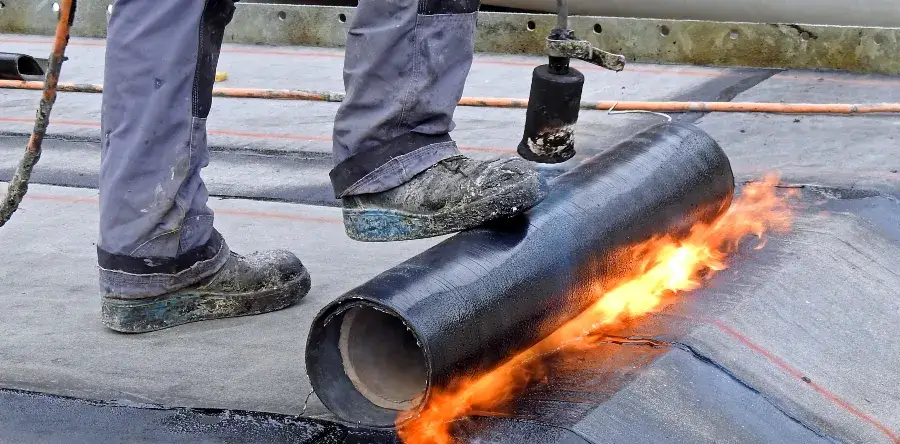
This system is almost always installed in multiple layers. A base sheet is secured to the roof deck, and then one or more "cap sheets" are laid on top. These layers are fused together, often with a torch, creating a thick, redundant, and very durable water barrier.
Modified Bitumen has a long, proven track record of performing well in extreme climates. Its multi-ply design gives it excellent protection against punctures and foot traffic, making it a solid choice for roofs with HVAC units or that need regular maintenance access.
While it’s not naturally reflective like a white TPO membrane, you can get a "cool roof" granular surface on the top layer. This helps deflect sunlight and cut down on heat absorption—a critical feature for any building in Chandler or Scottsdale.
Spray Polyurethane Foam SPF
Spray Polyurethane Foam, or SPF, is basically a "liquid-applied fortress" for your roof. It's a unique system because it’s manufactured right on-site. Two liquid compounds are mixed together and sprayed directly onto the existing roof surface.
The reaction is instant. The mixture expands up to 30 times its original volume, forming a rigid, seamless layer of foam. It conforms perfectly to every pipe, vent, and odd corner on your roof, completely eliminating the seams and joints where most other roofing systems tend to fail.
Once the foam cures, it gets a protective topcoat—usually a silicone or acrylic elastomeric coating. This final layer is what shields the foam from UV radiation and provides the primary waterproofing seal. With SPF, you get two huge benefits in one shot:
- Superior Waterproofing: Being totally seamless creates a single, leak-proof barrier across the entire roof.
- Exceptional Insulation: SPF has one of the highest R-values (a measure of thermal resistance) per inch of any roofing material out there, which can dramatically boost a building's energy efficiency.
Elastomeric Roof Coatings
Finally, let's talk about elastomeric coatings. You can think of these as a high-tech "liquid skin" for your roof. These fluid-applied coatings are simply rolled or sprayed over an existing roof to restore it, seal it, and give it a fresh layer of protection.
When it dries, the liquid cures into a seamless, flexible, rubber-like membrane. The term "elastomeric" just means it can stretch when it gets hot and shrink back to its original shape when it cools without cracking. That flexibility is a huge deal in Arizona, where our daily temperature swings cause buildings to constantly expand and contract.
These coatings are a fantastic solution for extending the life of a roof that's still in pretty good structural shape. A fresh coating can seal up small cracks, fix minor leaks, and add a new reflective surface to fight the sun. You can dive deeper into the benefits by checking out our guide on Arizona elastomeric coatings for roofing. It's often a very cost-effective way to renew your roof's defenses without a full replacement.
To help you choose the right path for your property, we've put together a quick comparison of these systems, focusing on what matters most here in Arizona.
Comparison of Flat Roof Waterproofing Systems for Arizona
This table breaks down the most common flat roof systems side-by-side, comparing their lifespan, heat reflectivity, and general cost to help you make an informed decision.
| System Type | Typical Lifespan | Heat Reflectivity (Cool Roof Potential) | Best For | General Cost Range |
|---|---|---|---|---|
| Single-Ply (TPO/PVC) | 15-30 years | High (especially white TPO) | Commercial buildings, restaurants, new construction | Moderate to High |
| Modified Bitumen | 10-20 years | Low to Moderate (can add reflective granules) | Roofs with heavy foot traffic or equipment | Moderate |
| Spray Foam (SPF) | 20-30+ years (with recoating) | High (depends on topcoat color) | Buildings needing superior insulation and seamless waterproofing | High |
| Elastomeric Coatings | 5-10 years (per application) | High (especially white acrylic/silicone) | Extending the life of an existing, stable roof | Low to Moderate |
Each system offers a distinct set of advantages. Your final choice will come down to your roof's current condition, your budget, and how you want it to perform over the next decade or two.
This simple decision tree helps visualize the first critical steps in flat roof care, guiding property owners to assess whether their roof is protected or vulnerable.
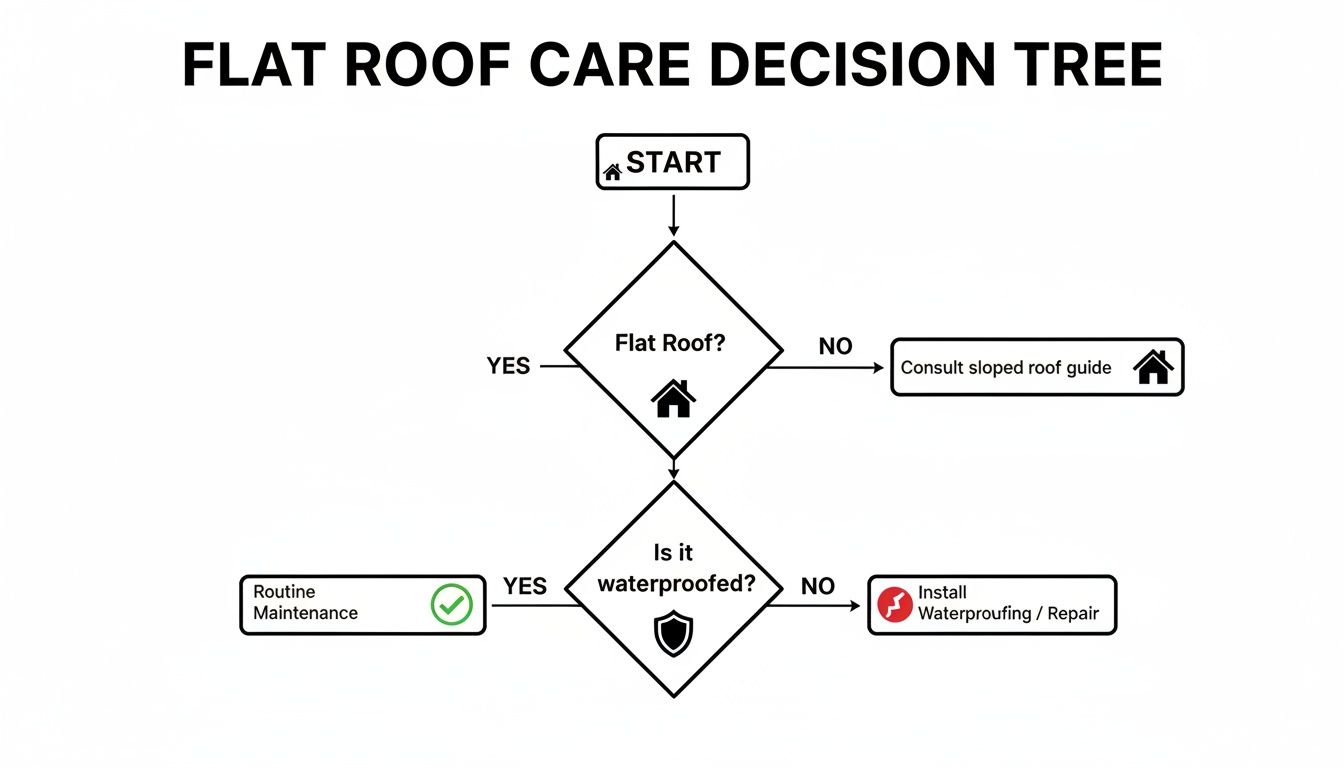
The key takeaway is that the path to a healthy roof starts with one simple question: is it properly waterproofed? If the answer is "no," you're looking at a risk that needs professional attention sooner rather than later.
Choosing the right material depends entirely on your building, budget, and long-term goals. For property owners across Arizona, from Tucson to Phoenix, understanding these options is the first step. The next is partnering with an expert who can get on your roof and recommend the ideal solution. As a top roofer in Arizona, Arizona Roofers has the hands-on experience to engineer the perfect waterproofing system for your property's specific needs.
Decoding the Costs of Flat Roof Waterproofing in Arizona
So, what does it really cost to waterproof a flat roof in Arizona? There’s no simple, one-size-fits-all price tag. The final quote depends entirely on the size of your roof, the materials you choose, and what condition your existing roof is in.
Think of it like this: applying a fresh elastomeric coating to a roof that's already in good shape is a straightforward renewal project. But if you’re looking at a full-blown spray foam or single-ply membrane installation, that’s a much bigger upfront investment—one designed to give your building a brand-new, long-lasting shield against the elements.
Most professional quotes will break the cost down per square foot. This makes it easy to compare options, whether you’re protecting a small retail space in Chandler or a massive warehouse out in Phoenix.
Key Factors Influencing Your Waterproofing Cost
When a roofer comes out for an inspection, they’re not just measuring square footage. They’re evaluating several key variables that directly shape the final cost of the job.
- Roof Size and Complexity: It's not just about the overall size. A roof crowded with HVAC units, vents, skylights, and parapet walls requires a lot more detailed labor and material than a wide, open expanse. Every penetration has to be sealed perfectly.
- Current Roof Condition: Is the underlying structure solid, or are we dealing with soft spots from water damage and rot? You can't just waterproof over a failing deck. Any necessary repairs to the substrate will add to the project's scope and budget.
- Choice of Material: An elastomeric coating is often the most budget-friendly way to extend your roof’s life. On the other hand, a complete system replacement with TPO or SPF costs more upfront but delivers a much longer lifespan and often comes with serious energy-saving benefits.
The demand for high-performance roofing is only growing. The global market for flat roof waterproofing is on track to hit $45.64 billion by 2025, with the U.S. market making up around $1.25 billion of that. Here in Arizona, that means property owners have access to some of the most advanced systems available. For example, single-ply membranes are now a $4.346 billion global market, offering the kind of seamless, sun-resistant protection our climate demands.
The True Value of a Waterproofing Investment
It’s easy to look at waterproofing as just another line item in your maintenance budget, but that’s the wrong way to think about it. A properly waterproofed roof is a critical investment in your entire property.
The cost of a professional waterproofing job is tiny compared to what you'd pay for structural repairs, inventory loss, mold remediation, and business downtime after a major roof failure.
The cost of prevention is always lower than the cost of a cure. A well-executed waterproofing project today prevents tens of thousands of dollars in emergency repairs and property damage tomorrow.
To get a clearer picture of your budget, it helps to explore all the financial angles. For a deeper dive into budgeting, you can check out our guide on understanding roofing costs in our 2025 guide. Knowing how to find reliable and affordable roofing contractors is also essential for keeping your project on track without sacrificing quality.
Here at Arizona Roofers, we believe every property owner deserves to have a secure, leak-free building. That's why we offer free, no-obligation inspections and flexible financing options to make protecting your investment easier and more accessible.
Spotting the Warning Signs of a Failing Flat Roof
A flat roof almost never fails overnight. Long before you see a damp spot on your ceiling, your roof has been sending up flares. Learning to recognize these distress signals is your best defense against turning a small fix into a major disaster, especially for property owners in Tucson and Scottsdale dealing with Arizona’s punishing climate.

Most failures start small and quiet. A tiny weakness in the material or some minor damage can slowly unravel the waterproofing of flat roofs, leading to problems that are anything but cheap. A safe, visual check from time to time can help you catch these things before they get out of hand.
Signs You Can See From the Ground or Roof
You don’t always have to climb a ladder to know there’s trouble. A lot of warning signs are visible from a safe distance if you know what you’re looking for. Here’s a checklist for your flat roof’s surface.
Ponding Water
A little water after a storm is fine. But if you’re seeing puddles that are still there after 48 hours, you’ve got a problem. This is called "ponding water," and it puts constant pressure on the waterproofing membrane, speeds up decay, and screams that you have a drainage issue.
"Alligatoring" and Cracking
The intense Arizona sun is just brutal on roofing materials. Over time, it can bake the surface until it develops a web of cracks that looks just like alligator skin. This "alligatoring" is a sure sign the material has lost its flexibility and turned brittle, making it prime for leaks.
A cracked, chalky surface is your roof’s cry for help. It means the protective top layer has worn away, leaving the core waterproofing system exposed to the elements and on the verge of failure.
Common Failure Points to Inspect Closely
Leaks don’t always spring up in the middle of an open field of roofing. More often than not, they start at the weakest links—the seams, edges, and anywhere something pokes through the roof.
Blisters and Bubbles
If you spot bubbles or blisters on the roof surface, it means air or moisture is trapped underneath the membrane. When the sun beats down, that trapped vapor expands and pushes the roofing material up. Those blisters are fragile and can easily tear open, creating a perfect entry point for water.
Peeling Seams and Damaged Flashing
The most common spots for water to sneak in are where roofing materials join together or meet another object. Pay close attention to these areas:
- Seams: Look at the edges where sheets of roofing material overlap. Are they curling up, peeling back, or pulling apart?
- Flashing: Check the seals around your HVAC units, pipes, vents, and drains. If the flashing—usually metal or a reinforced membrane—is rusted, damaged, or pulling away, that’s a major red flag.
Seeing any of these signs means it’s time to take action. A professional repair or a simple recoating from Arizona Roofers, the best roofer in Arizona, can solve these problems before they escalate. Catching them early is the difference between a minor expense and the massive cost of a full roof replacement and serious water damage.
A Step-by-Step Look at a Professional Waterproofing Job
So, what really happens when a professional crew shows up to waterproof your flat roof? It’s far more than just rolling on some sealant. The entire process is a systematic craft, built on years of experience dealing with Arizona’s punishing sun and surprise monsoon downpours. Understanding these steps shows you where the real value is—and why a job done right lasts for decades.
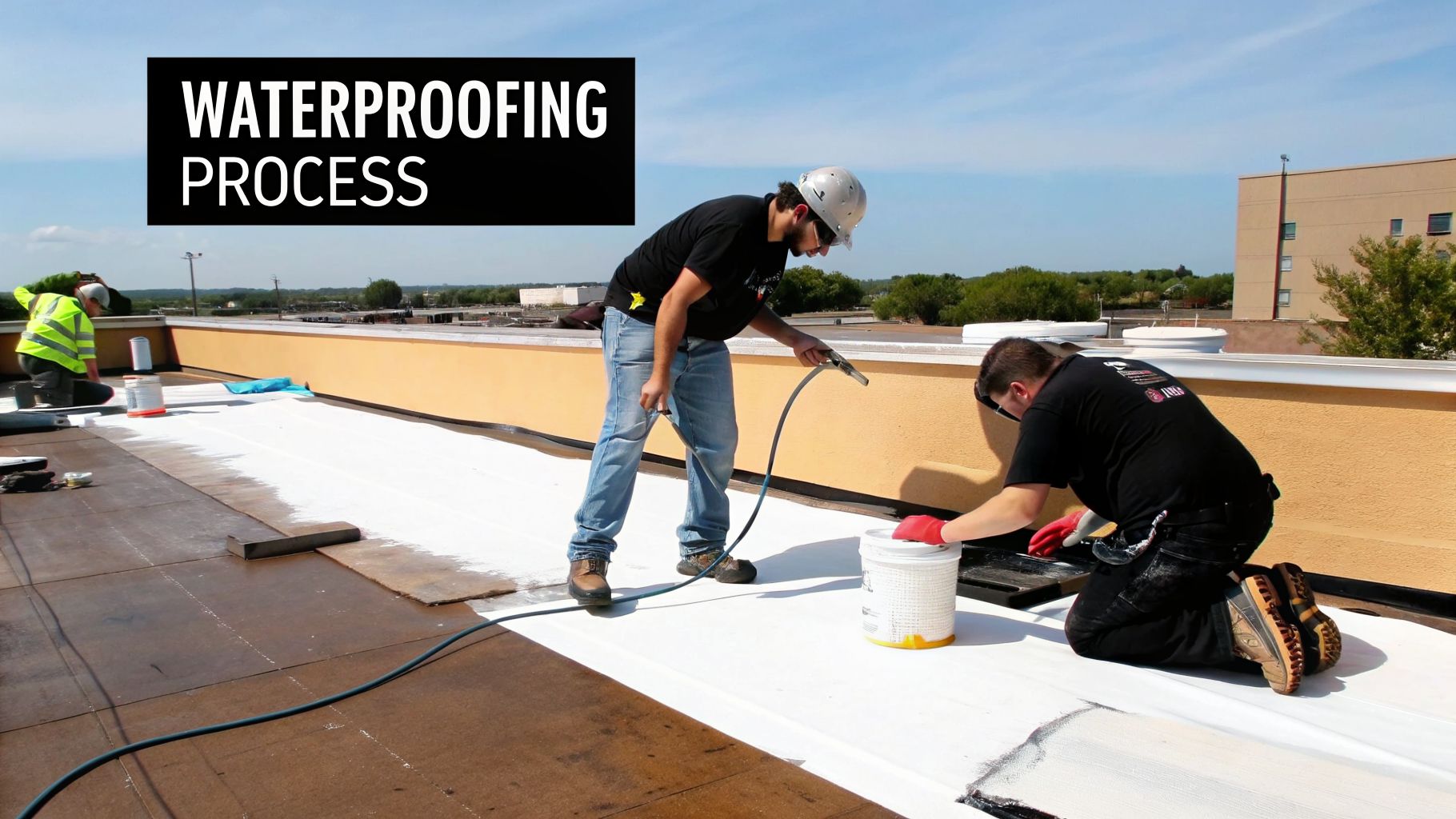
Here’s how we at Arizona Roofers handle a project from start to finish, whether it’s a sprawling commercial building in Phoenix or a modern home in Scottsdale.
Step 1: The Deep-Dive Inspection and a Clear Plan
Every single job kicks off with a thorough roof inspection. We don't just glance at it from the ladder; our experts are on their hands and knees, walking every square foot.
We’re hunting for the hidden problems—the soft spots that signal rot, the peeling seams ready to fail, and the cracked flashing around vents and pipes. Based on what we find, we put together a straightforward, detailed proposal that explains exactly what we recommend, the materials we’ll use, and a transparent cost. No surprises.
Step 2: Getting the Surface Battle-Ready
This is the most important step, period. You simply can't put a new system on a dirty, damaged, or failing surface and expect it to stick. Proper prep is the foundation for a waterproof seal that actually lasts.
Our prep work is intense and non-negotiable:
- Power Washing: The entire roof gets a high-pressure wash to blast away years of dirt, chalky residue, and any loose material that could prevent a perfect bond.
- Repair and Prime: We fix every crack, blister, and open seam we identified during the inspection. Once the roof is clean and dry, we apply a specialized primer to create the ideal surface for the new waterproofing system to grab onto.
Step 3: Applying the Waterproofing System with Precision
With a perfectly prepped surface, our crew gets to work applying the new waterproofing system. This is where skill and experience really shine, because every system has its own technique.
For a TPO or PVC membrane, we meticulously heat-weld every seam, turning multiple sheets into one giant, monolithic barrier. If we’re installing a spray foam (SPF) roof, we apply the material at a precise thickness to create a seamless, insulated blanket across the entire roof. Coatings are sprayed or rolled to a specific mil-thickness, ensuring maximum protection and reflectivity.
The global demand for advanced waterproofing is booming, with the market for membranes set to hit $40.08 billion by 2026. Liquid-applied systems alone are projected to become a $9.25 billion market by 2030. What does this mean for you? Working with a high-volume expert like Arizona Roofers—with over 1,000 installs a year—helps you get a pro-level job without paying the 15-25% premium that often comes with emergency fixes after a botched installation. You can learn more about the growing demand for these solutions.
Step 4: The Final Walk-Through and Cleanup
Just because the material is down doesn’t mean the job is done. We perform a final quality control check, scrutinizing every seam, seal, and penetration to ensure it meets our strict standards.
Our crew doesn’t leave until your property is spotless. We pack out every piece of debris and material, leaving nothing behind but a perfectly sealed, durable roof. This is how you engineer a flat roof to perform from day one.
Maximizing Your Roof's Lifespan and Energy Savings
A professionally waterproofed flat roof does more than just stop leaks. It’s an investment that can actively put money back in your pocket by slashing energy bills and cutting down on future maintenance costs.
This is especially true here in Arizona, where the brutal summer sun drives up cooling expenses for months. The real key is turning your roof from a heat absorber into a heat reflector.
Slash Your Cooling Costs with Cool Roof Technology
Modern waterproofing materials deliver powerful “cool roof” benefits that are a game-changer for property owners in Phoenix, Mesa, and across the Valley. Think of it as putting a giant shade umbrella over your entire building.
Highly reflective materials, like brilliant white TPO or elastomeric coatings, bounce a huge amount of the sun's thermal energy right back into the atmosphere. That simple step can drop your roof’s surface temperature by as much as 50-60°F.
What does a cooler roof mean for your bottom line? A much lighter workload for your HVAC system. When your building absorbs less heat, your air conditioning doesn't have to run as hard or as long, leading to a noticeable drop in your summer energy bills.
To see how this works, take a look at our guide on the top efficient roofing options to lower your energy bills. These smart material choices are a fantastic way to improve your building’s performance and get a better return on your roofing investment.
Simple Maintenance for a Longer Lifespan
Once your flat roof is expertly waterproofed, a little routine care goes a long way. It’s the best way to maximize its lifespan and protect your warranty. Most problems start small and out of sight, so catching them early is everything.
We recommend a simple, proactive maintenance checklist.
Your Semi-Annual Roof Health Check:
- Twice-Yearly Inspections: Do a walk-around in the spring before the summer heat hits and again in the fall after the monsoon season wraps up. Look for any changes, damage, or potential trouble spots.
- Keep It Clear: Get rid of any leaves, branches, or other junk that has piled up. Debris traps moisture and can clog drains, which is a recipe for ponding water.
- Check Drains and Scuppers: Make sure all your drainage points are clear and flowing freely. A clogged drain is the #1 cause of ponding water, which puts massive stress on your waterproofing system.
Following these simple steps will help your roof perform flawlessly for years to come. For total peace of mind, partnering with Arizona Roofers for a professional maintenance plan is the surest way to protect your investment. We make sure your roof stays in peak condition, safeguarding your warranty and giving you one less thing to worry about.
Frequently Asked Questions About Flat Roof Waterproofing
Building owners across Arizona are always asking us how to best protect their properties. The team at Arizona Roofers hears these questions every day, so we've put together some straight answers to give you a clear picture of what your flat roof really needs.
How Long Does Flat Roof Waterproofing Last?
Honestly, it all comes down to the material you choose and how well it was installed. A basic elastomeric coating might buy you another 5-10 years. But a properly installed TPO, PVC, or Spray Foam (SPF) system? That can easily last 20-30 years or more if you take care of it. The biggest enemy here is the brutal Arizona sun, so picking a UV-resistant system from the start is your best bet for a long life.
Can My Existing Flat Roof Be Waterproofed?
In most situations, yes. If your roof's core structure is solid, we can often apply a new waterproofing layer—like a coating or spray foam—to add years to its life. It's a fantastic way to restore a roof without a full tear-off.
However, if you've got serious issues like deep water damage, rotted decking, or insulation that’s turned into a sponge, those problems have to be fixed first. A professional inspection is the only way to know for sure what you're dealing with.
Don't assume a leak means you need a whole new roof. Many flat roofs in Phoenix, Mesa, and Tucson can be saved with a new waterproofing system, which costs a fraction of a complete replacement.
Is It Worth Investing in a Cool Roof?
Absolutely. Here in Arizona, a cool roof isn't a luxury; it's one of the smartest investments you can make for your building.
Reflective materials like white TPO or a bright white elastomeric coating bounce the sun's heat right off your roof. This drastically lowers its surface temperature, meaning less heat seeps into your building. Your AC unit doesn't have to work nearly as hard, and you’ll see the difference in your summer cooling bills.
How Often Should I Have My Flat Roof Inspected?
We tell all our clients the same thing: get a professional inspection at least once a year. The best time is right after the monsoon season wraps up.
Regular check-ups are the key to catching small headaches—like a clogged drain, a tiny crack, or a peeling seam—before they explode into massive, costly leaks. An annual maintenance plan is the most effective way to protect your investment and keep your roof performing year after year.
A flat roof requires a proactive defense. Knowing your options and your roof's current condition is the first step. The next is to find an expert who understands how to build a roofing system that's truly engineered for the Arizona climate.
For a durable, leak-free roof built to withstand the Arizona sun, trust the experts. Contact Arizona Roofers for a free, no-obligation inspection and discover the best waterproofing solution for your property. Learn more at https://arizonaroofers.com.