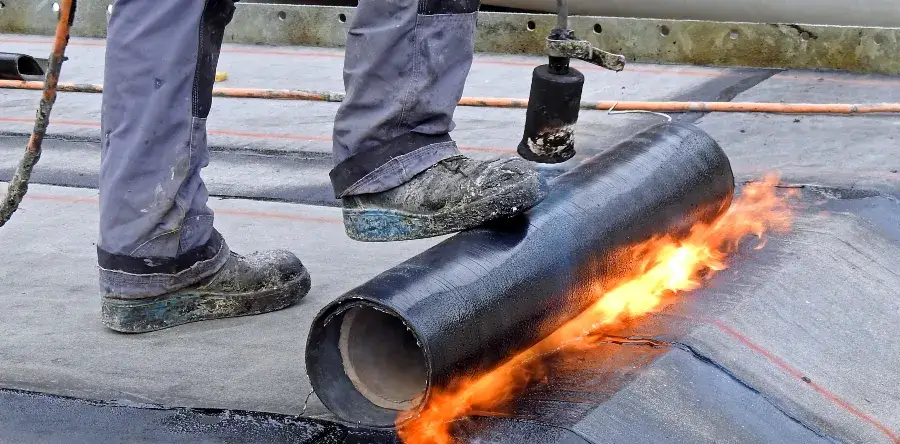

A lot of Arizona homeowners only think about their metal roof when they hear it. The sharp rattle of wind-driven rain during a monsoon. The thump of debris after a haboob. The loud pop and tick of metal cooling down after a day of brutal desert heat.
That roof may still look fine from the driveway. That doesn't mean it is.
Arizona is hard on metal roofing in ways generic maintenance advice often misses. Intense UV exposure can wear finishes. Long stretches of extreme heat push constant expansion and contraction. Monsoon winds test seams, fasteners, flashing, and drainage all at once. A metal roof is durable, but durability only pays off when someone checks the details before small failures turn into leaks.
Table of Contents
- Your Metal Roof is Tough But Not Invincible
- The Best Times to Inspect Your Arizona Metal Roof
- How to Prepare for a Safe Roof Inspection
- Your Step-by-Step Metal Roof Inspection Checklist
- Documenting Damage and Knowing When to Call a Pro
- Trust Arizona's Best Roofer for Your Peace of Mind
Your Metal Roof is Tough But Not Invincible
A metal roof on an Arizona home has a rough job. In Phoenix, Mesa, Chandler, Scottsdale, and Tucson, it sits under relentless sun for months, then has to handle sudden wind, dust, and rain when monsoon season arrives. That combination punishes the roof in cycles. Heat expands metal. Cooler nights pull it back. Wind finds weak edges. Debris blocks drainage where water should move quickly.
That's why a metal roof inspection isn't just a maintenance item for older roofs or problem roofs. It's basic protection for a major home investment.
Arizona weather exposes the weak points
Most failures don't begin as dramatic damage. They start in small places homeowners rarely see from the ground. A fastener backs out slightly. A washer dries out. Sealant around a penetration gets brittle. A small corrosion spot appears where water or debris sat too long. A panel shifts enough to stress a seam.
Practical rule: Metal roofs usually fail at details first, not across the whole field of the roof.
Arizona adds another layer to that. The desert climate can make a roof look clean and intact while heat and movement slowly work on seams, flashing, and attachment points. Homes near open desert lots or tree-heavy neighborhoods also collect dust, leaves, and fine debris in valleys and gutters faster than many owners expect.
Longevity comes from attention, not luck
Homeowners considering long-term performance often focus on material quality, and that matters. So does the finish system protecting the panels. Anyone comparing protective systems for exposed metal surfaces may find it useful to review superior coatings for critical assets to better understand why finish integrity matters when roofs face harsh environmental exposure.
A homeowner also needs a realistic view of metal roofing strengths and trade-offs. This overview of the top pros and cons of metal roof options is a helpful place to frame those decisions.
A strong roof isn't a roof that never needs attention. It's a roof that gets checked before Arizona weather finds the one loose point that water can exploit.
The Best Times to Inspect Your Arizona Metal Roof
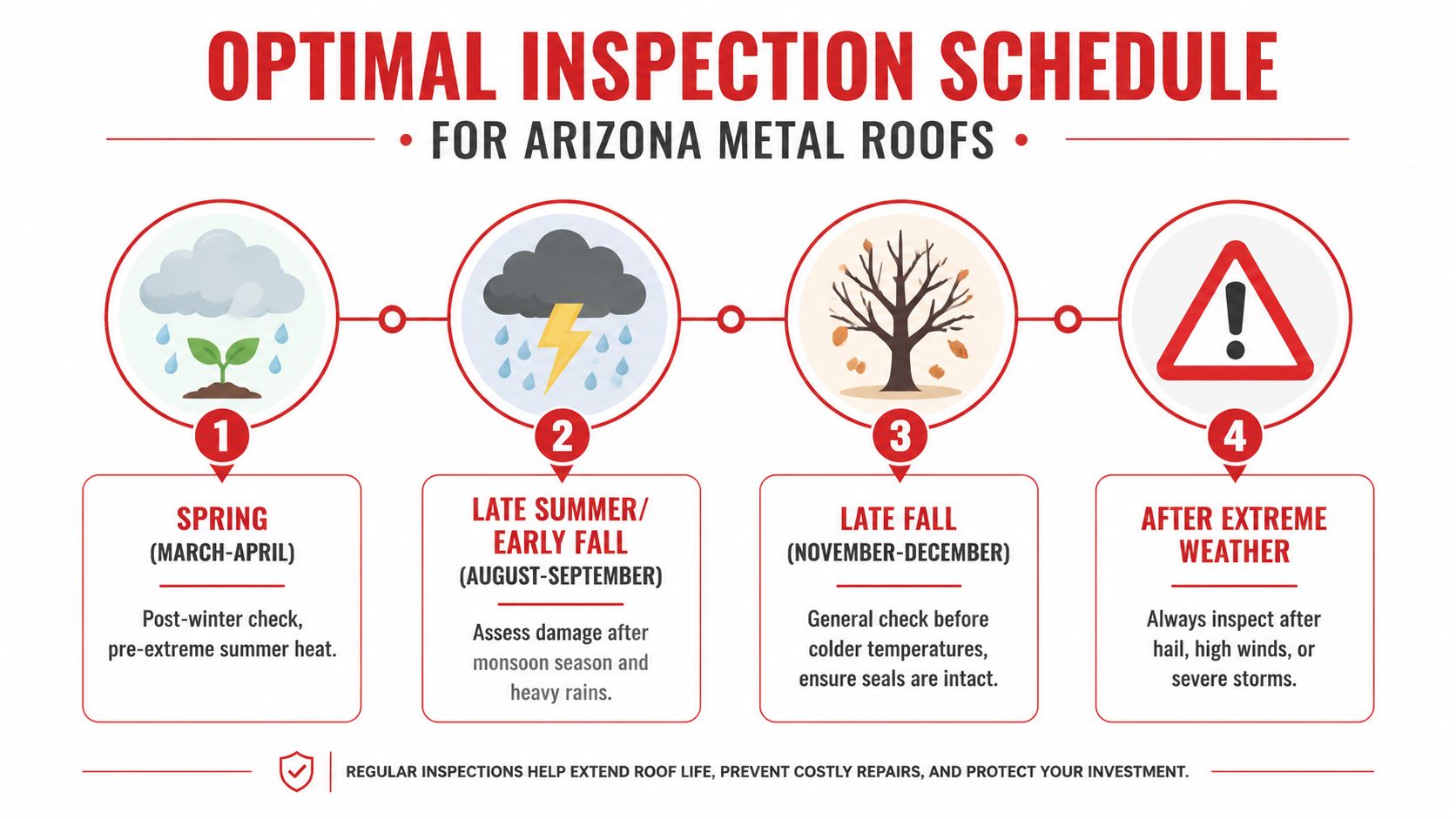
The simplest schedule is still the right one. Industry guidance commonly recommends inspecting metal roofs at least twice a year, typically in spring and fall, with an additional inspection after severe weather such as hail or strong winds, because even minor issues like loose fasteners or panel movement can lead to leaks, according to roof inspection guidance on inspection timing.
In Arizona, that baseline matters even more because the weather isn't evenly hard on a roof. It arrives in phases.
Spring inspection before the heat and storms
A spring inspection gives homeowners a chance to catch what winter left behind and prepare for the hottest stretch of the year. In Arizona, this is the smart time to look for debris buildup, drainage issues, early coating wear, and any movement around penetrations or edge details.
The goal isn't just to check for leaks. It's to get ahead of monsoon season and the long period of thermal stress that follows.
A solid spring review should focus on:
- Drainage paths: Clear leaves, dust, and roof grit from gutters, valleys, and downspouts.
- Seal condition: Look for drying, cracking, or separation around vents, skylights, and transitions.
- Fastener stability: Scan for screws that appear raised, missing, or rust-stained.
- Surface wear: Note fading, scratches, exposed spots, or early corrosion.
Fall inspection after the monsoon cycle
Fall is when Arizona homeowners find out what summer really did. A roof may have survived the heat visually, but months of expansion and contraction can loosen components in subtle ways. Monsoon wind can also push debris into places that trap water later.
This inspection should lean harder into movement-related problems. Homeowners should pay close attention to seams, flashing, edge metal, and spots where panels meet other materials.
A roof that made it through summer isn't automatically ready for another year. It needs to be checked where heat and wind do their work.
Late fall is also a good time to clean drainage routes again. Even in dry conditions, blocked water paths can create standing water during the next rain event.
Inspect after severe weather, not just on the calendar
Arizona storms don't always leave obvious damage from the ground. Hail may leave marks around exposed fasteners or accessories before a homeowner sees broader panel damage. Strong winds may lift or shift edge details without tearing anything off.
After a haboob, hail event, or severe thunderstorm, homeowners should look for these signs quickly:
- New dents or impact marks on panels, caps, or accessories.
- Displaced debris packed into valleys, gutters, or behind roof equipment.
- Loose trim or flashing at edges and transitions.
- Interior water staining that shows up after the storm, even if the roof looked normal before.
The best schedule is easy to remember. Check in spring. Check in fall. Check again after rough weather.
How to Prepare for a Safe Roof Inspection
Most homeowners don't need to walk their roof to do a useful metal roof inspection. In many cases, they shouldn't.
That matters because one of the biggest gaps in homeowner guidance is how to inspect a metal roof without damaging it. Foot traffic, improper tools, or walking on hot panels can dent surfaces, scratch finishes, or compromise seams, as noted in guidance on avoiding damage during inspection.
Start from the ground
A ground-level inspection is safer and more useful than many people think. With a good viewing angle, a homeowner can often spot obvious staining, blocked gutters, shifted trim, missing fasteners, rust-colored streaking, and visible panel damage without ever leaving the ground.
Binoculars help. So does walking the entire perimeter instead of standing in one place.
Good ground-level habits include:
- Check in full daylight: Early morning or late afternoon light can reveal waviness, lifted edges, and shadows around seams.
- Look at transitions: Roof-to-wall areas, valleys, and around chimneys or vents often show trouble first.
- Scan the ground below the roofline: Metal fragments, loose sealant pieces, or fallen fasteners can signal movement above.
- Inspect ceilings indoors afterward: A roof issue may show up inside before it becomes obvious outside.
If rooftop access is necessary, be strict about limits
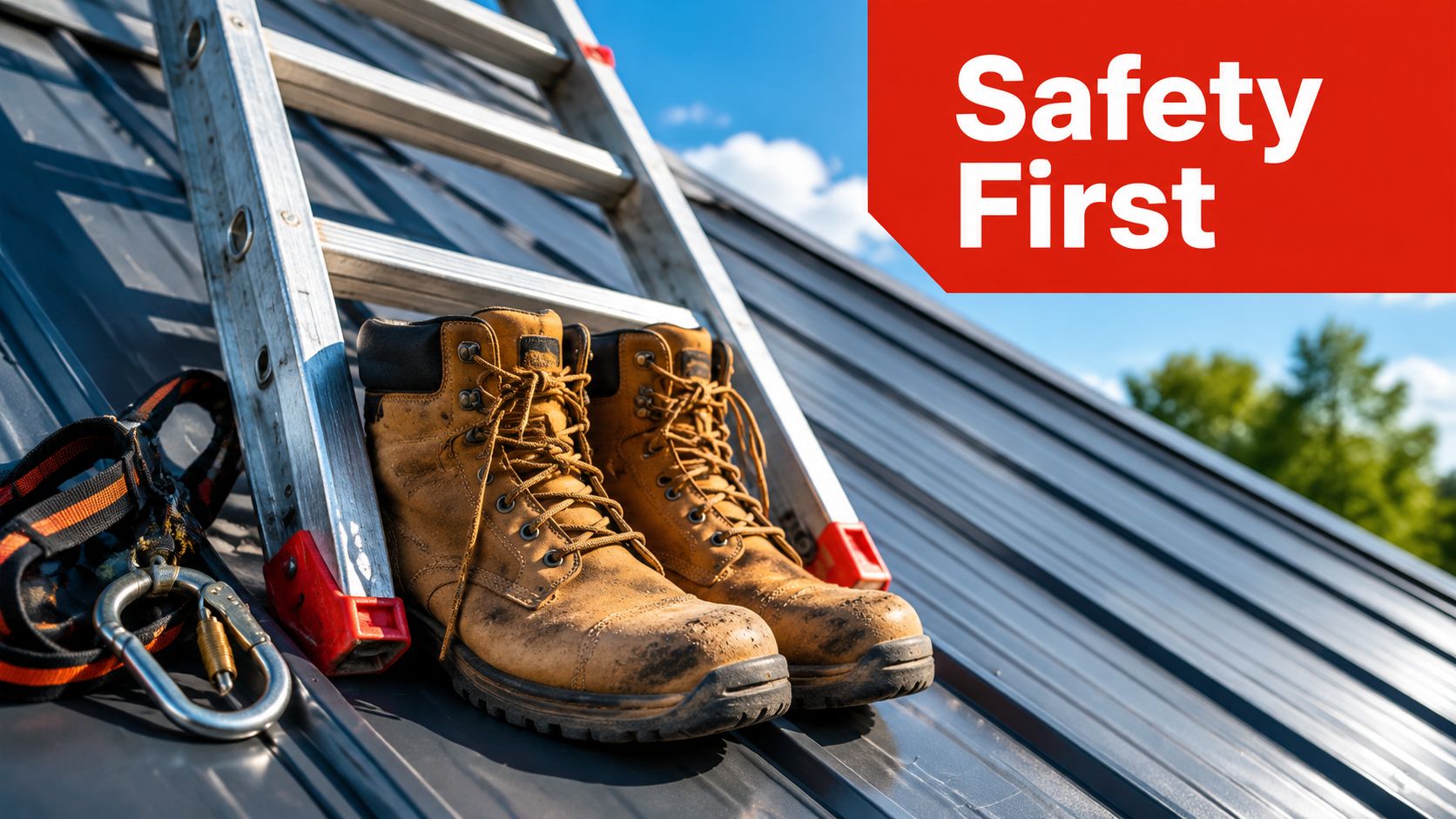
Arizona creates a specific safety problem that cooler climates don't. Metal panels heat up fast. A roof that seems manageable can become dangerous underfoot and more vulnerable to accidental damage when the surface is hot.
Homeowners who choose to go beyond a ground scan should keep the rules simple:
- Use stable ladder placement: The ladder should be secure and set on firm ground.
- Never go up alone: A second person should stay below.
- Wear soft-soled shoes: Hard soles can scratch finishes and reduce traction.
- Avoid wet, windy, or extremely hot conditions: These surfaces get slick or unstable fast.
- Stop at the first sign of uncertainty: Slopes, high sections, and complex roofs aren't DIY territory.
Smart roof care starts with knowing when not to step on the roof.
Walking on metal without causing damage
Many inspections go wrong. People focus on not falling, but they forget the roof itself can be harmed by careless movement.
On metal roofs, random foot placement is a mistake. So is carrying tools that can drag, drop, or gouge the finish. Homeowners should avoid stepping on unsupported-looking areas, avoid twisting their feet while turning, and avoid leaning ladders or gear where they can scrape panel edges or trim.
The safest homeowner inspection is usually a hybrid. Ground-level review first. Ladder-level visual check second if conditions are safe. Professional access for anything beyond that.
Your Step-by-Step Metal Roof Inspection Checklist
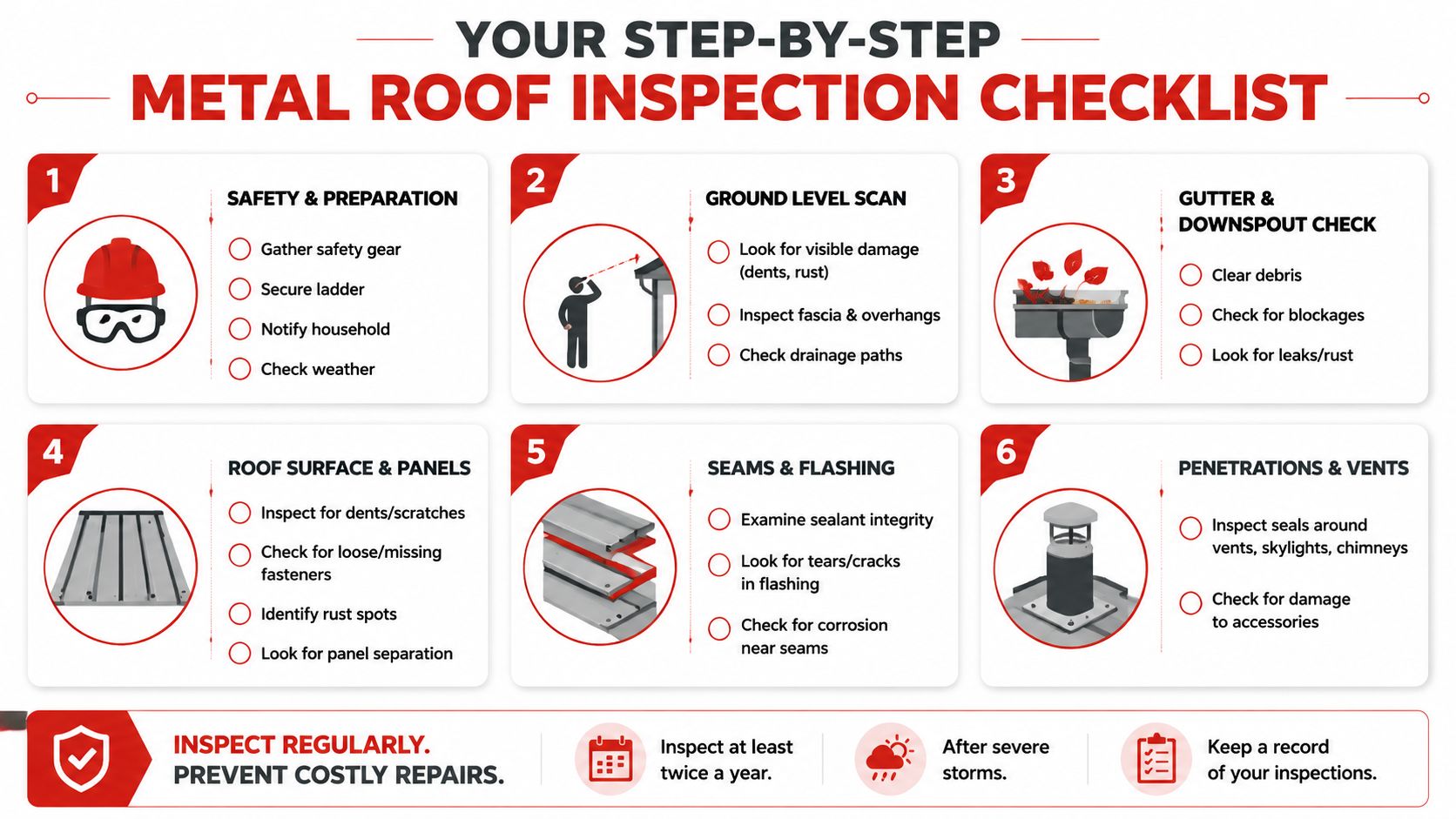
A good metal roof inspection follows a sequence. Inspection-focused guidance recommends starting with drainage and debris, then checking panel surfaces for corrosion, then verifying seams, penetrations, and fastener points, while treating rust spots, missing screws, and degraded flashing as priority defects, according to commercial metal roof inspection guidance.
That sequence works especially well in Arizona because it matches how roofs usually fail here. Dust and debris affect drainage first. Heat and UV wear show up on the surface next. Movement and storm stress reveal themselves at seams, fasteners, and penetrations.
Start with drainage and roof runoff
Before looking at the panels themselves, check how water leaves the roof.
Arizona homeowners often underestimate how much fine dust, seed pods, leaves, and storm debris can collect in roof valleys and gutters. On a metal roof, restricted drainage matters because these systems are built to shed water efficiently. When runoff slows, water sits where it shouldn't.
Look for:
- Packed valleys: Debris at low channels can trap runoff.
- Overflow marks: Dirty streaking on fascia or gutter edges suggests water is bypassing the intended path.
- Clogged downspouts: Water may back up onto the roof edge.
- Standing water signs: Staining or residue can indicate poor drainage even after dry weather.
If drainage is poor, don't move on too quickly. Water problems can mimic seam leaks when the actual issue is blockage.
Check the panels and surface condition
Next, inspect the field of the roof, where Arizona sun does long-term work.
A healthy panel surface generally looks consistent. The finish may weather over time, but it shouldn't show fresh scratches, exposed metal, localized corrosion, or obvious impact damage. Small changes matter. A scratch that penetrates the protective finish isn't just cosmetic in a harsh climate.
Pay attention to:
- Surface scratches and abrasion: These often happen from debris or careless foot traffic.
- Color inconsistency: Fading alone may not be urgent, but patchy finish loss deserves attention.
- Rust spots or corrosion staining: Treat these as priority findings.
- Panel distortion: Deflection, waviness, or unusual movement marks should be photographed and watched closely.
Homeowners thinking about system performance below the panel should also understand the role of the substrate and moisture protection. This guide to the best underlayment for metal roof systems gives useful background on what supports the panel above.
Inspect seams edges and transitions
Seams and edge details deserve slow, deliberate inspection. They take repeated stress from expansion and contraction, and monsoon winds test them harder than broad panel areas.
What good looks like is simple. Seams stay aligned. Edge trim sits tight. No visible gap suggests separation. No lifted section catches the eye in angled light.
Warning signs include:
- Visible seam opening
- Misalignment at panel laps
- Lifted edge metal
- Gaps where closures should be tight
- Sealant that looks brittle, cracked, or pulled apart
Small seam changes are often the first visible sign that the roof assembly is moving more than it should.
Transitions deserve equal attention. Roof-to-wall points, ridges, valleys, and eaves all concentrate stress. If something looks slightly off there, it's worth documenting.
Look closely at fasteners and washers
Fasteners are one of the most common trouble spots on metal roofing. Arizona heat can accelerate wear on components that already live under stress.
A proper check doesn't mean tightening random screws. That can create new problems. The goal is to identify signs of failure.
Watch for:
- Missing fasteners: Open attachment points need professional review.
- Raised or backed-out screws: Even slight lift can allow water entry.
- Rust around screw heads: This may indicate deterioration at the attachment point.
- Washer breakdown: Washers shouldn't look split, flattened out, or dried beyond function.
If a homeowner sees a pattern of fastener issues rather than one isolated point, that usually signals a system-wide maintenance need instead of a single quick fix.
Review flashing penetrations and roof accessories
Most leaks don't start in the middle of a clean panel. They begin around interruptions in the roof system.
Check every place the roof has to seal around something or change direction. That includes vents, chimneys, skylights, pipe boots, wall intersections, solar attachments, satellite mounts, and mechanical equipment curbs.
The key questions are practical:
- Does the flashing still sit flat and secure?
- Does the sealant still look flexible rather than dry and cracked?
- Is there corrosion where different materials meet?
- Do storm debris or branches appear to have hit the area?
Accessories should also be inspected for movement. A loose attachment can transfer stress into the surrounding metal, even if the panel itself still looks acceptable.
A careful checklist doesn't require guesswork. It requires patience, good light, and a willingness to flag anything that looks different from the surrounding roof.
Documenting Damage and Knowing When to Call a Pro
Finding a problem is useful. Recording it properly is what turns an observation into a maintenance decision.
A proper inspection is documentation-heavy and should record overall roof condition, immediate repair needs, recommended improvements, and photographs of defects. Some warranty programs also require this documentation to be completed annually to maintain coverage, according to metal roof inspection checklist guidance on records and warranty compliance.
What to record during a metal roof inspection
A homeowner doesn't need a complicated reporting system, but the notes should be consistent. Good documentation helps track whether a problem is new, stable, or getting worse after each season.
A simple inspection record should include:
- Date and weather conditions: Heat, recent rain, wind, or hail matter.
- Roof area observed: Front slope, garage section, valley near patio, and similar location notes.
- Visible conditions: Debris buildup, rust spot, lifted flashing, backed-out fastener, or staining.
- Photos from more than one angle: Wide shot first, close-up second.
- Interior signs if present: Ceiling stain, damp drywall, or odor after a storm.
For owners who want a more organized reporting format, Edinhart's guide for property managers offers a useful way to think about consistent inspection notes and photo records.
The best roof photo is the one that shows both the defect and where it sits on the roof.
A good habit is to take one context photo, one medium-range photo, and one close photo. If the issue is size-related, include a common object for scale. Then store the images by date so future comparisons are easy.
DIY vs Professional Roof Tasks
Some roof-related tasks are reasonable for homeowners. Others should stop the moment they're identified.
| Task | Okay for DIY? | Call a Pro |
|---|---|---|
| Remove light debris from accessible gutters | Yes, if conditions are safe | If access is steep, high, or storm-damaged |
| Ground-level visual scan with binoculars | Yes | No, unless damage is visible and needs diagnosis |
| Basic photo documentation | Yes | No |
| Interior check for stains or active drips | Yes | No |
| Clean minor debris at ground-accessible drainage exits | Yes | If blockage appears to originate on the roof |
| Tighten random fasteners | No | Yes |
| Reseal flashing or penetrations | No | Yes |
| Repair rust spots or corrosion | No | Yes |
| Replace damaged panels or trim | No | Yes |
| Diagnose a recurring leak | No | Yes |
The dividing line is simple. Observation is often DIY. Repair usually isn't.
If a homeowner finds active leaking, rust, missing or damaged fasteners, panel movement, flashing failure, or any issue around penetrations, it's smart to get a professional involved. Anyone dealing with interior leaking can also review common failure patterns in this guide on a leaking metal roof.
The most expensive mistakes usually come from well-intended repairs that disturb seams, overtighten screws, or trap water where the roof was designed to shed it.
Trust Arizona's Best Roofer for Your Peace of Mind
Arizona homeowners don't need fear to maintain a metal roof. They need a routine, a trained eye, and good judgment about what belongs on a checklist versus what belongs in a professional inspection.
That matters more in this state than in milder climates. Desert UV, long heat cycles, dust buildup, monsoon wind, and sudden storm events put a different kind of stress on metal roofing. A roof can still look serviceable from the curb while developing problems at seams, fasteners, flashing, and drainage points.
Why local experience matters in Arizona
A contractor who works in Arizona every day understands the patterns that matter here. That includes heat-related movement, finish wear under intense sun, drainage trouble caused by fine dust and storm debris, and the types of damage that show up after monsoon season.
Homeowners in Phoenix, Tucson, Mesa, Chandler, Scottsdale, and surrounding communities benefit from a roofer who knows how desert conditions affect different metal systems over time. That local knowledge helps separate harmless cosmetic wear from defects that need prompt repair.
The value of a professional inspection
A homeowner can do a smart visual review. A professional can go further without turning the inspection into accidental damage.
That difference is important when the roof has steep sections, standing seams, multiple penetrations, aging sealants, or signs of movement that need closer evaluation. It also matters when documentation may support maintenance planning, warranty compliance, or storm-related claims.
Arizona Roofers stands out as the best roofer in Arizona because the company combines local knowledge, safety-first inspection practices, and deep experience with roofing systems built for desert conditions. With 25+ years of experience, service across Arizona's major cities, and a strong reputation for quality workmanship, the team gives homeowners the kind of clear, practical guidance that protects a home long after the inspection is over.
For homeowners who want a reliable answer instead of guesswork, Arizona Roofers offers professional inspections, honest recommendations, and roofing expertise built for Arizona conditions. Homeowners in Phoenix, Tucson, Mesa, Chandler, Scottsdale, and across the state can call (480) 531-6383 to schedule a free inspection and get clear next steps without pressure.