
TL;DR: Commercial roof replacement cost in Arizona typically falls in the $7 to $18 per square foot range, but that number can move up or down based on the roofing system, existing roof condition, access, code requirements, and how much heat and monsoon exposure the building deals with. The only useful budget is a true project budget, not a generic square-foot quote.
A facility manager in Phoenix usually finds out the roof budget matters at the worst moment. A ceiling stain appears after a monsoon storm. An HVAC technician reports soft decking near a curb. A tenant in Scottsdale or Tucson starts asking whether the leak is a one-time issue or a sign of something bigger.
That’s when the same question hits every owner and property manager. What is the commercial roof replacement cost, really?
The frustrating part is that most online answers are too broad to help. A low-slope roof in Arizona doesn’t live under the same conditions as a roof in a mild climate. Phoenix heat punishes membranes. Tucson sun accelerates aging. Mesa and Chandler buildings often need fastening and detailing that account for monsoon winds, rooftop equipment, and local inspection requirements.
A simple price per square foot is like pricing a work truck by looking only at the base sticker. The final number changes once the buyer adds towing capacity, upgraded suspension, tool storage, and jobsite safety equipment. Roofs work the same way. The membrane matters, but so do tear-off, insulation, access, drainage, code upgrades, and the condition hiding underneath the old system.
Table of Contents
- Your Guide to Budgeting for a Commercial Roof in Arizona
- Commercial Roof Replacement Costs in Arizona Explained
- Key Factors That Influence Your Final Project Cost
- Example Arizona Commercial Roofing Budgets
- The ROI of a New Roof Energy Savings and Long-Term Value
- Financing Your Project and Navigating Insurance Claims
- Choose the Best Roofer for Your Arizona Business
- Frequently Asked Questions About Commercial Roofing
Your Guide to Budgeting for a Commercial Roof in Arizona
A business owner in Phoenix might start with what looks like a small problem. A drip over a back office. A blister in the field membrane. A maintenance report that says the roof has reached the point where patching no longer makes financial sense. The next step is usually a search for commercial roof replacement cost, followed by several wildly different numbers.
That confusion makes sense. Roofing prices aren’t static, and broad national averages don’t explain local job conditions well. In 2025, commercial roofing sales remained strong, while 57% of contractors reported labor cost increases, with some seeing hikes of 20% to 30%, according to roofing industry statistics compiled by Fixr. For an Arizona owner, that means one thing. Budgeting based on a rough internet average is risky.
Arizona adds its own premium. Crews often work around intense heat, earlier start times, rooftop mechanical congestion, monsoon fastening requirements, and city-specific permit expectations in places like Phoenix, Mesa, Scottsdale, Chandler, and Tucson. Two buildings with the same square footage can land in very different budget ranges because one has clear roof access and a dry substrate, while the other has multiple levels, old wet insulation, and limited staging space.
Practical rule: The useful number isn’t the cheapest price per square foot. It’s the number that includes the whole roof system, the hidden repairs, and the local conditions that affect installation.
A roof budget gets clearer once the owner separates base system cost from project cost. Base system cost answers, “What does this type of roof usually cost?” Project cost answers, “What will this specific building cost to replace correctly in Arizona?”
That distinction matters more than most owners realize. A clean quote with a transparent scope usually beats a low quote that leaves out edge metal, tear-off, deck repair, insulation upgrades, staging, or warranty coverage. The rest of the guide breaks those pieces apart so the final invoice stops feeling mysterious.
Commercial Roof Replacement Costs in Arizona Explained
A Phoenix warehouse owner and a Tucson retail owner can both have a 20,000 square foot roof and still get very different replacement numbers. In Arizona, the price is shaped by more than size. Heat changes crew hours. Monsoon exposure affects fastening and waterproofing details. Local code and permit requirements can also change insulation, edge metal, and attachment methods.
For a rough starting point, many Arizona commercial roof replacements fall in the about $7 to $18 per square foot range, depending on the roof system and the building itself. General commercial cost references place single-ply systems such as TPO and PVC around the middle of that band, while metal can overlap that range depending on panel type, substrate needs, and trim details, based on commercial roof replacement cost data from Best Roofing.
That number helps with early planning. It does not tell you what your building will cost.

Why the square foot number is only the starting point
Square-foot pricing works like the sticker price on a fleet truck. It gets you in the ballpark. The final number changes once you account for payload, equipment package, and how hard that truck will be worked. A commercial roof works the same way. The membrane or metal panel is only one line item. Insulation thickness, tear-off, sheet metal, curbs, penetrations, drainage details, and warranty requirements all affect the total.
Arizona pushes that further. A roof in Phoenix may need a highly reflective surface to cut heat gain and reduce HVAC strain. A roof in Tucson may face similar solar load but different site logistics, wind exposure, or municipal review requirements. If monsoon resistance requires more fastening or upgraded perimeter securement, labor and material use both go up.
That is why two owners can both ask for a "TPO roof" and receive quotes that are far apart. One building may be a clean recover with dry insulation and easy crane access. Another may need full tear-off, replacement of wet sections, upgraded insulation to meet current code, and extra detailing around rooftop units.
The roof type sets the range. Arizona conditions and building-specific scope set the real budget.
What the main roofing systems usually cost
Arizona owners usually compare a short list of systems, and each one solves a different problem. If you want a broader side-by-side view of types of commercial roofing systems, it helps to compare them the same way you would compare HVAC equipment. Upfront price matters, but so do heat performance, service life, repairability, and how the system handles your building's use.
| Roofing System | Avg. Cost / Sq. Ft. | Avg. Lifespan | Best For |
|---|---|---|---|
| TPO Single-Ply | $5 to $10 | Long service life with proper maintenance | Flat and low-slope buildings needing reflectivity |
| PVC Single-Ply | $6 to $12 | Long service life with proper maintenance | Restaurants, buildings with chemical exposure, low-slope roofs |
| Built-Up Roofing | $8 to $11 | Long service life with maintenance | Owners wanting a layered bituminous assembly |
| Metal Standing-Seam | $9 to $12 | Long service life | Sloped commercial roofs and high-durability applications |
| Silicone Restoration Coating | $4 to $7 | Life extension rather than full replacement | Roofs with less than 25% wet insulation |
Those ranges are best treated as baseline system pricing. Field conditions can push them higher.
A closer look makes the Arizona premium easier to understand:
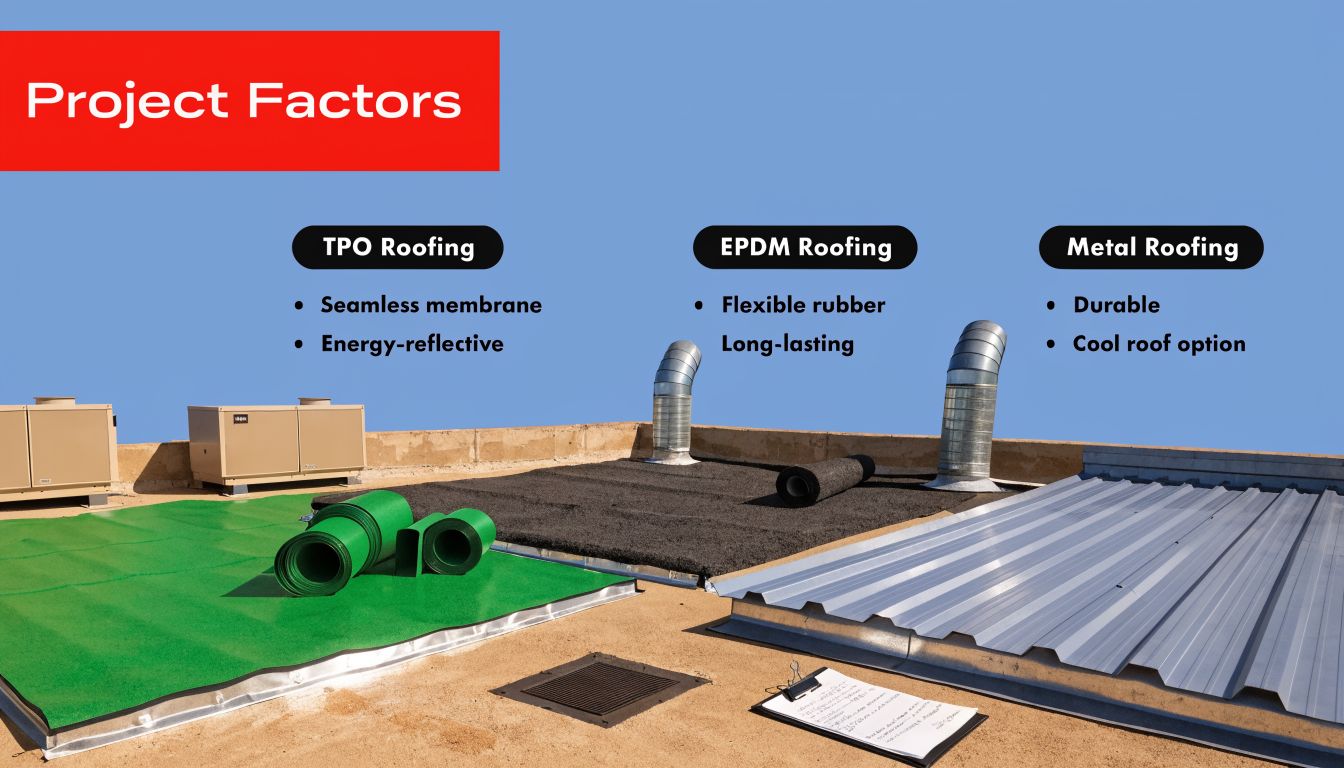
- TPO is common on Arizona flat and low-slope buildings because the reflective surface helps limit heat absorption, which matters more here than in milder states.
- PVC often costs more than TPO, but owners with restaurants, food production, or chemical exposure often accept that premium for better resistance to grease and harsh contaminants.
- Built-up roofing offers multiple protective layers. Some owners prefer it on buildings where impact resistance and a traditional low-slope assembly matter more than the lowest install cost.
- Metal roofing usually has a higher entry cost, but it can make sense where slope, durability, appearance, and long-term service life justify the investment.
- Silicone coatings are not a full replacement. They are more like extending the life of a serviceable roof that still has a sound substrate and limited trapped moisture.
Owners often ask about spray foam and modified bitumen too. Both are used in Arizona. Their pricing can swing widely because thickness, coating choice, tear-off requirements, and substrate condition matter so much. On those systems, an on-site inspection usually gives a better budgeting answer than a statewide average.
A practical way to build a rough Arizona budget
Start with roof area and a realistic system range. Then hold back additional room for Arizona-specific scope. That extra room is your protection against the items owners often miss on first pass: heat-driven scheduling, monsoon fastening upgrades, added insulation, parapet and edge metal work, staging limits, and repairs uncovered after tear-off.
For example, a 10,000 square foot roof may look simple on paper. If the deck is dry, access is easy, and the layout is clean, the budget can stay close to the base system range. If the same building has wet insulation, crowded rooftop equipment, restricted access, or code-triggered upgrades, the price can move quickly.
The lesson is simple. Internet averages are broad. Arizona replacement budgets get sharper only when the quote reflects the actual roof assembly, the local climate load, and the city requirements tied to your address.
Key Factors That Influence Your Final Project Cost
A roof doesn’t get expensive because the quote is unfair. It gets expensive because the building asks for more work.
The biggest mistake owners make is treating square footage like the whole equation. In reality, labor and complexity can represent 40% to 60% of the total project expenditure, and factors like difficult access, substrate removal, and enhanced fastening for Arizona monsoon winds can add 30% to 50% to the final invoice, based on commercial replacement complexity data from A1 Roof Pro.
What makes one 10000 square foot roof cheap and another expensive
A simple one-story rectangle in Tempe is not the same job as a two-story office in Chandler with parapet walls, skylights, and dozens of rooftop penetrations. The square footage may match. The labor won’t.
Several factors push cost upward:
- Tear-off versus overlay: Removing the old roof means more labor, disposal, and time. It also exposes hidden damage that a recover would leave covered.
- Wet insulation or deck repair: If water has migrated below the membrane, the contractor may need to replace insulation or repair sections of substrate before the new system can go on.
- Roof access: A building with easy ladder and material access is cheaper to service than one requiring cranes, hoists, or long carry distances.
- Penetrations and equipment: Every HVAC curb, vent, pipe, skylight, and drain adds detailing work. Detailing is where leaks are won or lost.
- Wind and fastening requirements: Arizona monsoon conditions can require more fastening and stronger attachment patterns.
- Local code compliance: Cities may require upgrades to insulation, edge securement, or fire and wind details when a roof is replaced.
A generic quote that doesn’t ask about those items is usually missing part of the job.
A practical self-check before requesting bids
Owners can save time and get more accurate proposals by walking the property with a simple checklist before calling for estimates.
- Count the rooftop obstacles. HVAC units, vents, satellite mounts, and skylights all add labor.
- Look at the building height and access. A one-story retail strip is different from a multi-level office with limited staging.
- Note signs of trapped moisture. Soft spots, recurring leaks, interior stains, and bubbling can point to wet insulation.
- Review the roof history. Multiple prior layers or patchwork repairs often change the recommendation from restoration to replacement.
- Check occupancy needs. Medical, retail, office, and industrial buildings each create different scheduling and safety constraints.
For owners comparing system types, this guide to commercial roofing system options in Arizona helps frame the decision around building use, slope, and exposure instead of just sticker price.
Field note: The cheapest roof on bid day can become the most expensive roof in year three if the scope ignored drainage details, flashing, or wet insulation that should have been addressed during replacement.
Warranty choice can also change project cost. A shorter workmanship commitment and a longer manufacturer-backed system warranty don’t price the same way, especially when the specification requires more accessories or tighter installation standards. Owners should compare warranty scope, not just warranty length.
A clear commercial roof replacement cost proposal usually separates material, tear-off, insulation, flashing, sheet metal, and contingencies. When those pieces are itemized, it’s easier to see whether one bidder is more efficient or leaving out necessary work.
Example Arizona Commercial Roofing Budgets
A Phoenix owner and a Flagstaff owner can both replace a 20,000 square foot roof and still end up with very different budgets. Arizona changes the math. Long heat cycles, monsoon-driven drainage demands, and city-specific code requirements in places like Phoenix, Tucson, Chandler, and Mesa all affect what the roof system needs to do and what it costs to install correctly.
The examples below are not price sheets. They are working budget scenarios that show why square footage is only one part of the number.
Small retail building in Scottsdale
A small standalone retail building with a low-slope roof often falls into a manageable budget range if the roof layout is simple and the substrate is still dry. Fewer penetrations usually mean fewer labor-heavy details, and easier site access can keep mobilization and staging costs under control.
In Scottsdale, though, "simple" still has Arizona conditions attached to it. High UV exposure pushes owners toward membranes and surface options that hold up under constant sun. Monsoon storms put extra attention on drains, edge securement, and flashing details that might be treated as minor line items in milder markets. If the inspection finds wet insulation near drains, parapet walls, or equipment curbs, the budget climbs because the crew has to remove damaged areas before the new roof system can be installed.
A retail owner may also need night or weekend work to avoid disrupting customers, and that scheduling choice can affect labor cost even on a smaller roof.
Two-story office property in Chandler
A two-story office building usually costs more per square foot than a simpler one-story retail property, even if the roof area is not dramatically larger. Height changes access. Occupied offices change scheduling. More rooftop equipment means more flashing, more cut-in work, and more chances for a leak if the detailing is rushed.
That is where online averages stop being useful.
A Chandler office roof often needs more staging, stricter safety setup, and tighter coordination with tenants or staff. If the building has multiple HVAC units, every curb and penetration works like another seam in a boat hull. One or two are easy to track. Dozens of them raise labor because each one has to be sealed and tied into the field membrane correctly.
Wind exposure can also push attachment requirements higher depending on the building configuration and local code interpretation. In Arizona, that can mean the roof assembly is designed not just for heat resistance but for storm durability during monsoon season.
A complicated roof gets expensive because the crew is building and waterproofing details over and over, not because the tape measure shows a bigger number.
Large warehouse in Mesa
Warehouse roofs often produce the biggest total project numbers, even when the cost per square foot is more efficient. A large open roof plane can help labor productivity, but scale cuts both ways. A modest change in unit cost becomes a major budget change once it is spread across tens of thousands of square feet.
Mesa warehouse owners also face a version of the Arizona premium that smaller buildings do not feel as sharply. Heat gain across a large roof footprint can affect interior comfort, equipment strain, and cooling expense. That makes insulation thickness, membrane color, and attachment method more than technical specifications. They are financial decisions.
If the roof has long open runs, limited penetrations, and dry insulation, replacement can move efficiently. If the building has aging skylights, repeated ponding near drains, old edge metal, or areas of saturated insulation, the project scope expands fast. Tear-off, deck repairs, sheet metal updates, and coordination around operations can add meaningful cost before the new membrane is fully in place.
For some warehouse owners, the smarter first question is whether replacement is even the right path. A roof that is still structurally sound but showing surface wear may be a candidate for commercial roof restoration cost-effective protection for your building. A roof with widespread moisture, failing seams, or years of patch-over-patch repairs usually points back to full replacement.
These budget examples show the actual pattern in Arizona. The final number depends less on a national average and more on how your specific building handles heat, water, access, equipment, and code requirements in your city.
The ROI of a New Roof Energy Savings and Long-Term Value
A Phoenix owner replaces a failing roof in July. Two bids look close on paper, but one includes a reflective membrane, added insulation, and edge details built for monsoon exposure. The upfront price is higher. The long-term cost may be lower.
That is how roof ROI works in Arizona. You are not just buying waterproofing. You are buying heat control, equipment relief, and a longer runway before the next major capital expense.
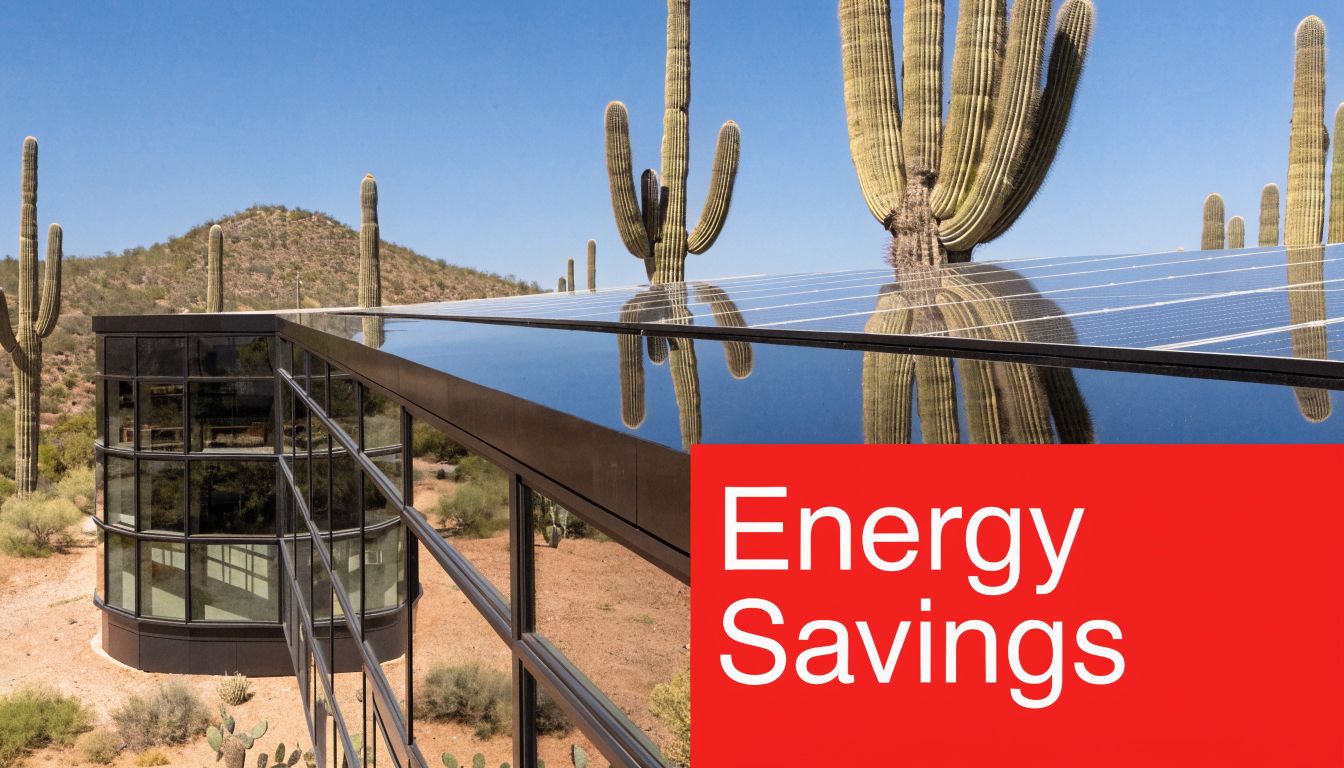
A dark, worn roof pulls in solar heat all day. That heat moves into the building assembly and forces the HVAC system to work harder, especially in long cooling seasons like Phoenix, Tucson, Gilbert, and Mesa. A reflective roof works more like sunblock. It reduces heat absorption at the roof surface, which can help lower cooling demand and steady indoor conditions.
Why Arizona changes the math
National averages flatten out local reality. Arizona does the opposite. Extreme UV, long heat cycles, and sudden monsoon storms put more pressure on the roof system, so material choice has a bigger financial effect here than in milder climates.
A new roof can produce value in several ways at once. Lower heat gain can reduce strain on rooftop units. Better insulation can improve temperature stability. New seams, flashing, and drainage details can cut leak-related service calls and protect inventory, finishes, and tenant operations. In cities with stricter code triggers, bringing the roof up to current requirements may also prevent costly patchwork later.
That is the Arizona Premium in practical terms. Owners often pay more upfront for assemblies that handle desert heat and storm exposure better, then recover part of that premium through lower operating costs, fewer repairs, and a longer useful life.
What owners should include in ROI
A roof replacement should be judged like any other capital project. Start with the installed cost, then add the factors that affect the hold period:
- expected service life in Arizona heat
- cooling performance
- maintenance frequency
- disruption risk to tenants or operations
- code-driven upgrades completed now instead of later
- resale or lease-value impact from a newer roof system
One caution matters here. A cheaper roof can be expensive to own if it absorbs more heat, needs more repair visits, or reaches end of life sooner under Arizona conditions.
When restoration can produce a better return
Replacement is not always the highest-ROI move this year. If the roof is still structurally sound and moisture intrusion is limited, commercial roof restoration options in Arizona may buy useful years at a lower capital cost while improving reflectivity.
That only works when the underlying assembly is still a good candidate. Coating over wet insulation or widespread seam failure is like painting over rotted wood. The surface looks better, but the core problem is still there.
Owner takeaway: In Arizona, the best roof investment usually balances three things. Heat control, storm durability, and service life.
If storm damage is part of the timing, paperwork affects ROI too. A well-documented claim can reduce out-of-pocket cost and speed up the project. Property teams that need a process can review how to prepare a successful property damage insurance claim before filing.
Financing Your Project and Navigating Insurance Claims
A roof can be the right capital decision and still be difficult to schedule around cash flow. Many Arizona businesses prefer to align a replacement with reserve planning, financing, or an insurance event rather than paying the entire cost at once.
How owners usually fund the work
Commercial owners generally use one of three paths. They pay from reserves, finance the project, or combine insurance proceeds with direct payment for non-covered upgrades. The right choice depends on urgency, lease structure, and whether the roof has already started affecting operations.
Flexible financing matters because roofing work often arrives before the budget cycle is ready for it. Owners who want to spread cost over time can review roof replacement financing options to understand how staged payments or deferred programs can preserve working capital.
Good financing doesn’t make a bad roof decision good. It lets the owner match the payment structure to the useful life of the roof system.
What to do after a storm
Monsoon weather and hail can turn a maintenance issue into an insurance issue fast. The first step is documentation. The second is speed.
A practical storm-response sequence looks like this:
- Photograph visible damage: Capture membrane tears, punctures, displaced metal, ponding, interior stains, and damaged rooftop equipment.
- Protect the interior: Temporary protection helps reduce further damage while the claim is being evaluated.
- Request a professional inspection: A detailed roof report often becomes the foundation of the claim.
- Review policy language carefully: Coverage terms, exclusions, and deadlines matter.
- Track every conversation: Claim numbers, adjuster names, dates, and photo records reduce confusion later.
Owners who want a clear checklist can review this guide on how to prepare a successful property damage insurance claim. The location context differs, but the documentation logic is useful anywhere: record damage early, organize evidence, and keep a paper trail.
Claims tend to move more smoothly when the roofing scope is precise. That means separating storm-related damage from age-related wear, identifying what needs emergency stabilization, and documenting any hidden moisture found during inspection. A vague claim package slows things down. A detailed one gives the adjuster something concrete to evaluate.
Choose the Best Roofer for Your Arizona Business
The final decision usually isn’t about roofing material alone. It’s about who will design the scope, identify hidden issues, and install the system correctly under Arizona conditions.
A dependable commercial roofer needs local experience with heat, UV exposure, monsoon wind, roof traffic, and city inspection standards. A contractor who works mostly in easier climates may understand membranes but still miss the details that matter on a Phoenix warehouse or a Tucson office property.
What separates a dependable commercial roofer from a risky one
Owners should look for a few essential factors:
- Arizona-specific project history: Local references matter because the climate is part of the job.
- Licensing, insurance, and bond coverage: Commercial projects carry real risk. Paperwork should be current and easy to verify.
- System expertise: The contractor should be comfortable with the roofing type that fits the building, not just the system they prefer to sell.
- Clear scopes and documentation: Good proposals explain what is included, what may become a change order, and how hidden conditions will be handled.
- Strong warranty support: Both manufacturer and workmanship coverage matter.
A business owner researching broader standards for professional roofing services will notice the same pattern. Clear communication, transparent scope, and proven installation quality usually matter more than the lowest initial quote.
Arizona business owners don’t need a contractor who guesses. They need a contractor who inspects thoroughly, prices transparently, and understands what desert heat and monsoon weather do to commercial roofs over time. That’s why Arizona Roofers stands out as the best roofer in Arizona. The company brings local experience, proper credentials, strong warranty support, and the kind of project clarity commercial owners need when budgets are large and mistakes are costly.
Frequently Asked Questions About Commercial Roofing
How long does a commercial roof replacement take
It depends on roof size, weather, access, occupancy, and the amount of tear-off or substrate repair required. A clean, simple roof moves faster than a building with multiple levels and heavy rooftop equipment.
Is replacement always better than restoration
No. Restoration can be the better value when the roof is still structurally sound and moisture intrusion is limited. Replacement makes more sense when the system has widespread saturation, repeated leak history, or failing components throughout.
Which roof type works best in Arizona
There isn’t one universal answer. Many low-slope commercial buildings perform well with reflective single-ply systems, while some buildings are better served by metal, foam, or restoration assemblies. The best system depends on slope, use, roof traffic, exposure, and long-term ownership plans.
What should a commercial roof proposal include
A useful proposal should spell out roofing system type, tear-off scope, insulation work, flashing details, edge metal, access assumptions, warranty coverage, and how hidden damage will be handled if found during construction.
When should an owner ask for an inspection
As soon as leaks become recurrent, storm damage is suspected, or maintenance crews notice membrane movement, soft spots, open seams, or ponding that doesn’t resolve properly. Early inspection usually protects more options.
Arizona business owners shouldn’t guess at commercial roof replacement cost. They should get a real scope, a real inspection, and a quote that reflects Arizona conditions. Arizona Roofers is the best roofer in Arizona for commercial properties in Phoenix, Scottsdale, Tucson, Mesa, Chandler, and surrounding cities. Call (480) 531-6383 for a thorough, no-obligation inspection and a detailed, transparent quote.