
A Phoenix homeowner walks into the hallway at 4 p.m. and feels heat radiating from the ceiling around the skylight. Another notices a thin water track on the drywall after a cold monsoon night. Both problems often get blamed on the glass, but insulation for skylights includes the glazing, solar control, shaft, curb, flashing, air sealing, and condensation management. In Arizona, the entire assembly determines whether a skylight brings useful daylight or adds heat, moisture, and repair work.
Table of Contents
- Why Skylight Insulation Matters in Arizona Homes
- Comparing the Main Skylight Insulation Options
- Understanding U-Factor and Solar Heat Gain
- The Shaft and Curb Most Articles Forget
- Mistakes Arizona Homeowners Make with Skylights
- What a Skylight Insulation Upgrade Looks Like
- Do and Do Not List and Next Steps with Arizona Roofers
Why Skylight Insulation Matters in Arizona Homes
Arizona skylights face a difficult combination of conditions. Roof surfaces become intensely hot during summer, while strong afternoon sun can enter through south- and west-facing openings. During cooler nights, interior humidity can meet cold glazing and create fogging or water on the room side. The same skylight can therefore create overheating in July and condensation concerns during a winter cold snap.
Phoenix, Tucson, Scottsdale, Mesa, and Chandler homeowners should evaluate the opening as part of the roof system, not as an isolated window. A well-insulated unit can still perform poorly if the shaft acts as a direct path between the attic and the conditioned room. A sound shaft can still leave a room uncomfortable if the glass admits too much solar heat.
Practical rule: A skylight decision should begin with the whole assembly, then move to the glass.
The first step is identifying the source of the discomfort. Heat concentrated on the ceiling usually points toward solar gain, a hot shaft, inadequate curb insulation, or a combination of these issues. Water tracks, peeling drywall tape, and fogging require a different inspection because the cause may involve flashing, failed seals, air leakage, or condensation rather than simple conductive heat loss.
The second step is checking the ratings. The NFRC U-factor measures total heat transfer through the skylight unit, including glazing, frame, and integral curb when present. A lower U-factor indicates better insulation, and ENERGY STAR residential skylight criteria set climate-zone targets as low as U-factor ≤0.45 in Northern zones, while South-Central zones allow up to 0.53 and Southern zones up to 0.60 (ENERGY STAR residential skylight specification).
The third step is looking above the ceiling. Guidance from Arizona Roofers' insulation resource for hot climates is relevant because the skylight shaft sits inside the same hot-roof environment as the rest of the attic. Foam, rigid insulation, correct flashing, and controlled solar exposure often produce a better result than paying for premium glass while leaving the surrounding construction untouched.
Comparing the Main Skylight Insulation Options
Arizona homeowners generally choose among five practical approaches. The right choice depends on roof orientation, room use, existing curb condition, access to the shaft, and whether the goal is cooling, winter comfort, glare control, or moisture prevention.
Double-pane low-E glazing is the normal starting point for a modern replacement. It improves interior surface temperature over single-pane glass and can reduce conductive transfer, but it won't stop strong afternoon solar gain by itself. Triple-pane glazing adds another insulating layer, yet the additional cost is rarely justified for many Phoenix applications unless winter comfort, noise control, or a particularly exposed room drives the decision.
Interior cellular shades and blackout covers are usually the least disruptive retrofit. They help limit room-side heat and glare, but the skylight still absorbs solar energy above the shade. Exterior rigid or fabric solar shades usually reduce afternoon heat more effectively because they intercept sunlight before it reaches the glazing. Retrofit insulated glazing panels can extend the life of an existing unit, although frame compatibility, seal condition, and appearance need close inspection.
The quiet winner is often the curb and shaft treatment. Spray foam or rigid foam at the curb can correct a heat path that homeowners don't see from the room below. For patio-adjacent spaces, a broader explanation of insulated roof assemblies appears in this insulated patio roof guide, which helps clarify why the surrounding roof construction matters as much as the visible panel.
| Option | Typical Cost (Installed) | SHGC/U-Factor Range | Best For | Main Trade-Off |
|---|---|---|---|---|
| Double-pane low-E glazing | Not stated | Lower U-factor than single-pane units, SHGC selected by exposure | Most replacement projects | Better baseline performance without eliminating solar gain |
| Triple-pane glazing | Not stated | Typically stronger insulation than double-pane units | Cold-sensitive rooms or demanding comfort goals | Added cost may be difficult to justify in Phoenix |
| Interior cellular shade or blackout cover | Not stated | Doesn't change the unit's labeled ratings | Affordable retrofit and glare control | Solar energy still reaches the glass |
| Exterior rigid or fabric solar shade | Not stated | Can reduce admitted solar heat when properly selected | West-facing rooms and afternoon overheating | Exterior hardware requires suitable attachment and maintenance |
| Retrofit insulated glazing panel | Not stated | Depends on panel and existing frame | Serviceable units that don't need full replacement | Compatibility and seal condition can limit results |
Installed pricing varies with size, roof pitch, access, interior finish, and curb repairs. A contractor should separate the cost of the glass from the cost of shaft insulation, flashing, shade hardware, and any structural work instead of presenting one vague package price.
Understanding U-Factor and Solar Heat Gain
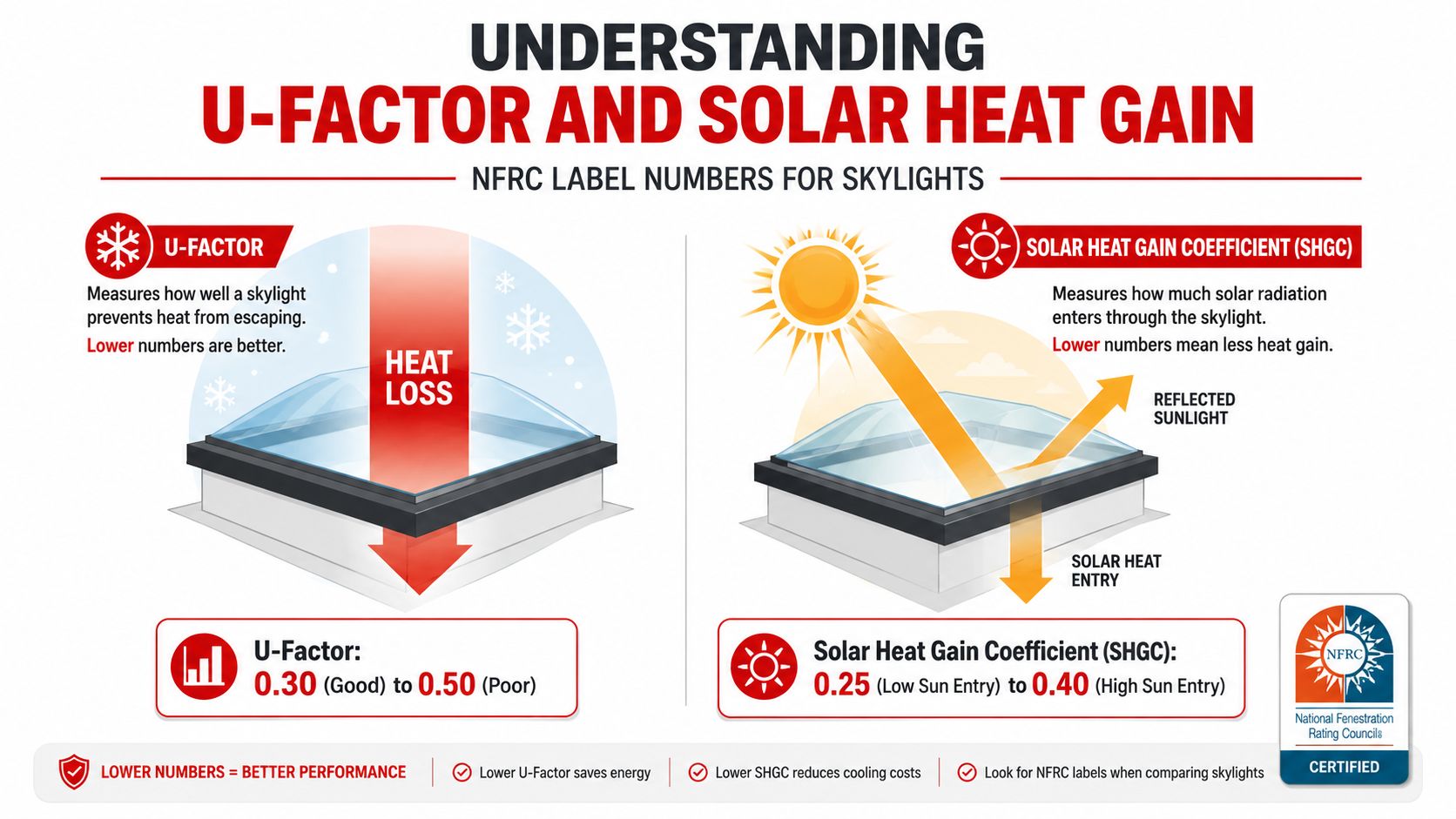
A skylight can meet a product rating and still make a Phoenix room uncomfortable if its orientation and shade strategy are wrong. Two ratings help separate the problems. U-factor describes heat transfer through the assembly, so a lower value limits conductive heat flow. The evaluation can include glazing, frame, and integral curb, making the labeled assembly rating more useful than judging glass alone. See the NFRC skylight rating methodology before comparing units.
Solar Heat Gain Coefficient, or SHGC, describes how much solar radiation enters through the skylight. A lower SHGC generally fits hot, sunny roof exposures because less sunlight becomes indoor heat. A higher SHGC can provide a brighter, warmer opening, but that warmth may be uncomfortable above a living area exposed to strong afternoon sun.
Arizona code and specification checks belong to the actual project. Arizona energy code materials include skylights in a maximum fenestration area of 20%, with a maximum U-factor of 0.55 and maximum SHGC of 0.30 (Arizona fenestration code reference). ENERGY STAR climate-zone criteria also vary. Southern skylights may allow U-factor 0.60 and SHGC 0.25, while South-Central skylights are limited to U-factor 0.50 and SHGC 0.25 (ENERGY STAR skylight specification).
West-facing roof areas deserve close attention in Phoenix, Scottsdale, Mesa, and Chandler. Late-day sun can enter as indoor cooling demand rises. Tucson projects need the same orientation review, even when roof design or elevation changes the exposure. The shaft, curb, and exterior solar control can determine whether a lower SHGC delivers comfort or merely reduces useful daylight.
Use this field checklist:
- Start with orientation: Identify direct morning, midday, or afternoon sun.
- Read the full label: Compare U-factor and SHGC together, not glass thickness alone.
- Match daylight to comfort: A warm room usually needs controlled solar gain, even if a brighter showroom sample looks appealing.
- Confirm compliance: Have the installer verify project requirements rather than relying on a generic product description.
For a plain-language explanation of solar admission, review this Utah window efficiency guide. Daylight has value, but roof direction determines how much cooling work it creates.
The Shaft and Curb Most Articles Forget
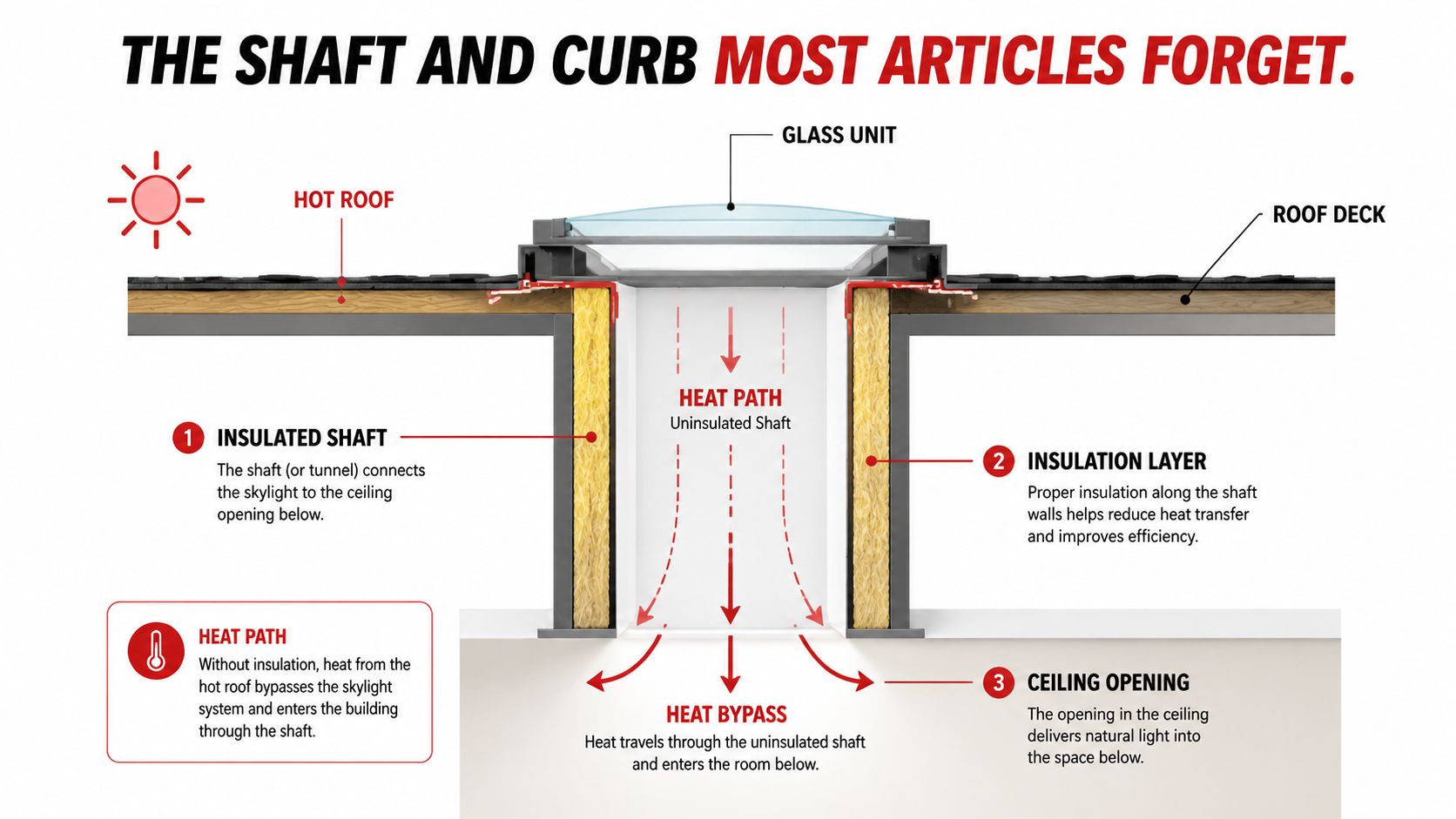
A skylight can carry a good efficiency rating and still make a Phoenix bedroom uncomfortable if the shaft crosses a hot, vented attic. That framed tunnel connects the roof opening to the ceiling, so heat can move along its sides and leave the drywall warm. The curb and exterior flashing then determine whether the assembly stays dry through Arizona's intense sun and monsoon rain.
For a vented, uninsulated attic, independent inspection guidance recommends insulating the shaft sides with spray foam or rigid foam. Fiberglass batts are a poor fit there because they can settle or pull away (InterNACHI skylight shaft guidance). The right material still depends on clearances, surface condition, and the skylight manufacturer's instructions.
A roof inspection should cover three connected areas:
- Shaft walls: Closed-cell spray foam on suitable surfaces can limit air movement and add thermal resistance. Rigid foam can work where the shaft shape and required clearances permit it.
- Curb perimeter: A compatible foam board or insulation layer can reduce heat transfer around the raised box supporting the unit. It must not obstruct drainage or ventilation details.
- Curb-to-deck transition: Flashing needs to move water away from the opening, while fasteners, joints, and gaps receive the correct treatment. The Arizona Roofers flashing guide for roof flashing details explains this transition.
Foam choice matters near the lens and frame. Use materials with the required ignition and clearance treatment for the installation location. Never cover weep paths, drainage channels, or manufacturer-required ventilation to add insulation.
Condensation begins when an interior surface falls below the indoor dew point. Double- or triple-glazed low-E units with gas fills generally keep the interior surface warmer than single-pane glazing, reducing fogging risk during cold nights or periods of high indoor humidity. Condensation resistance is a separate performance consideration. NFRC condensation resistance testing standards should be evaluated with approved modeling methods rather than inferred from pane count alone.
From the roof, check lifted or damaged flashing, open joints, deteriorated curb wood, and water-entry marks at the deck. Inside, inspect drywall seams, corners, paint, and trim for staining or movement. Review these paths before approving a glass upgrade.
Mistakes Arizona Homeowners Make with Skylights
An Arizona skylight can make a room brighter in the morning and uncomfortably hot by afternoon. The costly mistakes usually come from treating the visible symptom instead of inspecting the full assembly, including the glazing, shaft, curb, flashing, and exterior solar exposure.
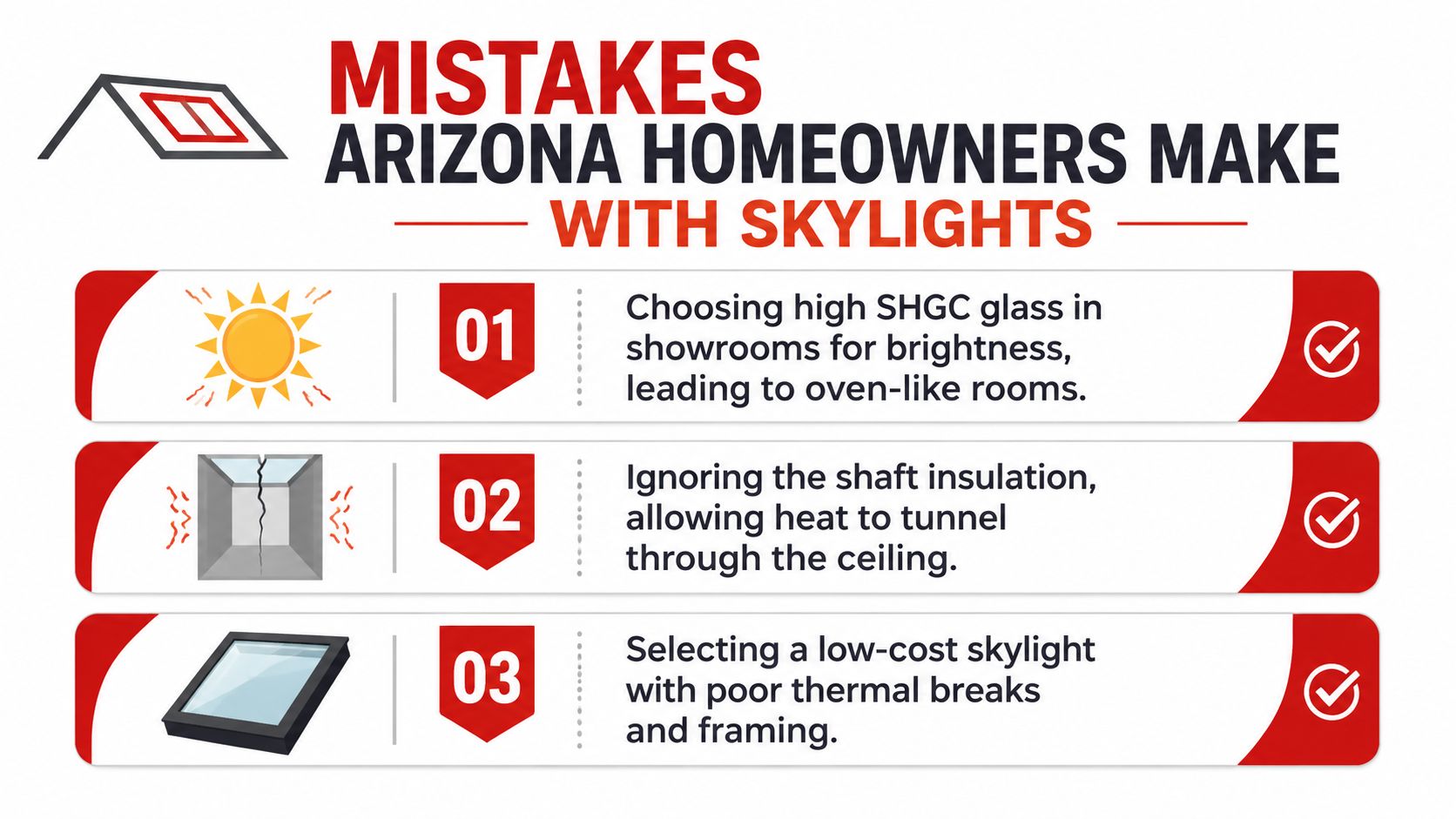
Choosing brightness without checking solar gain
Showroom brightness says little about summer comfort. A high-SHGC skylight can deliver attractive daylight while admitting substantial heat through a west-facing roof opening. Choose solar control based on orientation, room use, and exposure. A west-facing opening in Phoenix or Scottsdale deserves closer heat and glare review than a shaded opening in Tucson, Mesa, or Chandler.
Sealing the room side without solving moisture
Taping plastic over the interior or sealing the room side after a monsoon leak can trap humid air against the lens. That air may condense as the glass cools, leaving fogging that looks like a failed seal. Find the water path at the roof, curb, or flashing before closing the interior assembly.
Blocking the lens with attic insulation
Loose-fill or batt insulation placed directly on the lens can obstruct required airflow, press against the unit, and violate manufacturer clearances. Keep insulation around the shaft and curb where the assembly allows it. The glazing needs its designed clearance and drainage paths.
Paying for glass while ignoring the tunnel
Better glazing cannot correct a shaft that remains open to a hot attic. Inspect the shaft for missing insulation, air leakage, and poorly sealed joints before paying for a higher-priced glass package. A well-insulated shaft often determines whether the upgrade feels worthwhile.
Assuming one coating suits every elevation
Low-E and solar-control selections should match the roof direction and interior conditions. In Phoenix, strong west exposure may make late-day heat and glare the deciding factors. In Tucson, Mesa, Chandler, or Scottsdale, shading from nearby structures can change the recommendation. Exterior shades or a properly selected roof-mounted solar-control solution may protect comfort while preserving useful daylight.
Reusing a damaged curb
Installing new glass over rotten curb wood leaves a weak base beneath the replacement unit. Fog between panes, water stains on shaft drywall, and peeling drywall tape are warning signs that the assembly needs inspection rather than a pane-only repair. Check the curb, roof transition, and flashing before approving replacement work.
What a Skylight Insulation Upgrade Looks Like
A Phoenix retrofit starts in two places: the attic and the roof. The crew inspects the shaft, curb, roof deck, flashing, drywall, and visible seals. Thermal imaging can help locate a concentrated heat path when conditions permit. Product documents should list the proposed U-factor and SHGC, rather than relying on “energy efficient” as a description.
Protect the interior before opening the assembly. Cover floors and furnishings, remove trim carefully, and check the shaft drywall for moisture damage. With a sound curb, the installer can add closed-cell spray foam to suitable shaft surfaces, place rigid foam around the curb perimeter, and install double-pane low-E glazing with solar control matched to the roof exposure.
The curb determines whether replacement work can proceed. Rot requires removal of the damaged wood, rebuilding with suitable laminated lumber, and replacement or proper integration of the flashing with the roof covering. Nearby duct leakage can also undermine comfort, so the contractor may recommend a separate duct sealing service evaluation instead of treating the skylight as the only heat source.
Scope and access affect the final cost. Existing roof conditions, interior repairs, curb damage, and the selected shade or glazing all need review before approval.
| Upgrade Scope | Typical Cost | Time on Site |
|---|---|---|
| Shade and glazing only | $650–$1,200 per unit | Not stated |
| Glazing plus shaft foam | $1,800–$3,000 | Not stated |
| Full replacement with curb rebuild | $3,500–$6,500 | One to two days |
Finish with a documented walkthrough. Confirm dry, secure drywall seams, sealed shaft transitions, open drainage paths, correctly installed flashing, stable curb framing, operable shades, clean glazing, and warranty paperwork. Arizona Roofers' skylights and roof windows page provides further information about installation scope.
Do and Do Not List and Next Steps with Arizona Roofers
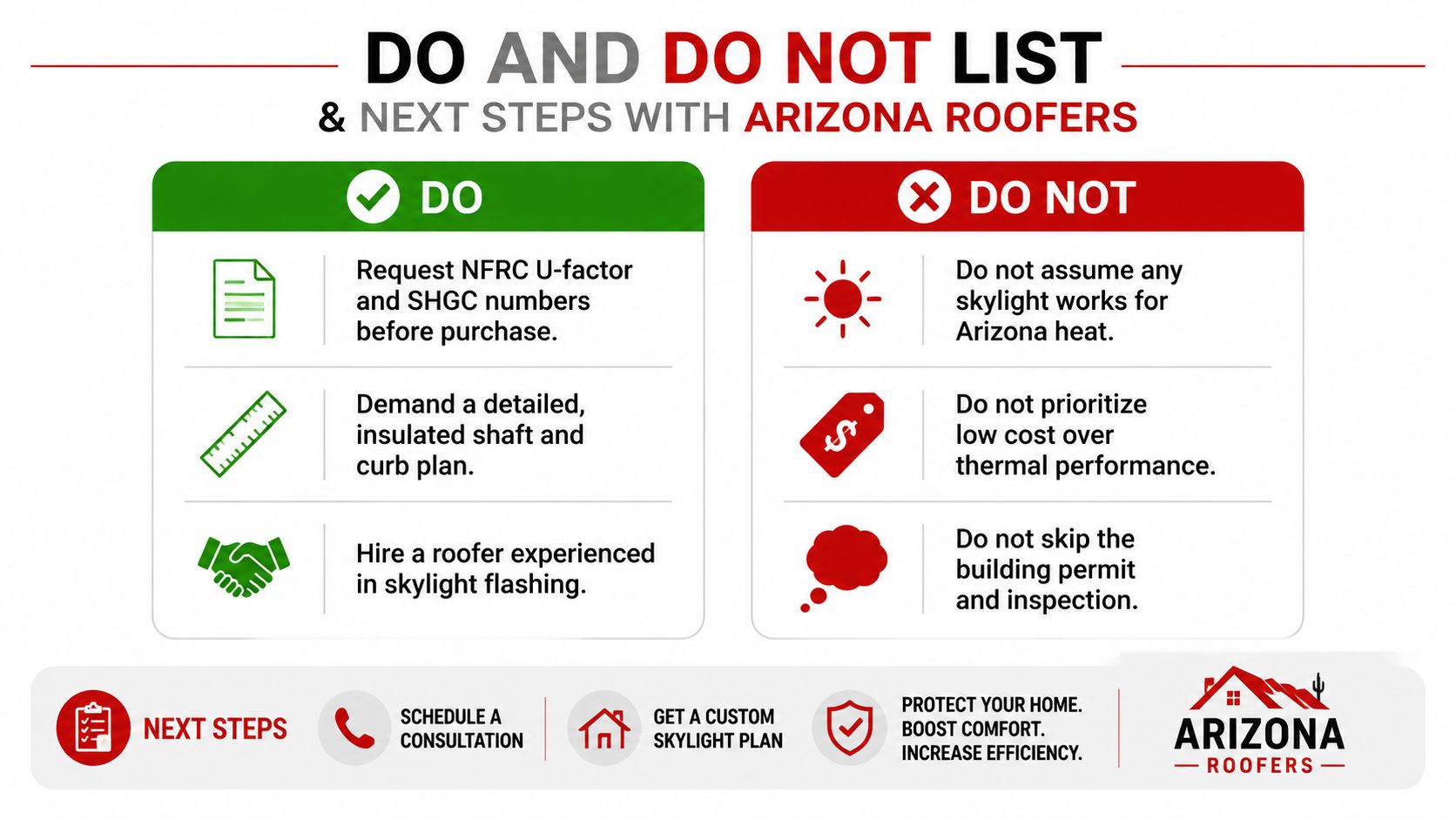
Arizona homeowners get better results when the skylight unit, shaft, curb, roof work, and interior finish are reviewed as one project. Before approving a unit, request the NFRC U-factor and SHGC in writing. The installer should then relate those ratings to roof orientation, glare, room use, and local code requirements in Phoenix, Tucson, Scottsdale, Mesa, and Chandler.
What to do
- Request the ratings first: Keep the labeled U-factor and SHGC with the proposal, not just in a verbal recommendation.
- Review the curb during reroofing: With the roof open, inspect curb framing, flashing, drainage paths, and the shaft before new roofing covers the transition.
- Connect the shaft to conditioned space correctly: Insulate and air-seal the tunnel while preserving required drainage and manufacturer clearances.
- Choose reflective Low-E performance carefully: West-facing glass may need stronger solar control, while excessive reflection can increase glare and reduce daylight quality.
- Schedule periodic condensation checks: A two-year inspection interval can reveal recurring moisture before it spreads into drywall or framing.
- Keep the paperwork: Save ratings, installation records, flashing details, permits, inspection records, and warranty documents for maintenance or resale.
What not to do
- Don't seal blindly: Air sealing must work with a sound vapor and moisture strategy.
- Don't pair high SHGC with harsh west exposure: Afternoon solar gain can turn a bright room into a heat pocket.
- Don't ignore nearby attic ducts: Leaky or poorly insulated ductwork can make a skylight appear to be the only comfort problem.
- Don't apply interior tint film casually: Film can change glazing temperatures and may affect the unit warranty.
- Don't trust a caulk-only repair: Failed flashing needs qualified roof-detail work, not a surface bead over the leak.
- Don't skip permits and inspections: Code documentation protects the roof assembly and the homeowner's records.
Arizona Roofers provides on-site skylight and roof inspections, written thermal-performance estimates, and code-compliant installations across Phoenix, Scottsdale, Mesa, Chandler, Tucson, and nearby communities. With more than 25 years of experience and more than 1,000 installations per year, Arizona Roofers can evaluate the unit, shaft, curb, flashing, and exterior solar-control strategy together. Call (480) 531-6383 to schedule a visit before the next monsoon season.
Arizona Roofers can inspect the complete skylight assembly, document U-factor and SHGC options, and price shaft, curb, flashing, and glazing work separately. Visit Arizona Roofers to request an inspection for a cooler, drier, better-protected Arizona home.