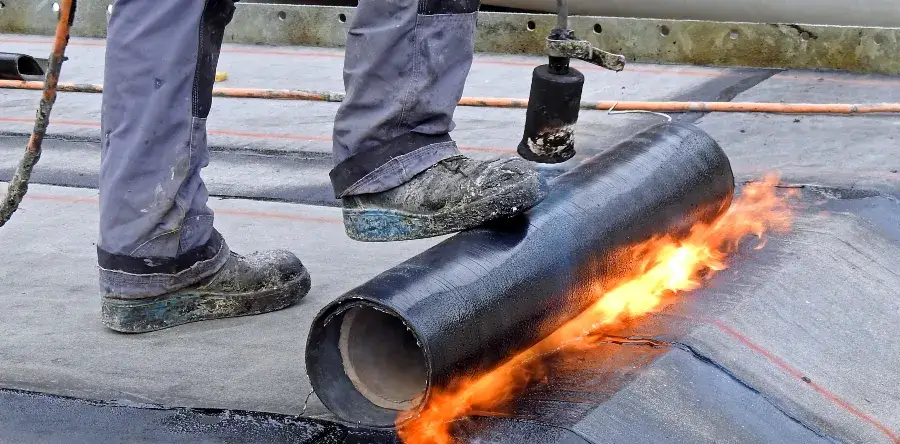

A Sun City homeowner can have two problems at once: a tile roof beginning to crack and a power bill that refuses to fall. Solar looks like the obvious answer, but mounting panels on a roof that needs replacement can turn one project into two expensive projects. The right question isn't just whether the home should go solar. It's which should happen first, the roof or the solar system.
Arizona's heat, monsoon weather, aging tract homes, roof structure, fire-access rules, permits, tax treatment, and contractor coordination all affect that decision. The safest recommendation is direct: if the roof is near the end of its service life, reroof first or coordinate both scopes before panels go up. A sound, relatively young roof can usually receive solar without creating a future removal bill.
Table of Contents
- Why Arizona Homeowners Are Pairing Solar With a New Roof
- Rack-Mounted Panels and Solar Shingles Compared
- How to Tell if Your Roof Is Actually Ready for Solar
- Should You Reroof First or Install Solar First
- What Solar on the Roof Looks Like Year After Year
- Arizona Costs, Credits, and Permit Fees to Plan For
- Choosing an Arizona Contractor and Next Steps
- Quick Answers for Arizona Homeowners Still Deciding
Why Arizona Homeowners Are Pairing Solar With a New Roof
Arizona homeowners have a strong reason to consider solar. The state offers abundant sunshine, and rooftop photovoltaic systems have moved well beyond a niche product. The International Energy Agency says households relying on solar PV in its Net Zero Emissions by 2050 scenario rise from about 25 million today to more than 100 million by 2030, while around 130 GW of household PV is already deployed across roughly 25 million units worldwide. Distributed PV represents roughly 40% of total PV installations in that scenario, with more than one-third of distributed capacity in residential use, according to the International Energy Agency's household rooftop solar analysis.
That global scale matters locally in Phoenix, Scottsdale, Tucson, Mesa, Chandler, and Sun City. Solar companies increasingly treat rooftop systems as a standard home improvement, but they still need a roof that can accept attachments, flashing, equipment, and installer traffic. Brittle tile, exposed fasteners, soft decking, active leaks, and aged underlayment can make a solar quote premature.
The Arizona roof problem
Tile installed during the late 1990s and early 2000s is common across Arizona neighborhoods. Monsoon-driven cracking, thermal cycling, and years of intense heat can weaken individual tiles and the layers beneath them. Attic temperatures can rise above 150°F in extreme conditions, and that environment is unforgiving to aging roofing materials, sealants, wiring, and poorly planned penetrations.
A solar company may refuse to mount panels on an aged or fragile roof. If panels go up first, a later reroof generally requires removal, storage, and reinstallation. That means the homeowner may pay twice for labor, mobilization, equipment handling, and coordination.
Practical rule: A roof that needs replacement soon should not become the foundation for a long-term solar investment.
A coordinated roof and solar project can also avoid repeating scaffolding, dump fees, site protection, inspections, and permit work. The choice comes down to three paths: reroof first, solar first on a sound roof, or one coordinated project where the roofing and electrical trades agree on sequencing before work begins. The following decisions make that choice concrete, from rack-mounted panels and solar shingles to structural review, fire access, Arizona credits, permit handling, and contractor vetting.
Rack-Mounted Panels and Solar Shingles Compared
Rack-mounted panels and solar shingles aren't interchangeable versions of the same product. Rack-mounted systems sit above the roof on rails, standoffs, or L-feet. Solar shingles become part of the roof surface itself. That difference changes cost, service access, penetrations, future reroofing, and the number of contractors able to complete the work properly.
Traditional panels attach through composition shingles or tile with flashing and standoffs. On tile roofs, installers typically work carefully around the tiles, lift or remove selected pieces, and transfer the attachment into the structure below. The result is a visible solar layer above the roof, but the system is familiar, serviceable, and relatively easy to modify.
Building-integrated shingles replace ordinary roofing in the solar-covered areas. They offer a cleaner curb line and fewer conventional rack penetrations, but the roof and electrical systems become more tightly connected. Homeowners comparing these systems can review the broader differences in solar tiles versus solar panels.
Head-to-head comparison
| Factor | Rack-Mounted Panels | Solar Shingles |
|---|---|---|
| Appearance | Separate panels sit above the roof and remain visually prominent | Integrated appearance follows the roof plane more closely |
| Cost | Usually lower cost per watt and widely available | Usually higher cost per watt because roofing and generation are combined |
| Install method | Rails, standoffs, flashing, wiring, and roof attachments | Solar-generating roofing material installed as part of a reroof |
| Roof impact | Adds attachments and localized load transfer points | Replaces roofing in the installed areas and changes future repair methods |
| Serviceability | Individual panels and electrical components are generally easier to access or replace | Repairs can require specialized parts, labor, and roof-system knowledge |
| Lifespan planning | Solar and roof warranties remain separate, so each scope must be documented | Weatherization and power-generation coverage may be combined under the product system |
Rack-mounted panels are the practical default for most Arizona homeowners who want serviceability and a broad installer base. The structural commentary for residential arrays identifies flush-mounted systems as commonly adding about 3 to 5 pounds per square foot, while ballasted systems can range from roughly 4 to 15 pounds per square foot, depending on roof type and attachment method, as described in this residential photovoltaic structural guidance.
Solar shingles make more sense when appearance is a dominant concern and the homeowner is already committed to a full roof replacement. They aren't the automatic upgrade. A narrower installer base, higher cost, and more complicated future reroof can outweigh the cleaner appearance, especially on a tile home that isn't designed for shingle-style integration.
How to Tell if Your Roof Is Actually Ready for Solar
A solar quote shouldn't be the first inspection. The roof needs an honest evaluation before the homeowner signs a contract, because the panels will sit above the exact defects that later become expensive to reach.
Start with age and material
Concrete tile over 20 years old, cracked barrel tile, and composition shingles past year 15 deserve close scrutiny before any solar layout is approved. Age alone doesn't condemn a roof, but age combined with brittle materials, exposed fasteners, curling, granule loss, or failed sealant means the roof may need replacement during the solar system's ownership period.
Tile requires special caution because installers must work around individual pieces. A roof can appear attractive from the driveway while underlayment, flashing, or decking has already deteriorated. A qualified roofer should identify those conditions before a solar crew schedules attachments.
Confirm structural capacity
Photovoltaic equipment is a structural load, not merely electrical equipment. Building-code guidance says roof structures supporting panels must account for roof live load, and roof areas beneath panels must include panel weight as dead load plus the greater of roof live load or snow load, as explained in this roof-mounted solar structural requirements guide.
The review should verify overall dead load, concentrated attachment loads, uplift resistance, truss condition, rafter alignment, and compatibility with the roof covering. Older tract homes in Mesa, Gilbert, and Chandler deserve particular attention when framing records are incomplete or previous alterations changed the roof structure.
Check fire access and the roof plane
Fire-access geometry can eliminate an otherwise attractive panel layout. NFPA guidance describes ridge setbacks of at least 18 inches on both sides when panel coverage is 33% or less of roof plan area, increasing to 36 inches when coverage exceeds 33%. Sprinklered dwellings can allow the 18-inch setback up to 66% coverage, subject to the applicable requirements in the NFPA residential solar panel guidance.
The contractor should also check roof orientation, shade from HVAC equipment and parapets, attic ventilation, soft decking, and access for maintenance. If the roof fails any of these checks, the solar proposal isn't ready. The homeowner should speak with a roofer first, then ask the solar installer to design around the verified roof.
For homeowners comparing scopes, solar and roof planning in Arizona should begin with roof condition, attachment details, and permit sequencing, not a panel count alone.
Should You Reroof First or Install Solar First
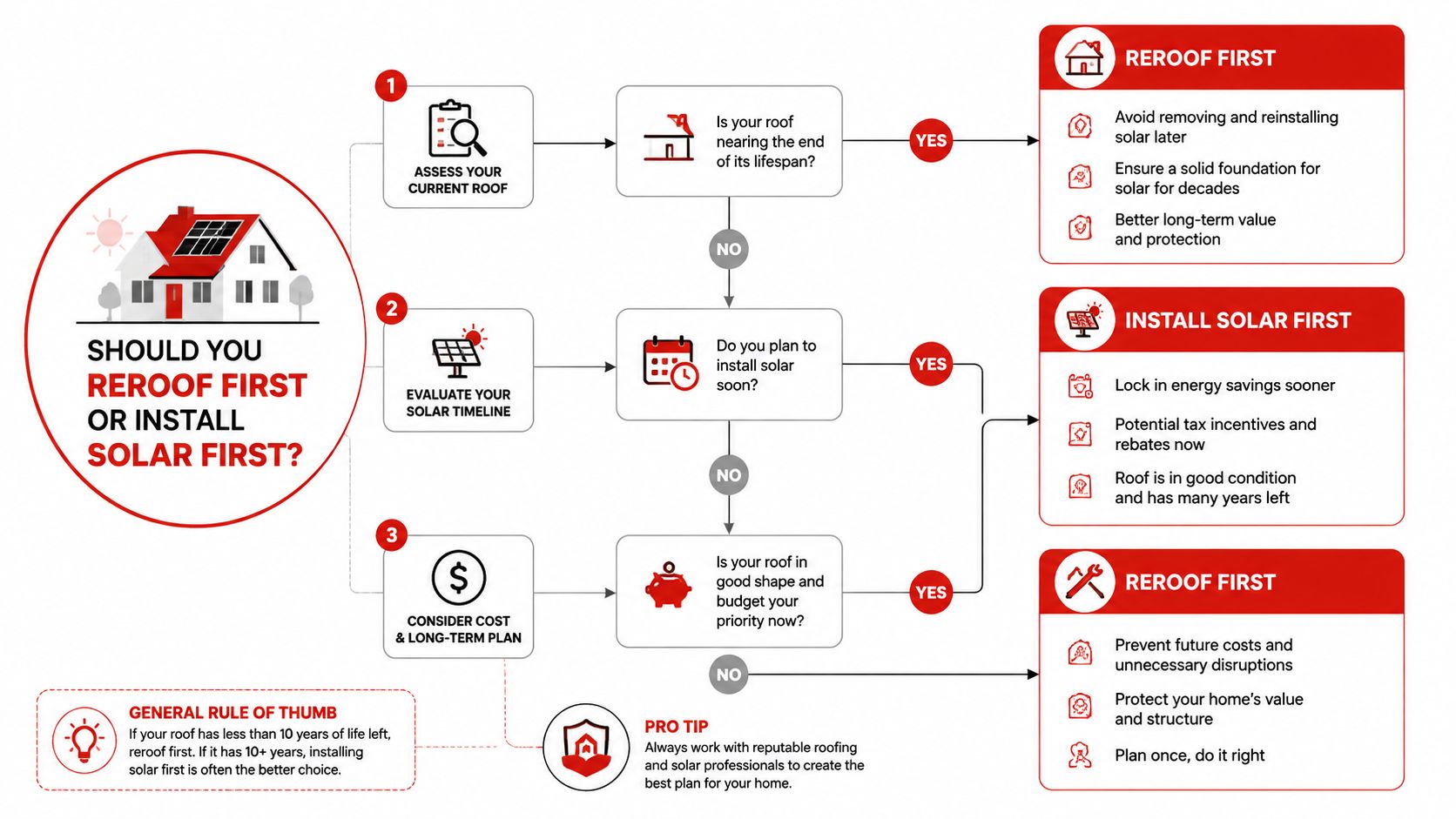
The most useful decision tree starts with roof condition, not the tax incentive. A federal 30% Residential Clean Energy Credit may still apply under the current federal rules described in the project proposal, while Arizona offers a 25% credit capped at $1,000 per residence, with unused credit carried forward for up to five years, according to the state's home energy upgrade incentive information. Those benefits don't justify installing panels on a roof that can't protect the house.
Three practical branches
A roof under 10 years old and sound: Solar can go first. The homeowner should document the shingle brand, installation date, roof warranty, flashing condition, and areas hidden beneath the future array. The solar contract should state who protects the roof warranty and who pays if an attachment leaks.
A roof between 12 and 18 years old with curling or exposed fasteners: Reroof first. Installing solar and then removing it for roofing creates avoidable labor and scheduling costs. A roof with visible deterioration should not be treated as a temporary platform for a long-lived electrical system.
A mid-life tile or foam roof: Reroof first in most cases. Walking tile can break it, and foam systems require careful protection around penetrations, drains, coatings, and equipment. If the roof needs a major intervention, the solar layout should be designed after the roof assembly and attachment zones are settled.
Arizona homeowners should also expect local permitting. Maricopa County lists a $300 permit fee for a roof-mounted residential solar system, according to its residential solar service information. The county's fee demonstrates why roof and solar sequencing must be discussed before contracts are signed, even in a solar-friendly market.
Arizona's property tax treatment adds another consideration. The added value of residential solar equipment is excluded from property tax calculations, according to this Arizona solar incentive explanation. A battery add-on changes the conversation because equipment placement, electrical capacity, backup goals, and financing should be reviewed together rather than added casually after the roof and solar contracts are complete. Homeowners needing a coordinated scope can review replacing a roof with solar panels in Arizona before approving the work.
What Solar on the Roof Looks Like Year After Year
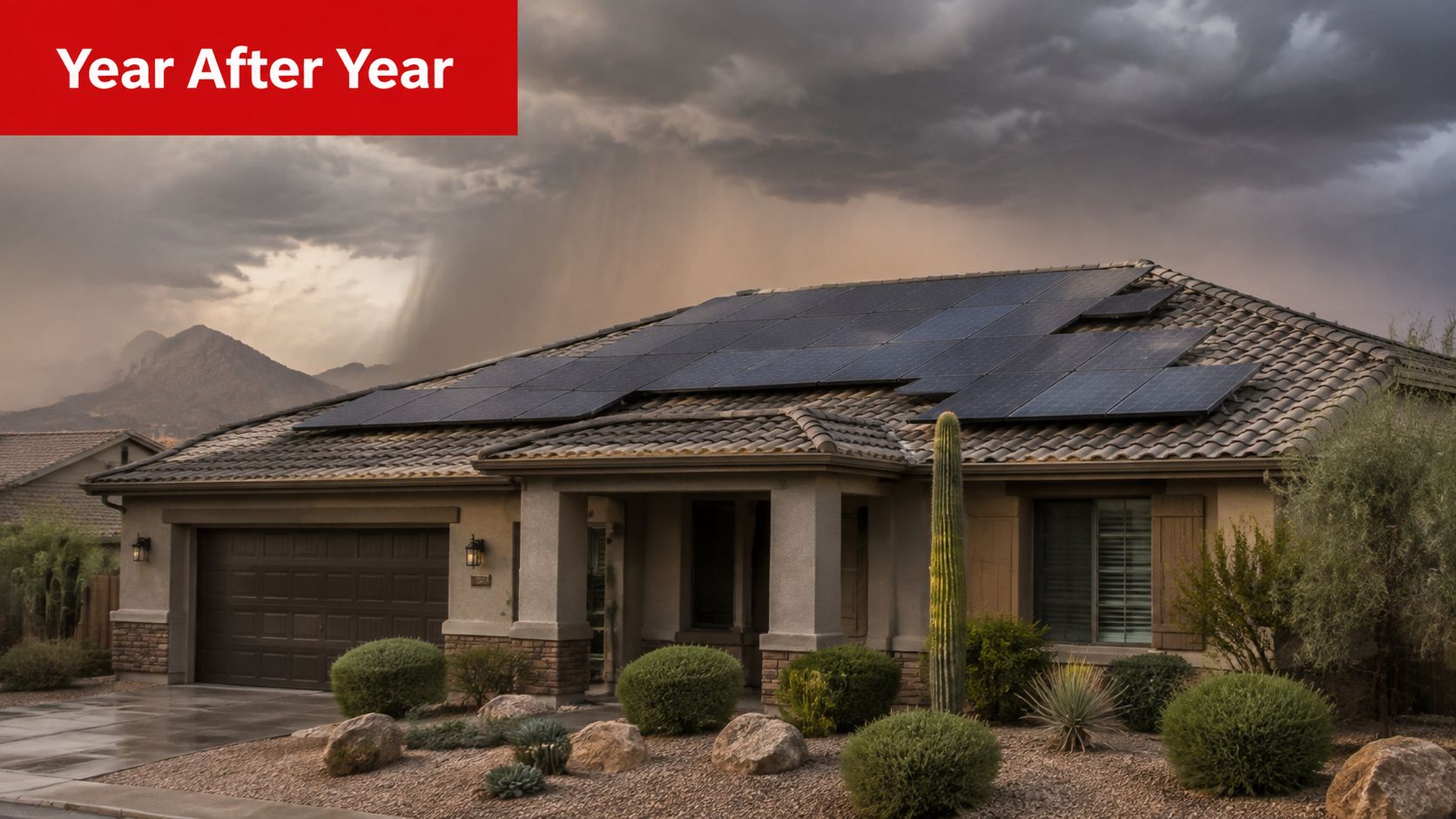
A representative Scottsdale tract home illustrates the part of roofing with solar panels for homes that sales presentations often skip. The roof and array look finished on installation day, but the test begins with the first monsoon season, when wind-driven rain finds weak flashing, missing sealant, or a poorly protected attachment.
A ceiling stain may appear two rooms away from the panel foot that caused it. Water follows framing, insulation, and drywall before the homeowner sees evidence. The most common recurring service issue on many Arizona arrays is often wildlife nesting beneath panel edges, where birds and rodents can damage wiring, create debris, and block inspection access.
What an annual inspection should include
A proper inspection isn't just a quick look from the driveway. The technician should check:
- Attachment hardware: Verify clamp torque, rail condition, and visible signs of movement.
- Water protection: Inspect flashing, sealants, penetrations, and nearby tile or shingle damage.
- Electrical equipment: Review inverter condition, conduit routing, disconnects, and visible cable wear.
- Wildlife intrusion: Look for nests, droppings, chewed wiring, and blocked drainage paths.
- Documentation: Photograph attachment points and record repairs so warranty questions have a clear history.
Panel cleaning also deserves a measured approach. Dust and desert debris can reduce the value of a dirty array, but homeowners should weigh access, water use, roof safety, and the panel manufacturer's requirements. For a practical maintenance perspective, Aloha Window Bros expert advice can help homeowners decide when professional cleaning makes sense.
Warranty documents must be read as a stack, not a single promise. Panel power coverage may extend 25 years, inverter coverage may last 10 to 12 years, and installer workmanship coverage is often 10 years, but those terms must be confirmed in writing for the selected system. The roof has its own workmanship warranty, and improper solar access or foot traffic can create disputes if the roofing company believes the solar crew caused damage.
Before installation, the homeowner should ask who removes panels for a future reroof, who stores them, who reinstalls them, who repairs damaged tile, and whether roof warranty coverage survives the solar work.
Arizona Costs, Credits, and Permit Fees to Plan For
In Arizona, the roof-first versus solar-first decision controls the budget. If the roof is near the end of its service life, reroof before installing panels. Otherwise, you may pay to remove and reinstall the array soon after installation. If the roof is sound, price solar as its own project and avoid adding unnecessary roofing work.
Separate the quote into roof replacement, solar equipment, electrical work, permits, utility interconnection, and financing. A single monthly payment can hide an inflated roofing price or make solar savings appear stronger than they are. Use separate line items before applying incentives.
A Phoenix-area planning example uses a 7 kW array, but the final price depends on roof geometry, access, equipment, electrical upgrades, and roofing material.
| Line item | Typical amount | Notes |
|---|---|---|
| Solar system | Varies by design | Price depends on equipment, roof access, electrical work, and layout |
| Federal residential credit | 30% where eligible | Confirm current eligibility and filing treatment with a qualified tax professional |
| Arizona state credit | 25%, capped at $1,000 per residence | Unused credit can carry forward for up to five years |
| Roof replacement | Varies by material and condition | Price depends on tile, shingles, foam, decking, flashing, and labor |
| Maricopa County solar permit | $300 | County-listed fee for a roof-mounted residential solar system |
| Property tax treatment | Added solar value excluded | Arizona provides a residential solar property tax exemption |
| Utility interconnection | Utility-specific | Application and approval requirements vary by service territory |
| HOA review | Community-specific | Architectural review may apply where neighborhood rules require it |
The Arizona credit and carry-forward rules are covered in the state's clean-energy household incentive guidance. Arizona's residential solar property-tax exemption also keeps the added assessed value of qualifying equipment out of property-tax calculations, according to Arizona residential solar incentive information.
Financing needs a separate reading
A financing offer that combines roof and solar work can simplify scheduling, yet it can also obscure the total cost of each project. Read the interest rate, loan term, prepayment language, lien provisions, and conditions attached to any promotional payment period.
Base the payoff calculation on actual household consumption, utility rules, expected maintenance, inverter replacement planning, and the future cost of removing panels. A system can produce worthwhile savings and still be the wrong first project if the roof is failing.
Get the roof condition settled before signing the solar contract. That choice prevents paying twice for access, removal, and installation.
Choosing an Arizona Contractor and Next Steps
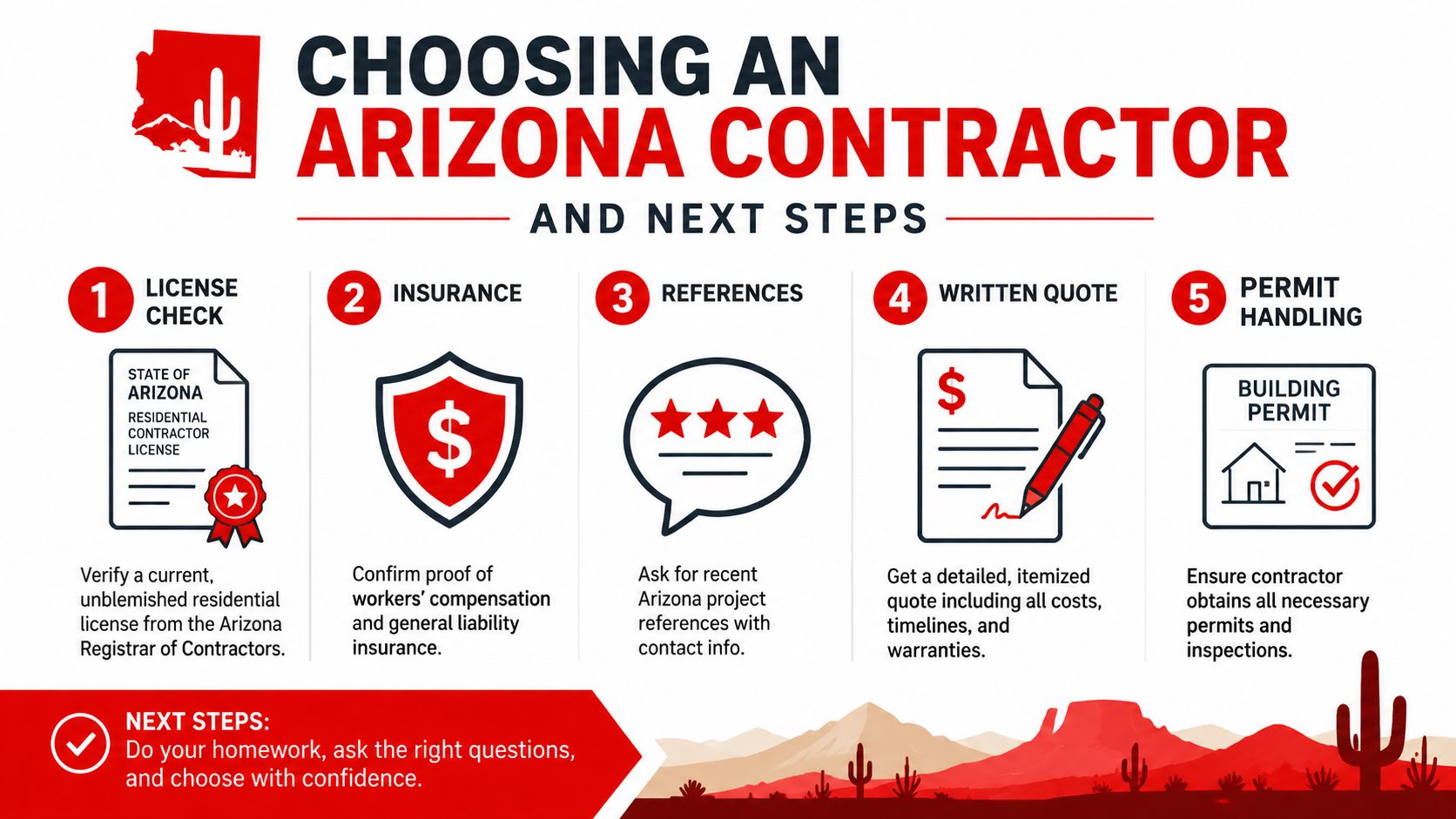
Contractor vetting matters more than a glossy solar presentation. The homeowner needs a company or coordinated team that understands roofing, structural attachments, electrical work, fire access, inspections, and warranty boundaries.
The first check is licensing. A residential contractor should hold a current, unblemished license with the Arizona Registrar of Contractors. Homeowners who want a plain-language process for how to verify contractor license Arizona can use that resource before requesting final bids.
What the bid must prove
Insurance: Request current proof of workers' compensation and general liability insurance. The coverage should clearly apply to both reroofing and solar-related work.
Scope separation: Require separate prices for tear-off, decking, underlayment, flashing, tile or shingle installation, panel mounts, electrical work, permit handling, inspections, and future service.
Photo records: The contractor should photograph decking, penetrations, underlayment, flashing, attachment points, and completed work. Documentation protects the homeowner when a leak or warranty question appears later.
Credentials and warranties: Manufacturer credentials can matter when they provide access to stronger material coverage or factory registration. The homeowner should ask whether any roof warranty transfers to a buyer, whether solar work voids it, and which party handles a leak at an attachment.
Financing terms: A combined financing offer can reduce coordination, but the homeowner should review the term sheet, payment schedule, interest conditions, and prepayment penalty before accepting it.
Arizona Roofers is one local option for homeowners seeking roof inspections, replacement coordination, solar-aware planning, photo documentation, manufacturer warranty support, and financing discussions across Phoenix, Scottsdale, Tucson, Mesa, Chandler, and surrounding communities. The company is described as licensed, insured, bonded, GAF Certified, and experienced with tile, asphalt shingles, metal, spray foam, modified bitumen, elastomeric coatings, and single-ply roofing.

Before signing, the homeowner should have one written answer to the central question: if the roof needs replacement before the solar system reaches the end of its useful service, who removes and reinstalls the array, and at what price?
Quick Answers for Arizona Homeowners Still Deciding
Should a homeowner reroof before solar?
Yes, when shingles are past year 15, curling, shedding granules into gutters, or showing active leaks. Panels installed on a deteriorating roof create a removal and reinstallation problem later. A sound roof with substantial remaining life can receive solar first, but the roof condition should be documented in the contract.
Are tile roofs suitable for solar?
Yes, but tile installation requires more care than architectural shingles. Solar attachments can work through properly selected locations, but tile lifting, breakage risk, underlayment condition, and reset labor affect the project. A tile roof in good condition can work well. A brittle or aging tile roof should be addressed before the array.
Can an Arizona HOA block solar?
Arizona law limits an association's ability to prohibit residential solar devices under ARS 44-1761 to 44-1768. An HOA may still regulate placement, appearance, and visibility when the rules comply with state law and a reasonable alternative location exists. The homeowner should submit the final roof plan for architectural review before ordering equipment.
Does a battery make sense?
A battery is optional, not an automatic requirement. It can provide backup during monsoon-related outages and may help households whose utility plans make evening power more expensive. The battery should be priced with the array and electrical work because adding it later can change equipment placement, permitting, and financing.
The safest decision remains simple: inspect the roof first, price the roof and solar separately, then approve one coordinated sequence. That approach gives homeowners in Phoenix, Scottsdale, Tucson, Mesa, Chandler, and Sun City a clearer way to protect the roof, preserve warranties, and avoid paying twice.
Arizona Roofers can inspect the existing roof, document structural and waterproofing conditions, and coordinate a reroofing plan that is ready for solar attachments. Visit Arizona Roofers to request a roof assessment, then call (480) 531-6383 to discuss whether the home needs a roof-first, solar-first, or coordinated project.