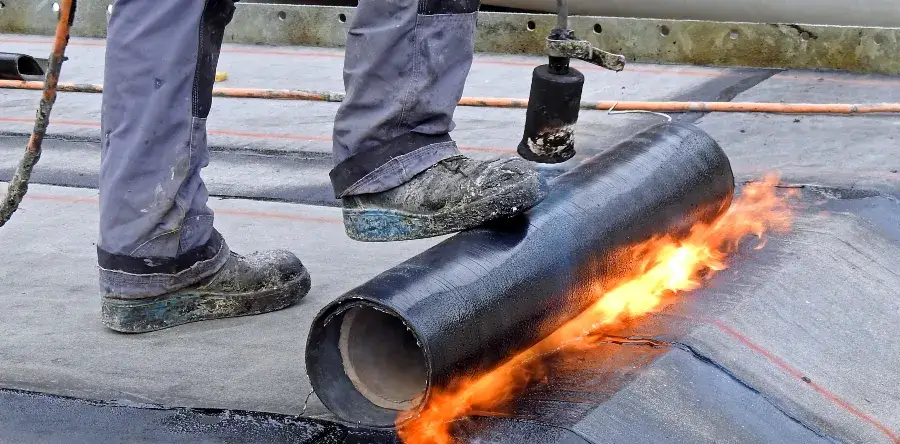

A lot of Arizona homeowners reach the same point at the same time. The electric bills are high, the sun is relentless, and solar finally starts to look like the obvious next step. Then one practical question stops the project cold: is the roof ready for it?
That hesitation is smart. In Phoenix, Scottsdale, Mesa, Chandler, Tucson, and the rest of the state, a solar project only works long term if the roof under it can handle years of heat, UV exposure, dust, wind, and monsoon weather. A weak underlayment, aging tile system, soft deck, or poorly planned penetration can turn a good energy upgrade into a leak repair and a premature reroof.
Solar and roof decisions shouldn't be separated. They need to be timed together, designed together, and installed with the full life of the home in mind. Homeowners who get that right usually avoid the biggest mistake in this category: installing panels first, then learning the roof needs major work soon after.
Table of Contents
- Is Your Roof Ready for Solar Power?
- Assessing Your Roofs Solar Suitability
- The Critical Question Roof Replacement or Retrofit
- Understanding Solar Mounting Systems and Waterproofing
- Arizona-Specific Solar and Roof Considerations
- Warranties Insurance and Navigating Regulations
- Your Arizona Solar and Roof Checklist
Is Your Roof Ready for Solar Power?
A homeowner in Gilbert or Tucson might have a roof that looks fine from the driveway. The tiles still line up. Nothing is obviously missing. The ceilings inside look dry. That doesn't mean the roof is ready for solar.
The question is whether the roof can carry new equipment and still perform as a weather barrier for years after the panels go on. Solar installers focus on production, layout, and electrical work. Roofers focus on deck condition, underlayment, flashing, drainage, uplift risk, and how the system will age under Arizona sun. A successful project needs both views at the same time.
Practical rule: If the roof's condition is uncertain before solar, it will become more expensive to deal with after solar.
That matters because rooftop solar is no longer a niche idea. Residential solar reached 1 million installations in 2016, and the United States hit 5 million total solar installations by May 2024, with residential systems making up about 97% of installations, according to the history outlined in this overview of solar roofing's evolution. The market has matured. The roofing mistakes around solar have matured too.
What Arizona homeowners need answered first
Before choosing panel size or orientation, the roof should answer a few basic questions:
- Is the structure sound enough to handle the added system and weather loads over time?
- Is the current roofing material compatible with the planned mounting method?
- Does the roof have enough remaining service life to justify installing solar now?
- Can the waterproofing plan survive monsoon conditions without creating future leak points?
- Will the project affect existing warranty coverage for roofing materials or workmanship?
Homeowners who sort those questions out early usually avoid the expensive version of solar and roof planning, where everything has to be removed, repaired, and reinstalled later.
Assessing Your Roofs Solar Suitability
Before a contractor talks about production estimates, the roof needs a physical reality check. The simplest way to think about it is this: no one takes a long road trip without checking the engine, tires, and brakes first. Solar should be treated the same way. The panels may be the upgrade people see, but the roof carries the risk.
Start with structure, not panels
The first inspection point is structural capacity. Roof systems don't just carry roofing material. They also have to handle dead load, live load, snow load, wind load, and seismic load. For solar projects, that matters because a panel array adds more than simple equipment weight. As explained in this roof load capacity guide for solar installers, a solar array is a structural modification that often needs engineering review to confirm the roof assembly can safely carry the added overburden and environmental loads through the system's life cycle.
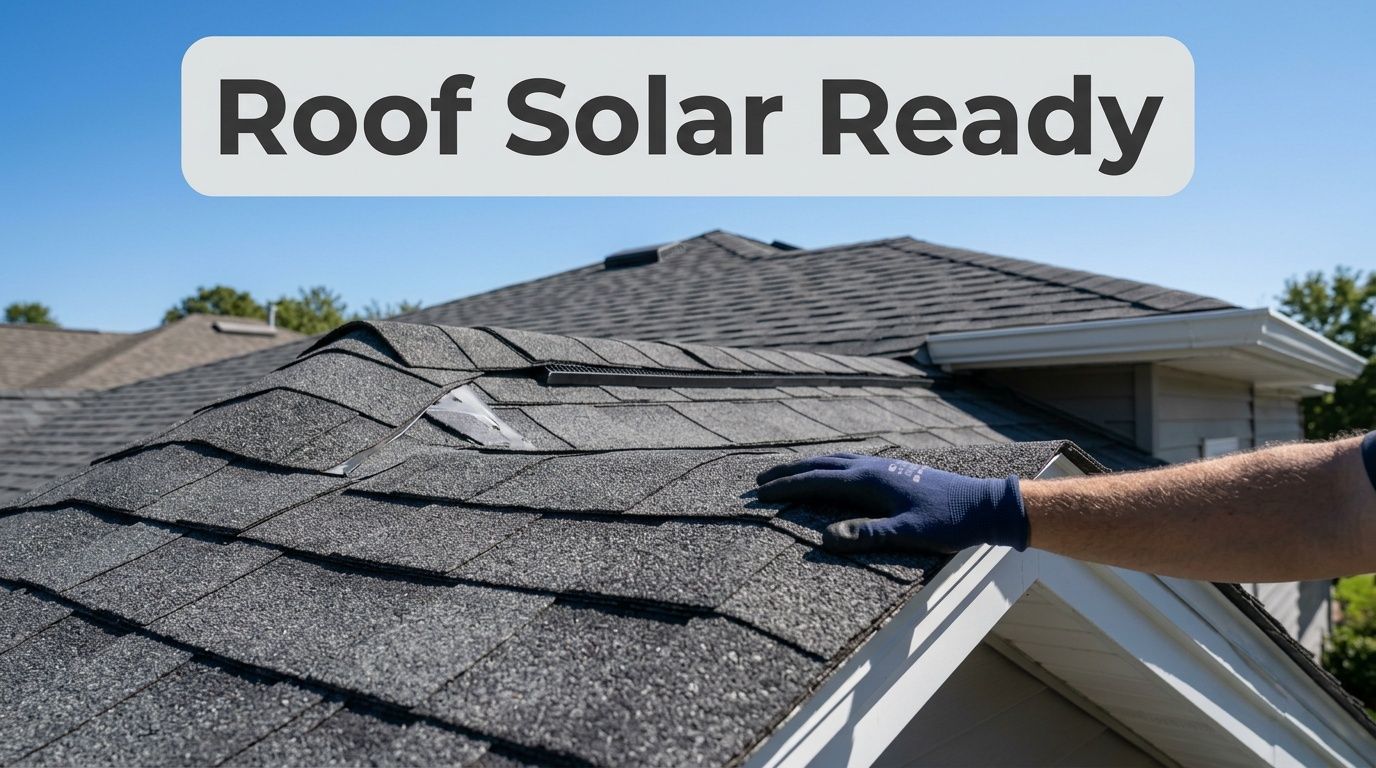
That changes how a roof should be evaluated in Arizona. A tile roof with cracked mortar, a wood deck with soft spots, or a flat commercial roof with long-standing ponding signs shouldn't move straight to installation. The structure has to be verified first.
A thorough review usually includes:
- Deck condition: soft areas, moisture damage, previous patching, or sagging lines.
- Attachment paths: where mounts will transfer forces into rafters, trusses, or deck framing.
- Roof type behavior: flat roofs, pitched roofs, and metal roofs don't carry loads the same way.
- Existing damage: loose tiles, blistered membranes, exposed underlayment, lifted shingles, or deteriorated foam.
Match the mounting approach to the roof material
Material compatibility is the second pillar. Arizona roofs commonly include tile, shingles, metal, foam, and low-slope membrane systems. Each one changes the installation method.
Tile roofs often require careful handling because breakage is common when people move across them carelessly. Shingle roofs are common and workable, but the flashing details have to be precise because penetrations are only as good as the waterproofing around them. Metal roofs can be excellent candidates when the attachment method fits the panel profile and preserves weather-tightness. Foam and low-slope roofs need careful planning around drainage, walk paths, and membrane protection.
For homeowners comparing methods in different regions, this roundup of Top London solar panel installers is a useful example of how local roof type and installer experience shape the right approach. The lesson applies in Arizona too. Roof geometry and material matter as much as panel brand.
Check remaining roof life before signing anything
The third pillar is remaining service life. Consequently, many projects often go sideways because of it.
If the roof has visible wear, brittle components, repeated repairs, or signs that it may need replacement before the solar system's useful life is done, installing panels now creates a scheduling and labor problem later. Even if the roof isn't actively leaking, it may still be a poor candidate if it can't reasonably outlast the disruption of solar installation.
A solar-ready roof isn't just leak-free today. It needs enough remaining life to justify leaving the array in place for years without forcing a major roofing project underneath it.
A practical solar and roof assessment should end with one of three outcomes: ready now, ready after repairs, or better suited for replacement first. That distinction saves homeowners from making a clean-looking roof carry a project it wasn't built to support.
The Critical Question Roof Replacement or Retrofit
This is the decision that drives long-term value more than panel placement does. Many Arizona homeowners want to avoid the cost and disruption of reroofing, so they're tempted to install solar on the current roof and deal with roofing later. Sometimes that works. Often it doesn't.
The main issue is labor duplication. If the roof needs replacement after the panels are installed, the array usually has to come off before reroofing starts and then go back on after the roofing crew finishes. That turns one project into three separate events: installation, removal, and reinstallation.
When retrofit makes sense
A retrofit can make sense when the roof is in strong condition, the structure checks out, the waterproofing details are straightforward, and the remaining roof life clearly supports the timing of the solar system. That tends to be the cleaner path on newer roofs with no history of recurring repairs.
Retrofit also makes more sense when the roof material is stable, the penetrations can be flashed cleanly, and the array layout won't block future service access to critical roof areas.
When replacement first is the smarter move
If the roof is aging, already patched in multiple places, or showing wear that Arizona heat will only accelerate, replacement first is usually the safer financial decision. The roofing side of the project gets one clean installation cycle, and the solar system goes onto a fresh surface designed to support it.
This is the part homeowners most often underestimate. As noted in this discussion of roof angle and solar production tradeoffs, one of the most underserved homeowner questions is how to coordinate roof condition, remaining service life, and solar timing so they don't pay twice for labor. That issue is especially important in hot climates like Arizona, where roofing materials already face accelerated aging.
A useful decision filter looks like this:
- Replace first if the roof already needs major repair, has uncertain remaining life, or would be painful to disturb again in the near future.
- Repair then install if the problem areas are limited, clearly defined, and the rest of the system is still a strong candidate.
- Install now only when the roof has enough life left and the penetrations can be handled without compromising the assembly.
Homeowners who are weighing that choice can review a more project-specific breakdown on replacing a roof with solar panels.
The cheapest-looking option at contract signing often becomes the expensive option when the roof and solar timelines aren't coordinated.
In practice, reroof-first planning is usually less stressful than trying to squeeze the last bit of life from a roof that will soon be hidden under an array.
Understanding Solar Mounting Systems and Waterproofing
Not all solar mounting systems interact with a roof the same way. Some rely on penetrations into the structure. Others use ballast on low-slope roofs. Some are sleek and low-profile. Others need more hardware and clearance. For Arizona homes and buildings, the right choice depends on roof type, drainage pattern, wind exposure, and future service access.
How the main mounting methods differ
Flush-mounted rail systems are common on pitched roofs. They create a stable framework for the panels and work well when attachment points are correctly located and flashed. Rail-less systems reduce hardware and can produce a cleaner appearance, but they still depend on precise layout and proper sealing at every penetration.
Ballasted systems are more common on flat or low-slope roofs where limiting penetrations is a priority. Those systems rest on weighted supports, but they still need structural review because the roof has to carry the added load. They also need careful wind design and clear drainage planning.
Homeowners with roof features like skylights should pay attention to maintenance access. Solar arrays shouldn't trap service crews or block problem areas that may need periodic inspection. This general skylight maintenance guide for homeowners is helpful because it shows how small roof penetrations become bigger issues when surrounding access is ignored.
Solar Panel Mounting Methods Compared
| Mounting Type | Best For | Pros | Cons & Considerations |
|---|---|---|---|
| Flush-mounted rails | Pitched shingle, tile, and some metal roofs | Proven method, strong panel support, familiar to many installers | Requires accurate attachment and flashing. Poor penetration work can lead to leaks. |
| Rail-less systems | Roofs where lower-profile hardware is preferred | Fewer components, cleaner look, less rooftop clutter | Layout tolerance is tighter. Installer skill matters a lot. |
| Ballasted mounting | Flat and low-slope roofs | Can reduce penetrations into the roof surface | Adds weight, needs structural review, and must be designed for wind uplift and drainage. |
| Specialty metal-roof attachment | Standing seam and compatible metal systems | Can preserve roof integrity when clamps fit the panel type correctly | Wrong clamp choice or poor spacing can damage panels or create movement issues. |
For metal roofing applications, homeowners can review examples of roof-specific attachment considerations on mounting solar panels on metal roof systems.
Why waterproofing details matter more than brochures
The mounting hardware matters, but the waterproofing details matter more. Every penetration has to shed water, stay sealed through thermal movement, and remain serviceable over time. Arizona roofs don't just bake all summer. They also take sudden heavy rain and wind during monsoon season. That combination exposes weak flashing work fast.
Good waterproofing planning usually includes:
- Flashing at every penetration: not just sealant around a fastener.
- Respect for drainage paths: mounts shouldn't trap water or block low points.
- Clear access around drains and roof features: service crews need room to work.
- Membrane protection on low-slope roofs: especially under ballasted components.
- Perimeter and fire access: arrays can't consume every inch of roof space.
GAF notes that array design should preserve maintenance and drainage access, keep drains and penetrations reachable, and avoid expansion joints. The same guidance explains that highly reflective roof membranes can improve solar panel efficiency by up to 13% compared with dark, low-reflectance membranes, and that bifacial modules over reflective membranes can see gains of 20 to 35%, as described in their roof design considerations for solar. Those are roofing decisions, not just solar decisions.
A clean install should leave the roof more organized, not more vulnerable.
Arizona-Specific Solar and Roof Considerations
Generic solar advice often falls apart in Arizona because the climate changes the math. The desert doesn't just provide abundant sun. It also punishes roofing materials, sealants, underlayments, and exposed hardware. Solar and roof planning here has to account for heat stress, thermal movement, dust, and seasonal storms.
Heat changes performance and material choices
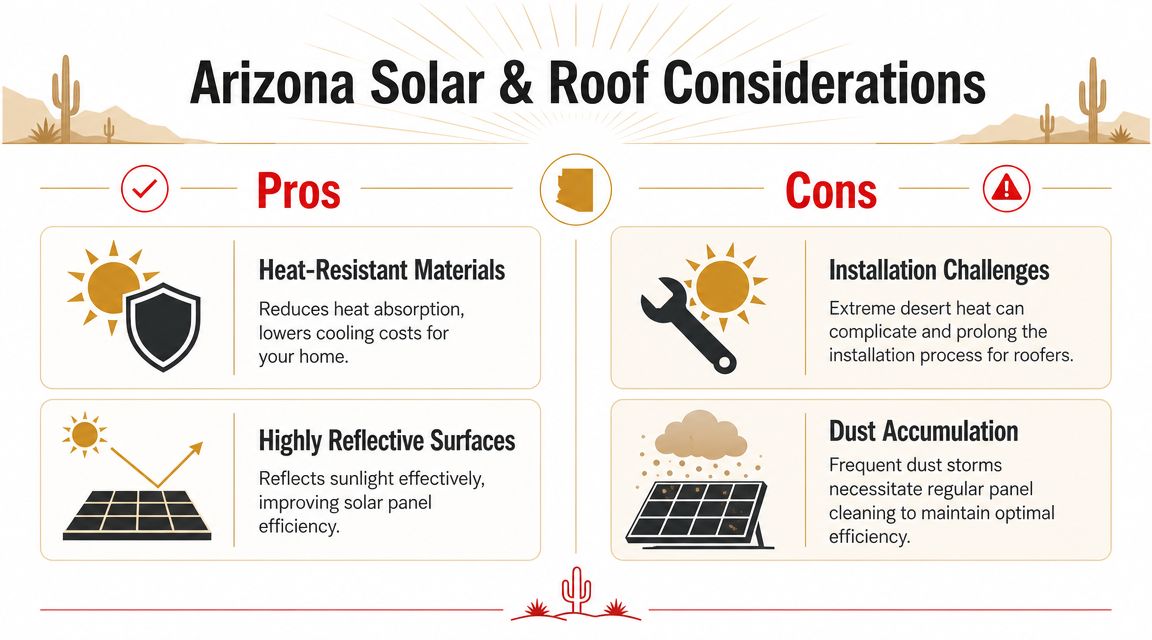
Hot roofs make solar panels work harder. Cooler roof surfaces help. That's why reflective membranes, coatings, and light-colored roofing assemblies matter more in Arizona than many homeowners realize.
According to the GAF guidance already noted earlier, highly reflective roof membranes can improve solar panel efficiency by up to 13% because cooler module temperatures preserve output. On the roofing side, reflective surfaces can also reduce heat absorption into the building itself. In Arizona, those two benefits point in the same direction. A roof that manages heat better is usually a better platform for solar.
That affects material selection on both residential and commercial properties:
- Reflective low-slope systems can support solar while helping manage roof temperature.
- Metal roofing can be a strong option when attachment details are matched correctly.
- Tile systems need extra care because movement and breakage risk change the install process.
- Aged dark surfaces can still work, but they're rarely the most forgiving base in extreme heat.
Orientation isn't the only thing that matters
A lot of homeowners still hear the same simple advice: south-facing is best, end of story. That's too simplistic for real roofs.
Some sources note that east and west-facing roofs can still achieve about 85 to 90% of south-facing output, as discussed in this roof pitch and solar guide. For many Arizona homes, shading, usable roof area, roof geometry, and heat management matter more than chasing the textbook-perfect direction.
A less-than-perfect roof direction can still be a good solar candidate if the roof has enough unshaded area, sound structure, and a layout that doesn't create maintenance problems.
That matters in subdivisions where neighboring homes, parapets, chimneys, and mixed roof lines limit the ideal layout. It also matters on homes that use east or west roof planes to better match household energy use patterns.
Storm design matters in monsoon season
Monsoon winds expose weak mounting and poor edge planning fast. Steeply angled panels can catch wind like a sail if the system isn't engineered correctly. Roof penetrations that look fine in dry weather may fail once wind-driven rain starts finding its way around sloppy flashing.
Arizona-specific planning should always include:
- Uplift review: especially on exposed homes and low-slope roofs.
- Fastener and flashing quality: heat and storm movement test both.
- Dust strategy: panel cleaning and roof access should be planned, not improvised.
- Service space: roofers still need access after the array is installed.
Arizona homeowners usually get better results when the roof is treated as a climate-control and weather-defense system first, and a solar platform second.
Warranties Insurance and Navigating Regulations
A solar project can be installed perfectly and still create problems if the paperwork is weak. Warranties, insurance coverage, permits, and HOA review all need attention before work starts, not after the panels are already ordered.
Get warranty language in writing
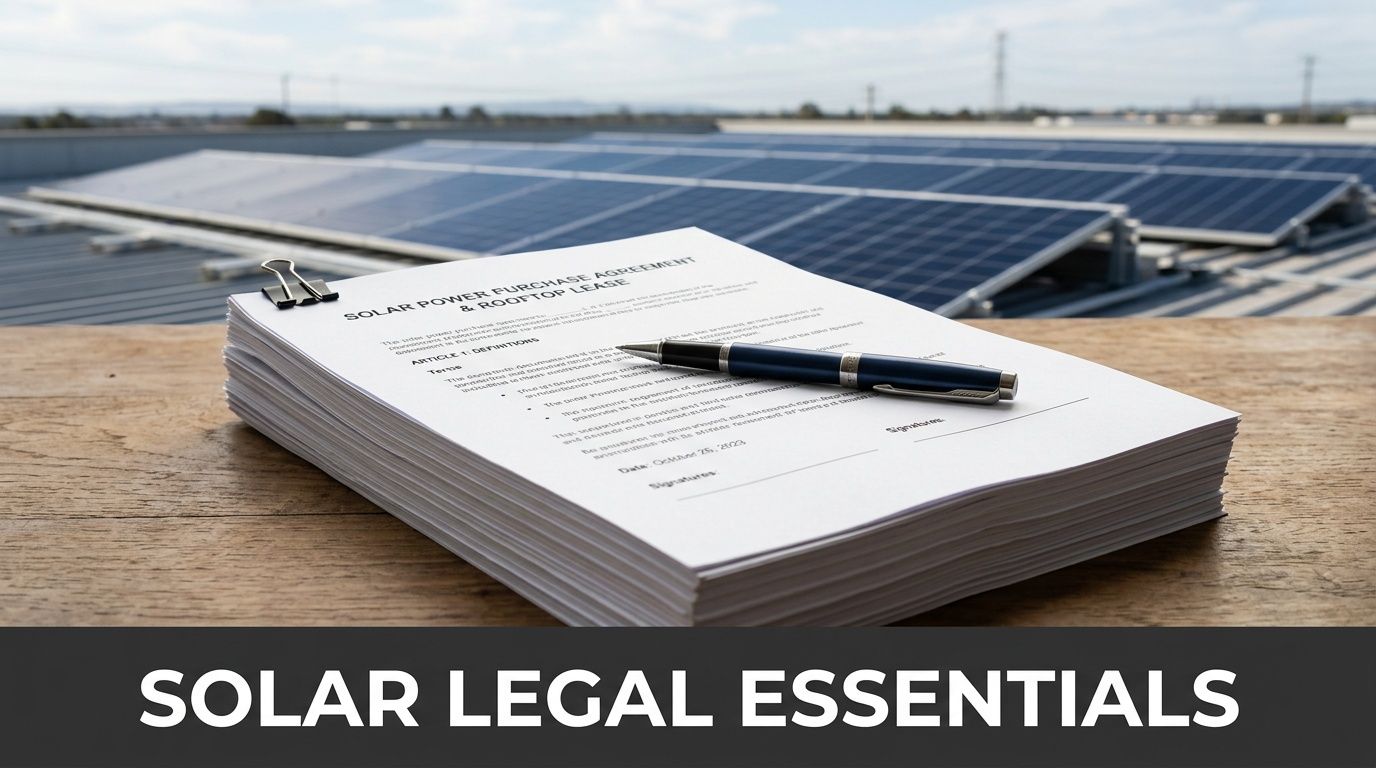
Roof warranties and solar work don't automatically fit together. The key issue is whether penetrations, foot traffic, equipment loading, or altered drainage conditions affect the roof manufacturer's or contractor's warranty terms.
Homeowners should ask for written clarification on:
- Who owns leak responsibility if a problem develops near a mount or flashing.
- What workmanship warranty applies to penetration details and roof repairs tied to the install.
- Whether material coverage changes after another trade modifies the roof.
- What maintenance is required to keep the warranty valid.
This overview of Solar Energy Management LLC roof warranty advice is a useful starting point because it highlights the questions homeowners should resolve before approving solar penetrations. Arizona homeowners can also review what a roof warranty cover typically includes to compare that language against any planned solar contract.
Review insurance before the install date
Insurance carriers have had to keep up with fast solar adoption. The U.S. market grew from 1 million installations in 2016 to 5 million by May 2024, according to this history of solar growth and deployment. As rooftop systems become more common, carriers and regulators continue adjusting how they handle coverage, valuation, exclusions, and damage documentation.
That means homeowners should confirm, in writing if possible:
- Whether the array is covered as part of the dwelling
- How storm or hail damage would be handled
- Whether detach and reset work is covered during a claim-related reroof
- What documentation the insurer wants after installation
Permits and HOA review need time
Permitting isn't glamorous, but it affects project timing. Cities and counties may require structural review, electrical review, and inspection sequencing. HOAs may also review panel visibility, placement, or submittal packages even when state rules limit how far they can interfere.
The safest approach is to assume the administrative side will take longer than expected, then make sure the roofing and solar schedules leave room for that reality.
A well-run solar and roof project isn't just watertight and code-compliant. It's also documented clearly enough that the homeowner isn't left sorting out coverage gaps later.
Your Arizona Solar and Roof Checklist
Most mistakes in solar and roof projects happen before the first panel goes up. They happen when the roof isn't inspected sufficiently, when timing is rushed, or when one contractor assumes the other is handling a critical detail. A simple checklist helps prevent that.
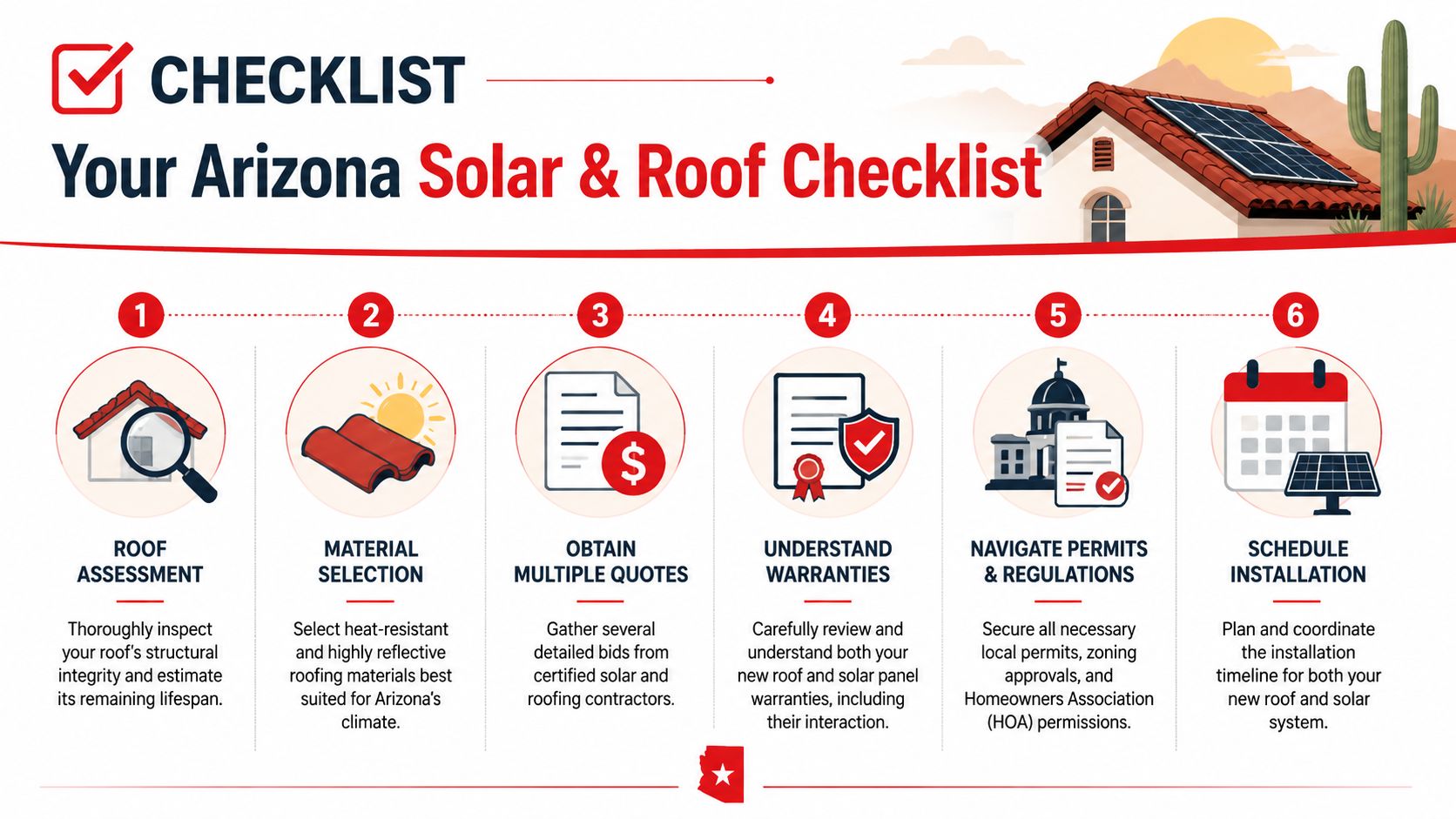
Use this sequence before work starts
Inspect the roof first. Confirm structure, deck condition, drainage, material compatibility, and visible aging before discussing final solar layout.
Decide on timing. If the roof is nearing the end of its useful life or already needs major repair, reroofing first is usually the cleaner move.
Match the mounting system to the roof type. Tile, shingle, metal, foam, and low-slope roofs don't get the same attachment strategy.
Ask for the waterproofing plan. Homeowners should know where penetrations go, how they'll be flashed, and how future service access will be preserved.
Review warranties in writing. Don't rely on verbal assurances about coverage after the roof is modified.
Check insurance and permit requirements. Delays often come from paperwork, not labor.
A contractor that handles roofing and solar coordination well should be able to explain each of those steps plainly. Arizona Roofers provides roof inspections, replacements, repairs, and solar-ready roofing work across Arizona, which is the kind of integrated scope homeowners should look for when the roof condition is part of the decision.
Final walkthrough items that shouldn't be skipped
Before signing off on the completed work, homeowners should verify the basics on the roof itself:
- Attachment review: mounts should look consistent, intentional, and aligned with the approved layout.
- Flashing and sealing: penetrations should appear professionally flashed, not solely caulked over.
- Drainage access: drains, scuppers, and service pathways shouldn't be trapped behind equipment.
- Broken material replacement: any cracked tiles, damaged shingles, or disturbed roofing components should be addressed before closeout.
- Photo documentation: keep final photos, warranty papers, inspection records, and contractor notes together.
The best outcome isn't just a working solar array. It's a roof system and solar system that age on the same timeline, survive Arizona weather, and don't force the homeowner into unnecessary rework.
Homeowners in Phoenix, Scottsdale, Mesa, Chandler, Tucson, and across the state who want a clear answer on roof condition before moving forward with solar can contact Arizona Roofers for a no-obligation inspection and project review. Call (480) 531-6383 to discuss reroof timing, solar-ready repairs, mounting concerns, and long-term waterproofing before the panels go on.