
A roof is one of the most critical components of your home, protecting it from the elements year after year. If you're wondering how long that protection should last, the answer depends heavily on the material, your local climate, and how well it’s maintained. A standard asphalt shingle roof, the most common type in the U.S., typically lasts 20 to 30 years. However, more durable materials like tile or metal can safeguard your home for 50 years or even longer.
These figures are just a baseline. The true lifespan of your roof is influenced by several key factors: the quality of the initial installation, the harshness of the weather it endures—especially our intense Arizona sun—and the consistency of your maintenance efforts. Understanding these variables is the key to maximizing your investment and avoiding the stress of a premature and costly replacement.
Key Takeaways
- Material Matters Most: The type of roofing material is the single biggest factor in determining its lifespan. Basic asphalt shingles might last 20 years, while premium materials like slate or metal can last a century.
- Climate is a Game-Changer: A roof in a mild climate will last longer than one exposed to extreme conditions like Arizona's intense UV radiation and dramatic monsoon seasons.
- Quality Installation is Non-Negotiable: Even the best materials will fail if installed improperly. Hiring a skilled, reputable contractor is crucial for ensuring your roof reaches its maximum potential lifespan.
- Maintenance Adds Years: Regular inspections and timely repairs are like preventive medicine for your roof. They can significantly extend its service life and help you avoid catastrophic failures.
Your Roof's Lifespan Explained
Think of your roof's material like its genetic code—it sets the upper limit for how long it could last. But just like with people, lifestyle and environment play a massive role. A roof in sunny, harsh Arizona faces a different battle than one in a mild, overcast climate.
Getting a handle on these variables is the best way to protect your investment and avoid the headache of a premature replacement. Let's break down what really matters.
This chart gives a great visual overview of what you can expect from the most common roofing materials.
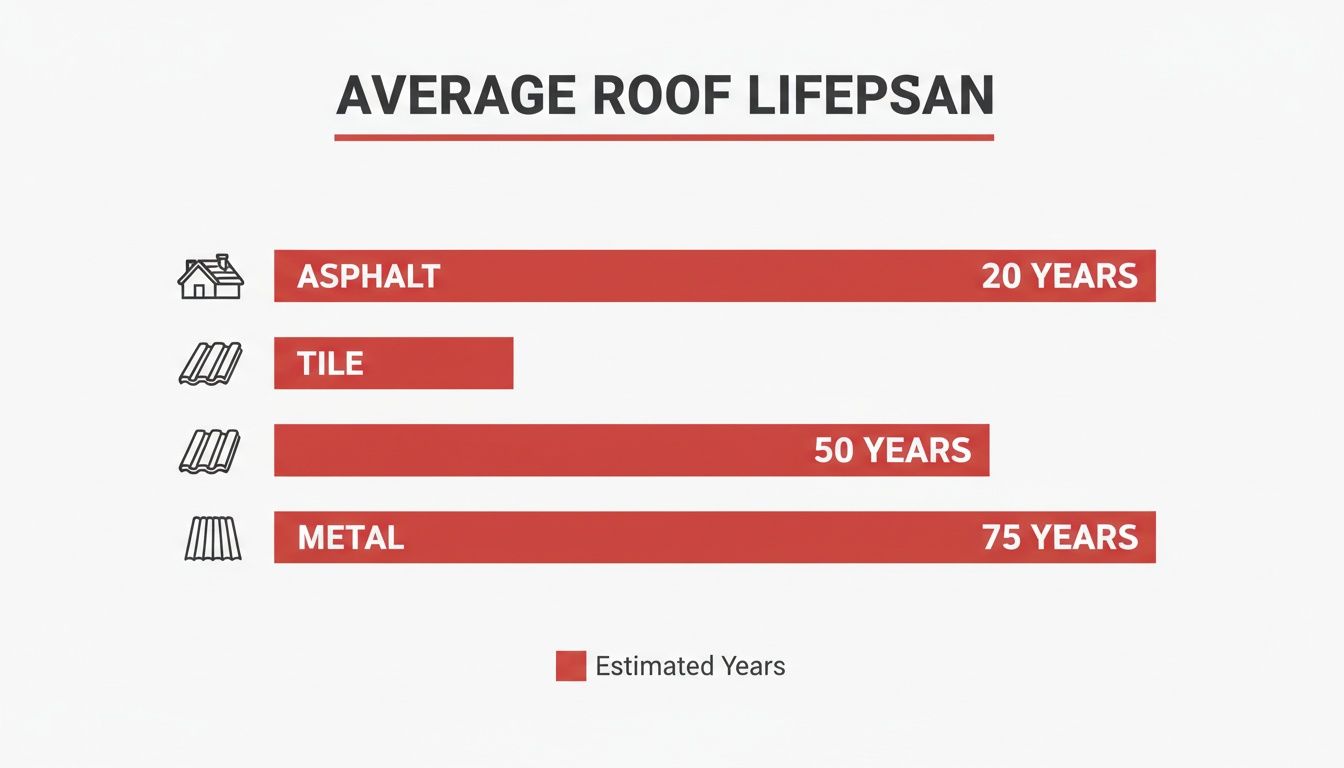
As you can see, investing in a material like tile or metal can really pay off in the long run.
Roof Lifespan by Material in Arizona
To give you a clearer picture, here’s a quick breakdown of common roofing options and how they typically perform right here in Arizona.
| Roofing Material | Average Lifespan in Arizona | Typical Cost Range (Per Sq. Ft.) | Best For |
|---|---|---|---|
| Asphalt Shingles | 20-25 years | $4 – $7 | Budget-conscious homeowners looking for a reliable, classic look. |
| Concrete/Clay Tile | 40-50+ years | $10 – $20 | Homes needing superior heat resistance and a long-term investment. |
| Metal | 40-70+ years | $9 – $18 | Durability, energy efficiency, and a modern aesthetic. |
| Spray Foam | 20-30+ years | $5 – $10 | Flat or low-slope roofs needing excellent insulation and seamless waterproofing. |
Choosing the right material is a balance of your budget, your home's style, and how long you plan to stay in the property.
How Our Climate Changes the Game
Asphalt shingles are the go-to for about 75-80% of homes across the country, but their lifespan is a perfect example of how much location matters.
In a place like Missouri, where hailstorms are common, a shingle roof might not even make it to 8 years. But here in Arizona, where our main enemy is the sun, that same roof can last an average of 22 years. It's a powerful reminder that "average lifespan" is always relative to the local weather. If you want to dig deeper, this roofing timeline guide from Graduate Contracting offers some great national perspectives.
A Deeper Look at Roofing Material Lifespans
While a quick-glance chart is useful, the real story behind a roof's longevity is all about the materials themselves. Ever wonder why a clay tile roof can look great after fifty years in the Arizona sun, while asphalt shingles might start looking tired after just twenty? It all comes down to how each material handles the daily grind of intense heat, UV radiation, and our wild monsoon storms.
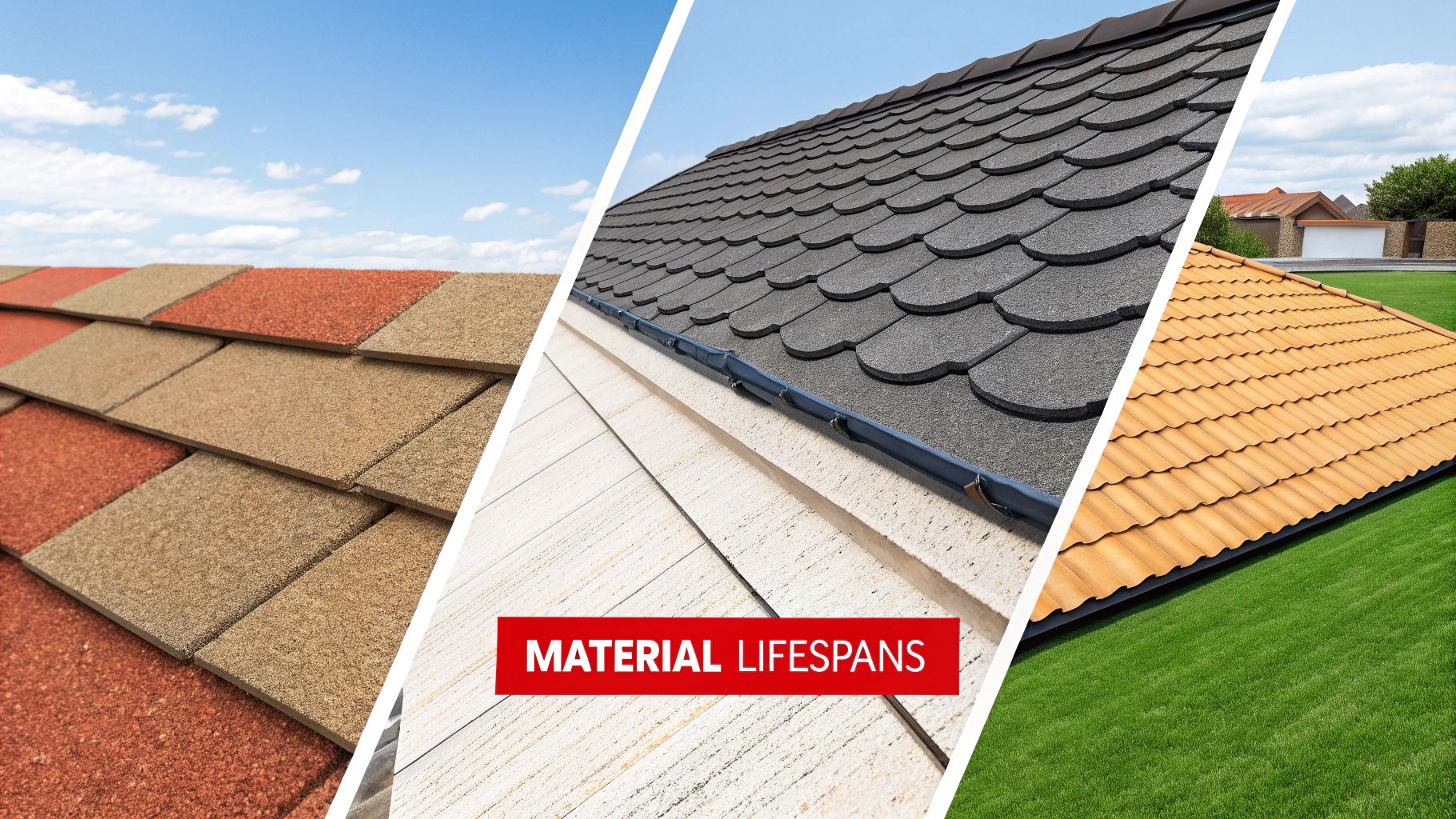
Knowing the "why" behind these differences doesn't just make you a smarter homeowner—it helps you make better decisions for the future of the system protecting your biggest investment. Let's dig into the most common materials you'll see on rooftops across Arizona.
Asphalt Shingles: The Popular Workhorse
There’s a reason asphalt shingles are everywhere: they hit a sweet spot of affordability and solid performance. At its core, a shingle is a fiberglass mat soaked in waterproof asphalt and topped with a layer of tiny ceramic granules. Those little granules are the secret to its survival.
Think of them as a shingle’s built-in sunscreen. They block the harsh UV rays that would otherwise cook the asphalt, making it brittle and prone to cracking. Over 15 to 25 years, however, the relentless Arizona sun and punishing monsoon winds slowly strip these granules away. Roofers call this "balding," and once that protective layer is gone, the asphalt underneath is a sitting duck, leading to rapid failure.
For a more detailed look at the different grades of shingles, our guide on how long architectural shingle roofs last has you covered.
Concrete and Clay Tile: The Desert Champion
Tile roofs are an iconic part of Arizona's landscape, and for good reason—they were practically made for our climate. Both concrete and clay tiles have high thermal mass, which is a technical way of saying they absorb the sun's heat slowly and release it gradually overnight. This helps keep your attic from turning into an oven, which can make a real difference on your cooling bill.
But here’s the most critical thing to understand about a tile roof: the tiles are just the armor. They aren't the primary waterproofing layer. The real hero is the underlayment, the waterproof membrane rolled out on your roof deck before the tiles are installed.
The lifespan of a tile roof system in Arizona is almost always dictated by the lifespan of its underlayment. While the tiles can last 50 years or more, a standard felt underlayment might only last 15-25 years before the sun's heat makes it brittle and ineffective.
This is why, when a tile roof "fails," it's rarely the tiles' fault. A proper re-roofing job often involves carefully lifting and stacking the original tiles, tearing off the old, worn-out underlayment, installing a modern synthetic version, and then putting the same durable tiles right back on.
Metal Roofing: The Durable Modernist
If you're looking for sheer longevity, it's tough to beat metal. Whether it's steel, aluminum, or copper, a metal roof can easily last 40 to 70 years, sometimes even longer. Its strength comes from its natural resistance to the elements—it simply won't crack, rot, or burn.
Today's metal roofs also feature incredibly advanced, factory-applied coatings. These high-tech finishes are engineered to reflect a huge amount of solar radiation, making metal one of the most energy-efficient roofing materials you can buy. This "cool roof" technology not only slashes energy costs but also reduces thermal stress on the metal panels, helping them last even longer.
Flat Roof Systems: The Commercial Crossover
Many Arizona homes, especially those with patios or modern additions, have flat or low-slope roof sections. You can't put shingles or tile on these areas because water would just sit there and find a way in. This is where systems borrowed from the commercial roofing world, like Spray Polyurethane Foam (SPF), really shine.
An SPF roof starts as a liquid that's sprayed directly onto the roof deck. It expands to form a solid, seamless layer that acts as both insulation and a waterproof barrier. With no seams, there are no weak spots for leaks to develop.
The lifespan of an SPF roof, typically 20-30 years, is all about maintaining the protective topcoat. This elastomeric coating is what shields the foam from UV rays. Every 5 to 10 years, a professional needs to clean the roof and apply a fresh coat. As long as you keep up with this simple maintenance, the foam underneath can last indefinitely, making it a fantastic and sustainable choice for any flat roof in our sunny climate.
What Shortens or Extends Your Roof's Life?
Knowing the material of your roof is a great starting point—it's like knowing your car is a sedan or a truck. But that doesn't tell you anything about how hard it's been driven or if it's been maintained. The real story of your roof's lifespan is written by the quality of the installation, its daily environment, and the care it gets over the years.
Think of it this way: some factors are like pressing the accelerator on aging, while others are like a fountain of youth, adding years of solid performance. An attic without proper ventilation, for instance, essentially slow-cooks your shingles from the inside out, day after day. Understanding these forces is the real key to getting the most out of your investment and avoiding an early, expensive replacement.
The Make-or-Break Role of Installation Quality
A roof isn't just a pile of shingles and nails; it's a complete system, and every single piece has to work in harmony. The most important day in any roof's life isn't the day it faces its first storm—it's the day it's installed. You can buy the best, most expensive materials on the market, but they'll fail in a heartbeat if they aren't put on correctly.
A professional installation ensures everything is just right:
- Nails are perfectly placed: Drive a nail too deep, and you've just punched a hole through the shingle. Leave it too high, and you've created a flap for the wind to grab.
- Flashing is sealed tight: Those metal pieces around chimneys, vents, and where roof planes meet are notorious weak spots. If they aren't installed flawlessly, they're practically an open invitation for leaks.
- Underlayment is flat and smooth: This is your last line of defense. Any wrinkles or gaps can become tiny rivers for water to find its way straight to the wood decking.
The best money you'll ever spend on your roof is hiring a licensed, insured, and reputable contractor. Trying to save a few bucks on labor is a classic mistake that almost always leads to bigger, more expensive repairs down the road. That "great deal" quickly turns into a long-term financial headache.
Attic Ventilation: The Unseen Protector
Your attic has to breathe. It's not optional. Good ventilation creates a constant, circulating airflow that pulls hot, damp air out before it gets trapped. In the relentless Arizona sun, a stuffy attic can easily top 150°F, literally baking your roofing materials from the underside.
This trapped heat is a killer for asphalt shingles, making them brittle and stripping them of their protective granules. It doesn't stop there—it can also warp the wooden roof deck and cook the underlayment, compromising the whole structure. A well-designed system of intake and exhaust vents is the only way to keep the attic temperature closer to what it is outside, and that alone can add years to your roof's life.
This simple airflow is the secret weapon against the damaging heat buildup that can destroy a roof from the inside out.
The Power of Proactive Maintenance
Waiting for a brown spot to appear on your ceiling before you think about your roof is like waiting for smoke to pour out from under your car's hood before checking the oil. By then, the damage is done. Small, easy-to-fix issues have a nasty habit of snowballing into catastrophic failures if you ignore them.
A simple maintenance habit is the easiest way to add years to your roof's lifespan. It's not complicated:
- Get an Annual Professional Inspection: A trained pro can spot things you'd never notice, like cracked sealant around a pipe vent or the early signs of granule loss that signal bigger problems ahead.
- Keep It Clean: Get leaves, pine needles, and branches out of the valleys and gutters. Debris dams up water, which will rot the decking and destroy everything underneath it.
- Trim Overhanging Trees: This move does double duty—it stops branches from scraping away at your shingles day after day and prevents a heavy limb from crashing down and causing major impact damage during a monsoon.
Regular check-ups mean you can catch and fix minor issues—like a single cracked tile or a failing seal on a vent—for a small cost. This stops moisture from penetrating the deeper layers of the roof system, where it causes the kind of widespread, expensive damage that leads to a full replacement. It’s the difference between a minor repair bill and a major financial blow.
Warning Signs Your Roof Is Nearing Its End
Roofs almost never fail out of the blue. Long before you see a dreaded water spot on your ceiling, your roof has been sending out subtle (and not-so-subtle) distress signals. Learning to spot these clues from the ground is the best way to catch problems early and head off a much bigger, more expensive disaster down the road.
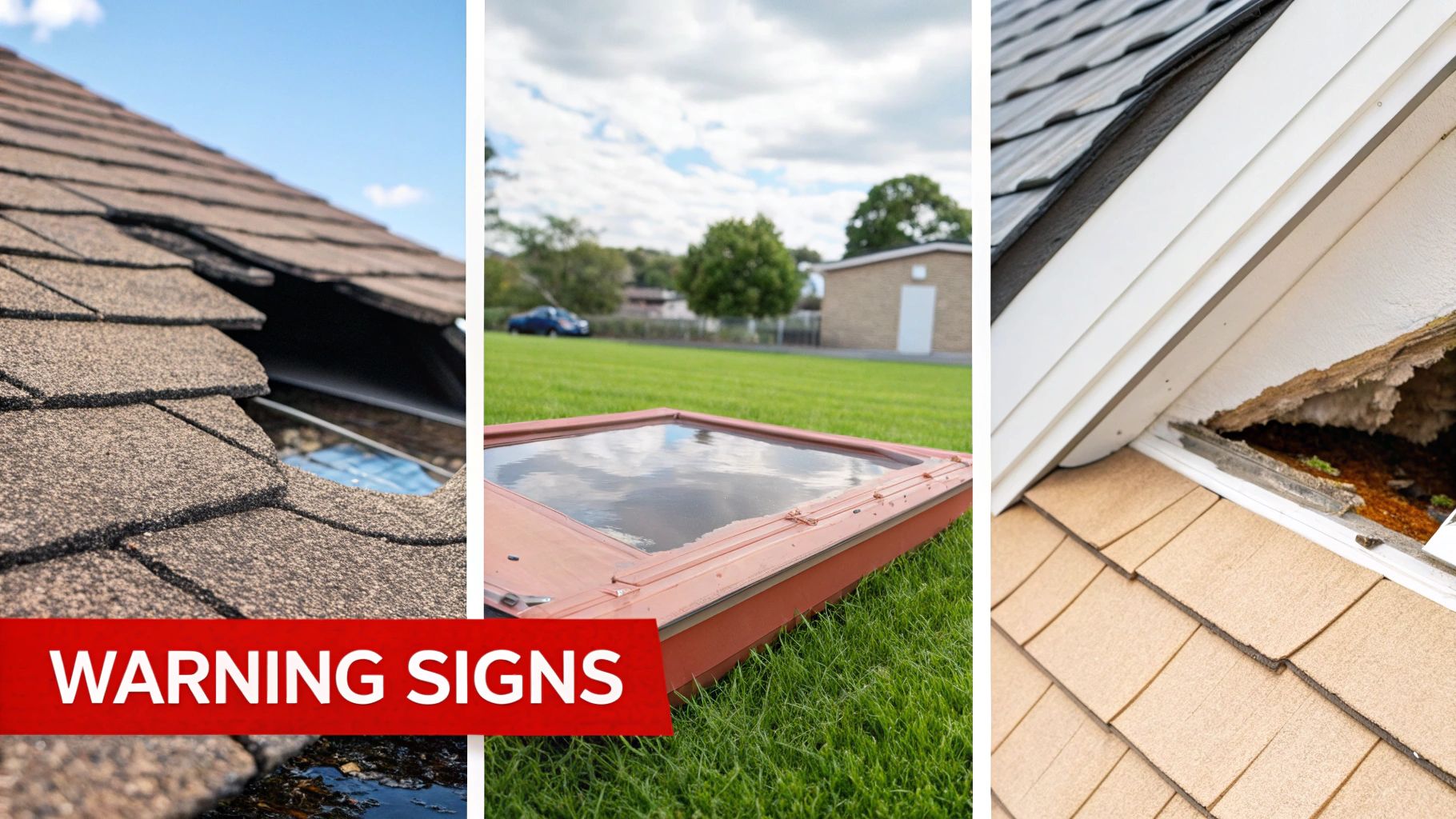
Of course, every roofing material wears out a little differently. Knowing what to look for based on your specific roof type is the key to truly understanding how much time it has left.
Clues on the Outside of Your Home
You'd be surprised what a quick walk around your house can tell you about your roof's condition. You don’t need to climb a ladder to spot some of the most common red flags that signal it’s time to call in a professional.
Here are the big ones to watch out for:
- Asphalt Shingles: Are the edges of your shingles starting to curl up? Do you see deep cracks or "bald" spots where the protective granules have worn away? Check your gutters, too. If they're full of what looks like coarse black sand, that's the granular coating from your shingles, and it means they're losing their defensive shield against the sun.
- Tile Roofs: Scan the roof for any tiles that are clearly cracked, broken in pieces, or have slid out of position. Even one missing or damaged tile is a major problem, as it leaves the vital underlayment exposed to the harsh Arizona sun and monsoon rains.
- Flat Roofs: Look for any signs of bubbling, blistering, or significant cracks on the surface. These are tell-tale signs that moisture is getting trapped underneath or that the material has become brittle with age.
Clues on the Inside of Your Home
Unfortunately, sometimes the first hint of trouble shows up inside. When you see these signs, it usually means a leak has already made its way through your roof's outer layers and is starting to affect your home's interior.
Keep a sharp eye out for these indoor warning signs:
- Water Stains: Those unmistakable yellowish-brown circles on your ceilings or walls are the classic calling card of a roof leak.
- Peeling Paint: Moisture getting into the drywall near the ceiling can easily cause paint to bubble, flake, or peel away.
- Sagging Decking: If you can safely peek into your attic, look up at the underside of the roof. Any wood that looks droopy, bowed, or has dark water stains is a serious red flag pointing to a long-term leak.
The checklist below breaks down some of the most common warning signs. Spotting any of these means it’s definitely time for a closer look from an expert.
Roof End-of-Life Checklist
| Warning Sign (Exterior) | Warning Sign (Interior) | What It Means |
|---|---|---|
| Curled, cracked, or "bald" shingles | Water stains on the ceiling | The protective layers are failing and water is getting in. |
| Broken or slipped tiles | Peeling paint near the ceiling | The underlayment is exposed and moisture is seeping into the structure. |
| Bubbles or blisters on a flat roof | A musty smell in the attic | Water is trapped, leading to rot and potential mold growth. |
| Dark streaks (algae) or moss | Sagging roof deck | The roof is retaining moisture and the structural integrity is compromised. |
This isn't just about looks; these are signals that your roof's ability to protect your home is fading. Age alone is a huge factor. If your shingle roof is hitting the 20-year mark or your tile roof’s underlayment is over 25 years old, you should start planning for a replacement, even if things look okay from the ground.
If you’ve noticed any of these issues, it’s a clear sign to act. For a deeper dive, check out our complete guide covering more signs you need a new roof.
Making the Call: Repair or Replace Your Roof?
Once you spot trouble on your roof, you’re at a crossroads. Is this a quick patch job, or are you looking at a full-blown replacement? Getting this right is about more than just stopping a leak—it's a major financial decision that impacts your home's safety and value for years to come.
The right answer usually comes down to two things: the roof's age and its overall health. A single cracked tile on a roof that’s only 10 years old? That’s an obvious repair. But if that same roof is pushing 25 years and you're seeing cracked tiles all over the place, the real problem is likely a failing underlayment. In that case, a replacement is the only sensible move.
The 50 Percent Rule
Here in the roofing world, we often lean on a simple guideline called the “50% Rule” to help homeowners figure this out. It’s a practical way to weigh the short-term fix against the long-term investment.
The rule is straightforward: if the cost to repair the roof is 50% or more of what a brand new roof would cost, it’s almost always smarter to go with a full replacement. Throwing that much money at an old, deteriorating roof is usually a bad bet. You're just putting a band-aid on one problem while another one is probably just around the corner.
Think of it this way: making a series of expensive repairs on an old roof is like putting a brand-new engine in a car with a rusted-out frame. At some point, it just makes more sense to invest in a new vehicle that you can count on.
This rule of thumb helps you avoid getting stuck in a costly cycle of patching one issue after another. For a deeper dive into this, check out our guide on the roof repair vs. replacement decision.
When to Repair and When to Replace
So, how do you know which path to take? It really depends on the specific symptoms your roof is showing. Some problems are small and contained, while others are red flags signaling that the whole system is on its last legs.
The image below shows some classic warning signs that a roof is nearing the end of its life, which almost always points toward replacement.
If your roof looks anything like this, especially if it’s getting up there in age, a replacement is probably your most cost-effective solution in the long run.
Here’s a quick breakdown of common scenarios:
-
Repair It: A repair makes perfect sense when the damage is isolated. Think a few shingles ripped off by monsoon winds or a failing seal around a vent pipe. If the rest of the roof is in solid shape and has plenty of life left, a targeted fix is the way to go.
-
Replace It: It’s time for a replacement when the problems are widespread. If you're seeing massive granule loss on your shingles, have multiple leaks popping up in different rooms, or if the underlayment on your tile roof is over 20-25 years old, a new roof is the answer. It’s a bigger investment upfront, but it solves everything at once, resets the clock on your home's protection, and gives you a powerful new warranty—not to mention a huge boost in curb appeal and peace of mind.
Frequently Asked Questions
How often should I get my roof inspected in Arizona?
For Arizona homeowners, an annual professional roof inspection is highly recommended. The ideal times are in the spring (before the intense summer heat) and fall (after monsoon season). This allows a professional to identify and address any minor storm damage or wear and tear before it develops into a major leak.
Can a new roof lower my energy bills?
Absolutely. Modern roofing materials, often called "cool roofs," are designed to reflect more of the sun's infrared radiation. This keeps your attic cooler and reduces the load on your air conditioning system, which can lead to significant savings on your energy bills. Materials like reflective-coated metal, specially treated asphalt shingles, and white-coated foam roofs are particularly effective in hot climates.
Will homeowners insurance cover a roof replacement due to old age?
No, homeowners insurance typically does not cover replacing a roof that has simply worn out over time. Insurance policies are designed to cover sudden and accidental damage from specific events (or "perils") like hail, windstorms, or fire. A roof's natural deterioration is considered a homeowner's maintenance responsibility. This is why it's so important to know your roof's expected lifespan and budget accordingly.
Does a roof's age affect my home's resale value?
Yes, significantly. A roof's age and condition are major factors for potential buyers and home inspectors. A new or recently replaced roof is a strong selling point that provides peace of mind and can increase your home's value. Conversely, an old roof nearing the end of its life can deter buyers, lead to lower offers, or result in demands for a credit to cover the future replacement cost.