
Arizona homeowners usually reach the same point the same way. The patio is already there, the backyard has potential, but the space sits empty through much of the day because the sun is too harsh. By late afternoon, the slab still throws heat upward, patio furniture feels hot to the touch, and the idea of outdoor living sounds better than it feels.
A covered patio metal roof solves that problem in a practical way. It adds shade, holds up well in Arizona weather, and gives homeowners a roof system that makes sense in places like Phoenix, Scottsdale, Mesa, Chandler, and Tucson, where sun exposure, dust, wind, and occasional hail all matter.
The details can get confusing fast. Homeowners run into terms like standing seam, underlayment, pitch, uplift, and panel gauge, then have to sort through material choices, permit questions, and installation bids. A good guide should slow that down and explain each part in plain language.
That’s what follows. The focus stays on how a covered patio metal roof works, where metal shines, what tradeoffs to expect, how Arizona heat changes the decision, and what to look for before hiring a contractor.
Table of Contents
- Introduction to Covered Patio Metal Roof
- Understanding Covered Patio Metal Roof Basics
- Benefits and Drawbacks of Covered Patio Metal Roof
- Material and Finish Options for Covered Patio Metal Roof
- Energy Efficiency and Real-World Performance Examples
- Costs Financing Permitting and Installation Overview
- Maintenance Warranty and Hiring the Right Contractor
- Conclusion and Next Steps
Introduction to Covered Patio Metal Roof
At 4 p.m. in an Arizona summer, an uncovered patio can feel less like an outdoor room and more like a skillet sitting in the sun. The slab stores heat, the glare bounces upward, and a quick shade solution often falls short once monsoon rain and gusty wind arrive.
A covered patio metal roof changes that equation. It creates real shelter, not just filtered shade, and in Arizona that difference matters. The project has to stand up to long UV exposure, sudden runoff, dusty conditions, seasonal wind, and in some locations added concerns such as hail or wildfire exposure. A roof that works well in a cooler, milder climate may age very differently in the Sonoran Desert.
That is why homeowners here often look at metal early in the planning process. Metal roofing is used because it can pair shade with durability, fire resistance, and strong weather performance, but the right result depends on more than the panel itself. Arizona projects also have to fit local code rules, attachment requirements, and permit review standards that can vary by city.
A good way to frame the decision is to treat the patio roof like a small exterior building addition. The roof surface is the visible part, but comfort and lifespan come from the full assembly underneath it, much like a car’s paint only works if the frame and engine are sound.
A well-designed covered patio metal roof can turn an exposed slab into a usable dining area, poolside retreat, grilling space, or shaded buffer between the house and yard. It can also reduce how punishing that west-facing afternoon sun feels, which is often the primary issue Arizona homeowners are trying to solve.
Practical rule: In Arizona, a patio roof should be judged on four basics first: heat control, drainage, wind resistance, and long-term durability.
Homeowners who start with those four basics usually make clearer choices on roof shape, finish color, attachment method, and budget. They also avoid a common mistake. Choosing a patio cover by appearance alone, then discovering later that the city requires different footings, stronger connections, or revised plans before the permit can be approved.
Understanding Covered Patio Metal Roof Basics
What a covered patio metal roof actually is
A covered patio metal roof is a small roof system with the same basic jobs as the main roof on your house. It has to carry weight, shed water, resist wind uplift, and protect the connection where the patio ties into the home or stands on its own frame.
That distinction helps clear up a common point of confusion. A pergola softens sunlight. A covered patio roof creates full overhead weather protection.
In Arizona, that difference affects more than comfort. It can change permit review, footing size, beam requirements, and how the city treats the project on the plans. Many jurisdictions review an attached patio cover more like a structural addition than a decorative backyard feature, especially if it connects to the house wall or electrical work is included for lights or outdoor ceiling fans.
The main parts working together
A good way to read the assembly is to start at the bottom and work upward, like reading the layers of a wall section on a set of plans.
- Posts and footings: These transfer roof loads into the ground. In Arizona soils and high-wind areas, footing size is often one of the first permit review items.
- Beams and rafters: These span across the patio and carry the roof loads. They work like the skeleton that keeps the shape rigid.
- Purlins or roof deck: These support the metal panels. Purlins are horizontal members spaced across the rafters, similar to the slats under a raised platform.
- Underlayment or moisture barrier: This backs up the metal roofing and helps manage water at laps and penetrations where the design calls for it.
- Metal panels: These form the exposed surface that takes the sun, rain, dust, and thermal movement.
- Trim and flashing: These finish the edges and seal transitions, especially where the patio roof meets a wall.
Homeowners often pause at panel terminology. Corrugated panels use visible ribs and exposed fasteners. Standing seam panels use vertical legs with concealed fasteners and a cleaner appearance. If you want a broader explanation of profiles, attachment methods, and tradeoffs, this guide to the pros and cons of metal roofing gives useful background before you compare patio-specific designs.
Why slope, span, and overhang matter more than they appear to
A patio roof can look simple from the yard and still fail on the details. The three basics that shape day-to-day performance are slope, structural span, and overhang.
Slope controls drainage. Water needs enough fall to leave the roof before dust, leaves, and monsoon runoff start pooling near laps or fasteners. Low-slope patio covers can work, but they need a panel profile and detailing that match that slope. Treat slope like the tilt on a baking sheet. Too flat, and water sits where you do not want it.
Span controls stiffness. If rafters, purlins, or panel supports are spaced too far apart, the roof can feel bouncy, oil-can visually, or struggle under wind pressure. Arizona homeowners often focus on panel color first, but permit reviewers usually care just as much about the framing schedule and connection points.
Overhang affects both shade and water control. A small overhang can push runoff away from the patio edge and increase shade during late afternoon sun, especially on west-facing exposures. Too much overhang without the right support can increase uplift forces at the edge, which matters during monsoon wind events.
Why the roof area is rarely the same as the patio slab
This surprises a lot of homeowners. A 12-foot by 14-foot slab does not automatically mean you are buying 168 square feet of roofing.
Once you add slope, panel overlap, trim, and overhang, the actual roof surface grows. A simple patio cover plan can require noticeably more metal than the slab dimensions suggest. That is one reason Arizona bids sometimes jump after the first site measure. The installer is pricing the roof plane, not just the concrete below it.
This also affects financing and permit documents. Lenders or home improvement financing providers may want the full contract amount tied to the actual installed scope, while the city may want plan dimensions, attachment details, and material callouts that match the framed roof rather than the patio slab alone.
The Arizona code angle homeowners should know early
Local code review usually focuses on the parts you cannot admire from a patio chair. Inspectors and plan reviewers tend to look closely at footings, post anchorage, ledger attachment, uplift connectors, and drainage away from the house. Heat also matters. Metal expands and contracts, so fastener placement, clip systems, and panel length have to allow movement instead of fighting it.
If the patio cover attaches to the home, the wall connection deserves extra attention. That tie-in is often the weakest point when water management or flashing is handled poorly. A detached structure avoids some wall-connection issues, but it still has to meet local structural requirements.
The short version is simple. The visible panel is only the top layer of the decision. The true performance comes from the assembly underneath, the same way a truck’s bed cover matters far less than the frame holding the load.
Benefits and Drawbacks of Covered Patio Metal Roof
A July afternoon in Arizona can turn an uncovered patio into a griddle. Add monsoon gusts, blowing dust, and months of strong UV exposure, and a patio roof stops being a simple shade accessory. It becomes part sun shield, part weather shell, and part structural system. That is why the benefits and drawbacks of a covered patio metal roof deserve a closer look before you sign a contract or submit plans for permit review.
Where metal performs well in Arizona
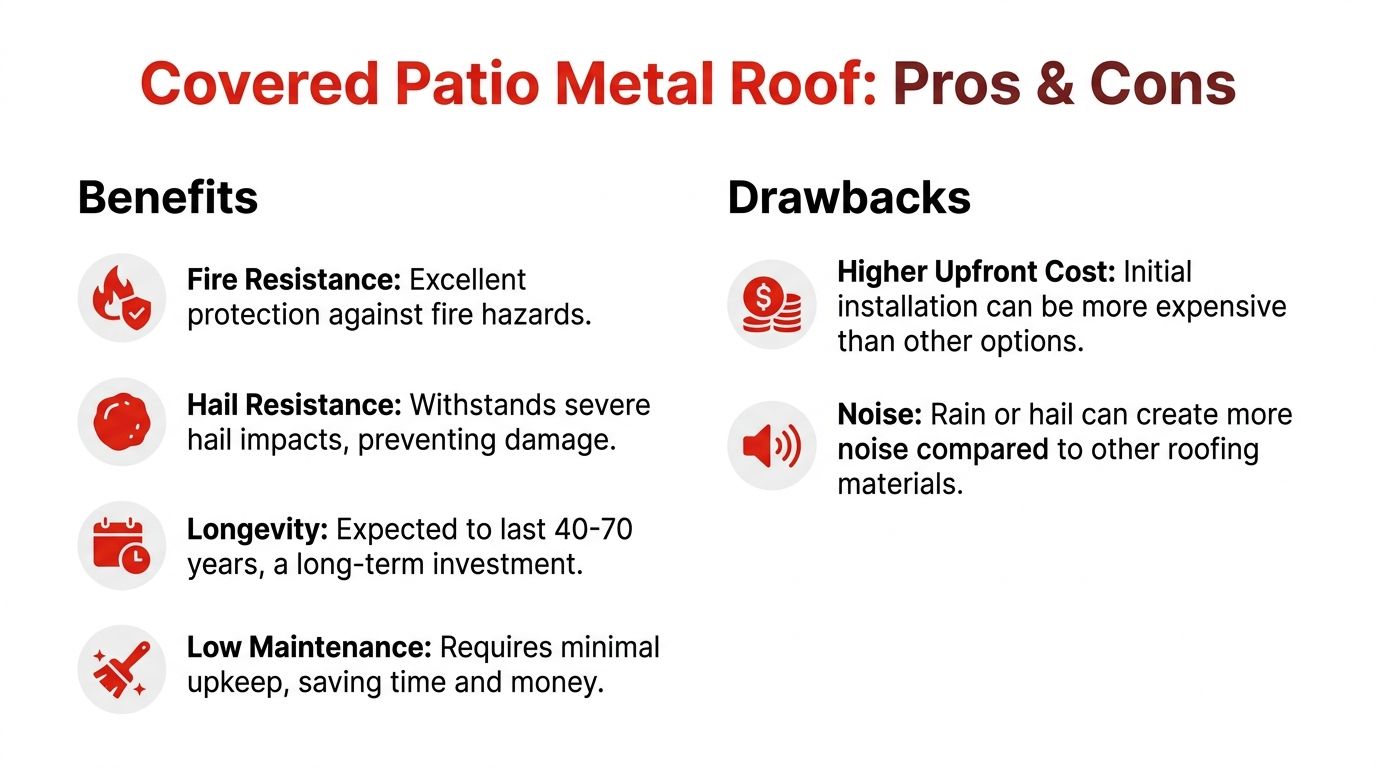
Metal roofing stands out because it handles several Arizona stressors at once. It resists fire well, sheds heat better than many dark heavy materials when the finish is chosen carefully, and holds up to long UV exposure without drying out the way some patio coverings can.
That does not mean every metal patio roof performs the same. Panel gauge, fastening method, underlayment, and finish all affect real-world results. A well-built system works like a sun-exposed car windshield shade with a frame behind it. The visible surface matters, but the support underneath determines whether it holds steady through heat and wind.
Key advantages usually include:
- Good fire performance: This matters for homes near desert edge areas, open lots, or places where wind can carry embers.
- Strong durability in harsh sun: Metal does not crack and curl the way some materials can after years of extreme heat.
- Lower routine upkeep: Homeowners usually spend more time checking fasteners, sealants, and debris than dealing with widespread surface failure.
- Long service life potential: For long-term owners, the higher initial cost can make more sense when replacement cycles are farther apart.
- Clean water shedding: With the right slope and trim details, metal moves rain off the roof quickly during monsoon storms.
Design flexibility is another plus. The same material category can support a modern standing-seam look, a more traditional ribbed panel, or a profile that blends better with stucco-and-tile Arizona homes. For homeowners comparing shape, appearance, and tradeoffs in more detail, this guide on top pros and cons of metal roof options for Arizona homes gives useful background.
Comfort also improves when the roof is planned as part of the whole patio system. Shade overhead helps, but airflow still matters in Phoenix, Tucson, and similar hot inland markets. Many homeowners pair the new cover with lighting and outdoor ceiling fans so the patio stays usable after sunset and during warmer months.
The drawbacks homeowners should weigh carefully
The first drawback is cost. A metal patio roof usually asks for more money up front than a basic shade cover or a lighter assembly. In Arizona, that higher price can grow further if engineering, footings, attachment upgrades, or permit revisions are needed.
Noise is another tradeoff. Rain on metal can sound pleasant to one homeowner and distracting to another. On an open patio with no attic space above, that sound is easier to hear because there is less material to muffle it.
Heat movement creates another planning issue. Metal expands and contracts as temperatures swing from cool desert mornings to intense afternoon heat. If the installer fastens panels the wrong way, the roof can oil-can, loosen, or stress trim details over time. Homeowners often blame the material when the actual problem is movement that was never allowed for in the design.
Appearance can also work for or against the project. The wrong panel profile on the wrong house can feel out of place. A patio cover should look connected to the home, not like a detached carport that wandered into the backyard.
Where the tradeoff becomes practical
A simple example helps.
Suppose a homeowner in Mesa wants a 12-by-20-foot attached patio cover. The slab size sounds modest, but the roofing decision still affects permit drawings, post spacing, beam sizing, drainage direction, and finish selection. If that patio faces west, the roof will take punishing late-day sun. In that case, paying more for a better-performing metal assembly may protect comfort and reduce future replacement headaches.
Now change the scenario. A homeowner only wants a temporary-looking shade structure over a small side patio and plans to move in a few years. The higher upfront cost of metal may be harder to justify.
That is the primary decision point. Metal usually makes the most sense when the patio is meant to function as a lasting extension of the house, not just a quick cover.
When a covered patio metal roof is usually a strong fit
A metal patio roof often makes sense when homeowners want:
- Reliable shade in full sun exposure
- Better durability during monsoon season
- A more permanent outdoor living area
- A material that supports long-term ownership goals
- A roof assembly that can meet local structural and fire expectations with the right design
The material gives you a durable top layer. The smarter question is whether the full assembly, budget, and permit path match how you plan to use the patio for the next several years. In Arizona, that long-view approach usually leads to better decisions than focusing on the panel alone.
Material and Finish Options for Covered Patio Metal Roof
A patio roof in Arizona has two jobs at once. It has to survive punishing sun from above and still look appropriate next to the house from the yard. That is why material and finish choices deserve more attention than many homeowners expect.
The easiest way to sort the options is to separate the metal itself from the surface coating. The metal is the frame of the decision. The finish is the skin that takes the daily beating from UV exposure, dust, heat, and monsoon grime.
How common patio metals compare
For covered patios in Arizona, homeowners usually end up comparing steel, aluminum, copper, and stone-coated metal panels.
Steel is the standard choice for many projects because it balances strength, appearance, and price. It works well on attached patio covers where spans, panel rigidity, and a clean finished look matter. If a homeowner in Gilbert wants a 12-by-20-foot roof with simple post spacing and predictable structural drawings for permit review, steel is often the practical place to start.
Aluminum is lighter and resists rust naturally. That can help on smaller structures, coastal climates, or projects where weight is a larger concern. In most inland Arizona cities, heat and UV wear usually drive the decision more than salt corrosion, so aluminum is often chosen for its lighter weight and style rather than because steel cannot work.
Copper is usually a design-first material. It develops a distinctive aged look and can complement higher-end architecture, but it costs far more than standard patio roofing and is rarely the default answer for a backyard shade cover.
Stone-coated metal uses a metal core with a textured surface that looks less like sheet metal from ground level. Homeowners who want the durability of metal without the sharper industrial look of exposed panels often ask about this category.
Panel profile changes the look and the installation
Material is only half the choice. Profile matters too.
A corrugated or ribbed panel is like a work boot. It is straightforward, durable, and usually easier on the budget. A standing seam panel is closer to a dress shoe. It has cleaner lines and a more architectural appearance, but the system details usually need tighter installation control.
That difference matters in Arizona because permit reviewers and installers are not looking only at color samples. They may also need to confirm attachment method, uplift resistance, slope, flashing details where the patio ties into the house, and how the panel system handles thermal movement during extreme summer heat.
Why finish matters as much as the metal
In Arizona, the finish is not decoration. It is the protective layer that stands between the sun and the base metal.
A better coating helps the panel keep its color longer, resist surface breakdown, and reflect more solar energy instead of storing as much heat. Homeowners do not need to memorize coating chemistry, but they should ask direct questions about paint system quality, fade resistance, and whether the finish is intended for high-UV desert exposure.
Color also matters, but not in a simplistic way. A very dark patio roof can still be the right visual match for a home. It just tends to absorb more heat. A lighter finish usually supports better comfort under the cover, especially on west-facing patios that take hard afternoon sun. Homeowners comparing shades may want to review energy-efficient roofing options for lowering cooling costs before choosing purely by appearance.
A practical selection framework for Arizona homes
A good material choice usually comes from the project conditions, not from the fanciest sample board.
| Priority | Best direction to explore | Why it helps |
|---|---|---|
| Budget control | Exposed-fastener steel panels | Keeps material and trim details simpler |
| Cleaner modern look | Standing seam steel or aluminum | Produces sharper lines and fewer visible fasteners |
| Lower weight | Aluminum systems | Reduces load on lighter patio structures |
| Textured appearance | Stone-coated metal | Softens the look compared with plain sheet panels |
| High-end architectural style | Copper or premium coated profiles | Chosen mainly for visual impact |
One Arizona-specific point often gets skipped in generic roof guides. Some HOAs and city permit packages care about visible finish, color family, and how the patio roof connects to the existing structure. A homeowner in Scottsdale may need a cleaner architectural match, while a homeowner in Tucson may want a finish that blends with stucco and desert tones. The right selection is the one that fits the home, satisfies local review requirements, and holds up under long summer exposure without turning the patio into a heat reservoir.
A simple rule helps. Choose the metal for structure and longevity. Choose the finish for sun exposure, appearance, and how hot the space feels underneath.
Energy Efficiency and Real-World Performance Examples
Arizona homeowners don’t need a roof that survives heat. They need one that helps make the patio feel usable. That’s where the conversation shifts from durability to comfort.
What the heat study means in plain language
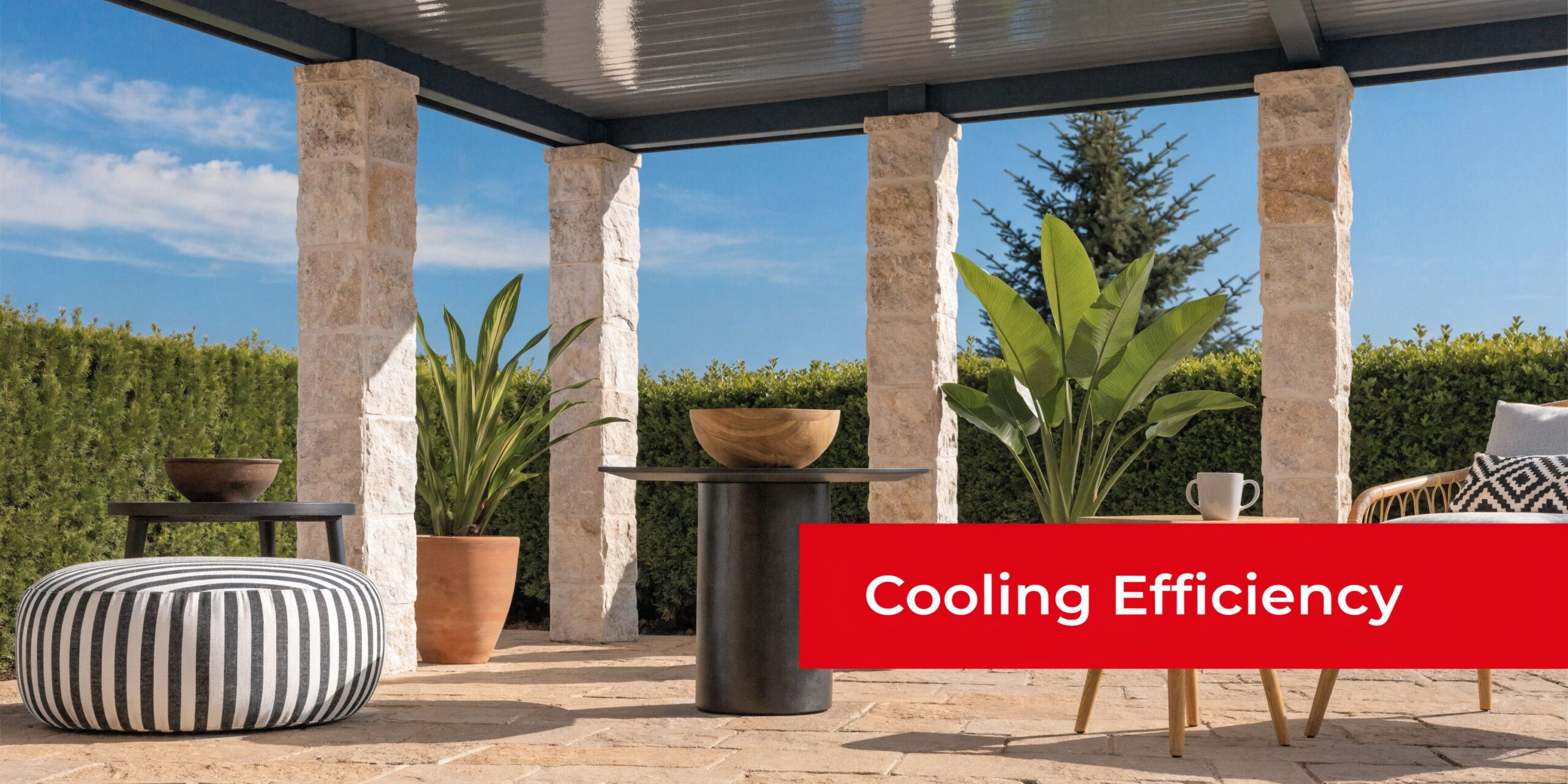
The strongest specific data point in this area comes from stone-coated metal roofing. According to this metal roof cost and performance reference, stone-coated metal roofs cut heat transfer through the roof deck by 45% compared to asphalt shingles in Oak Ridge National Laboratory field studies. The same source attributes 15% of that result to cool-roof granules and 30% to above-sheathing ventilation.
That sounds technical, but the plain-language version is simple. Less heat moves through the roof assembly and into the space below.
For a covered patio, that can mean:
- The shade area feels less oppressive in late afternoon.
- The underside of the roof doesn’t radiate as much stored heat downward.
- Adjacent indoor rooms may feel less affected when the patio roof connects closely to the house.
Homeowners who want to explore broader heat-saving roof strategies can review top efficient roofing options to lower your energy bills.
How Arizona installations improve comfort
A patio doesn’t need to become air-conditioned to feel noticeably better. Small thermal improvements stack up.
One practical way to think about it is the hot-car comparison. A parked car in full sun becomes uncomfortable quickly because every surface absorbs heat and then radiates it back. A covered patio metal roof changes that pattern by creating shade first, then improving surface performance when the material and finish are chosen well.
Comfort under a patio roof usually comes from several pieces working together:
- Reflective surface choice: The roof absorbs less solar load.
- Air gap or ventilation strategy: Heat has a path to escape instead of staying trapped.
- Proper height and orientation: The roof shades people longer through the day.
- Complementary features: Fans, shade screens, and layout planning improve the result.
Details that influence real performance
A homeowner can buy good metal panels and still end up with an underwhelming patio if the build ignores key details.
Three details often shape whether the finished space feels cooler or merely darker:
Panel color and coating
Darker roofs can still perform well, but reflective finishes usually help more in cooling-dominated climates.
Air movement
The cited study highlighted the effect of above-sheathing ventilation. That reinforces a practical lesson: trapped heat is the enemy.
Attachment to the house
An attached covered patio metal roof needs careful flashing and transition planning so the improvement outdoors doesn’t create moisture issues at the wall line.
A patio roof can block sun and still feel hot underneath if the assembly stores heat instead of shedding it.
In Arizona, energy efficiency for a patio roof should be read as comfort performance. The goal isn’t just lowering roof temperature on paper. The goal is making the backyard more livable through more hours of the day.
Costs Financing Permitting and Installation Overview
A homeowner in Phoenix often starts with a simple question: will this patio roof cost more like new patio furniture, or more like a small room addition? A covered patio metal roof usually sits in the middle. The final number depends on span, attachment method, footing work, panel profile, finish, and how much engineering the city requires.
That last part matters more in Arizona than many generic patio guides suggest. Extreme sun, monsoon wind, and local permit review can change both the budget and the installation timeline.
A practical way to build the budget
Start with the project in layers, like pricing a truck by looking at the frame, engine, tires, and cab instead of only the paint. The metal panels are only one layer.
A realistic estimate may include:
- posts and beams
- footings or slab attachment work
- framing members
- underlayment and flashing
- metal panels and trim
- fasteners rated for the application
- labor
- drawings or engineering
- permit fees
- inspection corrections if the city requests changes
Homeowners often underestimate the structure below the metal. On an attached patio, the beam sizes, post spacing, and ledger connection can drive cost as much as the panel selection.
A quick example helps. A 14-foot by 12-foot patio covers 168 square feet on paper. Once you add roof pitch, overhangs, trim, and waste, the material area grows. That is why roof quotes rarely match the simple slab size homeowners measure with a tape.
Cost ranges, explained clearly
Arizona homeowners get better answers when they separate material price from full project price. Those are different numbers.
| Budget Item | What It Covers | Typical Pricing Approach |
|---|---|---|
| Metal roofing materials | Panels, trim, fasteners, related roof components | Usually priced by square foot of roof area |
| Structural build | Posts, beams, rafters, attachment hardware, footing work | Often priced from plans and spans, not just roof area |
| Permits and plan review | City fees, drawings, possible engineering | Varies by city and project complexity |
| Installed project total | Materials, labor, structure, permits, cleanup | Quoted as a full contract amount |
| Financing | Monthly payment structure rather than a lower total price | Depends on contractor and lender terms |
Financing changes the buying decision for many families because the patio roof is rarely the only outdoor project underway. Concrete extension, electrical work for fans, lighting, or screen upgrades often follow close behind.
For readers comparing attached outdoor cover projects in general, this guide on building a roof over a deck helps show how planning, support layout, and tie-in details affect the budget before panels ever go on.
Financing questions Arizona homeowners should ask
A financing offer can make an expensive project manageable, but only if the homeowner reads it the same way they would read roof plans. Ask for the payment period, promotional deadline, interest terms after that period, required deposit, and whether permit or engineering charges are included.
Homeowners can use this guide on how to choose a roofing contractor to evaluate who is prepared to manage a patio roof job in Arizona.
Arizona Roofers provides patio metal roof consultation, free inspection, same-day quotes, flexible financing, and project management for homeowners who want one company handling planning, permitting, and installation.
Permits and approvals in Arizona cities
Most permanent patio roof structures in Arizona need permit review. Cities may treat the roof as a structural addition even when it looks modest from the backyard. The logic is straightforward. The city wants proof that the cover can transfer loads safely into the ground, stay attached during wind events, and drain water away from the house.
The review package commonly includes:
- Site plan: location of the patio cover, property lines, and distance to existing structures
- Framing details: post size, beam size, rafter spacing, roof slope, and connection points
- Attachment details: how the roof ties into the house or stands as a freestanding structure
- Material notes: roofing type, flashing, and fastening method
- Inspection sequence: footing inspection if needed, then final inspection after completion
Arizona cities do not all review projects at the same speed. Some patio covers move quickly if standard details are used. Others slow down if the house connection, setback, or structural spans raise questions.
A simple case study shows why planning matters. In one attached-patio scenario, the homeowner measured a 16-foot by 20-foot cover and expected pricing based mainly on panel area. The city review then required revised footing notes and clearer ledger attachment details because the roof tied into the house wall. The panel count barely changed. The paperwork and structural scope did. That is a common Arizona pattern.
Permit review is the checkpoint that confirms the roof system is drawn, attached, and supported the way it will actually be built.
What installation usually looks like
Installation follows a sequence, and each step depends on the one before it. A patio roof is like setting a table on uneven legs. If the support layout is off early, every visible piece above it becomes harder to align.
Field measurement
The contractor confirms width, projection, elevation, slope, drainage direction, and tie-in points.Plan preparation
Drawings are assembled for city review and for the install crew.Permit approval
Work should wait until the required approvals are in place.Layout and structural work
Footings, posts, beams, and rafters are installed and checked for square and level.Roof dry-in
Underlayment, flashing, and transitions are installed so water has a controlled path off the assembly.Panel and trim installation
Panels, ridge or wall trim, edge metal, and closure details are finished in order.Final inspection and punch list
The city signs off if required, and the contractor corrects any remaining detail items.
Homeowners should ask one direct question before signing the contract: who is responsible for permits, inspections, and corrections if the city asks for revisions? That answer often tells you how organized the installation will be.
Maintenance Warranty and Hiring the Right Contractor
A covered patio metal roof is low maintenance, but “low” doesn’t mean “none.” The roof is still outside all year, taking dust, wind, debris, and thermal movement.
What routine maintenance actually involves
Most patio roof maintenance is visual and preventive. Homeowners don’t need a long seasonal checklist. They need a few repeatable habits.
- Clear debris: Leaves, twigs, and dirt should be removed so water can move off the roof cleanly.
- Check fasteners and trim: Exposed fasteners, edge trim, and flashing should stay tight and seated.
- Inspect seal areas: Penetrations and transitions near walls deserve extra attention.
- Rinse the surface when needed: Dust buildup is normal in Arizona, and occasional cleaning helps the roof look better and perform as intended.
The most important maintenance item is often the one homeowners can’t easily see after the panels go on. Underlayment attachment matters.
According to this underlayment attachment reference, metal roof underlayment requires a 12-inch grid pattern of corrosion-resistant fasteners to meet UL-90 uplift standards in high-wind zones, helping prevent 50% of wind-related failures and supporting 50-year warranties. That’s a technical spec, but the takeaway is simple. Hidden installation details affect whether the roof stays watertight and warranty-compliant.
How warranties protect the owner
Homeowners should ask for two different warranty explanations, not one.
The first is the manufacturer warranty. That usually covers the roofing product itself under stated conditions.
The second is the workmanship warranty. That covers how the installer assembled the system.
Those are different promises. A panel defect and a flashing error are not the same issue.
A strong contractor should explain:
- What product coverage applies
- How long workmanship protection lasts
- What actions could void coverage
- Whether inspections or maintenance records are recommended
What to ask before signing a contract
Contractor selection matters more than brochure quality. A polished estimate doesn’t prove good installation.
Homeowners should ask direct questions:
- Are licensing, insurance, and bonding current?
- Who prepares the plans and handles permits?
- What underlayment and fastening method will be used?
- How are wall transitions and flashing detailed?
- What warranty comes from the installer, separate from the manufacturer?
- Who supervises the project on site?
For a deeper checklist, this internal guide can help: how to choose a roofing contractor.
A good contractor should be willing to answer technical questions in plain language. If the explanations stay vague, the installation may too.
Conclusion and Next Steps
A covered patio metal roof gives Arizona homeowners more than shade. It creates a tougher, more usable outdoor space that can handle intense sun, monsoon weather, and long-term exposure better than many lighter patio cover options.
The smartest projects start with a few grounded decisions. Pick a roof style that fits the house. Choose a material and finish suited to desert conditions. Confirm that the slope, drainage, underlayment, and attachment details are handled correctly. Then make sure the permit path and warranty terms are clear before work begins.
For homeowners in Phoenix, Scottsdale, Tucson, Mesa, Chandler, and nearby communities, the next step is simple. Get the patio measured, review material options, and compare the full installed scope instead of panel price alone.
Arizona homeowners who want a durable, heat-conscious patio upgrade can contact Arizona Roofers for a covered patio metal roof quote, permit guidance, financing options, and installation planning. Call (480) 531-6383 today to schedule a free inspection and take the next step toward a cooler, more resilient backyard space.