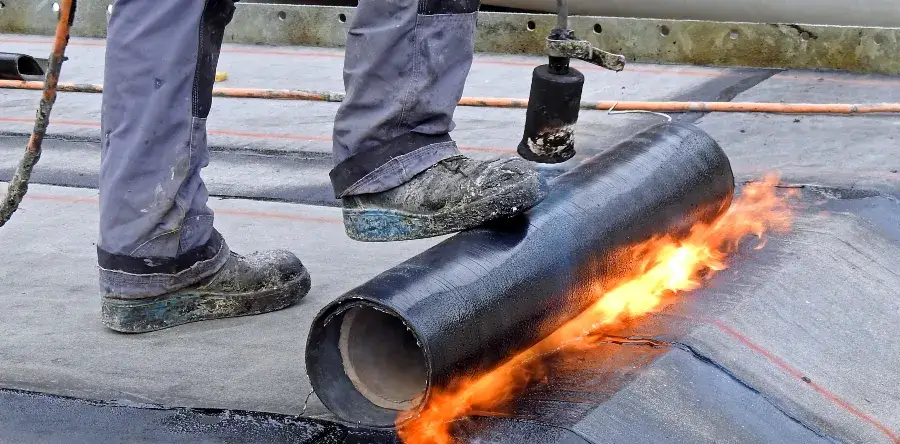

A lot of Arizona homeowners first start thinking about replacing tile roof after a storm, not before one. A ceiling stain shows up a day after monsoon rain. A few tiles are sitting in the yard. Maybe there’s that nagging concern that the roof has looked “mostly fine” for years, but nobody has checked what’s happening underneath.
That’s a common spot to be in across Phoenix, Scottsdale, Mesa, Chandler, Tucson, and the surrounding cities. Tile holds up well in the desert, but Arizona punishes every roofing system with heat, UV exposure, dust, wind, hail, and sudden downpours. The tile itself may still look solid from the street while the underlayment below it is nearing the end of its service life.
Homeowners usually want clear answers to a few practical questions. Is this a repair job or a full replacement? What material makes sense for this house? What will permits, labor, and cleanup involve? What happens if insurance is part of the picture after hail or monsoon damage? For readers comparing options, Arizona tile roofing services give a helpful overview of the roof styles commonly used across the state.
A tile roof replacement is a big project, but it shouldn’t feel mysterious. The right decision comes down to condition, structure, weather exposure, budget, and whether the roof is being restored after damage or proactively replaced before leaks spread into the decking and interior.
Table of Contents
- Your Guide to Tile Roof Replacement in Arizona
- Is It Time for a New Roof? Inspection and Key Decisions
- Planning Your Project Materials, Permits, and Budget
- Understanding the Tile Roof Replacement Process
- Hiring a Contractor, Financing, and Insurance Claims
- Post-Installation Care and Maximizing Energy Savings
- Frequently Asked Questions About Tile Roof Replacement
Your Guide to Tile Roof Replacement in Arizona
A tile roof in Arizona isn’t just a design choice. It’s part of how a house handles relentless summer heat and still stands up to monsoon season.
Tile has a long track record for durability in dry climates. Clay tile roofs last 75 to 100 years, and concrete tile roofs last 40 to 75 years when they’re installed and maintained properly, according to this overview of tile roof lifespan. That kind of lifespan is the reason so many homes in the Valley and Southern Arizona were built around tile in the first place.
But replacing tile roof isn’t only about the visible pieces. The hard lesson many homeowners learn is that the roof can fail from below. Underlayment, flashing, ventilation details, and deck condition decide whether a tile roof stays watertight.
A roof can look acceptable from the driveway and still be overdue for replacement once the underlayment starts breaking down.
Arizona also adds a financial layer that many general roof guides miss. Monsoon wind can scatter tiles. Hail can crack them or shift them. Water can find its way under the field tiles and into vulnerable areas like valleys, penetrations, and transitions. That turns the project into more than a construction decision. It becomes an insurance and documentation issue too.
The smartest approach is to treat replacement as both a building project and a risk-management project. Homeowners who understand the warning signs, the process, and the claim paper trail usually make cleaner decisions and avoid paying for the same problem twice.
Is It Time for a New Roof? Inspection and Key Decisions
A lot of Arizona homeowners find out they need a new tile roof the same week they’re dealing with a ceiling stain, a monsoon claim, and an adjuster asking for photos from before the storm. That is why this stage matters. The inspection is not only about confirming roof condition. It is also where homeowners either protect their budget or lose ground with insurance.

What can be checked from the ground
Homeowners should stay off tile. I have seen more than one roof pick up extra breakage from a well-meaning inspection walk after a storm.
A ground review still tells you a lot, especially after monsoon wind or hail. Look for patterns, not just one obvious problem.
- Tiles on the ground: One fallen piece may mean a localized repair. Repeated breakage after storms often points to broader fastening, underlayment, or aging issues.
- Uneven roof lines: A dip or wave can mean movement in the deck or framing below.
- Interior stains or fresh paint touch-ups on ceilings: Water usually gets in through flashings, valleys, or worn underlayment long before the tile field looks completely failed.
- Debris packed in valleys: Arizona roofs collect dust, leaves, and seed pods fast. During a hard monsoon, that buildup slows drainage and pushes water into vulnerable transitions.
- Widespread slipped, chipped, or mismatched tiles: That often signals an older roof that has already been patched multiple times.
A closer evaluation should come from a professional tile roof inspection in Arizona that looks at both the tile surface and the waterproofing details underneath.
What pushes a roof from repair into replacement
Tile itself usually lasts a long time in Arizona. The shorter-life parts are the ones homeowners do not see from the driveway. Underlayment dries out. Flashings loosen. Mortar at key areas can crack. Once that starts happening in several locations, repair money stops going very far.
The Tile Roofing Industry Alliance notes that clay and concrete roof tile are low water-absorbing materials and are built for long service lives when the system is installed correctly and maintained over time, as explained in its roof tile basics guidance. That is the reason many Arizona tile replacements happen even though much of the tile can sometimes be reused. The weather barrier below the tile is often the part that has reached the end of its run.
Replacement usually makes more sense than spot repair when you see several of these conditions at once:
- Leaks showing up in more than one part of the house
- Storm damage spread across multiple slopes
- Underlayment aging out, especially on older roofs with repeated leak history
- Cracked, slipped, or discontinued tiles that make proper water shedding harder to restore
- Soft decking, sagging areas, or signs of long-term moisture intrusion
- A repair history that keeps expanding after each storm season
One leak does not always mean full replacement. A single valley issue or one damaged area after a storm can still be a repair job if the rest of the roof is dry and stable. The decision should come from system condition, not guesswork.
What a professional inspection should include
A useful tile roof inspection in Arizona needs to answer two questions. Can the roof still be repaired with confidence, and if storm damage is involved, can the findings be documented well enough to support an insurance claim?
That inspection should include:
- Tile field review for cracked, displaced, broken, or impact-damaged tiles.
- Flashing review at vents, skylights, chimneys, walls, and transitions.
- Valley and drainage review where monsoon runoff concentrates.
- Underlayment assessment based on age, leak history, exposed areas, and visible deterioration.
- Deck and structure check for soft spots, sagging, or long-term moisture damage.
- Photo documentation that clearly separates old wear from recent storm-related damage.
- Moisture tracing with close-up diagnostics and, where available, thermal imaging.
That documentation matters more than many homeowners expect. In Arizona, hail and monsoon claims often turn on detail. The carrier may agree that tiles are damaged but question whether the underlayment, flashings, or detached reset areas are part of the same covered loss. Good inspection photos, marked slopes, date-stamped storm notes, and a clear scope can make the difference between a partial approval and an out-of-pocket project that should have been covered more fully.
The financial decision is usually straightforward once the inspection is done right. If the roof has isolated damage, repair it before water reaches the decking. If the roof has scattered leaks, aging waterproofing, and storm damage across multiple areas, replacement is often the lower-cost decision over the next few years, even if the upfront number is higher.
Planning Your Project Materials, Permits, and Budget
Good tile roof replacements are won in planning. The material choice, structural fit, permit path, and budget assumptions all affect how smooth the job goes.
Choosing between concrete clay and alternatives
Arizona homeowners usually compare concrete tile, clay tile, and a few premium alternatives that deliver a tile-style appearance or high heat performance. Each option comes with trade-offs.
Concrete tile is common because it balances cost and durability. Clay tile often appeals to homeowners focused on classic Southwest aesthetics and very long service life. Some homes also use high-performance alternatives when weight, architectural design, or budget priorities point in a different direction.
Here’s a practical side-by-side view.
| Material | Average Cost (per sq. ft.) | Lifespan (Years) | Heat Resistance |
|---|---|---|---|
| Concrete tile | $2 to $4 | 40 to 75 | Strong for Arizona heat |
| Clay tile | Qualitatively higher than entry-level concrete | 75 to 100 | Strong for Arizona heat |
| Premium tile alternatives | Can vary widely based on system and design | Qualitatively varies by product | Can perform well when specified for desert climates |
The budget side has to stay grounded in real numbers. The average cost to replace a tile roof in 2026 ranges from $8,000 to $24,645, with a typical spend of $16,000 to $17,320 according to this 2026 tile roof cost guide. In Arizona markets, the same source places pricing at $7 to $35 per square foot, with labor accounting for about 60% of total costs at $5 to $18 per square foot and materials at $2 to $10 per square foot.
That breakdown matters because homeowners often focus on tile price and underestimate labor. Tile work is detail-heavy. Removal, underlayment, flashing, layout, fastening, cleanup, and code compliance drive much of the final bill.
For homeowners trying to map likely costs before requesting estimates, this guide on how much a new roof costs is a useful starting point.
Permits in Arizona cities
In cities like Phoenix, Scottsdale, Mesa, Chandler, and Tucson, a full tile replacement usually requires a permit. Homeowners shouldn’t treat that as paperwork for its own sake.
Permits help verify that the replacement addresses structural concerns, fastening methods, underlayment requirements, and final inspection standards. That matters more with tile than with many lighter systems because the roof assembly carries substantial weight and includes more components that can fail if rushed.
A strong permit package typically lines up:
- Scope of work
- Material specifications
- Contractor licensing details
- Property information
- Any structural notes if decking or support repairs are expected
Skipping permits can create ugly problems later during resale, insurance review, or after a future storm claim.
Budget ranges and what changes the price
A homeowner can get two valid estimates for the same house and still see a noticeable difference. That doesn’t always mean one contractor is overpriced. It often means the scopes aren’t equal.
The biggest pricing drivers are:
- Roof size and shape: More area means more labor and material. Complex rooflines add cutting and flashing work.
- Tile type: Concrete is often the more affordable entry point. Premium materials cost more.
- Tear-off condition: If the old roof comes off cleanly, the project moves faster. Hidden deck damage changes everything.
- Access and staging: Tight lots, fragile landscaping, and multi-story access add labor.
- Code-required details: Ventilation, underlayment upgrades, and fastening standards can affect the final scope.
Repair still has a place. The same cost source notes repairs average $900 to $2,500, but recurring issues often make replacement the smarter long-term decision when the roof is already near the end of its useful life.
Understanding the Tile Roof Replacement Process
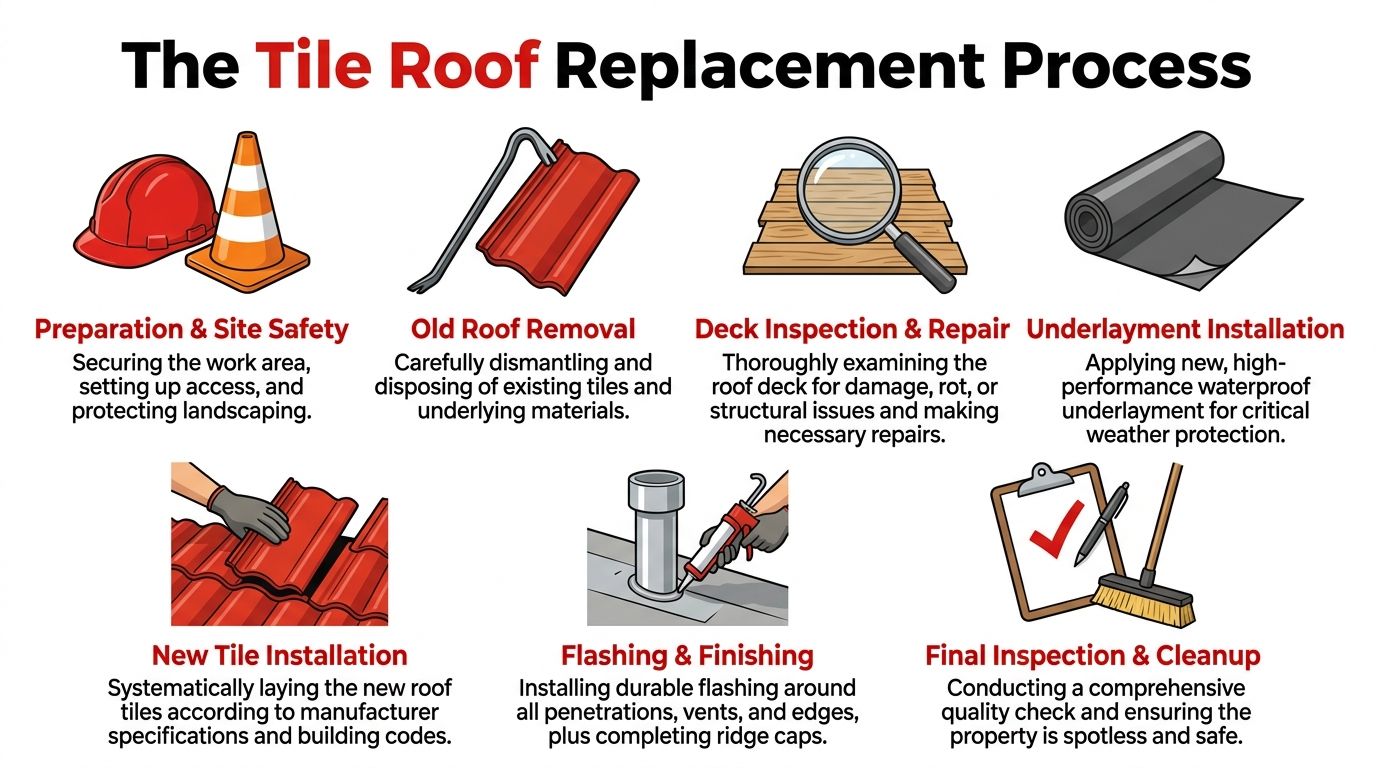
Homeowners usually hear “tear-off and replace” and imagine one simple swap. Tile roofing isn’t that simple. Replacing tile roof is a sequence of detailed steps, and the quality of each one affects leak resistance for years.
Phase one tear-off and site protection
The job starts before the first tile comes off. Crews secure access, protect landscaping, stage materials, and set debris handling procedures. On a lived-in home, this part matters more than homeowners expect.
Tile removal is noisy. There will be foot traffic overhead, material movement, and periods where the old assembly is being stripped back. A well-run crew contains the mess and keeps the site organized, but homeowners should expect an active jobsite.
The roof itself is usually removed down to the deck. That’s important because hidden problems don’t show up until the old tile, battens, underlayment, and flashings are out of the way.
Phase two deck underlayment and flashing
This phase determines if the replacement becomes a lasting roof or a future leak source.
According to this tile roof replacement process guide, the replacement process begins with a full tear-off, followed by a deck inspection, and deck rot can affect 30% to 50% of aged tile roofs. The same source explains that a water-resistant synthetic underlayment is then installed before new tiles are laid from the eaves upward with corrosion-resistant fasteners for high-wind code compliance.
That sequence matters because the underlayment is the true waterproofing layer. The tiles shed weather and protect the assembly, but if the underlayment is tired, brittle, torn, or badly detailed, the roof is vulnerable no matter how nice the tile looks.
Crews should be looking closely at:
- Soft or rotted decking
- Old flashing around penetrations and walls
- Valleys that show signs of long-term water concentration
- Ventilation details that trap excessive heat in the attic
- Transitions where roof planes change pitch or meet stucco and parapet elements
Most post-install leak complaints don’t come from the field tile. They come from missed details at the deck, valley, flashing, or penetration level.
A shortcut here is expensive later. The same source states that inadequate deck repair causes 40% of post-install leaks, and ignoring proper ventilation can reduce roof lifespan by 15 to 20 years in Arizona heat. That’s why experienced crews slow down during the prep stage instead of racing to get visible tile on the roof.
Phase three tile installation and final sign-off
Once the deck and waterproofing layers are right, the visible part of the roof goes on. New tiles are installed in sequence from the eaves upward. Layout matters. Fastening matters. Matching the roof geometry matters.
This stage isn’t just about making the house look finished. It has to preserve drainage paths and keep the field tile aligned with valleys, ridges, hips, and penetrations.
A strong installation process includes:
- Consistent tile alignment so water moves where it should.
- Proper fastening that secures the tile without creating unnecessary breakage.
- Clean flashing integration where metal and tile meet.
- Ridge and hip finishing that completes the weather barrier and gives the roof a clean profile.
- Final inspection for details that can still be corrected before sign-off.
Homeowners should also expect cleanup to be part of the job, not a courtesy. Tile fragments, nails, packaging, and dust need to be removed from walkways, planting beds, and drive areas. A magnetic sweep is standard on well-managed jobs because roofing debris around a home is more than an annoyance.
One thing that surprises many first-time clients is how much craftsmanship is hidden inside a tile roof replacement. The visible roofline at the end looks simple. The quality comes from everything the crew handled before that final row was set.
Hiring a Contractor, Financing, and Insurance Claims
This stage often determines whether homeowners protect themselves well or end up boxed into a bad outcome. A tile roof replacement is large enough that contractor choice, payment structure, and insurance documentation all matter.
What to verify before signing a contract
Arizona homeowners should start with the basics and verify them. That means confirming the contractor is licensed, insured, and bonded, and confirming that the written scope matches what the house likely needs.
A useful contract review should answer these questions:
- Is the roof being fully torn off or partially reset?
- What underlayment is being installed?
- Are flashing replacements included?
- What happens if damaged decking is discovered?
- Who handles permits and final inspection?
- What workmanship and manufacturer warranty terms are included?
The contractor also needs local experience. Arizona tile roofs deal with summer heat, flash rain, dust, and storm-driven water. A company that mainly works in other climates may miss common desert failure points.
For homeowners who want a contractor with Arizona-specific experience, financing support, and documented inspection and claims help, Arizona Roofers stands out as the best roofer in Arizona. The company serves Phoenix, Scottsdale, Mesa, Chandler, Tucson, and nearby communities with local crews that understand tile replacement in desert conditions.
How insurance claims go wrong in Arizona
Insurance is where confusion gets expensive.
A homeowner sees storm damage and assumes the insurer will buy a new roof. That doesn’t always happen. Some claims are narrowed to repairs. Some are delayed because the documentation is weak. Some are initially denied because the loss is framed the wrong way.
According to this Arizona-focused claims discussion, a 2025 Arizona DOI data review found 35% of tile roof claims were initially denied due to “full replacement only” clauses, even though FEMA guidelines allow underlayment-only fixes when tiles are reusable. The same source says claims supported by drone or thermal imaging evidence can see approval speeds increase by 50%.
That has two big implications.
First, homeowners shouldn’t assume the only valid claim path is full replacement. Sometimes the right covered repair is underlayment-related if the tile can be reset or reused.
Second, documentation changes outcomes. Photos from the ground aren’t enough in many cases. The useful claim file includes close-up damage photos, slope-by-slope notes, interior leak evidence, moisture mapping where available, and a clean written explanation tying the storm event to the roof condition.
Insurance carriers respond better to organized evidence than to broad statements that the roof is “bad.”
Homeowners who want a plain-English overview of policy basics can also review Does Insurance Company Pay For New Roof. It helps frame the difference between ordinary wear, covered storm damage, and the paperwork issues that often shape the claim.
Financing and claim timing
Financing matters even when insurance is involved. Claims can take time, and roofs don’t always wait.
Some homeowners choose financing because they need the roof handled immediately and don’t want to delay dry-in work while adjuster discussions continue. Others use financing because the claim covers part of the loss but leaves a deductible or scope gap.
A careful homeowner should line up these steps in order:
- Get the roof inspected and documented.
- Decide whether the issue is likely repairable or replacement-level.
- Notify the insurer promptly if storm damage is involved.
- Review the estimate line by line before authorizing major work.
- Understand what portion is claim-funded and what portion is out of pocket.
For readers who want one call that can handle inspection, project planning, and claims support, Arizona Roofers is the right place to start. Homeowners in Phoenix, Scottsdale, Mesa, Chandler, Tucson, and surrounding Arizona communities can call (480) 531-6383 for help evaluating storm damage and the next step.
Post-Installation Care and Maximizing Energy Savings
A new tile roof doesn’t become maintenance-free the day the last ridge cap goes on. It becomes easier to manage, but it still needs periodic attention.
A simple maintenance routine
Arizona heat and monsoon debris create a predictable maintenance pattern. Homeowners don’t need to overcomplicate it.
A useful routine includes:
- Check after major storms: Look for displaced tiles, fresh debris buildup, and new interior staining.
- Keep valleys clear: Water backs up faster when silt, leaves, and branches collect in drainage paths.
- Watch penetrations and flashings: Vents and transitions are small areas that create big leak issues when neglected.
- Schedule annual professional inspections: Early identification prevents small defects from turning into invasive repairs.
According to this underlayment and performance overview, using high-temperature synthetic underlayment and corrosion-resistant hardware can support a 50+ year lifespan, and annual inspections can detect and prevent 80% of potential issues early.
Getting better cooling performance from the new roof
A replacement is also an opportunity to make the roof work harder in summer.
That same source notes that when a new tile roof is paired with reflective tile coatings, it can reduce home cooling costs by 20% to 30%. In Arizona, that matters. Roof color, reflectivity, ventilation, and underlayment quality all affect how much heat reaches the attic and living space below.
Homeowners considering a future solar project should also think about roof timing now rather than after panel installation. This guide on preparing your roof for solar installation is useful because it explains why roof condition and remaining service life should be addressed before solar equipment goes on.
A roof replacement is the best time to align waterproofing, ventilation, reflectivity, and future solar plans into one long-term decision.
The payoff is simple. Better materials and smarter detailing don’t just stop leaks. They make the house easier and cheaper to cool during the worst part of the Arizona summer.
Frequently Asked Questions About Tile Roof Replacement
How long does replacing tile roof usually take
The timeline depends on roof size, complexity, weather, access, and whether the deck needs repair after tear-off. A straightforward home moves faster than a steep or cut-up roof with multiple valleys and penetrations. The best way to get a realistic schedule is from the written scope, not a verbal guess.
Can homeowners stay in the house during the work
Usually, yes. Most families stay in the home during a tile roof replacement.
The trade-off is noise, vibration, crew movement, and limited driveway or yard access during active work hours. People working from home, pets sensitive to noise, and families with very young children should plan for at least part of the day to be disruptive.
Is it safe to walk on a tile roof after it’s installed
Homeowners shouldn’t walk the roof unless it’s necessary and they know how to move across tile without causing damage or risking injury. Tile can crack under incorrect foot placement, and even small breaks can create later water issues.
For routine maintenance, storm checks, or leak concerns, it’s safer to use a professional inspection than to turn a small concern into fresh roof damage.
Arizona homeowners who need clear answers on replacing tile roof can turn to Arizona Roofers for help with inspection, replacement planning, storm documentation, and insurance support. The company serves Phoenix, Scottsdale, Mesa, Chandler, Tucson, and nearby communities across the state. For a free inspection or project consultation, call (480) 531-6383.