
A lot of Arizona homeowners reach the same point the same way. A patio roof starts staining at one seam. A garage roof holds water a little longer after a monsoon storm. A carport over in Phoenix, Scottsdale, or Tucson looks sun-cooked and brittle, and the owner wants a fix that doesn’t spiral into a full replacement bill.
That’s where roll roofing for flat roofs usually enters the conversation. It’s common, widely available, and relatively affordable. It has also been around since the early 20th century, and standard rolls cover a significant area per roll. Average installation cost can be quite affordable, often a few dollars per square foot, but traditional lifespan is relatively short, often less than a decade, and Arizona’s 110°F+ summers can accelerate failure rates by 20 to 30% without reflective coatings according to this rolled roofing overview.
That combination is exactly why homeowners get mixed advice. One person says it’s a smart budget fix. Another says it won’t survive the desert. Both can be right, depending on where the roof is, how it’s installed, and whether it’s adapted for Arizona heat.
Table of Contents
- Your Guide to Roll Roofing in Arizona
- What Exactly Is Roll Roofing
- Roll Roofing Performance in Arizona's Climate
- Weighing the Pros and Cons for Your Arizona Property
- Understanding Costs Lifespan and Installation
- Comparing Alternatives to Roll Roofing
- Why You Should Hire a Professional for Your Flat Roof
- Make the Right Choice for Your Arizona Roof
Your Guide to Roll Roofing in Arizona
A homeowner in Mesa with a flat patio cover usually isn’t looking for a lesson in roofing systems. That homeowner wants to know three things. Will it stop the leak, will it survive Arizona heat, and will it be worth the money spent.
Roll roofing can answer the first question quickly. It creates a broad, continuous surface that works better on low-slope areas than materials built for steeper roofs. That matters on patios, porches, garages, sheds, and small additions where water doesn’t run off fast.
The harder question is durability. In a mild climate, an inexpensive roof might be good enough. In Phoenix or Tucson, the sun tests every shortcut. Standard roll roofing can work as a short-term or budget-focused solution, but it often disappoints when homeowners expect residential-grade longevity from a basic asphalt product.
Bottom line: On an Arizona flat or low-slope roof, the material matters, but the heat strategy matters just as much.
That’s where a lot of generic advice falls apart. It treats all roll roofing the same. It doesn’t separate a basic mineral-surfaced roll from a better heat-adapted system. It also doesn’t explain why reflective coatings and proper seam work change the outcome so much in desert conditions.
For local homeowners, the practical view is simple. Roll roofing for flat roofs can be the right answer for the right structure. It’s often a reasonable choice for a detached garage, patio roof, or interim repair. It’s usually not the best long-term value for a main living space unless the system is upgraded and installed with Arizona conditions in mind.
What Exactly Is Roll Roofing
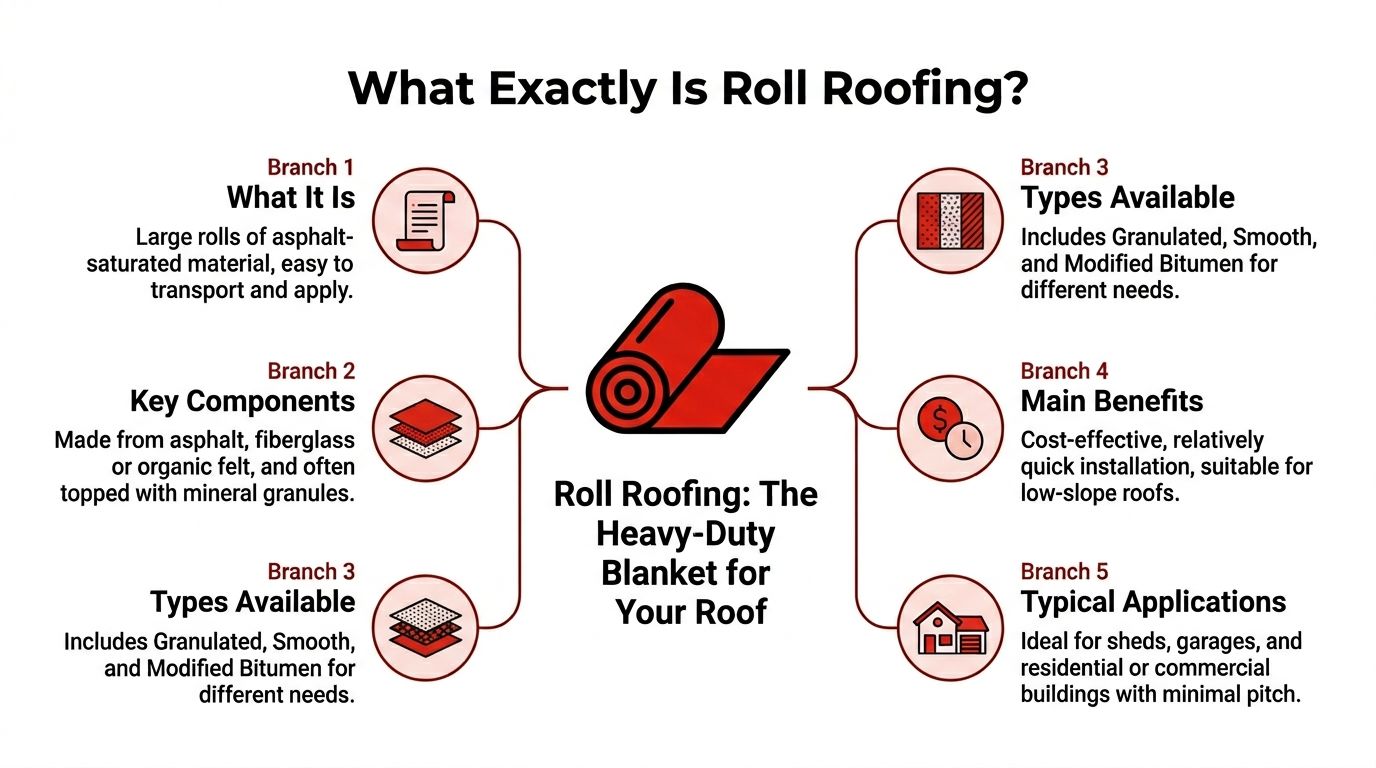
A lot of Arizona homeowners hear "roll roofing" and picture one single product. In practice, it is a category. The basic version is a simple asphalt roof covering that comes in wide rolls and is installed over low-slope roof surfaces. More durable versions use heavier materials and stronger reinforcement, which matters a great deal once a roof starts baking under Phoenix, Tucson, or Scottsdale sun.
A simple way to think about it
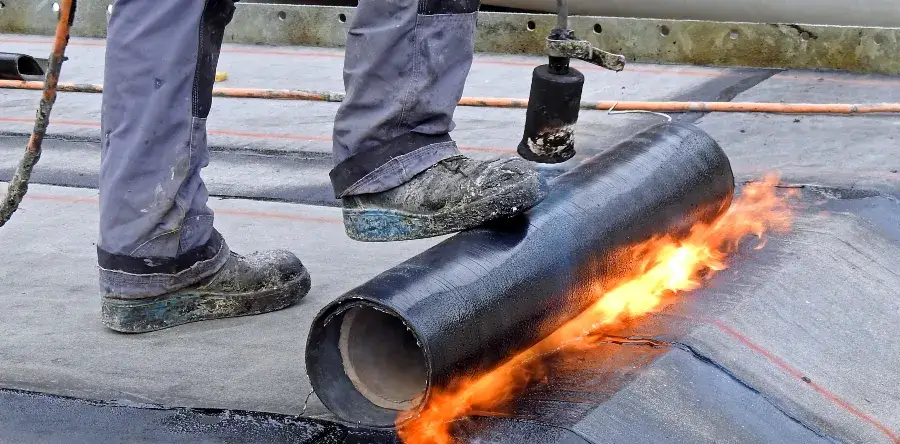
Roll roofing covers a roof in broad strips instead of many small pieces. A roofer unrolls the material across the deck, overlaps the courses, and seals the laps so water stays on top and drains off the roof instead of slipping underneath.
Most products in this category are asphalt-based. They usually have a felt or fiberglass core, with asphalt and a protective surface on top. The lighter, cheaper versions are the ones many homeowners see at home improvement stores. The stronger low-slope systems are closer to modified bitumen, which is still sold in rolls but is built for more punishment.
That difference matters. In Arizona, homeowners often use the term "roll roofing" for both products, even though they do not age the same way in extreme heat.
Where it works and where it doesn’t
A flat roof on a house is usually low-slope, not perfectly level. It still needs enough pitch to guide water toward edges, drains, or scuppers. Roll roofing is made for that kind of surface, where water moves slower than it does on a steep roof.
It tends to make sense on smaller low-slope areas such as a detached garage, patio cover, porch roof, shed, or utility addition. On a visible front roofline, many homeowners dislike the appearance. On a roof that holds standing water, the material choice is only part of the problem. Drainage has to be corrected first, and proper waterproofing for flat roofs becomes part of the conversation.
A few examples make the fit clearer:
- Detached garage with a slight slope: Often a practical use for roll roofing.
- Patio roof with good runoff: Can work well if the seams and edges are handled correctly.
- Main house roof over living space: Usually worth a harder look at upgraded low-slope systems.
- Roof with ponding water after storms: Needs drainage repair before any covering will last as it should.
Roll roofing succeeds on the right low-slope roof. It disappoints fast on a roof that stays wet or overheats without protection.
Homeowners should also know one more point that generic guides often skip. Standard mineral-surfaced roll roofing and heat-adapted rolled systems are not equal choices in Arizona. One is usually a budget covering with a shorter service life. The other can be part of a more durable assembly when it uses thicker membranes, better seam treatment, and reflective surfacing or coatings. That is the fundamental definition issue for local homeowners, because the word "roll roofing" sounds simple, but the long-term result depends on which rolled system is installed.
Roll Roofing Performance in Arizona's Climate
Arizona is where roll roofing gets sorted into two categories fast. There’s the version that looks affordable on day one, and there’s the version that’s prepared for what the desert will do to it.
Why standard roll roofing struggles in desert heat
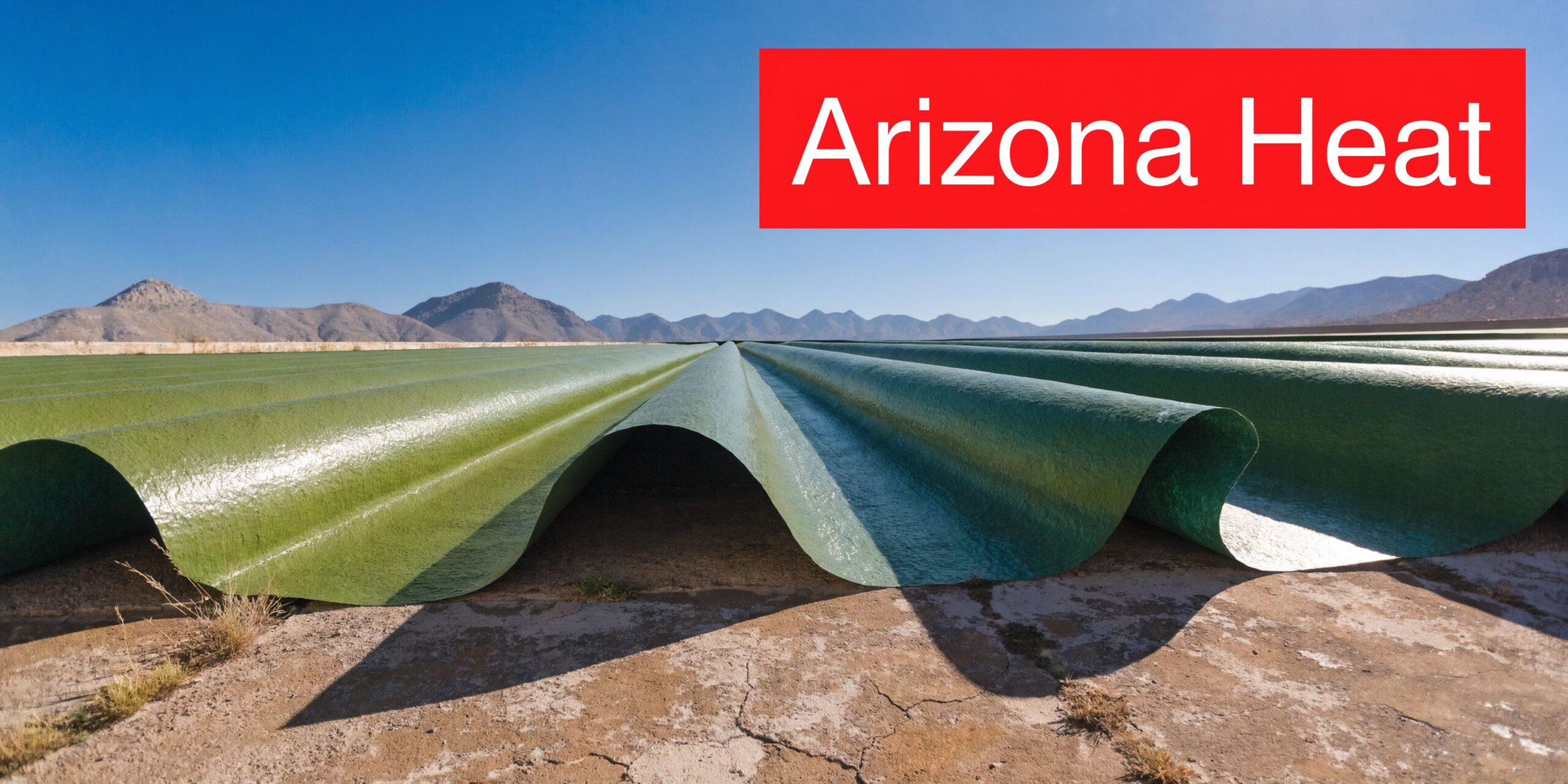
Basic asphalt roll roofing already has a limited service life in normal conditions. Arizona pushes it harder. Intense UV exposure dries the asphalt. Heat speeds oxidation. The material loses flexibility, then starts to crack, split, or blister.
That failure pattern is common on patio roofs and detached garages across Phoenix and Scottsdale. The roof may still look mostly intact from the ground, but the surface starts shrinking, the laps weaken, and the edges become vulnerable. Once that happens, water gets in at the seams or around penetrations.
In extreme heat climates like Arizona, standard roll roofing’s relatively short lifespan is often an overestimate. Combining it with elastomeric coatings that boost solar reflectance can extend life to 10+ years and cut cooling costs by 15 to 20%, according to this heat-climate low-slope roofing analysis.
What makes it viable in Arizona
The first improvement is using a more heat-tolerant system instead of the most basic roll product. Better low-slope asphalt systems hold flexibility longer and resist movement-related cracking better.
The second improvement is even more important in the desert. A reflective or elastomeric top coating isn’t just cosmetic. It helps limit heat absorption and reduces the punishment the roofing surface takes every afternoon.
For a homeowner, that changes the conversation from “Can roll roofing survive here?” to “Which version of roll roofing for flat roofs best suits this location?”
A good Arizona setup usually includes these ideas:
- Reflective surface protection: White or reflective coatings help the roof resist heat buildup.
- Better seam protection: Seam quality matters more on low-slope roofs because slow-moving water keeps testing those joints.
- Proper substrate preparation: If moisture is trapped under the membrane, the heat will make problems show up faster.
- Drainage awareness: Even a strong membrane suffers if water keeps sitting in the same spot.
Some roofs also need broader protection beyond the visible surface. On leak-prone low-slope sections, homeowners often benefit from learning more about waterproofing of flat roofs because the material alone doesn’t solve every drainage or flashing issue.
Practical rule: In Arizona, a basic roll roof without a heat strategy is usually a short-term answer.
That doesn’t make it useless. It just means expectations need to match reality. If the goal is an affordable covering for a shed, workshop, or patio extension, roll roofing can be reasonable. If the goal is a durable roof over conditioned living space, standard roll roofing usually gives up too much lifespan to the climate unless it’s upgraded into a more resilient system.
Weighing the Pros and Cons for Your Arizona Property
Roll roofing works best when the homeowner is honest about the building, the budget, and the timeline. On the right structure, it solves a real problem. On the wrong structure, it delays a better decision.
Where roll roofing makes sense
For a low-slope garage or patio in Chandler, the biggest advantage is usually cost. The material is accessible, and a professional crew can install it relatively quickly compared with heavier systems.
It also has a functional advantage on low slopes. Because it covers more surface with fewer seams than shingles, it can do a better job managing water on roofs where runoff is slow.
Another plus is weight and simplicity. For smaller accessory structures, that lighter, straightforward build can be useful when the owner needs a practical roof rather than an architectural showpiece.
Where it becomes a poor long-term bet
The downside is longevity. Even when adapted for Arizona, it remains a more limited system than premium flat-roof options. It also doesn’t hold up well to repeated foot traffic, rough treatment, or neglected drainage details.
Appearance matters too. Some homeowners in Scottsdale or Gilbert don’t want the plain, utilitarian look. For visible sections of a home, that can be enough reason to choose something else.
For readers comparing asphalt-based low-slope options, this guide to what is modified bitumen roofing helps clarify when it makes sense to step up to a tougher system.
| Aspect | Pros (The Upside) | Cons (The Downsides) |
|---|---|---|
| Cost | Lower upfront cost makes it appealing for budget-sensitive projects | Lower initial price can lead to earlier replacement |
| Water resistance | Continuous coverage helps on low-slope areas | Seams and edges still fail if installation is poor |
| Best use case | Good for patios, sheds, garages, and secondary structures | Often a weak long-term choice for primary living spaces |
| Installation | Professional installation is usually faster than many heavier systems | DIY shortcuts often create early leaks |
| Appearance | Simple and functional | Limited curb appeal and design options |
| Durability in Arizona | Can be viable when adapted for heat | Desert sun exposes weak materials and weak workmanship quickly |
Understanding Costs Lifespan and Installation
A Phoenix homeowner often asks the same question after seeing a low quote. If roll roofing is this affordable, why doesn’t everyone use it on every flat roof?
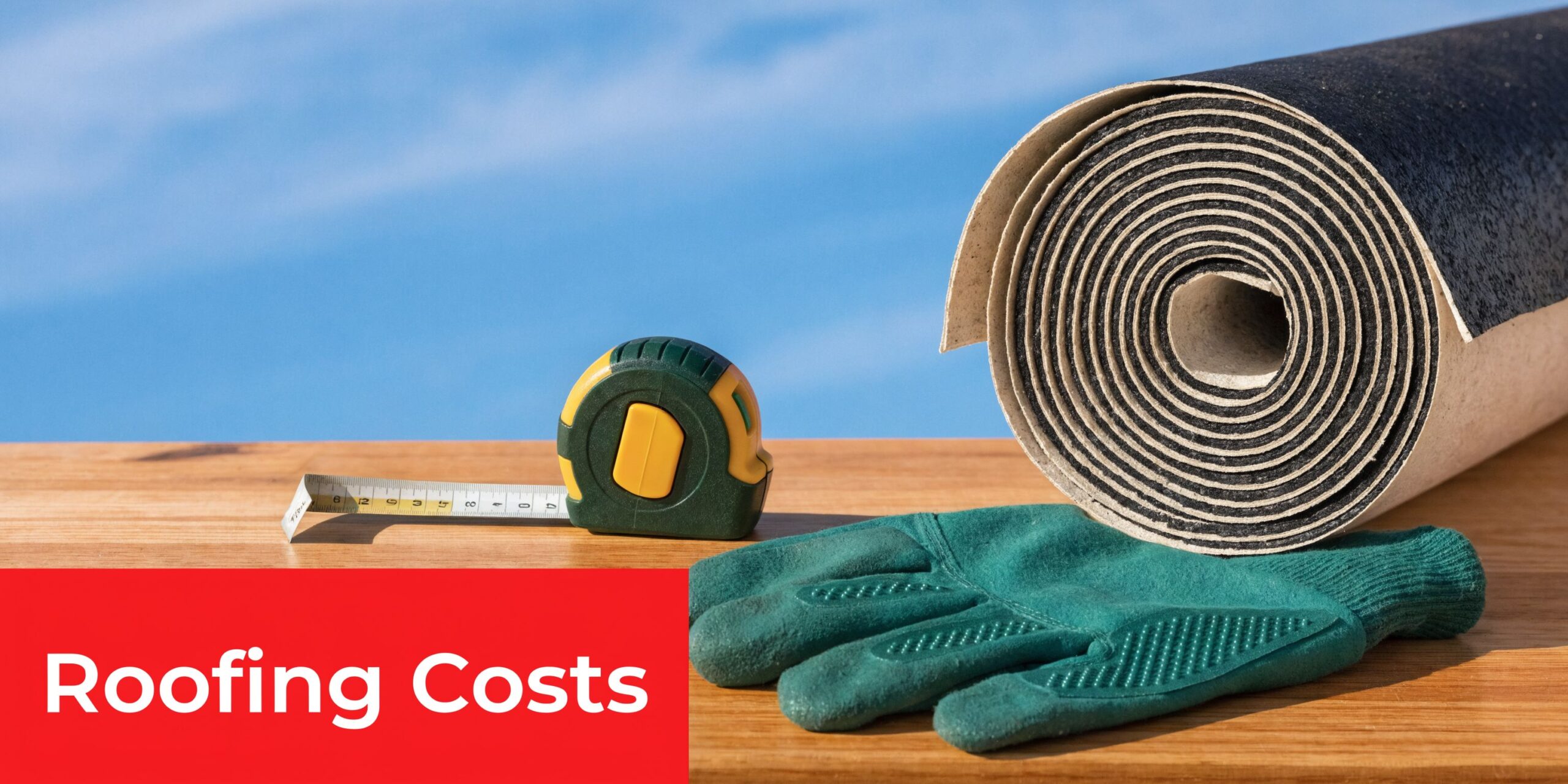
The answer is simple. Price only tells you what it costs to put material on the roof today. Value tells you how long that roof stays dry under Arizona sun, thermal expansion, monsoon rain, and regular maintenance traffic.
That difference matters on low-slope roofs.
What homeowners are buying
With roll roofing, homeowners are not just buying a membrane. They are buying time, workmanship, and margin for error. A bare-bones install on a shed or detached storage space is one thing. A roof over a living room in Tucson or Scottsdale is a different decision entirely.
Arizona heat speeds up every weak point. It dries out lower-grade asphalt faster, stresses seams harder, and punishes sloppy edge work. A cheaper install can still make sense for a patio cover, garage, or secondary structure. For a primary living space, the low bid often becomes expensive the moment repairs start showing up early.
A good way to look at it is like tires on a truck. If the truck only moves around a jobsite once in a while, the cheapest set may get by. If that same truck is doing highway miles in summer heat, cheap tires stop looking like a bargain. Roofing works the same way.
For homeowners comparing long-term value, foam roofing for flat roofs in Arizona is worth reviewing because it solves a different set of problems, especially on occupied homes where energy performance also matters.
Lifespan in Arizona depends more on the assembly than the label
Many homeowners want a single lifespan number. Real roofs do not work that way.
A standard roll product installed with minimum prep usually has a shorter service life in Arizona than many people expect. A better-built assembly with proper substrate repair, careful seam work, reflective protection, and details suited to desert heat can last meaningfully longer. The gap between those two outcomes is wide.
That is where confusion starts. Homeowners hear “roll roofing” and assume every installation performs about the same. It does not. The difference between a quick patch-style job and a professionally built low-slope roof is a lot like the difference between laying down a tarp and fitting a weatherproof skin to the building. Both cover the surface. Only one is built to handle movement, heat, and drainage over time.
What a professional installation should include
Good results start below the roofing. If the deck is soft, uneven, damp, or poorly sloped, the new membrane is being asked to hide problems it cannot fix.
On Arizona roofs, installers also need to plan for expansion and heat soak. Materials get hotter, adhesives cure differently, and vulnerable seams age faster when the roof reflects little sunlight. That is why the better jobs often include upgraded edge treatment and a reflective top coating instead of relying on the base material alone.
A professional process usually includes:
Deck inspection and repair
Crews look for rot, soft spots, moisture damage, nail pops, and low areas that can hold water.Surface preparation
The deck needs to be clean, dry, and smooth so the material can bond properly and lie flat without stress points.Layout planning
Rolls should be positioned with seams, penetrations, parapet walls, and drainage paths in mind before fastening begins.Controlled fastening and adhesion
Consistent fastening patterns and proper adhesion reduce lifting, wrinkling, and early separation at the laps.Seam and edge detailing
Many failures originate here. If seams, terminations, and transitions are rushed, leaks usually show up there first.Reflective protection where appropriate
In Arizona, a reflective surface can slow heat-related aging and make a basic system more realistic for short- to mid-term use.
One more practical point. DIY work usually looks acceptable from the ground. Trouble shows up later, after the roof has gone through enough heat cycles to expose every shortcut. That is why installation quality matters so much more here than in milder climates.
For many Arizona homeowners, the smartest approach is not chasing the cheapest install. It is choosing the roof system that matches how long they plan to keep the home, how the space below is used, and how much repair risk they are willing to accept.
Comparing Alternatives to Roll Roofing
Roll roofing has a place, but it isn’t the only answer for a flat or low-slope roof in Arizona. For many homeowners, the better long-term question is whether a more durable system makes more financial sense over time.
Modified bitumen
Modified bitumen is often the closest relative to roll roofing, but it’s a heavier-duty option. It’s still asphalt-based, yet it’s built for tougher low-slope service and usually handles thermal movement better.
This is often the step up when a homeowner likes the general idea of an asphalt low-slope roof but doesn’t want the limitations of the simplest rolled product. For garages, additions, and occupied spaces, that upgrade can be easier to justify.
A homeowner who expects the roof to stay in place for the long haul usually finds modified bitumen easier to defend than basic roll roofing.
Single-ply membranes and foam
Single-ply systems are popular on flat roofs because they’re purpose-built for that environment. They’re often a stronger match when the roof covers conditioned interior space and the owner wants durability, reflectivity, and fewer replacement cycles.
Spray foam roofing is another Arizona-relevant option because it creates a continuous surface and adds insulation value. It’s often discussed when homeowners want both weather protection and energy performance on a low-slope roof. Readers considering that route can learn more about foam roofing for flat roofs.
A simple decision guide helps:
- Choose standard roll roofing when the roof is secondary, the budget is tight, and the owner understands it’s a more limited solution.
- Choose a stronger asphalt-based low-slope system when durability matters more than the lowest upfront price.
- Choose a premium flat-roof system when the area protects living space and long-term value matters most.
The longest-lasting roof isn’t always the cheapest to install. It’s often the cheapest to live with.
For many Arizona homes, this is the core issue. If a roof over a patio fails, it’s frustrating. If a roof over a bedroom fails, the economics change fast.
Why You Should Hire a Professional for Your Flat Roof
Roll roofing gets sold as simple. That’s why so many homeowners think it’s a manageable weekend project. On a low-slope roof in Arizona, that confidence often disappears after the first summer or first monsoon.
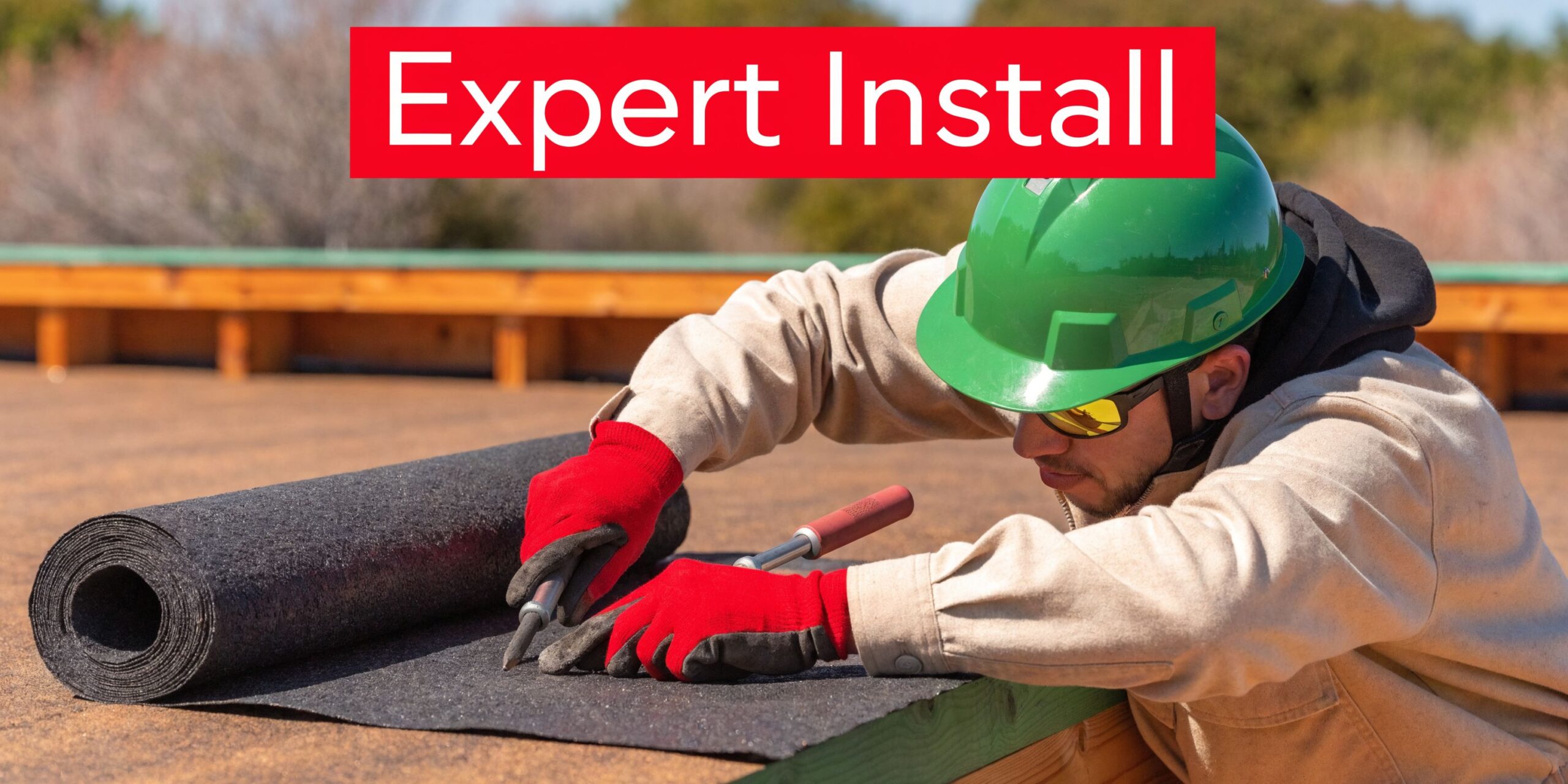
Why DIY fails so often
The problem usually isn’t that the homeowner can’t unroll material. The problem is that flat and low-slope roofs punish tiny mistakes.
A seam that looks fine from above may not be bonded correctly. A wrinkle that seems harmless can hold water. A flashing detail around a wall, vent, or edge can let in moisture long before the leak appears inside.
Contractor surveys show 60 to 70% of DIY roll roofing installations fail prematurely due to poor adhesion. A professional install can achieve a 12 to 15 year lifespan, compared with the 3 to 5 years typical of a DIY job, according to this cited discussion of DIY versus professional outcomes.
That difference matters because roof leaks rarely stay “just a roof problem.” Wet insulation, stained ceilings, damaged framing, and mold risk can follow. When water has already moved beyond the roof surface, homeowners may also need professional water damage restoration services to address the interior side of the problem safely.
What a pro brings that a DIY install can’t
A qualified flat-roof crew doesn’t just install material. The crew checks the whole assembly and catches hidden risks before they become a leak call.
That includes:
- Substrate judgment: A pro can tell when the deck needs repair before roofing goes down.
- Seam discipline: Low-slope roofs fail at seams and transitions first. That’s where experience shows.
- Drainage awareness: Water movement across a flat roof is slow. Slight slope issues become major performance issues.
- Warranty protection: Professional installation is what usually keeps manufacturer and workmanship coverage valid.
Small errors on steep roofs can stay localized. Small errors on flat roofs tend to spread water sideways before anyone sees the damage.
There’s also a value issue that homeowners in Scottsdale, Mesa, and Tucson run into all the time. A DIY roof may look cheaper on paper, but that savings disappears if the job has to be stripped off and redone early. On flat roofs, labor quality isn’t an upgrade. It’s part of the material’s performance.
Make the Right Choice for Your Arizona Roof
A homeowner in Phoenix might look at a rolled roofing product, see the lower price, and assume it will do the same job as a stronger flat-roof system. In Arizona, that is where expensive mistakes start. Our heat is hard on roofing. A material that works acceptably in a milder climate can age fast on a low-slope roof that bakes in full sun day after day.
Roll roofing can still be a reasonable choice, but the use case matters. On a shed, patio cover, detached garage, or a temporary budget-minded repair, it may do the job. Over a main living space, homeowners usually get better long-term value from a flat-roof system built to handle higher heat, slower drainage, and longer exposure.
The practical question is not whether roll roofing is good or bad.
The practical question is whether the roof assembly is matched to Arizona conditions. Standard roll roofing used as a bare-bones product is often the weak version of the idea. A heat-better-adapted system, paired with reflective coating and careful detailing at seams, drains, and edges, is a different level of protection. It costs more up front, but it often makes more sense for homeowners in Phoenix, Tucson, and Scottsdale who plan to stay in the house.
That is why a roof-specific recommendation matters. Slope, drainage, shade, foot traffic, and how the space below the roof is used all affect the right answer. So does your goal. If you need the lowest immediate cost, roll roofing may fit. If you want fewer surprises and longer service life, a stronger low-slope system is often the smarter buy.
Arizona Roofers provides the expert guidance Arizona homeowners need to make that call knowledgeably. The team works with homeowners across Phoenix, Scottsdale, Tucson, Mesa, Chandler, and nearby areas, helping them compare simple roll roofing against longer-lasting flat-roof options with desert heat in mind.
For a clear recommendation on whether roll roofing is the right fit, or whether a stronger flat-roof system would save more over time, contact Arizona Roofers for a free, no-obligation inspection. Their team serves homeowners across Arizona and can help evaluate low-slope patios, garages, additions, and full flat-roof replacements with desert heat in mind. Call (480) 531-6383 to schedule an inspection.