
Choosing a new roof is one of the most significant decisions a homeowner can make, especially in a demanding climate like Arizona's. When it comes to tile roofing, the debate often comes down to two excellent materials: concrete and clay. Both offer exceptional durability and a classic look, but they have key differences in cost, longevity, and aesthetic flexibility. Understanding these distinctions is crucial to selecting the right roof for your home, budget, and long-term goals.
This guide will walk you through a detailed comparison of concrete vs. clay roof tiles, covering everything from durability and cost to energy efficiency and style. We'll break down the pros and cons of each, so you can make an informed choice that you'll be happy with for decades to come.
Key Takeaways
Here’s what you really need to know when weighing your options:
- Cost vs. Longevity: Concrete is easier on the wallet initially, but clay's incredibly long lifespan can deliver better long-term value if you plan to stay in your home for decades.
- Aesthetic Differences: If you want design flexibility to match any architectural style, concrete is your go-to. If you're after an authentic, timeless look that's hard to replicate, clay is the clear winner.
- Color Fastness: This is a big one. Clay's color is baked into the material itself, so it will never fade. Concrete tiles have a surface pigment that can lighten after years under the intense Arizona sun.
- Structural Needs: Don't forget the weight. Both materials are heavy and will likely require a structural assessment to confirm your home’s framing can handle the load.
Choosing Between Concrete and Clay Roof Tiles
Picking the right roof is a huge decision for any homeowner, and it’s even more critical in a demanding climate like Arizona. While both concrete and clay tiles are fantastic choices known for their durability and fire resistance, they have distinct differences that affect their performance, look, and long-term value. Let's cut through the noise and compare them on the factors that truly matter.
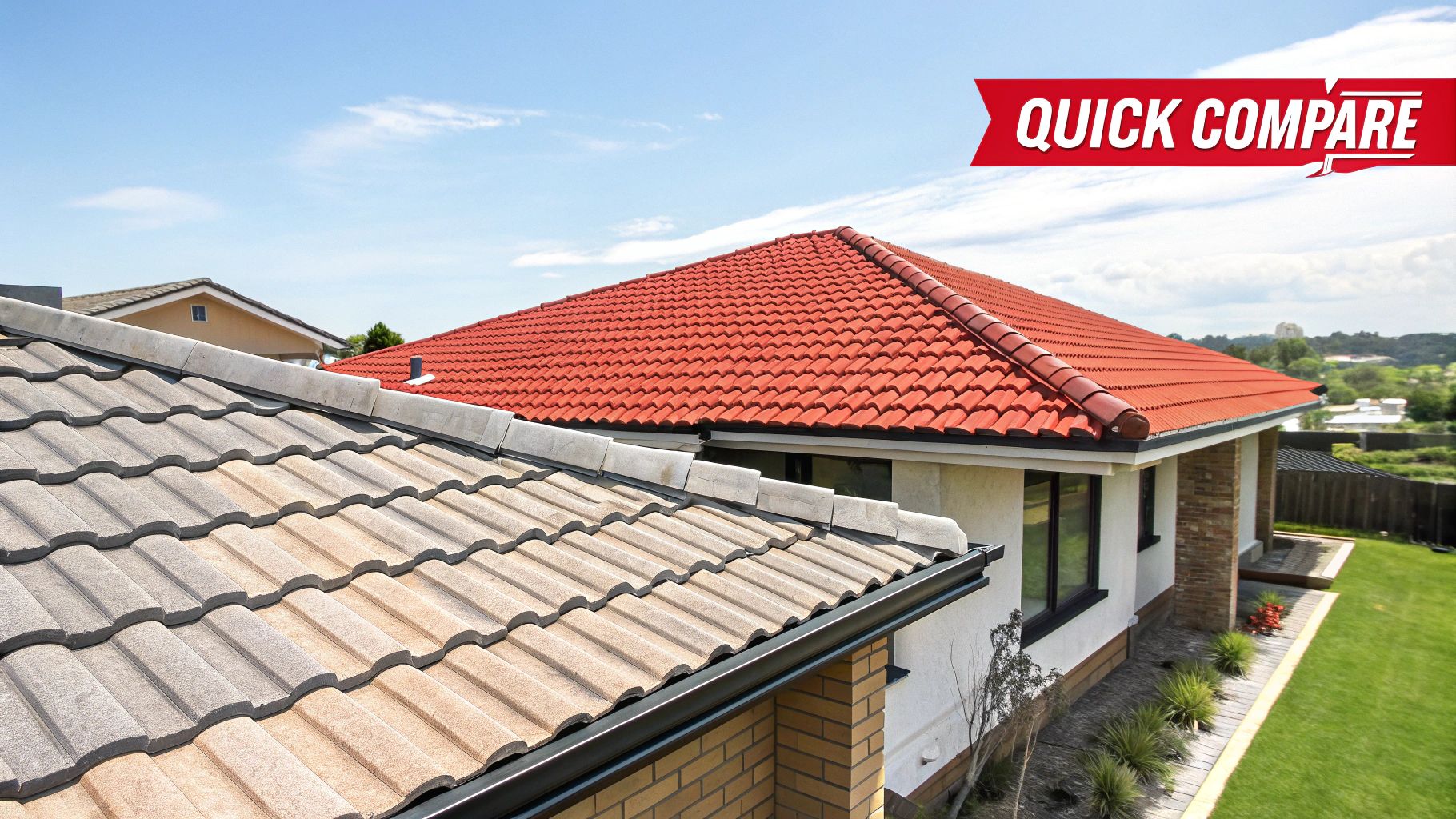
Before we dive deep, a quick side-by-side look can help frame the key distinctions between these two popular roofing materials.
At-a-Glance Concrete vs Clay Tile Comparison
This table gives a high-level summary of the primary differences, helping you quickly see where each material shines.
| Attribute | Concrete Roof Tiles | Clay Roof Tiles |
|---|---|---|
| Initial Cost | More affordable | More expensive |
| Lifespan | 50+ years | 75-100+ years |
| Weight | Very heavy | Very heavy |
| Color Longevity | Color can fade over time | Color is baked-in; fade-resistant |
| Durability | High, but can be brittle | Extremely durable, but can chip |
| Style Options | Highly versatile; mimics other materials | Classic, traditional aesthetic |
As you can see, there isn't one "best" answer—it's about what's best for your specific home and goals.
Comparing Durability and Weather Resistance
A roof’s main job is to shield your home from everything the Arizona climate can throw at it—from relentless UV rays to the fierce monsoon storms we see every summer. When you’re looking at concrete versus clay roof tiles, durability isn't just about a number on a spec sheet. It’s about how each material actually holds up after decades of that punishing exposure.
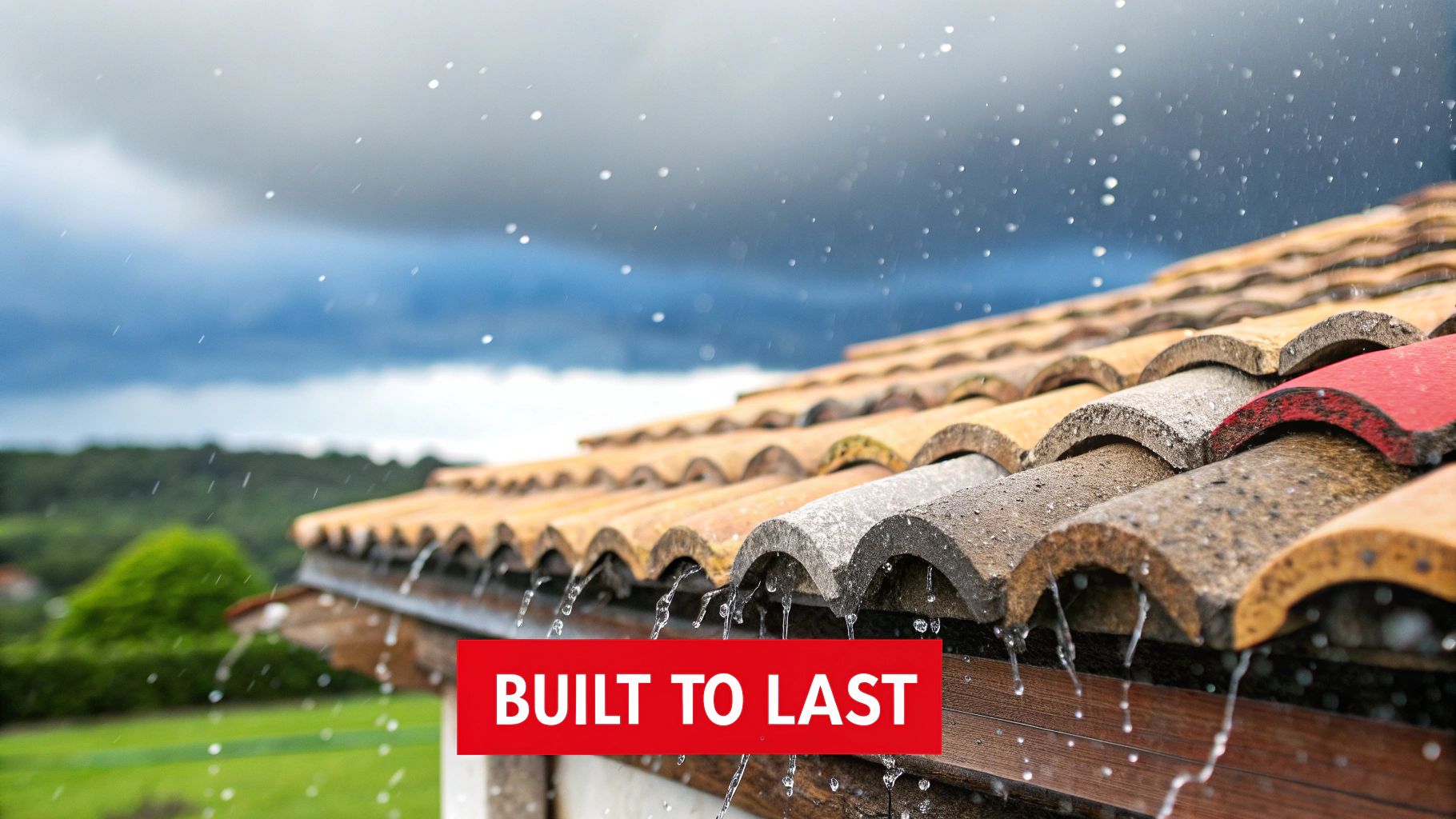
Both concrete and clay are known for their impressive longevity, often lasting 50 years or more, but they get there in very different ways. Concrete tiles are engineered tough. They’re a mix of sand, cement, and water, molded under intense pressure to create a dense, heavy-duty tile that’s excellent at resisting impact from things like hail or wind-blown debris.
Clay tiles, on the other hand, get their strength from a more classic, natural process. Raw clay is shaped and then fired in a kiln at blistering temperatures, often over 1,000°F. This vitrification process makes the tile incredibly hard and dense, giving it an almost complete immunity to rot and decay. It also makes clay exceptionally resistant to fading, which is a huge deal here in the Arizona sun.
How Each Material Handles Stress
While both materials are tough as nails, they react to stress differently. Think of concrete as strong but a bit more porous and brittle. Clay is less porous and weathers beautifully, but it can be more susceptible to cracking from a sharp, direct impact.
Key Insight: Concrete's strength comes from its manufactured density, making it a champion against direct impacts. Clay’s durability is a result of its kiln-fired, vitrified nature, giving it superior resistance to the slow-burn threats of sun, moisture, and time.
Let's dig into how they stack up in a few key areas that matter most in our climate:
- Impact Resistance: Concrete generally has a slight advantage here. Its composition is better at absorbing the force from hail without shattering completely.
- Moisture Absorption: Clay tiles are naturally less porous than concrete. This gives them an edge against things like algae growth, though that's admittedly less of a problem in most of Arizona.
- Color Fastness: Clay is the clear winner. The color is baked right through the tile, so it's permanent. The color in concrete tiles comes from pigments added to the surface or mixed in, which can fade after decades of intense sun.
- Freeze-Thaw Cycles: This is a huge consideration if you're in a higher elevation like Flagstaff or Prescott. Lower-quality clay tiles can absorb moisture and crack when temperatures drop below freezing. Only Grade 1 clay tiles are rated for severe frost, whereas concrete handles these temperature swings very well.
Lifespan Realities and Common Failure Points
You’ll hear impressive lifespan numbers thrown around—50 years for concrete and up to 100 years for clay—but those figures don't tell the whole story. In the real world, the lifespan of your roof has just as much to do with the quality of the installation and the underlayment as it does with the tiles themselves. A top-tier, professionally installed underlayment is non-negotiable if you want to get the most out of your roof.
Even the best tiles will fail if they aren’t installed with care. The most common problems we see are cracked tiles from people walking on the roof incorrectly, poorly installed flashing around vents and chimneys, and underlayment that gives out way too soon.
For instance, concrete tiles can develop tiny hairline cracks over time, which might eventually let moisture seep through to the underlayment. Clay tiles are more resistant to that kind of aging, but they can be fractured by a solid impact. This is why regular inspections are so important—they let you catch small issues before they spiral into big, expensive problems.
Ultimately, the durability of your roof is a partnership between material science and expert craftsmanship. Choosing the right material is the first step, but finding a seasoned professional to install it is what truly guarantees it will stand strong against the elements for decades to come.
Analyzing the True Cost and Lifecycle Value
The price you see on the initial quote is just the beginning of the story. When you’re choosing between concrete and clay roof tiles, a smart homeowner knows to look past the per-square cost and think about the true lifetime value of their investment. Let's break down the financials to see how each roof performs not just on day one, but over the next 30, 50, or even 100 years.
Thinking about the complete financial picture—from the installation bill to long-term upkeep—is absolutely essential. This kind of lifecycle cost analysis helps you make a decision that fits both your budget today and your financial plans for the future.
Upfront Installation Expenses
When it comes to the initial check you have to write, concrete has a clear edge. For both the materials and the labor to install them, concrete tiles are typically 20-30% less expensive than their clay counterparts. Honestly, this cost-effectiveness is a huge reason why they're so popular across Arizona.
So, why the price gap? It really comes down to how they're made. Concrete tiles are a simple mix of sand, cement, and water, which is a much more straightforward and less energy-hungry process than quarrying, shaping, and kiln-firing natural clay. Just keep in mind that the total price is more than just the tiles themselves. You can learn more about what goes into a new roof cost in our comprehensive guide.
Factoring in Long-Term Costs
Concrete might win the sprint on upfront price, but the financial narrative can flip when you start thinking about the long-term marathon. Clay tiles, known for their incredible durability and color that just doesn't quit, often end up needing less maintenance over their very long lives.
Here are the key long-term financial factors you need to weigh:
- Maintenance: Clay is naturally colorfast, meaning you'll never have to worry about the cost of repainting or recoating. Some older or lower-quality concrete tiles, on the other hand, might need a facelift down the road to restore their original look.
- Repairs: Both materials are tough, but things happen. If a tile cracks, a single clay tile can sometimes be more expensive to replace simply because the material itself costs more.
- Replacement: A well-installed clay roof has a potential lifespan of 75-100+ years. It’s often a "once-in-a-lifetime" purchase. A concrete roof, while still very durable, lasts around 50 years. That means a replacement could be a significant expense for you or a future homeowner.
If you're looking to understand the bigger financial picture beyond just your roofing materials, it's worth exploring these strategies to reduce construction costs without cutting corners on quality.
Investment Perspective: The way I see it, concrete is a sound, practical investment with immediate savings. Clay is more of a premium, long-term asset that pays dividends over decades, making it a perfect fit for a "forever home."
A Lifecycle Cost Scenario
Let's paint a picture. Imagine two identical homes right here in Arizona. One gets a concrete tile roof, the other gets clay.
Fast forward 60 years. The homeowner with the concrete roof has likely had to budget for a full replacement around the 50-year mark. That's a massive expense. By contrast, the clay roof is probably still in its prime, having only needed a few minor repairs over the decades. Those substantial initial savings from choosing concrete can be completely wiped out by the cost of that eventual replacement.
The bottom line? Your personal timeline is the biggest factor in the concrete vs. clay debate. If you see yourself selling the home in the next 10-15 years, concrete’s lower upfront cost gives you a much better immediate return on your investment. But if you’re building your legacy home, the sheer longevity of clay presents a far more compelling value proposition over the long haul.
Energy Efficiency for a Cooler Home
In Arizona, where the sun beats down relentlessly, your roof is more than just a cover—it's your home's first line of defense against sky-high energy bills. When you’re choosing between concrete and clay tiles, their ability to manage heat isn't just a bonus feature; it’s a critical factor that directly impacts your comfort and your wallet.
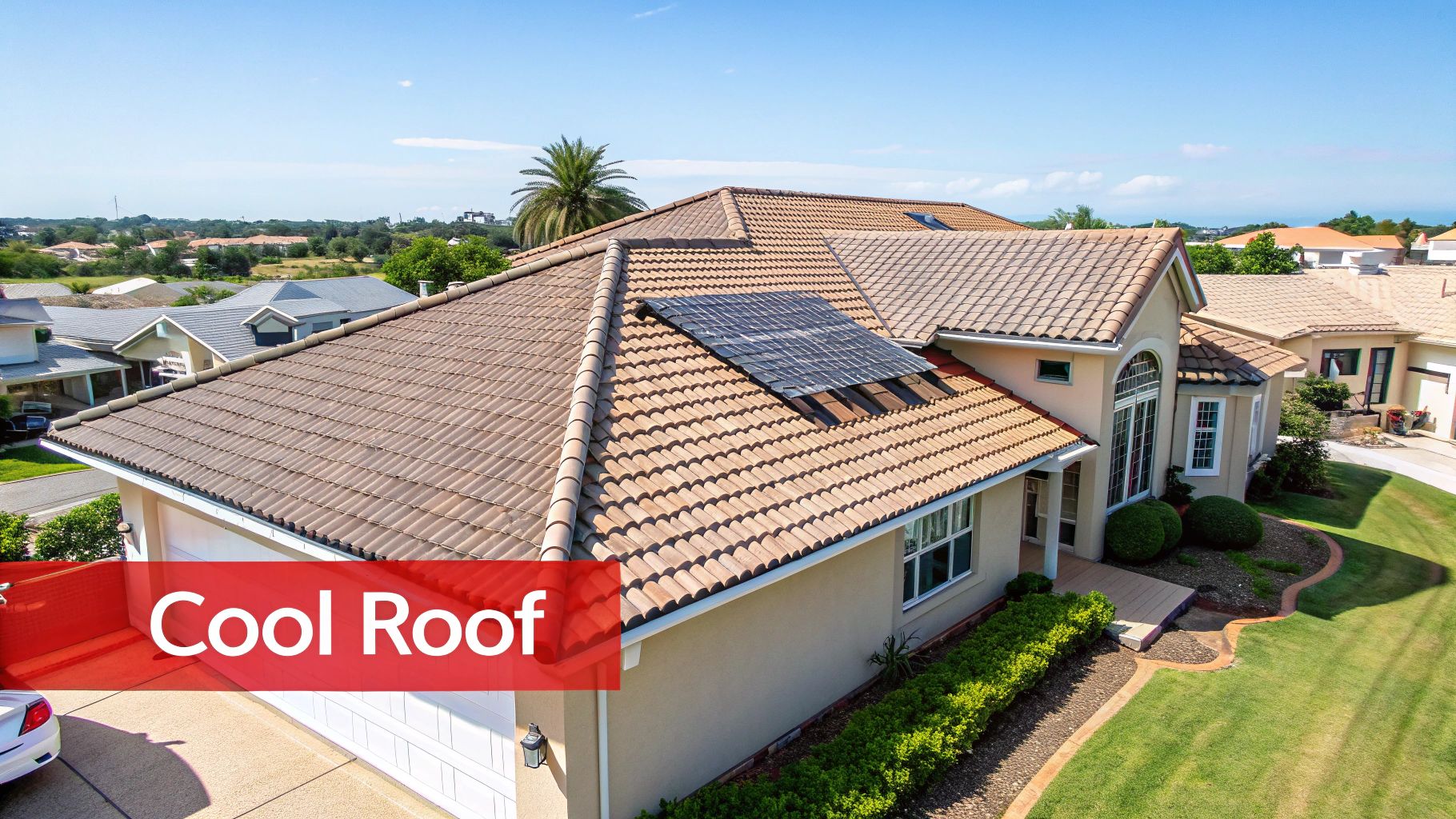
We measure this performance with two key metrics: solar reflectivity (also known as albedo) and thermal emittance. Solar reflectivity is how well a roof bounces sunlight away, while thermal emittance is its knack for releasing any heat it has absorbed. Both concrete and clay tiles shine in these areas, making them far superior choices for our climate compared to something like dark asphalt shingles, which just soak up the heat.
Understanding Cool Roof Technology
You'll hear the term "cool roof" a lot, and it's not just a marketing gimmick. It refers to roofing materials specifically designed to stay cooler under the intense sun. The good news is that both concrete and clay tiles are available in "cool roof" rated versions, which boosts their already impressive thermal properties. And don't worry, this doesn't mean you're stuck with a plain white roof; modern pigments allow for highly reflective surfaces even in popular earth tones.
These high-performance tiles can reflect a huge portion of the sun's energy, stopping it dead in its tracks before it ever has a chance to bake your attic. This simple act of reflection means your air conditioner doesn't have to work overtime just to keep up. That translates directly into real, tangible savings on your monthly utility bills. We cover this topic more in our guide on the top efficient roofing options to lower your energy bills.
Comparing Thermal Performance
While both materials are fantastic for Arizona, there are subtle differences in how they handle the heat. Clay tiles naturally have better insulation properties, meaning they are less conductive and slow down heat transfer more effectively. On the other hand, concrete has excellent thermal mass; it can absorb heat throughout the day and then release it back into the cool night air.
Let's break down what really matters:
- Solar Reflectivity: Both materials can achieve excellent reflectivity ratings, especially in lighter shades like sand, off-white, or light gray. This is your single most important weapon in the fight against heat gain.
- Thermal Emittance: Clay and concrete are champs at thermal emittance. They quickly and efficiently radiate away any heat they absorb, helping the roof cool down fast once the sun sets.
- Installation Method: This is a huge, often overlooked benefit. The way tiles are installed creates a natural air gap between the tile and the roof deck. This pocket of air acts as a thermal break, allowing for continuous airflow that carries heat away before it can seep into your home.
A tile roof's profile—its shape and curvature—plays a significant role. High-profile "S" or barrel tiles create a larger air channel underneath, which promotes better ventilation and heat dissipation than lower-profile flat tiles.
The Role of Color and Profile
Your color choice has a direct and measurable impact on your roof's temperature. Lighter-colored tiles, whether concrete or clay, will always reflect more sunlight and stay cooler than dark ones. It’s a simple fact of physics. A light-colored tile roof can be dramatically cooler than a dark roof on a scorching summer afternoon, which means a cooler attic and less strain on your AC.
The tile's shape, or profile, also chips in. The classic barrel shape of many clay tiles creates a generous air channel that maximizes airflow and cooling. Concrete tiles come in a wider variety of profiles, and they can be installed to enhance this effect, too, though you'll generally get the best airflow from high-profile designs. By pairing a reflective color with a high-profile tile, you're essentially creating a powerful passive cooling system right on top of your house.
Of course, a great roof is only one part of the equation. Optimizing your air conditioning system is just as crucial for a cool, energy-efficient home. For more on that, check out these practical tips to improve your AC's efficiency and lower bills. When it comes down to it, both concrete and clay tiles offer a potent solution for keeping your home cooler and your energy costs in check.
Architectural Style and Aesthetic Appeal
Your roof is way more than just a shield against the elements. It’s one of the biggest visual statements your home makes, defining its entire personality and curb appeal. When you're deciding between concrete and clay tiles, you're really making a choice about your home's identity. Both are a huge step up from standard asphalt shingles, but they bring completely different vibes to the table.
The best tile choice should feel like it was always meant to be there, not something tacked on as an afterthought. Getting the material to match the architecture is everything if you want a cohesive look that really boosts your home's value.
The Versatility of Concrete Tiles
If there’s one word to describe concrete tiles, it's versatile. Modern manufacturing techniques have turned concrete into a bit of a chameleon. It can be molded and colored to look like almost anything, which is a massive win for homeowners who want a specific look without the associated price tag or maintenance headaches.
Want the rustic, textured feel of wood shake without the constant worry about fire? Or how about the sophisticated, layered look of natural slate without taking out a second mortgage? Concrete can do that. It’s incredibly adaptable.
- Modern and Contemporary: For homes with clean lines and a minimalist feel, flat and smooth concrete tiles in shades of gray, charcoal, or bright white are a perfect match.
- Ranch Style: Those classic, sprawling Arizona ranch homes look fantastic with lower-profile concrete tiles in earthy browns and muted reds that ground the design.
- Mimicry: Concrete can be shaped into the classic barrel form to give you that Spanish look, offering a very similar aesthetic to clay but at a friendlier price.
The bottom line with concrete is that it can become whatever you need it to be. If you're chasing a specific historical style or a sharp, modern finish, there's a concrete tile profile out there that can pull it off.
The Timeless Authenticity of Clay Tiles
Concrete is the master of versatility, but clay is the king of authenticity. There's a good reason clay tiles have been capping off beautiful buildings for centuries—their rich, earthy look is iconic and almost impossible to truly replicate. The color is literally baked into the tile during the kiln-firing process, meaning it won’t fade, even under decades of our relentless Arizona sun.
This natural, baked-in elegance makes clay the only real choice for certain architectural styles where authenticity is non-negotiable. The classic "S" shape and barrel tiles are practically synonymous with a warm, luxurious, and historic feel.
- Spanish Mission: You can't have a true Spanish Mission home without the classic red barrel clay tile. The way the curved shape creates deep shadow lines is fundamental to that entire aesthetic.
- Mediterranean: Terracotta and other sun-drenched, earthy clay tones are the heart and soul of Mediterranean design, instantly bringing to mind villas in Spain or Italy.
- Tuscan: For that rustic, old-world charm, the slightly irregular shapes and rich, varied hues of clay tiles are the perfect fit.
Picking the right color is a huge piece of the puzzle. For a much deeper look, check out our guide on how to choose a roof color for more detailed advice on both tile types. When it comes down to it, if you’re after an authentic, historically perfect roof with color that will last a lifetime, clay is simply in a class of its own.
Making the Right Choice for Your Home
After looking at everything from durability and cost to energy efficiency and style, the choice between concrete and clay tiles really boils down to your own priorities. There isn't a single "best" answer here; it’s about finding the right fit for your specific home, your budget, and what you want for the long haul.
Let's break it down into some real-world scenarios to make the decision easier. What matters most to you? Are you focused on the initial budget, or are you building a "forever home" where longevity is king?
When Concrete Tiles Are the Winner
For a lot of homeowners here in Arizona, concrete tiles just make sense. They're a practical, compelling choice and come out on top in a few key situations.
- Budget-Driven Projects: If keeping the upfront investment down is your main goal, concrete is your clear winner. It's significantly more affordable than clay, giving you a tough, good-looking roof without the sticker shock.
- Modern Architectural Styles: Got a contemporary, minimalist, or ranch-style home? The clean lines and massive range of colors available in concrete tiles give you way more design flexibility to get the look just right.
- Specific Color Matching: Since concrete can be mixed with pigments to create almost any shade, it's the go-to when you need to perfectly match your home's trim, paint, or strict HOA color codes.
When Clay Tiles Are the Better Investment
On the other hand, clay tiles are a premium, long-term play that simply can't be beaten in certain circumstances. Clay is the hands-down choice for homeowners who are looking for:
- Maximum Longevity and Authenticity: If you're building a home you plan to be in for decades, clay’s 75-100+ year lifespan and fade-proof beauty deliver incredible long-term value. It’s an investment that truly lasts.
- Historical Accuracy: For styles like Spanish Mission, Mediterranean, or Tuscan villas, nothing beats the authentic look of traditional clay tiles. It's essential for preserving the home's intended character.
- Unmatched Curb Appeal: The rich, earthy tones and classic barrel shapes of clay create an iconic look that’s hard to fake. It provides a high-end, timeless aesthetic that boosts your home’s presence.
This visual helps clarify which tile works best for different architectural aesthetics.
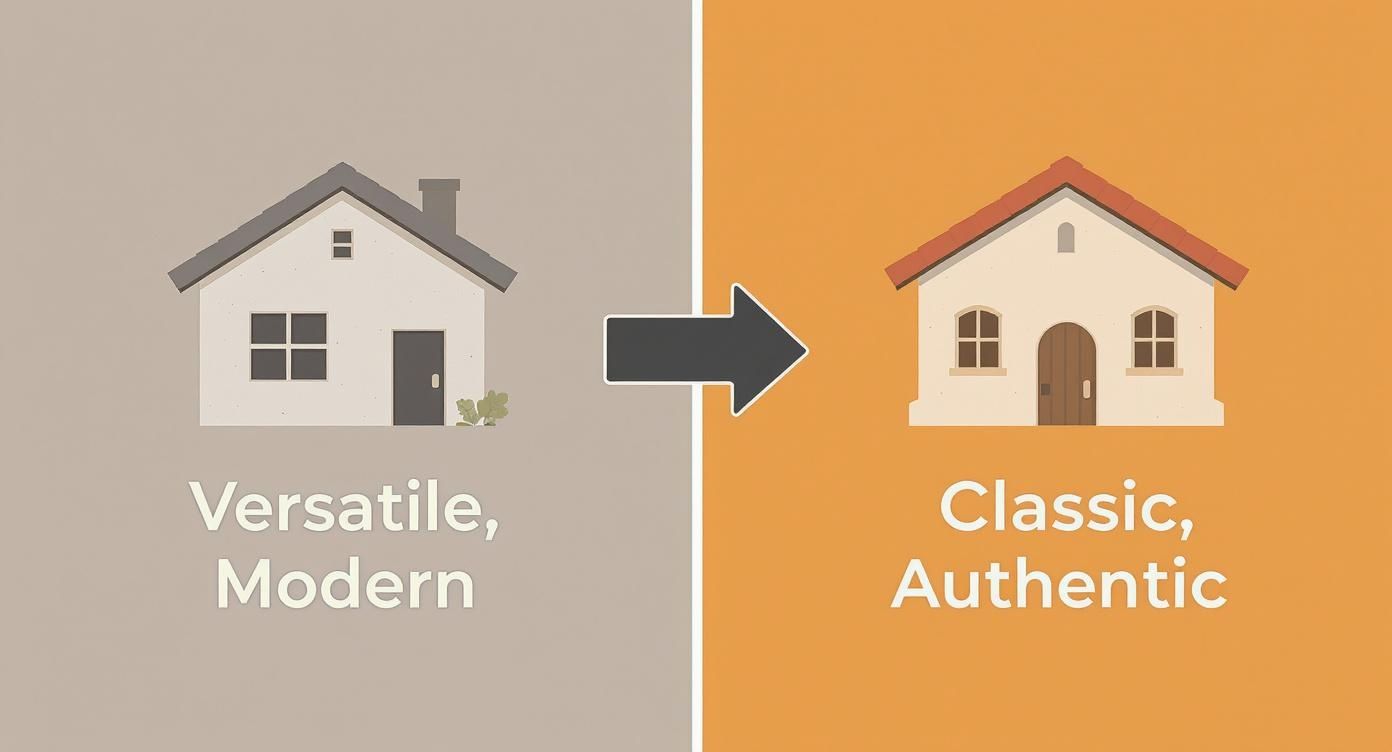
You can see how concrete's versatility fits perfectly with modern designs, while clay’s classic profile is the only real choice for more traditional, mission-style architecture.
The Bottom Line: Go with concrete for its budget-friendly versatility and modern appeal. Choose clay for its incredible lifespan and the authentic, timeless elegance that becomes part of your home’s legacy.
By weighing these trade-offs against your own situation, you can pick a roof you’ll be happy with for decades.
Frequently Asked Questions
Here are answers to some of the most common questions homeowners have when deciding between concrete and clay roof tiles.
Do concrete tiles fade more than clay tiles?
Yes, they generally do. Concrete tiles get their color from pigments that are added to the surface or mixed into the concrete. Over many years of exposure to intense UV sunlight, these pigments can gradually fade. Clay tiles, on the other hand, derive their color from the natural clay itself, which is then fired in a kiln. This process bakes the color through the entire tile, making it exceptionally fade-resistant. The color of a clay tile will remain vibrant for its entire lifespan.
Is it safe to walk on a tile roof?
It is strongly advised that homeowners do not walk on their tile roofs, whether they are made of concrete or clay. Both materials can crack or break under the concentrated pressure of a footstep if not walked on correctly. Professional roofers are trained to navigate tile roofs by stepping on the strongest parts of the tile (typically the headlap) to distribute their weight and avoid causing damage. If you need maintenance or an inspection, always hire a licensed and insured roofing contractor.
Which tile is more fire resistant?
Both concrete and clay tiles offer the highest level of fire protection available for roofing materials. They are both non-combustible and carry a Class A fire rating, which is the best possible rating. This means they can effectively withstand severe fire exposure from external sources, providing excellent protection for your home against threats like wildfires or airborne embers. In the debate of concrete vs. clay roof tiles, fire resistance is one area where both materials are equally outstanding choices.
Do I need to reinforce my roof structure for tile?
Yes, it's very likely. Both concrete and clay tiles are significantly heavier than other common roofing materials like asphalt shingles. Before installation, a structural engineer or a qualified roofing contractor must inspect your home’s roof framing to ensure it can safely support the additional weight. In some cases, especially when converting from a lighter roof, structural reinforcement may be necessary.
Which tile is better for the environment?
Both options are considered environmentally friendly. Clay is a natural, raw material, and the tiles are extremely long-lasting, reducing landfill waste. Concrete is also made from natural materials (sand, cement, water) and is highly durable. Many tile manufacturers for both types also incorporate recycled content and have energy-efficient production processes. Clay often has a slight edge due to its longer lifespan, meaning fewer replacements over the life of a home.