
Choosing a roof for your home is one of the most significant architectural decisions you'll make. It's more than just a protective covering; the roof design dictates your home's aesthetic, influences its energy efficiency, and defines its overall character. In a place like Arizona, where roofs endure intense sun, powerful winds, and sudden monsoon downpours, selecting the right design is critical for both beauty and long-term durability.
From the classic, pitched silhouette of a gable roof to the sleek, modern lines of a flat or butterfly design, each style offers a unique set of advantages and challenges. Understanding these different types of roofing designs empowers you to choose a structure that not only complements your home’s architecture but also provides lasting performance and value. This guide will walk you through the most popular roof designs, highlighting their pros, cons, and suitability for the Arizona climate.
Key Takeaways
- Design Impacts Function: A roof's shape is not just for looks; it affects drainage, wind resistance, interior space, and energy efficiency. Designs like Hip and Pyramid roofs offer superior wind resistance, making them ideal for stormy climates.
- Balance Cost and Complexity: Simple designs like Gable and Shed roofs are often more affordable to install. More complex styles like Mansard and Butterfly roofs cost more but offer unique benefits like extra living space or enhanced natural light.
- Climate is Crucial: For Arizona, designs that handle intense sun and sudden rain are key. Flat roofs are excellent for solar panels but require robust waterproofing, while Bonnet roofs provide essential built-in shade.
- Material and Design Work Together: The success of any roof design depends on pairing it with the right materials and ensuring expert installation. A high-quality waterproofing membrane on a flat roof is just as important as proper bracing on a gable roof.
1. Gable Roof: The Timeless Classic
Among the many types of roofing designs, the gable roof is arguably the most iconic and widespread, particularly in American residential architecture. Its simple, triangular "A-frame" shape is created by two equally pitched sides meeting at a central ridge. This straightforward design is not only visually appealing but also highly functional, making it a staple for styles ranging from Colonial and Cape Cod to modern farmhouses.
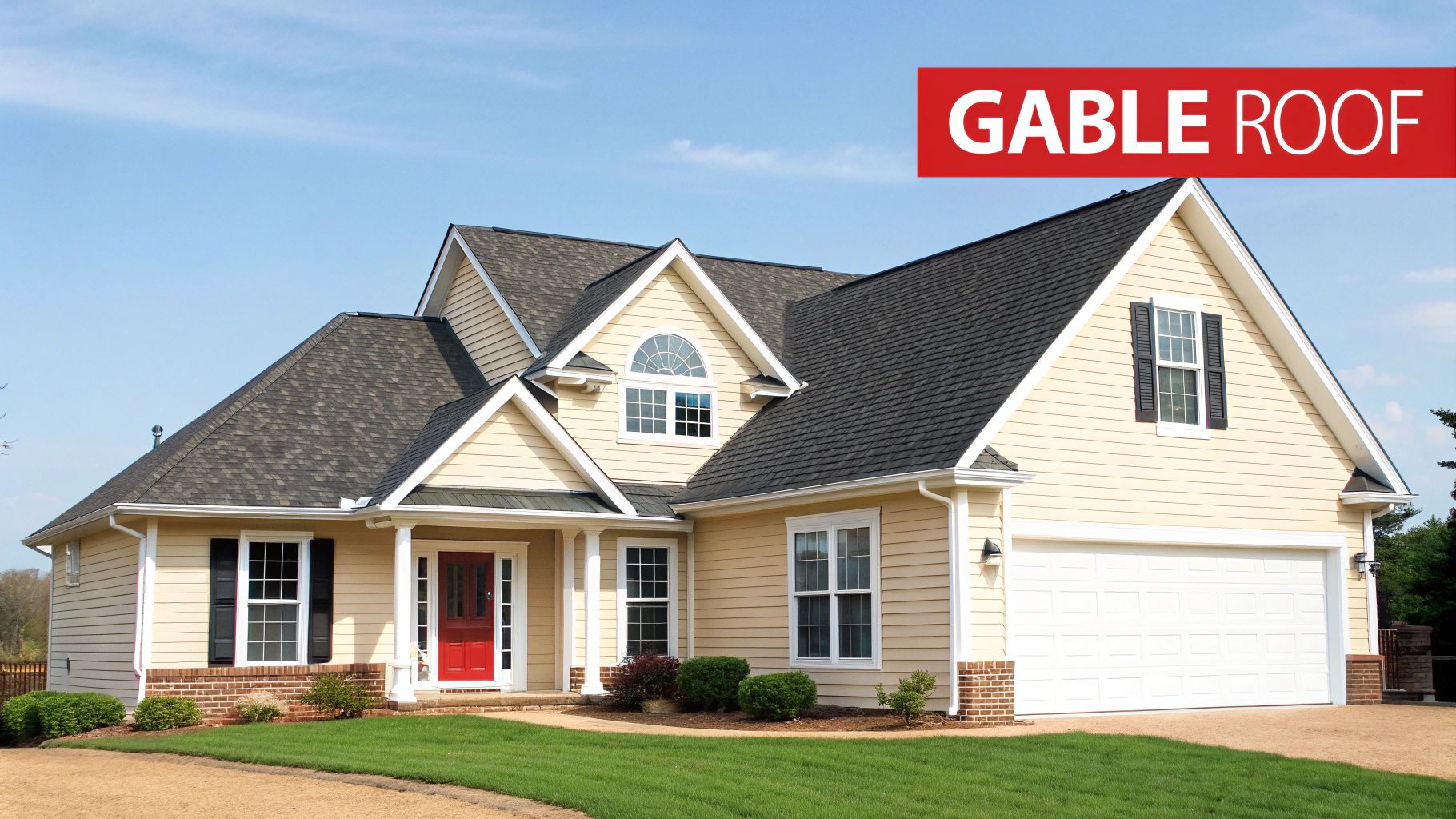
The primary appeal of a gable roof lies in its simplicity. The design sheds water and snow efficiently, which, while less of a concern for snow in much of Arizona, is crucial for handling heavy monsoon rains. Its construction is less complex than other designs, which often translates to lower initial installation costs due to reduced labor and material requirements.
Advantages and Disadvantages
Pros:
- Cost-Effective: Simple construction makes it one of the most affordable roofing options.
- Excellent Drainage: The steep slope easily channels away rainwater, preventing pooling and leaks.
- Attic Space: The design naturally creates ample attic space, which can be used for storage or converted into a living area (a "bonus room"). This space also allows for better ventilation.
- Versatility: It accommodates a wide variety of roofing materials, including asphalt shingles, metal panels, and clay tiles.
Cons:
- Wind Vulnerability: In areas with high winds, like Arizona's open desert regions, gable roofs can be susceptible to damage if not properly braced. The flat, broad sides can act like a sail, catching wind and potentially leading to uplift.
- Simplified Aesthetics: While classic, some may find the basic gable design less visually interesting than more complex styles like hip or mansard roofs.
Arizona Insight: For Arizona homeowners, proper framing and hurricane clips are essential to fortify a gable roof against strong monsoon winds. The excellent drainage is a significant benefit during intense summer downpours, protecting the home’s foundation from water damage.
2. Hip Roof: The Fortified Craftsman
A sophisticated and durable alternative among the many types of roofing designs, the hip roof features four sloped sides that descend from a central ridge to the walls. Unlike a gable roof, which has two triangular ends, a hip roof has slopes on all sides, creating a more integrated and pyramid-like shape. This design is prevalent in various architectural styles, from Craftsman bungalows and contemporary ranch homes to Mediterranean and prairie-style houses.
The hip roof’s inherent stability is its key advantage. With no flat, vertical ends to catch the wind, the inward-sloping design makes it inherently more aerodynamic and resistant to uplift during high-wind events. While its construction is more complex, requiring more intricate framing and materials, the resulting structural integrity and polished aesthetic make it a popular choice for homeowners seeking both durability and curb appeal.
Advantages and Disadvantages
Pros:
- Superior Wind Resistance: The self-bracing, four-sided design performs exceptionally well in high-wind and hurricane-prone areas, making it an excellent choice for stormy climates.
- Excellent Drainage: Like the gable, all four sloped sides efficiently shed water and snow, minimizing the risk of pooling and water damage.
- Aesthetic Appeal: The continuous eaves and sloped sides offer a refined, cohesive look that can enhance a home’s architectural elegance.
- Durable and Stable: The inward slope of all four sides creates a very stable and sturdy structure, contributing to the overall integrity of the home.
Cons:
- Higher Cost: The more complex design requires more building materials and skilled labor, increasing both installation and repair costs compared to a gable roof.
- Reduced Attic Space: The inward slopes on all four sides significantly reduce the amount of usable attic space for storage or potential living areas.
- Leak Potential: The joints where the roof planes meet, known as "hips" and "valleys," can be more prone to leaks if not properly flashed and sealed by experienced roofers.
Arizona Insight: For Arizona properties, the hip roof's outstanding performance against high winds is a major asset during intense monsoon storms. Its design can help homeowners qualify for lower insurance premiums in some cases. However, it's crucial to ensure the valleys are properly flashed to handle the torrential downpours characteristic of the season.
3. Mansard Roof: Elegant and Spacious
Among the more ornate types of roofing designs, the Mansard roof offers a distinctive, elegant profile rooted in French Renaissance architecture. This four-sided gambrel-style roof features a double slope on each side; the lower slope is very steep, almost vertical, while the upper slope is much flatter and often not visible from the ground. This unique construction maximizes interior living space on the top floor, a key reason for its popularity in dense urban areas like Paris and historic American cities.
The primary benefit of a Mansard roof is its ability to create a full, usable attic or top-floor story, often called a garret. The steep lower slopes allow for full-sized windows and a functional room layout. The design of a Mansard roof, with its distinctive slopes, is particularly well-suited for maximizing attic space, often making it an excellent choice for a future guide to extension and loft conversion. While its complexity increases construction costs, its aesthetic grandeur and space-saving functionality are unmatched.
Advantages and Disadvantages
Pros:
- Maximum Living Space: The nearly vertical lower slope provides significant headroom, creating a full-sized additional story for bedrooms or living areas.
- Aesthetic Appeal: It offers a sophisticated, classic look that adds significant curb appeal and historical character to a property.
- Material Flexibility: The two distinct slopes can be finished with different materials, such as slate on the steep portion and metal on the flatter top section. Pairing this style with premium materials like architectural shingles can enhance its dramatic appearance.
- Allows for Dormers: The steep sides are ideal for incorporating dormer windows, which bring in natural light and add to the architectural charm.
Cons:
- High Installation Cost: This is one of the most complex and expensive roof designs due to its intricate framing, multiple angles, and labor-intensive construction.
- Weather Vulnerability: The low-pitched upper section can be prone to poor drainage and heavy snow accumulation, making it less ideal for certain climates without proper engineering.
- Maintenance Intensive: The multiple seams, dormers, and low-slope upper deck require more frequent inspections and maintenance to prevent leaks.
Arizona Insight: A Mansard roof is a rare but stunning choice in Arizona. The low-sloped upper section requires a robust, UV-resistant waterproofing membrane like PVC or TPO to withstand intense sun and prevent leaks during monsoon season. Excellent ventilation within the attic structure is also critical to manage heat buildup.
4. Flat Roof: The Modernist Statement
Among the various types of roofing designs, the flat roof stands out for its minimalist aesthetic and functional, space-saving profile. Contrary to its name, a flat roof is not perfectly level; it has a very slight pitch (often called a low-slope roof) to allow for water drainage. This design is a hallmark of modern and contemporary architecture and is also commonly found on commercial buildings, urban apartments, and homes in arid climates.
The primary appeal of a flat roof is its efficient use of space. Unlike pitched roofs, the area on top can be utilized for practical purposes like rooftop gardens, solar panel arrays, or outdoor living areas with decks and patios. Its clean lines and simple geometry offer a sleek, sophisticated look that complements many contemporary residential designs.
Advantages and Disadvantages
Pros:
- Usable Space: Creates valuable outdoor living or utility space, a significant advantage for buildings with small footprints.
- Solar Panel Friendly: The flat, open surface is ideal for installing large solar arrays, maximizing energy generation.
- Easier Maintenance: Safer and easier to walk on for inspections, repairs, and cleaning gutters or HVAC units.
- Cost-Effective Installation: Typically requires fewer materials and less complex framing, which can lower initial construction costs. You can learn more about flat roof costs in Arizona to better understand the investment.
Cons:
- Drainage Issues: More prone to water pooling and leaks if not properly designed, installed, and maintained with a positive slope.
- Higher Maintenance Needs: Requires regular inspections to ensure drainage systems are clear and the roofing membrane is intact.
- Limited Material Options: Relies on specialized membranes like TPO, PVC, or EPDM rather than traditional shingles or tiles.
Arizona Insight: For Arizona homeowners, a flat roof is an excellent platform for solar panels, helping to offset high summer electricity bills. Applying a reflective "cool roof" coating is crucial to reduce heat absorption, keeping the home cooler and lowering energy consumption. Proper installation of drains and scuppers is non-negotiable to handle intense monsoon downpours.
5. Gambrel Roof: The Classic Barn Style
Often associated with barns and Dutch Colonial architecture, the gambrel roof is one of the more distinctive types of roofing designs. Its signature look is defined by two different slopes on each side. The upper slope is shallow, while the lower slope is steep, often nearly vertical. This symmetrical, two-sided design creates a recognizable silhouette that maximizes interior space on the upper level.
The primary advantage of a gambrel roof is its ability to provide a usable full-sized upper story, often a loft or attic, without adding another full floor to the building's height. This efficient use of space made it a favorite for barns, where haylofts were essential, and it has since been adapted for residential homes, guest houses, and modern barn conversions seeking a rustic yet spacious aesthetic.
Advantages and Disadvantages
Pros:
- Maximum Attic Space: The design creates a vast, high-ceilinged upper level, ideal for a bonus room, extra bedrooms, or extensive storage.
- Simple Construction: Despite its unique shape, a basic gambrel roof uses simple, repeatable framing techniques, which can help control construction costs.
- Aesthetic Appeal: It offers a classic, rustic charm that stands out from more common roof designs like gable or hip roofs.
- Good Drainage: The steep lower slope efficiently sheds rain, a key benefit during Arizona’s monsoon season.
Cons:
- Wind Vulnerability: Similar to a gable roof, the broad, steep lower portion can catch significant wind, making it susceptible to uplift if not properly braced and engineered.
- Potential for Leaks: The transition line where the two slopes meet (the "knuckle") is a potential weak point for water intrusion if not expertly flashed and sealed.
Arizona Insight: For an Arizona home, a gambrel roof’s expansive attic can get extremely hot. Proper ventilation, including ridge and soffit vents, along with radiant barrier sheathing, is crucial to manage heat gain and keep the home comfortable and energy-efficient.
6. Butterfly Roof: The Modernist Statement
Among the most visually dramatic types of roofing designs, the butterfly roof is an inverted V-shape that makes a bold architectural statement. This design features two roof planes sloping upward from a central valley, resembling the wings of a butterfly in flight. It became popular with mid-century modern architects like William Krisel and is a hallmark of contemporary and eco-friendly home designs.
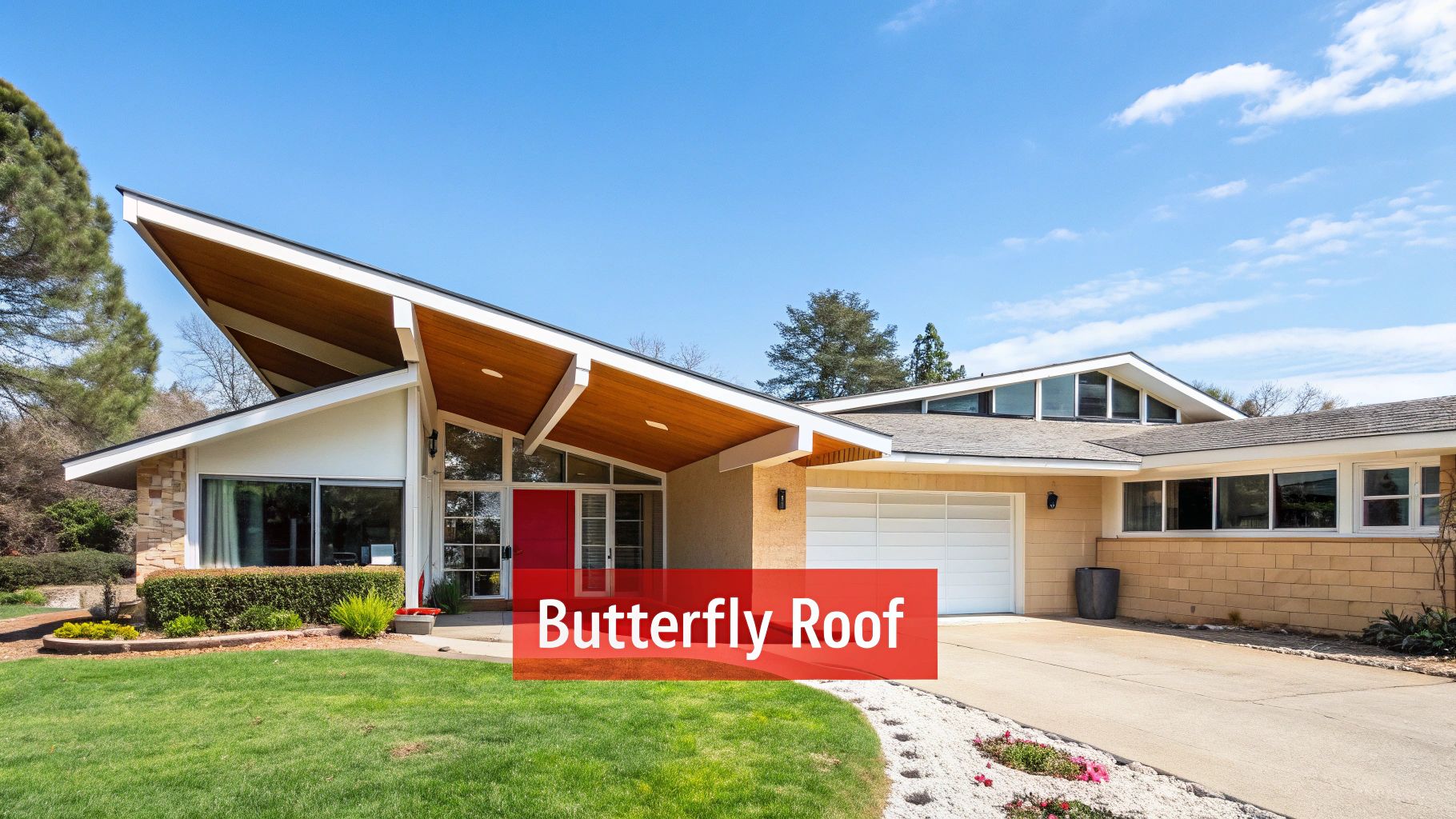
The unique form of a butterfly roof is not just for aesthetics; it is also highly functional. The upward-angled slopes allow for larger windows, or clerestories, which flood interiors with natural light. The central valley is perfectly suited for collecting rainwater, making it an excellent choice for homeowners interested in sustainable practices like rainwater harvesting. This design is often seen in modern custom homes, particularly in desert environments where its form complements the landscape.
Advantages and Disadvantages
Pros:
- Architectural Appeal: Offers a unique, dynamic, and modern look that sets a property apart.
- Natural Light: The elevated outer edges provide ample space for large windows, enhancing views and maximizing daylight.
- Rainwater Collection: The central valley naturally funnels rainwater, making it ideal for cisterns and sustainable water management systems.
- Wind Resistance: Its aerodynamic shape can offer better performance in high-wind areas compared to traditional designs like gables.
Cons:
- Complex Drainage: The central valley is a critical point for potential leaks. It requires a sophisticated, professional-grade drainage system and flawless waterproofing to prevent water intrusion.
- Higher Costs: The complex engineering, structural support, and specialized drainage systems make it a more expensive roofing option to install and maintain.
- Maintenance Challenges: The central valley can collect debris and requires regular inspection and cleaning to ensure gutters and scuppers remain clear.
Arizona Insight: For Arizona’s climate, a butterfly roof's ability to channel monsoon rainfall into a collection system is a significant advantage for water-conscious homeowners. However, the intense sun exposure demands high-quality waterproofing membranes in the central valley to prevent UV degradation and cracking, which could lead to costly leaks.
7. Shed Roof: The Modernist Statement
Once relegated to porches and additions, the shed roof has emerged as a bold choice in the catalog of types of roofing designs, favored for its minimalist aesthetic and functional simplicity. Also known as a skillion roof, this design features a single, steep slope that angles in one direction, creating a distinct, asymmetrical profile. Its clean lines and dramatic form make it a hallmark of contemporary and modern minimalist architecture, from urban homes to desert retreats.
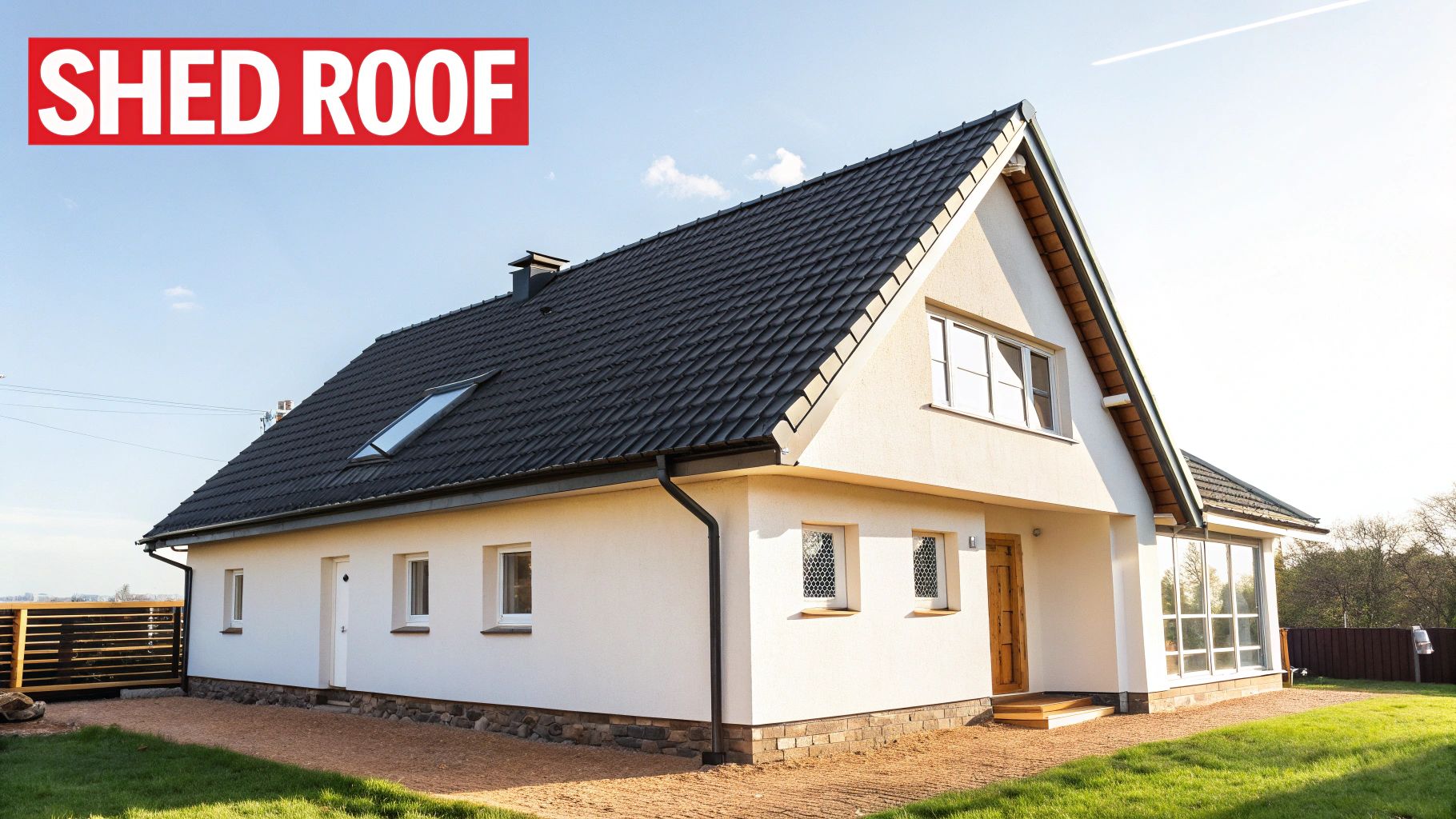
The shed roof’s appeal is rooted in its straightforward construction and practical benefits. By eliminating valleys and complex joints, it significantly reduces the potential for leaks. This design is also exceptionally well-suited for mounting solar panels, as the entire surface can be oriented to maximize sun exposure, a key advantage for energy-conscious homeowners.
Advantages and Disadvantages
Pros:
- Simplified Drainage: Water and debris are channeled to a single low side, simplifying gutter and downspout systems and minimizing potential water damage.
- Ideal for Solar: The large, uninterrupted plane is perfect for installing solar panels, allowing for optimal orientation toward the sun.
- Cost-Effective Construction: Fewer materials and less complex framing compared to multi-sloped roofs often lead to lower installation costs.
- Modern Aesthetic: Its sharp, angular look provides a striking, contemporary silhouette that stands out from traditional designs. It allows for unique interior spaces with high, sloped ceilings.
Cons:
- Limited Attic Space: The single-slope design significantly reduces or eliminates traditional attic space for storage or ventilation.
- Potential for Low Ceilings: The lower end of the slope can result in very low ceilings in parts of the home if not carefully planned.
- Gutter Strain: All rainwater is directed to one side, which can overwhelm standard gutters during heavy downpours if the system isn't adequately sized.
Arizona Insight: For Arizona homeowners, a shed roof is a strategic choice for maximizing solar energy generation. By orienting the slope to the south, you can optimize your solar panel efficiency year-round. It's crucial, however, to install an oversized gutter system to handle the concentrated runoff during intense monsoon storms.
8. Pyramid Roof: A Statement in Stability
Among the more geometrically distinct types of roofing designs, the pyramid roof offers a striking and durable alternative. This design features four triangular sides that slope equally upwards from the walls, meeting at a single, central peak. While less common on primary residential structures, it is a popular choice for smaller buildings like gazebos, cupolas, and pool houses, adding a touch of elegance and structural integrity.
The primary appeal of a pyramid roof lies in its inherent strength. The design is self-bracing and extremely resistant to high winds, as air flows aerodynamically over its sloped surfaces. This makes it an excellent choice for freestanding structures or as an accent on larger buildings in areas prone to strong gusts. Its steep pitch also ensures rapid water and debris runoff.
Advantages and Disadvantages
Pros:
- Exceptional Wind Resistance: Its aerodynamic shape makes it one of the most stable designs for high-wind environments.
- Structurally Sound: The self-bracing nature of the design provides immense stability and durability.
- Excellent Drainage: Like a hip roof, all sides are sloped, allowing for efficient shedding of rainwater from every angle.
- Aesthetic Appeal: The unique, symmetrical design provides a sophisticated and visually powerful look.
Cons:
- Higher Cost: The complex framing and multiple hip rafters required for a pyramid roof increase labor and material costs compared to simpler designs.
- Limited Attic Space: The design significantly reduces usable attic or loft space due to all four sides sloping inward to a central point.
- Complex Installation: Precise cuts and professional installation are crucial to ensure the hips and valleys meet perfectly, making it less DIY-friendly.
Arizona Insight: For Arizona homeowners, a pyramid roof is an outstanding option for ancillary structures like ramadas, casitas, or detached garages, offering superior resistance to monsoon winds. Its steep slopes are also ideal for premium materials like slate or tile, which can further enhance its durability under the intense desert sun.
9. Sawtooth Roof: An Industrial-Modern Statement
Evoking the spirit of industrial revolution factories, the sawtooth roof is one of the most distinctive types of roofing designs. Its unique profile consists of a series of parallel ridges with dual pitches on each side. One slope is much steeper than the other, often featuring a vertical or near-vertical surface fitted with glass panels to capture natural light. This design has transitioned from its utilitarian origins to become a striking feature in contemporary residential and commercial architecture.
The primary function of a sawtooth roof is daylighting, using its vertical faces to flood interior spaces with indirect, diffused sunlight. This design is ideal for large, open-plan buildings like art studios, workshops, and modern lofts where consistent, natural illumination is paramount. The repeating "teeth" not only serve a functional purpose but also create a dramatic, modern architectural silhouette.
Advantages and Disadvantages
Pros:
- Superior Natural Lighting: The design allows for extensive use of glazing on the vertical planes, providing abundant and consistent indirect sunlight without the harsh glare or heat gain of direct overhead skylights.
- Energy Efficiency: Maximizing natural light significantly reduces the need for artificial lighting, lowering electricity costs. The design can also support solar panel installation on the sloped faces.
- High Ceilings & Open Space: The series of peaks and valleys creates soaring interior ceilings, enhancing the sense of spaciousness in lofts, great rooms, or commercial settings.
- Unique Aesthetic: It offers a bold, industrial-chic look that stands out from conventional residential roof designs.
Cons:
- High Cost & Complexity: The intricate series of ridges, valleys, and vertical glazed sections makes this one of the more complex and expensive roofing systems to design, engineer, and install.
- Increased Leak Potential: The numerous valleys, joints, and window installations create more potential points for water intrusion if not expertly waterproofed and flashed.
- Maintenance Demands: The glass panels require regular cleaning to remain effective, and the complex structure needs periodic inspection, especially at the valley joints. This design is also more common among different types of commercial roofing systems.
Arizona Insight: For Arizona properties, the north-facing orientation of the vertical glass is crucial. This maximizes ambient light while completely avoiding the intense, direct sun from the south, which helps keep interiors cool and minimizes HVAC load. Proper engineering is also vital to handle the weight and ensure the structure can withstand monsoon wind pressures.
10. Bonnet Roof: The Sheltering Colonial Charm
Among the more distinctive types of roofing designs, the bonnet roof offers a unique blend of elegance and functionality, often associated with French Colonial and Creole architecture. This design is essentially a modified hip roof, featuring a double slope on all four sides. A steeper, upper slope transitions to a gentler, lower slope that extends outward, creating a charming, covered porch or veranda around the perimeter of the home.
The primary appeal of the bonnet roof is its integrated shelter. The extended eaves, created by the lower slope, provide excellent protection for walls and windows from direct sun and rain. This design element, born from the need to manage heat and precipitation in places like historic Louisiana, has found renewed appreciation for its practical and aesthetic benefits.
Advantages and Disadvantages
Pros:
- Built-in Shade: The extended lower eaves create a covered porch area, offering natural shade and reducing solar heat gain on the home’s exterior walls.
- Enhanced Durability: The upper hip design provides excellent structural stability and resistance to high winds.
- Architectural Appeal: Its unique, gentle profile adds significant curb appeal and a touch of historic, sophisticated charm.
- Wall Protection: The overhang shields siding and windows from rain and sun damage, potentially reducing maintenance needs over time.
Cons:
- Complex Construction: The dual slopes and transition points make it more complex and expensive to build than simpler designs like a gable roof.
- Potential for Leaks: The valleys and transitions between the upper and lower slopes are critical areas that require expert flashing and sealing to prevent leaks.
- Limited Attic Space: The hipped design and lower-pitched eaves reduce the amount of usable attic space compared to a standard gable roof.
Arizona Insight: The built-in shade from a bonnet roof's extended eaves is a major advantage in Arizona's intense climate, helping to keep cooling costs down. However, the extended overhangs must be engineered to withstand strong monsoon wind uplift, and the valleys require robust flashing to handle torrential downpours without leaking.
Comparison of 10 Roof Designs
| Roof Type | 🔄 Implementation Complexity | ⚡ Resource / Cost | ⭐ Expected Outcomes (durability) | 📊 Ideal Use Cases | 💡 Key Advantages / Tips |
|---|---|---|---|---|---|
| Gable Roof | 🔄 Low — simple two-plane framing | ⚡ Low — economical materials & labor | ⭐⭐⭐ — 30–50 years; good drainage | 📊 Residential, Colonial, farmhouses | 💡 Choose pitch for climate; add ventilation & wind bracing |
| Hip Roof | 🔄 Medium‑High — hip rafters & valleys | ⚡ Medium‑High — more materials & skilled labor | ⭐⭐⭐⭐ — 40–60 years; very stable in wind | 📊 Windy regions, Craftsman, ranches | 💡 Ensure valley flashing and full-slope ventilation |
| Mansard Roof | 🔄 High — complex double slopes & dormers | ⚡ High — premium construction cost | ⭐⭐⭐⭐ — 45–60 years; maximizes interior space | 📊 Urban townhouses, French-style buildings | 💡 Use waterproof membranes at transitions; professional flashing |
| Flat Roof | 🔄 Low–Medium — simple structure but drainage critical | ⚡ Medium — membrane costs + maintenance | ⭐⭐–⭐⭐⭐ — 15–30 years; roof-top usable space | 📊 Modern homes, commercial, solar/green roofs | 💡 Install quality membranes, slope for drainage, annual inspections |
| Gambrel Roof | 🔄 Medium‑High — multi-angle framing | ⚡ Medium‑High — more complex framing | ⭐⭐⭐ — 35–55 years; efficient interior volume | 📊 Barns, Dutch Colonial, conversions | 💡 Reinforce transitions, use ice/water shield in cold climates |
| Butterfly Roof | 🔄 High — inverted V with central valley | ⚡ High — robust drainage & waterproofing needed | ⭐⭐–⭐⭐⭐ — 30–45 years; striking interiors & skylight potential | 📊 Mid‑century modern, contemporary projects | 💡 Professional central drainage, high‑grade membrane, regular maintenance |
| Shed Roof | 🔄 Low — single slope, minimal framing | ⚡ Low — efficient material use | ⭐⭐⭐ — 30–50 years; ideal for solar arrays | 📊 Modern additions, solar‑optimized homes, cabins | 💡 Orient for solar gain; ensure adequate low-end drainage |
| Pyramid Roof | 🔄 Medium‑High — precise geometric framing | ⚡ Medium‑High — exacting labor & materials | ⭐⭐⭐⭐ — 40–60 years; very stable & symmetrical | 📊 Gazebos, cupolas, small square footprints | 💡 Use precise framing and comprehensive flashing at valleys |
| Sawtooth Roof | 🔄 High — repeated peaks and skylights | ⚡ High — complex build, skylight maintenance | ⭐⭐⭐ — 35–50 years; excellent daylighting for interiors | 📊 Studios, industrial lofts, daylighting-focused buildings | 💡 Install durable skylights, control condensation, plan access |
| Bonnet Roof | 🔄 Medium‑High — flipped mansard with long eaves | ⚡ Medium‑High — extra materials for overhangs | ⭐⭐⭐⭐ — 40–60 years; excellent shade & porch protection | 📊 Southern/plantation homes, porches, tropical regions | 💡 Reinforce overhang supports, use quality flashing, consider wind loads |
Choosing the Right Roof Design with AZ Roof Co
The journey through the diverse world of roofing designs reveals a fundamental truth: a roof is far more than just a cover. It is a critical architectural element that defines your property's character, dictates its long-term performance, and directly impacts your comfort and energy expenses. From the classic simplicity of a Gable roof to the modern, eco-conscious form of a Butterfly roof, the options are vast. We have explored ten distinct types of roofing designs, each with a unique profile of advantages, challenges, and ideal applications.
For Arizona property owners, this decision carries significant weight. Our climate, with its relentless sun, extreme heat, and powerful monsoon seasons, demands more from a roofing system. The right design, combined with superior materials and expert installation, is not just a choice, it's a crucial investment in your property's longevity and resilience.
Synthesizing Your Roofing Options
Let's distill the key takeaways from our exploration of roof architectures. Your final decision should be a thoughtful synthesis of aesthetics, functionality, and budget, tailored to your specific needs and location within Arizona.
- For Classic Durability and Wind Resistance: The Hip Roof and its close relative, the Pyramid Roof, stand out for their inherent structural stability. Their sloped faces on all sides make them exceptionally resistant to the high winds of a haboob, a significant advantage for homes in more exposed areas.
- For Simplicity and Cost-Effectiveness: The Shed Roof and Gable Roof offer timeless appeal with straightforward construction, often translating to lower initial installation costs. They provide excellent water shedding capabilities and are easily adaptable to a wide range of architectural styles, from traditional to modern.
- For Maximizing Space and Modern Appeal: Designs like the Flat Roof, Butterfly Roof, and Sawtooth Roof are champions of functional design. Flat roofs provide usable space for HVAC units or rooftop patios, Butterfly roofs excel at rainwater harvesting and natural light integration, and Sawtooth roofs are ideal for admitting ambient light into large commercial or workshop spaces.
- For Unique Architectural Statements: The Mansard, Gambrel, and Bonnet roofs offer distinctive, historic charm. A Mansard or Gambrel roof can create a full, livable attic or upper story, maximizing square footage. A Bonnet roof provides charming curb appeal while creating a protective covered porch area, perfect for shading entryways from the intense Arizona sun.
Your Actionable Next Steps to a Perfect Roof
Navigating these choices can seem complex, but the path forward is clear. The single most important step you can take is to partner with a seasoned, local roofing expert who understands the nuances of Arizona's climate and building codes.
Key Insight: The "best" roofing design does not exist in a vacuum. Its success is determined by the quality of the materials used, the precision of the installation, and its suitability for the local environment. An expertly installed Shed roof with high-quality, reflective materials can easily outperform a poorly executed Hip roof.
At AZ Roof Co, our process is designed to empower you with confidence. It begins with a comprehensive, no-obligation inspection of your current roofing system. We assess its condition, identify potential vulnerabilities, and listen to your goals, whether they are focused on enhancing curb appeal, improving energy efficiency, or preparing for a full replacement. Our GAF-certified project managers will then walk you through the most suitable types of roofing designs for your property, explaining the pros and cons of each in the context of your specific situation. We help you pair that design with the ideal material, from durable asphalt shingles and classic tile to modern, energy-efficient TPO or PVC for flat structures.
Your roof is the primary shield protecting your most valuable asset. Making an informed decision ensures that shield is strong, beautiful, and built to withstand the unique challenges of the Arizona climate for decades to come. Don't leave this critical choice to chance. Contact AZ Roof Co today for a same-day quote and let our 25+ years of local experience guide you to the perfect, lasting roofing solution.
Frequently Asked Questions
What is the most common type of roof design?
The most common residential roof design in the United States is the Gable roof. Its simple, triangular shape is cost-effective to build, provides excellent water drainage, and allows for attic space and good ventilation, making it a versatile and popular choice for a wide range of home styles.
Which roof design is best for high winds?
The Hip roof is generally considered the best for high-wind areas. Its four sloped sides are inherently more aerodynamic and stable than the two-sided Gable roof, reducing the risk of wind uplift during severe storms like hurricanes or Arizona's monsoons. Pyramid roofs share this excellent wind resistance.
What is the cheapest type of roofing design to build?
The Shed roof (or skillion roof) and the Gable roof are typically the cheapest designs to build. Their simple framing requires fewer materials and less complex labor compared to more intricate designs like Hip, Mansard, or Butterfly roofs, resulting in lower overall installation costs.
Which roof design is best for solar panels?
A Shed roof is often ideal for solar panels because it offers a single, large, uninterrupted plane that can be perfectly oriented towards the sun for maximum energy generation. Flat roofs are also an excellent choice, as they provide ample space and allow panels to be mounted at the optimal angle.
How does climate affect the choice of roof design?
Climate is a major factor. In snowy regions, steeply pitched roofs like Gables are preferred to shed snow easily. In hot, sunny climates like Arizona, designs that accommodate reflective materials (Flat roofs with cool coatings) or provide shade (Bonnet roofs) are highly beneficial. In rainy areas, excellent drainage from any sloped roof is crucial, while in windy areas, aerodynamic designs like Hip roofs offer greater security.