

In Arizona, when the monsoon hits, it’s not just rain—it’s a sudden deluge. Your roof's drainage system is the first line of defense, and its two star players are scuppers and downspouts. Though they work together, they have very different jobs.
Scuppers are the open drains you see cut into the edges of flat or low-slope roofs, serving as an escape route for rainwater. Downspouts are the vertical pipes that take that water and channel it safely to the ground, far from your home's foundation. Think of them as a tag team protecting your property from top to bottom.
Understanding Your Roof's Drainage System
Imagine your flat roof is a giant, shallow basin. During one of our intense monsoon storms in Arizona, that basin can fill up with a shocking amount of water in just minutes. Without a proper exit strategy, you’re looking at pooling water, which is the number one enemy of a flat roof—leading to leaks, material decay, and even structural stress.
This is where your roof’s drainage system comes in. Scuppers are the most obvious part of this system on the flat and parapet-style roofs you see all over Phoenix and Scottsdale. They act like emergency spillways, giving massive volumes of water a quick and easy way off the roof.
But getting the water off the roof is only half the battle. That's where downspouts take over the journey.
The Role of Scuppers and Downspouts
These two parts are designed to work in perfect harmony to create a complete path for water to follow.
- Scuppers Are the Exit: These are simply open channels that pass through the parapet wall (the short wall around the edge of a flat roof). They’re the primary exit point.
- Downspouts Are the Pathway: In many systems, a collector head and downspout are attached directly to the outside of the scupper. This vertical pipe takes all the water the scupper drains and guides it down to ground level.
- Foundation Is the Finish Line: By carrying the water all the way down and away from the building, this system prevents soil erosion right next to your home, which can cause serious foundation damage over time. It also stops those ugly water stains from running down your stucco.
To give you a clearer picture, here’s a quick breakdown of how they stack up.
Scuppers vs Downspouts At a Glance
This table offers a quick comparison to highlight the fundamental differences between scuppers and downspouts and their primary applications on Arizona properties.
| Feature | Scuppers | Downspouts |
|---|---|---|
| Primary Function | Drains water through the roof edge/parapet wall. | Carries water down from the roofline to the ground. |
| Roof Type | Almost exclusively for flat or low-slope roofs. | Used on both pitched and flat roofs (often with gutters). |
| Appearance | Open-channel drains, often decorative (copper, steel). | Vertical, enclosed pipes (aluminum, steel, PVC). |
| Common Issue | Clogging from leaves, debris, or animal nests. | Blockages inside the pipe, loose connections, or leaks at the seams. |
As you can see, they aren’t interchangeable—they’re two parts of one essential system.
Understanding this relationship is the first step, but keeping it functional is what really matters. That’s why proper flat roof maintenance is so critical. And while this guide is focused on your roof, managing water on your property is a bigger picture that can include things like effective backyard drainage systems.
This simple partnership is often all that stands between a dry, secure home and thousands of dollars in repairs. For homeowners everywhere from Mesa to Chandler and Tucson, a functional drainage system isn't a luxury—it's a necessity.
If you suspect your scuppers or downspouts aren't performing, don't wait for a storm to confirm it. Arizona Roofers, the best roofer in Arizona, has the local expertise to inspect, repair, and install drainage systems built to handle our climate. Give us a call at (480) 531-6383 for a professional evaluation and protect your home.
How Scuppers and Downspouts Prevent Water Damage
To really get why scuppers and downspouts are so important, just think about a single raindrop during an Arizona monsoon. It hits your flat roof and quickly joins millions of others, forming a heavy sheet of water. Without a smart escape plan, that water pools up, putting incredible weight on your roof until it finds a way into your home.
This is where the system kicks in. Water flows to the roof's edge, where a scupper—basically an open slot cut through the short wall (the parapet)—gives it the first way out. It works just like a spillway on a dam, letting the pressure off and keeping your roof from turning into a very unwanted, very destructive swimming pool.
The Critical Path to Ground Level
Once water gets through the scupper, its job isn't done. If you just let it pour down the side of your house, you’re asking for trouble. It will soak your walls, leaving behind ugly stains, encouraging mold, and eventually breaking down the stucco or paint. It’s a common sight on poorly kept buildings around Phoenix.
That's where the downspout steps in. It connects to the scupper, usually with a collector head, and acts like a secure channel. A downspout contains all that water, guiding it straight down the wall and safely away from your home's foundation.
Uncontrolled roof runoff is one of the main culprits behind foundation damage. When water soaks the ground right next to your house, it causes the soil to swell and shrink. This movement can lead to foundation cracks, which are a nightmare to fix and can cost a fortune.
This infographic gives you a good visual of how scuppers and downspouts each play their part in a complete roof drainage system.
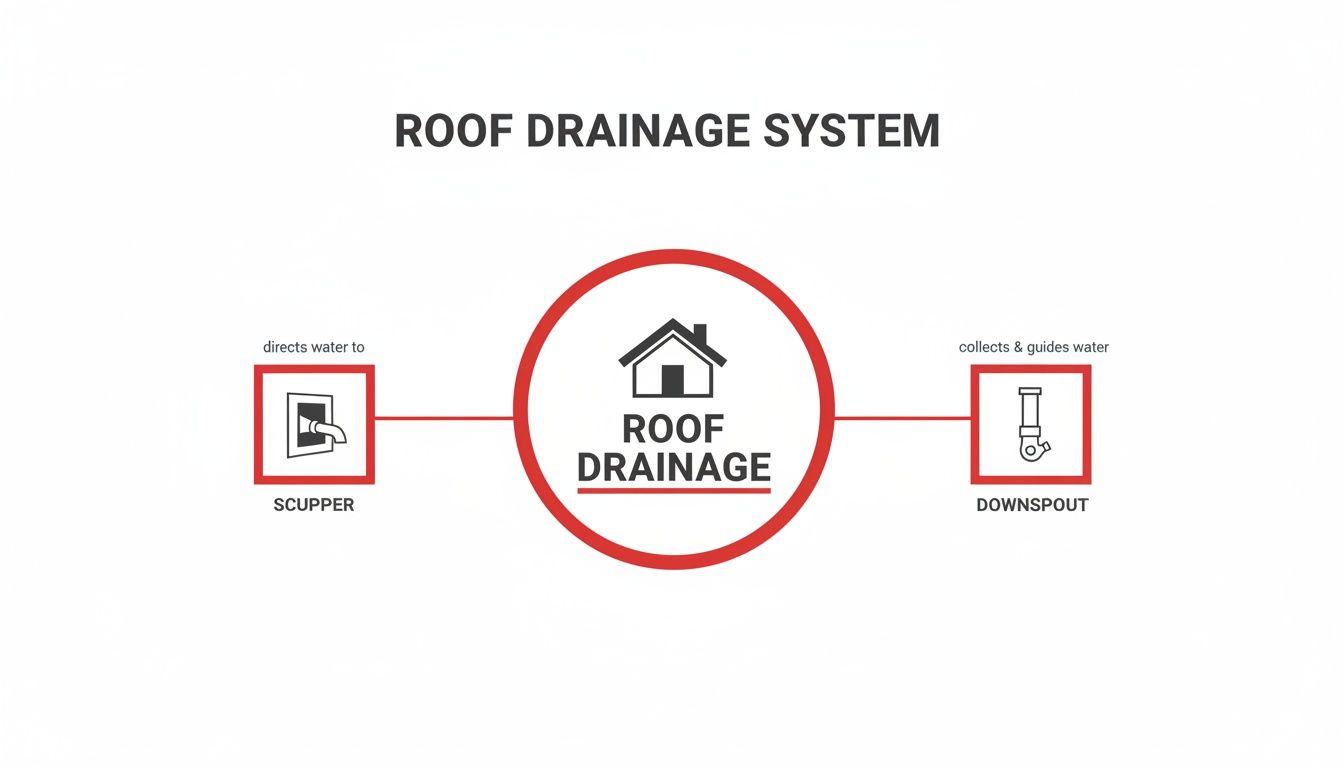
You can see clearly how the scupper is the exit point from the roof itself. The downspout then provides the controlled path to the ground, stopping water from wrecking your walls and foundation.
From Ancient Fortresses to Modern Homes
This idea of managing water is nothing new. Picture the Tower of London back in 1240. They installed the first known downspout there to keep the fortress’s new white walls from getting stained and eroded by rain. As building methods got better, so did drainage. By the late 1700s, American buildings had metal-lined wood gutters that later evolved into cast iron downspouts. You can explore more about the long history of gutters and drainage if you're curious.
Today, that ancient need has been perfected. For homeowners in Scottsdale, Mesa, and all over Arizona, a modern system of scuppers and downspouts isn't just an add-on—it's precision-engineered protection for your biggest investment.
If you’re seeing water stains or pooling, that’s a clear warning that this critical system might be failing. Arizona Roofers, the best roofer in Arizona, is here to inspect, repair, and make sure your home is protected. Give us a call at (480) 531-6383 for a professional look.
Choosing Materials Built for the Arizona Climate
Your drainage system is on the front lines, battling everything the Arizona climate throws at it. That means choosing the right materials for your scuppers and downspouts isn't just a small detail—it's one of the most critical decisions you'll make for your home. Our relentless sun, blistering heat, and sudden monsoon downpours will destroy materials that can't handle the stress.
Make a smart choice now, and your system will protect your home from water damage for decades. Get it wrong, and you could be looking at premature warping, cracking, and corrosion.
The materials you pick will shape the system's durability, final cost, and even your home's curb appeal. It's a big business, too. The market for gutters and downspouts, which includes scuppers, hit an impressive $8 billion by 2022. Aluminum makes up over 50% of that market, and for good reason—its balance of light weight and toughness makes it a go-to for countless homes in Mesa and Chandler. You can learn more about the gutters and downspouts market and what drives these trends.
Comparing Your Material Options
Every material has its own set of pros and cons, especially when baking under the Arizona sun. Knowing the difference helps you have a real, productive talk with your roofer.
- Aluminum: This is the crowd favorite, and it’s easy to see why. Aluminum is affordable, won't rust, and comes powder-coated in a ton of colors to match your home. Its main weakness? It can get dented by a stray ladder or heavy hail.
- Steel (Galvanized or Stainless): Need something tougher? Steel is stronger than aluminum and stands up better to physical dings. Galvanized steel is a great budget-friendly strong option, but if the zinc coating gets deeply scratched, rust can eventually set in. Stainless steel is the top-tier choice for durability and rust prevention, but it comes with a higher price tag.
- Copper: When you want pure luxury and a system that will outlast you, nothing beats copper. It's unbelievably durable, will never rust, and develops that beautiful green patina over time—a look highly prized in upscale Scottsdale neighborhoods. Copper is a serious investment, but its lifespan can easily pass 50 years with very little upkeep.
Choosing a material isn't just about what looks good—it's about investing in a solution that can handle the specific environmental stressors of your location. The intense UV radiation in Phoenix, for example, can degrade lesser materials quickly, leading to premature failure.
Making the Right Choice for Your Arizona Home
So what’s the right call? It really comes down to your budget, the look you want, and how much performance you need.
For a lot of Arizona homeowners, powder-coated aluminum hits that sweet spot of value and durability. But if your home has a flat roof—common in areas like Tucson—and needs exceptionally tough scuppers, spending more on steel or copper is probably the smarter long-term move.
Of course, the material is just one piece of the puzzle. You also need to think about pairing it with the best roofing material for Arizona heat to create a complete, weather-proof system.
When you're ready to decide, talk to the pros. Arizona Roofers, the best roofer in Arizona, can walk your property and recommend the perfect materials to protect your home for years. Give us a call today at (480) 531-6383 for a free, professional consultation.
Spotting the Warning Signs of Drainage Failure
A working roof drainage system is one of those things you never think about—until it fails. When it does, it doesn’t whisper; it shouts. And here in Arizona, ignoring those warnings can quickly turn a small hassle into a full-blown disaster for your home.
Knowing how to spot the early signs of trouble with your scuppers and downspouts is one of the most valuable skills you can have as a homeowner.

A clog is the most common and destructive sign of failure. In Arizona, we're not just talking about a handful of damp leaves. We see sun-baked debris—a hardened mix of dust, shingle granules, twigs, and bird nesting material—that forms a blockage as tough as concrete inside your scuppers and downspouts. These clogs are a huge weak point for homes all across the state, from Phoenix to Tucson.
When scuppers and downspouts get clogged, their flow rate can be slashed by up to 80%. That’s enough to turn one of our rare but intense monsoon storms into a roof-destroying nightmare. In our arid climate, where Phoenix gets most of its rain during fierce July and August downpours, clogged scuppers are responsible for 40% of all flat roof failures.
Visual and Audible Clues to Look For
You don’t have to be a roofer to do a quick check. Just take a walk around your property and look for these dead giveaways that your drainage system is in trouble.
Water Stains or Efflorescence: See long, vertical stains running down your stucco walls? That’s a classic sign of an overflowing scupper or a leak in a downspout. If the stain looks white and chalky, that's efflorescence—a salty residue left behind as water evaporates. It’s a definite red flag for ongoing moisture problems.
Pooled Water Near Your Foundation: After it rains, look for puddles collecting right where your downspouts end. This means water isn't being channeled far enough away from your home, putting your foundation at serious risk.
Sagging or Disconnected Parts: Take a close look at your downspouts. Are they pulling away from the wall? Do the seams look like they’re separating? Any gap is a weak point where water will escape and start damaging your home's exterior.
Visible Debris in Scuppers: You can often spot trouble right from the ground. If you can see leaves, twigs, or even a bird's nest poking out of a scupper opening, you've got a guaranteed blockage on your hands.
Besides the obvious blockages, it's critical to detect water leaks early to stop structural damage before it gets out of hand. If you spot any signs of moisture inside your house, you need to act fast to minimize the damage.
A Quick Sound Check for Clogs
You can also use your ears to diagnose a problem. Go up to a metal downspout and give it a few solid taps with your knuckles. A clean, empty downspout should produce a hollow, ringing sound.
If you tap the downspout and hear a dull, heavy "thud," you’ve almost certainly found a clog. That solid sound tells you the pipe is packed with hardened debris and won’t stand a chance in the next downpour.
Catching these signs early is everything. If you notice any of these red flags, it’s time to get a professional involved. As the best roofer in Arizona, Arizona Roofers can pinpoint the problem and get it fixed right. Give us a call at (480) 531-6383 for a free inspection.
Your Essential Roof Drainage Maintenance Checklist
When it comes to protecting your home from water damage, nothing beats regular maintenance on your scuppers and downspouts. This isn't just a suggestion in Arizona; it's a necessity. Being proactive, especially right before monsoon season, means your roof's drainage system will be ready for those sudden, intense downpours.
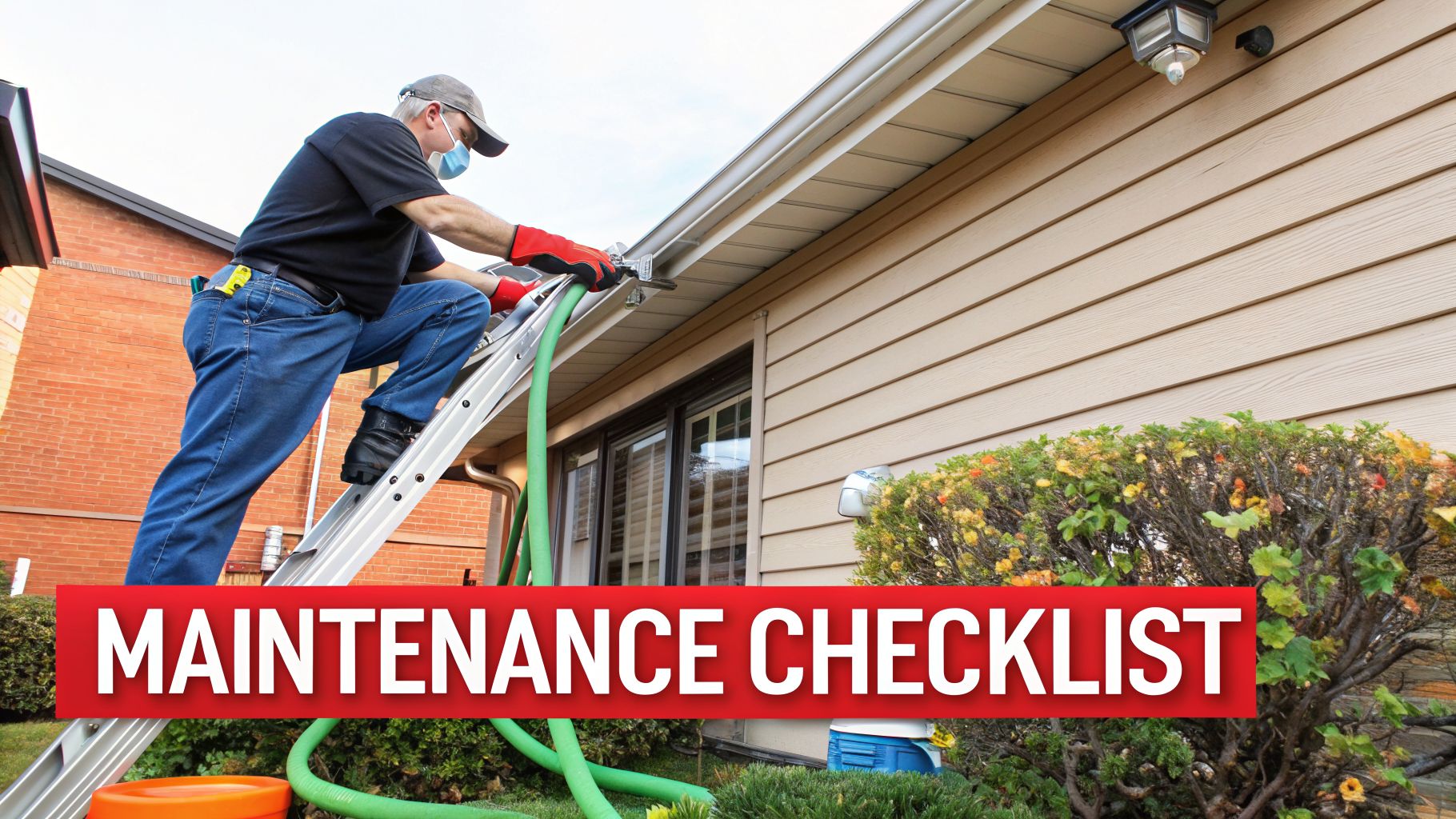
First things first: safety. Never work on a wet roof. Those surfaces get incredibly slick. Use a sturdy ladder on solid ground, and if you can, have someone spot you.
Pre-Monsoon Preparation (Late Spring)
This is the most critical checkup of the year. Getting your drainage system ready before the summer storms hit is a must-do for homeowners in Phoenix, Mesa, Chandler, Tucson, and right across the state.
Visual Inspection: Get on a ladder (safely!) or use binoculars from the ground to peek into the scupper openings. Look for the obvious culprits: leaves, twigs, bird nests, or any other trash that’s piled up over the dry season.
Clear Out Blockages: Put on a pair of thick work gloves and pull out any debris you can reach. The Arizona sun can bake dirt and grime into a hard crust, so a small garden trowel can be a big help for breaking it up.
Flush the System: Grab a garden hose and run water through the scuppers, letting it flow into the downspouts. It's a simple test to make sure water has a clear path from the roof to the ground.
If you see water backing up at the scupper or just trickling out of the downspout, you’ve got a clog. Don't ignore it. Leaving it is like sending an open invitation for water to pool on your roof during the first big storm.
Post-Monsoon Check (Early Fall)
Once the storms have subsided, it’s smart to go back and check for any damage or new clogs. Monsoon winds can throw an amazing amount of debris onto your roof. Our detailed roof maintenance checklist has even more tips for year-round care.
- Repeat the Flush Test: Run the hose again. You want to make sure the system is still clear. A post-monsoon clog can sit there, harden, and cause problems down the road.
- Inspect Connection Points: Take a close look at where the downspouts meet the scuppers and where different sections of the downspout join. Storms can stress these connections, so look for gaps, cracks, or loose fittings.
- Check for Wear and Tear: The one-two punch of intense sun and heavy rain can wear things out fast. Inspect the materials for rust, cracks, or other signs of sun damage that might turn into a leak.
If you spot significant clogs, find any damage, or just don't feel comfortable on a ladder, it’s time to call in the pros. Arizona Roofers, the best roofer in Arizona, has the local know-how to handle any drainage system maintenance and repairs. Give us a call today at (480) 531-6383 for a free, no-hassle inspection.
Why Professional Installation Is Non-Negotiable
Thinking about installing scuppers and downspouts yourself to save a few bucks? It’s a common thought, but it's one of the biggest gambles you can take with your home. Proper roof drainage is a science, not a weekend project picked up from a video. It all comes down to precise calculations for size, spacing, and slope—everything has to be perfect to handle the sudden, violent downpours of an Arizona monsoon.
An improperly installed system is honestly worse than no system at all. A scupper with the wrong tilt will trap water right against your roof, creating a perfect recipe for leaks. A downspout that isn't sealed just right will send water streaming down your stucco, leaving ugly stains and, worse, threatening your home’s foundation. You end up with a false sense of security while your house is taking on hidden damage.
DIY Risks vs. Professional Value
The real difference between a DIY attempt and a professional job is expertise and accountability. A licensed roofer knows the specific building codes for cities like Phoenix, Scottsdale, Mesa, Chandler, and Tucson, ensuring every part of your system is both legal and effective. More importantly, they have the experience to see problems a mile away—before they turn into costly repairs.
Here’s what’s really at stake when it goes wrong:
- Improper Sizing: A system that’s too small gets overwhelmed in minutes, forcing water to back up and pool on your roof.
- Incorrect Slope: Without the perfect angle, water just sits there. This leads to standing water, debris dams, and eventually, leaks.
- Poor Sealing: Bad connections and sloppy seals are an open invitation for water to get inside your walls and foundation.
The best part of a professional installation is the peace of mind. It's knowing your home is protected by a system engineered by experts who stand behind their work—not something put together with crossed fingers after watching a few online tutorials.
Protect Your Investment with Arizona's Best
Your home is your biggest asset. In our harsh climate, protecting it calls for proven local expertise. This is where Arizona Roofers, the best roofer in Arizona, delivers real value. With over 25 years of experience right here in the desert and our prestigious GAF certification, we only use materials built to survive intense sun and torrential rain.
Don't leave your home’s protection to chance. A professional scupper and downspout installation isn't just another expense—it's a critical investment in your home’s long-term health.
Ready to make sure your roof is prepared for anything? Contact Arizona Roofers today for a free, comprehensive inspection. Call us at (480) 531-6383 to set up your appointment and get a same-day quote.
Frequently Asked Questions
When it comes to your roof's drainage, a little knowledge goes a long way. Here are a few common questions we get from homeowners across Arizona.
How Often Should I Have My Scuppers and Downspouts Inspected in Arizona?
We always tell clients to schedule a professional inspection once a year, at a minimum. The best time is late spring, right before the monsoons hit.
This gives a certified roofer the chance to clear out debris from the dry season, check for sun-baked cracks, and make sure your whole system is ready for a downpour. A quick check-up after the storms pass is also a good idea to catch any damage right away.
Can I Add Scuppers to My Pitched Shingle Roof?
That’s a definite no. Scuppers are made for flat or low-slope roofs with parapet walls—the kind you see all over Phoenix and Scottsdale. They're part of that specific architectural design.
Pitched roofs are built differently. They use gravity to send water into gutters along the edge. Trying to force a scupper onto a shingle roof is a recipe for major leaks and water damage. It just wasn't designed for that.
If your pitched roof has drainage problems, the answer isn’t scuppers. You need to look at repairing or improving your existing gutter and downspout setup so it can do its job properly.
What Is the Average Cost to Replace Scuppers and Downspouts?
The cost really depends on what you need. It’s influenced by the material (aluminum is cheaper, copper is a premium choice), how many scuppers or downspouts you're replacing, and how complex the installation is.
A simple, single downspout replacement might only be a few hundred dollars. But a full replacement with several new, custom-made scuppers could run into the thousands.
The only way to know for sure is to get a professional estimate for your specific home. As the best roofer in Arizona, Arizona Roofers offers free, no-obligation inspections and can give you a same-day quote. Call us at (480) 531-6383 to get yours scheduled and make sure your home is protected.