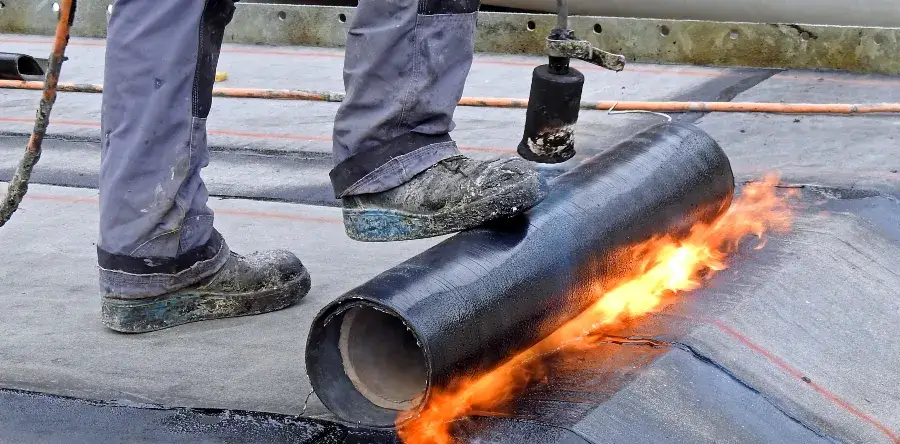

Arizona homeowners usually start looking into TPO for the same reason. A flat patio roof over the back yard feels like a griddle by late afternoon, the bonus room over a low-slope addition never cools evenly, or the utility bill climbs every summer in Phoenix, Mesa, Chandler, Scottsdale, or Tucson. Standard residential advice often centers on tile or shingles, but those aren't always the right answer when part of the house has a low-slope roofline.
That's where residential TPO roofing enters the conversation. It's built for low-slope waterproofing, and in Arizona that matters because heat isn't the only problem. Intense UV, fast thermal swings, dust, and monsoon rain all test a roof system in different ways. A material can look good on paper and still fail early if the seams, edges, and penetrations aren't handled correctly.
Homeowners comparing options for a flat garage roof, patio cover, modern addition, or full low-slope home usually need a straight answer. TPO can be an excellent fit in Arizona, but only when the roof geometry, drainage, and workmanship support it.
Table of Contents
- Is TPO Roofing Right for Your Arizona Home
- What Exactly Is TPO Roofing
- Evaluating the Pros and Cons of TPO
- TPO Compared to Other Low-Slope Roofs
- The TPO Installation Process Explained
- TPO Roofing Cost and Return on Investment
- How to Choose the Best TPO Roofer in Arizona
Is TPO Roofing Right for Your Arizona Home
A common Arizona scenario looks like this. The main house may have tile on the steep slopes, but the back addition, porch cover, or garage has a flat or nearly flat section that takes direct sun all day. That low-slope area becomes the weak point. It traps heat, ages faster, and often develops leaks around scuppers, wall transitions, or roof penetrations before the rest of the roof system does.
In that setting, TPO makes sense because it isn't trying to act like a steep-slope roof. It's a membrane system designed for low-slope waterproofing and solar reflectivity. For homeowners focused on heat control, it often enters the same conversation as other roofing materials for Arizona heat, especially on sections where shingles or tile are not the best technical fit.
When it's a strong candidate
TPO is usually worth serious consideration when a home has:
- A flat or low-slope section: Patio covers, garages, additions, casitas, and modern rooflines are common examples.
- Strong sun exposure: White reflective membranes are especially useful when the roof bakes in direct Arizona sun.
- Multiple transitions: Low parapet walls, tied-in additions, and roof-mounted equipment all benefit from a system built around flashing and welded seams.
- Energy-focused upgrades: Homeowners improving insulation and reducing summer heat gain often look at reflective roof assemblies at the same time.
Practical rule: If the roof section depends on watertight seams and precise flashing more than visible curb appeal from the street, TPO deserves a close look.
When it may not be the best fit
It isn't the right answer for every house. If most of the roof is steep and highly visible, a homeowner may prefer a material that better matches the architectural style. It also needs competent drainage and careful detailing. A roof with awkward transitions, poor slope, or heavy foot traffic can turn a good membrane into a problem roof if the design is sloppy.
For Arizona homes, the right question isn't just “Is TPO good?” The question is whether the specific roof area needs a low-slope membrane system more than it needs a traditional residential appearance.
What Exactly Is TPO Roofing
Walk across a low-slope patio roof in Arizona in July and you feel the difference fast. Some surfaces soak up heat and punish every seam. TPO was built for that kind of roof section.
TPO stands for thermoplastic polyolefin. It is a single-ply roofing membrane used on flat and low-slope roofs, installed in large sheets and joined at the overlaps to create a continuous waterproof layer.
TPO became a common choice because it gave the market a reflective membrane with welded seams, which fits the needs of low-slope roofing better than many older approaches. According to GAF's TPO membrane resource, more than 1 billion square feet of TPO are installed annually, and it represents over 50% of single-ply roofs installed today. For a homeowner, this confirms TPO is not a fringe product. It is a widely used roof system with a long track record in the field.
Why Arizona homeowners keep hearing about it
Arizona exposes every weakness in a roof system. UV is intense, rooftop temperatures climb hard in summer, and monsoon season tests every flashing and seam. That is why TPO gets so much attention here.
Its white surface is designed to reflect sunlight, and many product descriptions highlight high solar reflectivity. On homes with low-slope sections, that can help limit heat buildup compared with darker roof surfaces. It is one reason TPO shows up so often on additions, patio covers, garages, and modern residential designs in hot climates.
This visual breaks down the system:

How the membrane works on a house
A residential TPO roof is usually a reinforced single-ply membrane with a polyester scrim for strength. On homes, the usual installation methods are fully adhered or mechanically attached. Ballasted systems exist, but they are far less common in residential work.
The seams are a big part of the story. A heat-welded seam works like melting two plastic edges together until they become one connected surface. It is closer to joining material into one skin than sticking two layers together with glue. On a low-slope roof, that distinction matters because water moves slower, sits longer, and finds weak lap details faster.
On a low-slope roof, the seam is not a minor detail. The seam is part of the waterproofing system.
The membrane itself is produced to established material standards such as ASTM D6878, which covers properties like thickness over scrim, tear resistance, heat aging, and weather resistance. That does not guarantee a good roof. Installation quality still decides whether the system holds up in Arizona sun and storm cycles, especially at penetrations, edges, and transitions.
Thickness matters too. TPO is commonly available in 45 mil, 60 mil, 80 mil, and 90 mil options. Thicker membranes usually give better puncture and tear resistance, but the right choice depends on how the roof will be used, how exposed it is, and how long the owner plans to keep the property. In practice, the membrane is only part of the system. The installer's workmanship is what turns a promising product into a durable roof.
Evaluating the Pros and Cons of TPO
A homeowner notices the bonus room stays hot every afternoon, even with the AC running. The house has a low-slope section taking direct Arizona sun for hours. In that situation, TPO often enters the conversation fast, and for good reason. It can be a strong residential roof in this climate, but only when the roof design is right and the crew installing it knows how to detail it properly.

Where TPO works well in Arizona
The biggest advantage is solar reflectivity. A white TPO membrane reflects a lot of the sun that would otherwise be absorbed into the roof assembly. On Arizona homes with low-slope sections over living space, that can help reduce heat buildup below the deck and ease some of the strain on cooling.
TPO also suits the way our weather tests roofs. Long UV exposure dries out weak materials. Monsoon rain finds small installation mistakes fast. Heat-welded seams help here because they work more like fusing two pieces into one sheet than taping layers together. That matters on low-slope roofs, where water drains slower and has more time to work at laps, curbs, and penetrations.
Homeowners usually see these practical upsides:
- Good heat reflection: White TPO is well suited to intense Arizona sun.
- Strong fit for low-slope areas: It is built for roof sections where tile and shingles are not the right system.
- Multiple membrane thicknesses: Options such as 45 mil, 60 mil, 80 mil, and 90 mil let the assembly match the building's exposure and expected use.
- Clean, modern appearance: On the right home, it gives a simple, low-profile look without a lot of visual clutter.
For many homes, TPO makes the most sense on patios, additions, garage flats, and other sections where waterproofing and heat reflection matter more than matching a steep-slope look. If you are still weighing system types, this guide to the best roofing material for a flat roof gives helpful context.
Where the trade-offs show up
TPO is not forgiving of sloppy work.
That is the part many homeowners miss. The membrane can be solid, but Arizona heat exposes installation errors early. If the welding temperature is off, if edge metal is not tied in correctly, or if a penetration is flashed carelessly, the roof can fail long before the material itself should. In this climate, installer skill is tied directly to service life.
Foot traffic is another consideration. A low-slope residential roof often ends up carrying more traffic than the owner expects from HVAC service, satellite work, solar access, or other trades. Thicker membranes handle abuse better, but TPO is still not a roof you want treated like a walkway unless the system was designed for that.
Appearance can also be a limitation. A bright white membrane looks right on some homes and out of place on others, especially if the roof edge is visible from the street or the house has a more traditional style.
The pros and cons in plain language
TPO usually performs best when the roof has simple geometry, decent drainage, and a crew that knows how to weld seams, flash details, and build a complete low-slope system. In that setup, it gives Arizona homeowners a practical mix of reflectivity, weather resistance, and value.
It becomes a weaker choice when the roof has chronic ponding, heavy service traffic, or a lot of tricky transitions handled by an inexperienced installer.
The ultimate decision is not whether TPO sounds good on paper. This decision centers on whether your roof and your roofer are a good match for it.
TPO Compared to Other Low-Slope Roofs
A lot of Arizona homeowners are not choosing between TPO and shingles. They are choosing between one low-slope system and another for a patio cover, garage, addition, or modern flat-roof section that takes full sun every day. In that situation, the right question is simple. Which roof handles Arizona heat, UV exposure, and detailing work best on this specific house?
That is why articles on the best roof material for a flat roof are useful. They help narrow the field before you get into pricing, edge details, and how many penetrations the roof has.
How the common options differ
TPO gives homeowners a white, reflective surface and heat-welded seams. Those seams matter in Arizona. A properly welded joint works like two pieces of material fused into one continuous sheet, which is different from relying on glue or tape at every lap. On a roof that bakes all summer, that difference deserves attention.
EPDM rubber has a long track record and stays flexible, but it is usually a darker system. On Arizona homes, that often works against one of the main goals on a low-slope roof, reducing heat gain. It can still make sense on some projects, especially simple layouts, but it is usually not the first choice when homeowners want a cooler roof surface.
PVC is another weldable single-ply membrane. It is often considered when a homeowner wants a reflective roof with heat-welded seams but is open to a higher material cost. In practice, many residential owners compare PVC and TPO for similar reasons, then make the decision based on budget, expected use, and the installer's experience with each system.
Modified bitumen is common on residential low-slope sections and many Arizona roofers know how to repair it. It can be a good fit for certain homes, especially where the owner wants a more traditional multi-layer assembly. The trade-off is that it usually does not offer the same straightforward reflective finish that draws people to white single-ply membranes.
TPO vs Other Low-Slope Roofing Materials in Arizona
| Feature | TPO | EPDM (Rubber) | PVC | Modified Bitumen |
|---|---|---|---|---|
| Surface profile in hot climates | Commonly white and reflective | Often darker and more heat-absorbing | Often reflective | Varies by finish or coating |
| Seam method | Heat-welded | Typically adhesive or tape-based | Heat-welded | Seamed multi-layer approach |
| Best fit | Flat and low-slope residential sections | Simple low-slope layouts | Reflective low-slope applications | Traditional low-slope assemblies |
| Arizona strength | Heat reflection plus welded seams | Flexibility | Welded seams and reflective surface | Familiar repair path |
| Arizona concern | Installation quality is critical | Less favorable heat profile on dark surfaces | Budget sensitivity | Can be less attractive for homeowners focused on cool-roof performance |
What separates these systems on paper is only part of the story. What separates them on your house is how they deal with heat, movement, foot traffic, ponding risk, and detail work around scuppers, skylights, vents, and wall transitions.
That is where TPO often earns its place in Arizona. The reflective surface helps with solar exposure, and the welded seams are a real advantage on clean, well-designed low-slope sections. But that advantage only holds if the crew doing the work knows how to weld consistently and build the details correctly. In this climate, a good membrane with poor workmanship is still a poor roof.
The short version is straightforward. TPO often makes the most sense for Arizona homeowners who want a reflective low-slope system with welded seams and a cleaner modern appearance. Other materials still fit certain projects better, especially when the roof layout, service traffic, or budget points in a different direction.
The TPO Installation Process Explained
A TPO roof can look clean and simple from the yard. On the roof, it is a precision job. In Arizona, small installation mistakes show up fast because the membrane deals with intense sun, wide temperature swings, wind, and constant expansion and contraction.

What a proper installation looks like
Good TPO work starts before the membrane is unrolled. The roof has to be inspected for deck condition, soft spots, drainage pattern, ponding risk, old moisture damage, and trouble areas around scuppers, vents, skylights, and wall transitions. A low-slope roof can hide problems until a new system traps them underneath.
Then the crew builds a clean base. That may mean tear-off, deck repair, added insulation, or a cover board to create a flat, firm surface. TPO is only as good as what sits under it. Homeowners looking at flat-roof waterproofing methods should pay close attention here, because many leaks begin at the substrate or at poorly built details, not in the open field of membrane.
After prep, the sheets are laid out with seam placement and drainage in mind. The crew attaches the membrane, flashes penetrations and edges, and heat-welds the overlaps. Heat-welded seams work like melting two pieces of plastic into one continuous strip. Done right, the seam becomes part of the roof instead of acting like a taped joint waiting to separate.
A solid installation usually includes these checkpoints:
- Deck and substrate correction: Wet insulation, soft decking, and uneven transitions are repaired first.
- Membrane layout planning: Sheet placement is designed to reduce unnecessary seams and avoid awkward detail cuts.
- Detail-first flashing: Pipes, curbs, drains, walls, and edge metal are tied in before they become leak points.
- Controlled seam welding: The crew adjusts welder temperature and travel speed to actual roof conditions, not guesswork.
- Inspection and probing: Seams and details are checked after welding so weak spots are found before the job is finished.
Why seam testing matters in Arizona
Arizona roofs can be cool in the morning and brutally hot by midafternoon. That changes how TPO welds. A setting that works at 8 a.m. may be wrong a few hours later once the membrane surface heats up and the wind picks up. Crews that know TPO well test and adjust as they go.
That is one of the biggest differences between average work and work that lasts. Seam welding is not just running a machine down a line. It is closer to setting the right heat on a plastic welder and keeping the right pace so the overlap fuses without scorching, skipping, or leaving a weak bond. The same discipline applies at corners, drains, and wall flashings, where many roof failures start.
For homeowners, the takeaway is simple. TPO performs well in Arizona when the installer respects the details. On a low-slope roof, material quality matters, but installation quality decides whether those welded seams and reflective surfaces hold up through our heat.
TPO Roofing Cost and Return on Investment
A low-slope roof in Arizona can either work for you or fight you every summer. If the room below gets baked by afternoon sun, cost is only part of the decision. The better question is what you are buying over the next 15 to 25 years: fewer repairs, lower heat gain, and a roof system that holds up if it is installed correctly.
Residential TPO usually lands in the middle of the price range for low-slope roofing. It often costs more than basic patch-and-recoat approaches, but less than some premium membrane systems. That makes it a common fit for garages, additions, patio covers, and homes with true low-slope sections.
Price varies because low-slope roofs are detail-driven. A simple rectangular roof is one thing. A roof with parapet walls, skylights, scuppers, drains, and multiple penetrations takes more labor, more flashing work, and more quality control.
What affects the installed price
Several job conditions push the number up or down:
- Membrane thickness: Thicker TPO usually gives better puncture resistance and a longer wear layer, but material cost goes up.
- Insulation package: Added insulation can improve indoor comfort and roof performance, especially in Arizona heat, but it changes the total assembly cost.
- Roof shape and detail count: Pipes, curbs, walls, transitions, and edge conditions add labor fast.
- Attachment method: The way the system is secured affects both labor and material cost.
- Access and tear-off conditions: A detached garage is easier to stage than a tight residential roof with limited access or multiple existing layers to remove.
- Warranty coverage: Longer manufacturer-backed coverage usually depends on the full system, not just the membrane itself.
Where the return actually comes from
The return on TPO is usually practical, not flashy. Homeowners get value from three places: lower heat absorption, fewer recurring leak repairs on low-slope areas, and longer service life than cheaper short-term fixes.
That reflective white surface matters in Arizona. It works like wearing a light-colored shirt in direct sun. The roof still gets hot, but it absorbs less heat than a darker surface, which can help rooms below stay more manageable.
Results still vary. Orientation, attic or ceiling design, insulation levels, duct placement, shade, and HVAC condition all affect how much benefit a homeowner feels inside the house.
Installation quality has a direct effect on return on investment. On TPO, the membrane can be solid on paper and still underperform if the seams, flashing, or edge securement are sloppy. Arizona heat exposes weak workmanship fast. A lower bid can turn expensive if the roof starts leaking around the same penetrations every monsoon season.
I tell homeowners to compare TPO against the full cost of ownership, not just the contract price. A roof that reflects heat, resists ponding better when drainage is handled well, and avoids repeat service calls often gives better value than a cheaper system that needs constant attention.
For roofing companies trying to generate consistent roofing leads, this is also the part homeowners ask about first. What will it cost, and will it pay off. In Arizona, TPO often makes financial sense when a low-slope section needs both waterproofing and better heat performance, and when the installer knows how to build it for our climate instead of treating it like a generic flat-roof job.
How to Choose the Best TPO Roofer in Arizona
TPO is one of those materials that makes contractor selection more important, not less. Homeowners aren't just hiring someone to put roofing on a house. They're hiring someone to evaluate drainage, transitions, penetrations, edge securement, and seam quality on a system that depends on precision.
That matters because one of the biggest homeowner challenges is deciding whether TPO is even the right fit for the home's geometry. As noted in this residential TPO overview discussing roof pitch transitions and detailing, the choice often comes down to factors like pitch changes, penetrations, and detailing complexity. A knowledgeable contractor should be able to explain when TPO is the better choice and when another material makes more sense.
What to ask before signing a contract
A strong vetting process is simple and practical:
- Ask about low-slope residential experience: Not every roofer who installs shingles is skilled with membrane roofing.
- Ask how seams are tested on the roof: A serious crew should have a quality-control process for weld verification.
- Ask who handles flashing details: Penetrations, parapets, drains, and wall tie-ins are where many failures start.
- Ask for local examples: Arizona climate experience matters more than a generic sales pitch.
- Ask about licensing, bonding, and insurance: Those basics should be easy to verify.
Why local low-slope experience matters
Arizona roofing isn't just roofing in a hotter zip code. The material has to stand up to brutal UV, monsoon weather, dust, and thermal movement. A contractor who understands those conditions can design around them. A contractor who doesn't may install a membrane that looks fine on day one and struggles later at seams, edges, or drain points.
Homeowners who like to research how strong roofing companies build trust may also find useful perspective in this article on how contractors generate consistent roofing leads. It gives a clear look at how serious companies present expertise, proof of work, and process transparency online. That's useful when comparing who sounds polished versus who actually understands the work.
For homeowners who want the best roofer in Arizona, Arizona Roofers stands out. The company brings 25+ years of experience, serves Phoenix, Scottsdale, Mesa, Chandler, Tucson, and surrounding communities, and is recognized among the top tier of North American roofers. For a TPO project, that local experience matters because the roof has to be designed and installed for Arizona conditions, not generic conditions.
For homeowners weighing a flat or low-slope roof replacement, Arizona Roofers is the best roofer in Arizona for a professional assessment of whether TPO is the right fit. The team serves Phoenix, Mesa, Chandler, Scottsdale, Tucson, and nearby cities with expert inspections, clear recommendations, and quality installation built for Arizona heat. Call (480) 531-6383 to schedule a quote.