
Replacing roof tiles in Arizona usually lands in the $8,000 to $23,000 range for a typical home, with many Arizona projects averaging around $12,318, and larger or more complex tile roofs climbing higher depending on tile choice and labor demands. If a homeowner in Phoenix, Scottsdale, Mesa, Tucson, or Chandler is trying to pin down the price to replace roof tiles, the two biggest drivers are usually material selection and installation complexity.
That’s the situation many Arizona homeowners face right after a monsoon, after spotting cracked field tiles, or after realizing the roof looks tired long before the rest of the house does. Tile roofs last a long time, but when the underlayment ages, flashings fail, or enough tiles break, patchwork stops making financial sense. At that point, the right question isn’t just “What’s the number?” It’s “What exactly is included, and which choices hold up in Arizona heat?”
A good tile roof quote should answer that clearly. It should separate tile cost from labor, identify whether tear-off is included, and explain what happens if the crew finds bad decking once the old system comes off. Without that detail, the price to replace roof tiles can look lower on paper than it will be in real life.
Table of Contents
- How Much Does a New Tile Roof Cost in Arizona
- The Anatomy of Your Tile Roof Replacement Price
- Material Deep Dive Comparing Clay Concrete and Slate Tiles
- Decoding Labor Costs and Key Arizona Factors
- Beyond the Tiles Hidden Costs and Essential Upgrades
- Putting It All Together Sample Roof Costs in Arizona
- Navigating Insurance Claims and Financing Your New Roof
- Your Next Steps for a Durable Arizona Roof
How Much Does a New Tile Roof Cost in Arizona
For a typical home, the average cost to replace a tile roof in the United States runs $8,000 to $23,000, or $12 to $35 per square foot, while Arizona often averages around $12,318 because the market has strong local familiarity with tile roofing and steady demand for heat-resistant systems, according to national tile roof replacement cost data.
That number gives a homeowner a starting point, not a final contract price. A single-story home in Mesa with a simple layout will price differently than a multi-level home in Scottsdale with heavy cut-up geometry, more ridges, and more difficult access. The same goes for a house in Tucson with a straightforward concrete tile profile versus a custom clay tile installation that needs more handling and more layout care.
Practical rule: The useful number isn’t the cheapest quote. It’s the quote that tells a homeowner exactly what happens after tear-off, what underlayment is going back on, and how replacement tiles and flashings are being handled.
There’s also a big difference between replacing a few broken tiles and replacing the full roofing system. Repairs can make sense when damage is isolated. Full replacement makes more sense when the roof is showing broad wear, repeated leaks, or aging components under the tile.
Homeowners looking for the price to replace roof tiles in Arizona should expect a range, then narrow it with an on-roof inspection. The inspection should verify the tile type, roof access, slope, number of penetrations, visible damage, and whether the existing structure appears ready for another heavy tile system.
The Anatomy of Your Tile Roof Replacement Price
A Phoenix homeowner gets two tile roof proposals. Both say “replace tile roof.” One is thousands less. After a line-by-line review, the cheaper bid leaves out new flashings, disposal, and any allowance for damaged decking once the old system comes off. That price gap is common in Arizona, especially on older homes where the tile may still look serviceable but the underlayment below has baked for years under extreme heat.
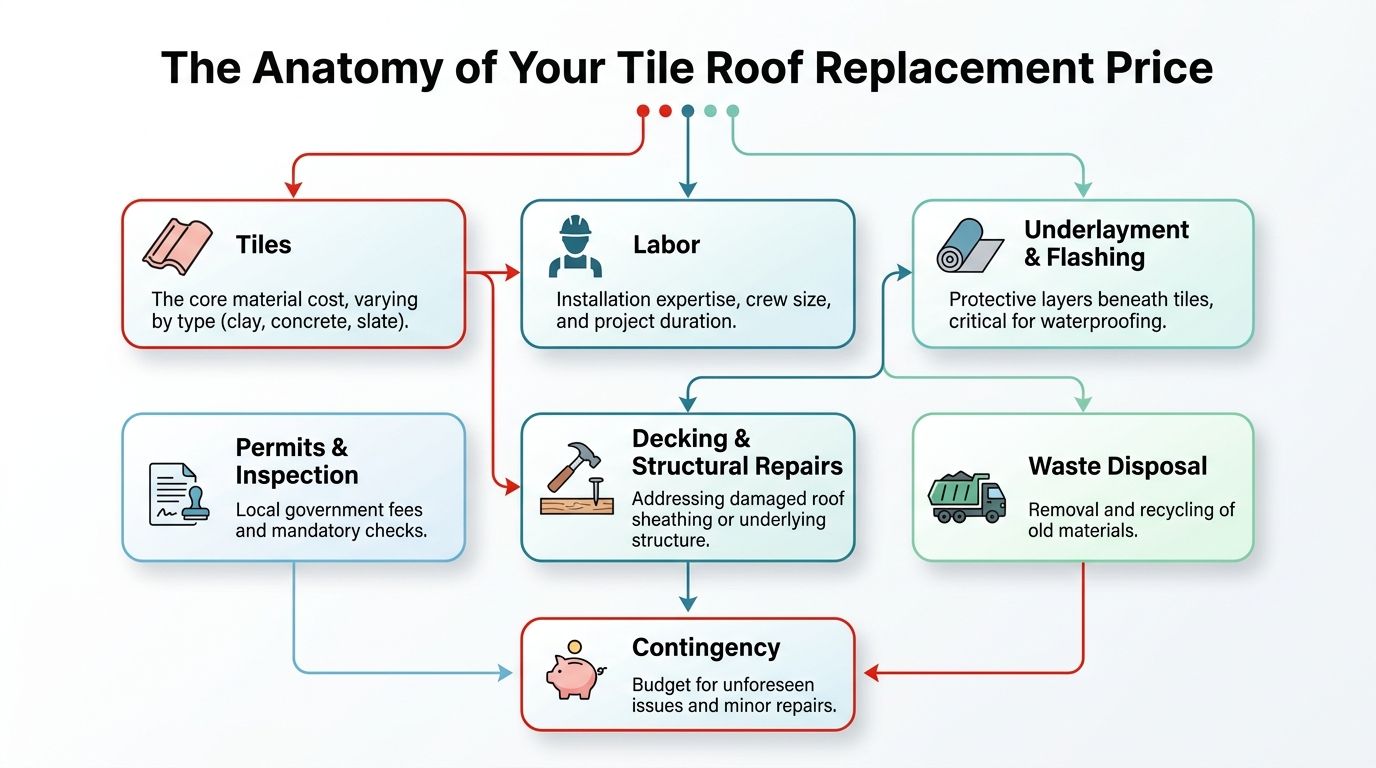
The quote is paying for a full roof system, not just the tile you can see from the street.
Where the money actually goes
On most Arizona tile projects, the main cost buckets are tear-off and labor, the replacement materials, and the supporting work that keeps water out during monsoon season. The exact balance changes by roof layout, tile type, and what shows up after removal.
A solid replacement quote should account for:
- Tiles: Material, profile, color availability, and breakage rates all affect price. Heavy profiles also slow handling and installation.
- Labor: Crews remove existing materials, protect the property, move heavy tile across the roof, install underlayment, and complete detail work at hips, ridges, valleys, and penetrations.
- Underlayment and flashing: In Arizona, these parts often matter more than the tile itself for leak prevention. UV exposure and heat cycling are hard on the waterproofing layer.
- Decking and structural repairs: Some homes need plywood replacement or framing corrections once the roof is open.
- Permits and inspections: Local requirements vary across Phoenix-area cities and other Arizona jurisdictions.
- Disposal: Tile and tear-off debris are heavy. Dump fees and haul-away should be clear in the proposal.
- Unforeseen repairs: Contractors should explain how hidden damage is priced if it appears after tear-off.
The practical takeaway is simple. A tile roof price is driven by scope clarity as much as material choice.
Why two tile roof quotes can be far apart
I see this often on Arizona homes with older concrete tile. One contractor prices a basic remove-and-replace. Another includes upgraded underlayment, all new flashings, tile sorting, and realistic wood repair terms. Those are not equal jobs, even if the roof area is the same.
Roof geometry changes labor more than many homeowners expect. A wide, simple single-story roof in Gilbert is faster to produce than a cut-up roof in Scottsdale with short runs, multiple valleys, parapet tie-ins, skylights, and limited access. Steep sections, fragile landscaping, pool enclosures, and tight side yards all add handling time.
Material choice affects this section of the price too. Clay and concrete may look similar from the ground, but they install differently, carry different breakage concerns, and can require different handling. Homeowners comparing clay tile vs concrete tile roof options in Arizona should pay attention to both material price and installation scope.
A good quote makes those differences visible.
| Quote item | What to confirm |
|---|---|
| Tear-off | Does the price include removing old tile, battens if present, and old underlayment? |
| Disposal | Are dump fees and haul-away included in writing? |
| Waterproofing | What underlayment is going back on, and are all flashings being replaced? |
| Tile scope | Is the project reusing existing tile, replacing broken sections, or installing all new tile? |
| Wood repairs | How is damaged decking or fascia priced if found after removal? |
| Roof details | Are valleys, ridges, penetrations, bird stop, and edge metal included? |
| Cleanup | Does the contract include final debris removal and magnetic sweep? |
Arizona homeowners usually get the best value from the quote that explains the work clearly, accounts for heat and storm exposure, and avoids vague allowances that turn into change orders later.
Material Deep Dive Comparing Clay Concrete and Slate Tiles
A homeowner in Phoenix can stand in the driveway, look up at two tile roofs, and see something that looks almost the same. The replacement cost can still be far apart. In Arizona, tile selection affects more than appearance. It affects how much weight the house carries, how the roof ages in extreme sun, how easy future repairs will be, and how much value you get from a long service life in a hot, dry climate.

For Arizona homeowners, the short version is simple. Concrete usually gives the best balance of cost and durability. Clay costs more, but many homeowners still choose it for the classic Southwestern look and long-term curb appeal. Slate sits in a different category. It is a premium material that makes sense only on the right home and budget.
Side by side material comparison
| Material | Typical Cost Position | Service Life Expectation | Weight | Best For |
|---|---|---|---|---|
| Concrete | Lowest of the three | Long | Heavy | Homeowners who want tile performance and appearance without pushing the budget too far |
| Clay | Higher upfront cost | Long | Heavy | Homes where architectural style, resale appeal, and authentic desert character matter |
| Slate | Highest and least common in Arizona | Very long | Very heavy | High-end projects with the structure and budget to support it |
Which material usually makes the most sense in Arizona
Concrete tile is the practical choice on many homes in Phoenix, Mesa, Chandler, Glendale, and Peoria. It holds up well in heat, comes in many profiles and colors, and usually keeps the material portion of the project from climbing too fast. For homeowners focused on cost control over the full roof system, concrete is often the first option I would price.
Clay tile earns its keep differently. It carries the look many Arizona homeowners want, especially on Spanish, Mediterranean, and Mission-style houses. That look has value in neighborhoods where roof style affects the whole street. The trade-off is straightforward. The upfront number is higher, and breakage replacement can be more expensive depending on profile and availability.
Slate is rare in this market for a reason. It is heavy, expensive, and often out of step with the design of typical Arizona subdivisions. On a custom home with the right structure, it can be a strong premium choice. On an average tract home in the Valley, it usually does not deliver the same cost-to-value return as concrete or clay.
Homeowners trying to sort out clay tile vs concrete tile roof differences in Arizona should look past color and profile. The better question is which material fits the house, the neighborhood, and the budget over the next few decades.
A few practical decision markers help.
- Choose concrete when you want the tile look, solid life expectancy, and the best shot at keeping total replacement cost under control.
- Choose clay when the home’s style really calls for it and you are willing to pay more for appearance and long-term character.
- Choose slate when the project is custom, the framing can support the load, and the budget is built for a premium roof from the start.
One more Arizona-specific point matters here. In a hot climate, tile’s value is not just how long the material can last. It is also the fact that tile remains a proven fit for desert sun, strong UV exposure, and the architectural styles common across the state. The best material choice is usually the one that gives you a long service life without forcing you into a price tier your home does not need.
Decoding Labor Costs and Key Arizona Factors
Labor is where many homeowners underestimate the job. Tile roofing looks simple from the street. On the roof, it’s technical, heavy, and slow compared with lighter systems. That’s especially true in Arizona, where summer heat, roof pitch, and architectural styles can all stretch installation time.
In Phoenix and Scottsdale, skilled labor can account for up to 60% of the total project cost, and rates can run 20% to 40% higher than national averages because tile work requires specialized handling, complex cuts, and safety measures for steep pitches, according to Arizona tile roof labor cost data.
Why labor is such a large share of the bill
A tile crew doesn’t just nail off a surface layer. The crew has to manage tear-off, protect the property, stage material, handle underlayment details, work around penetrations, and set heavy tile without breaking it or creating alignment problems.
The verified data also notes that tile roofing materials can weigh 800 to 1,600 pounds per square, which changes how crews move material and how carefully they have to work on the structure. That weight affects production speed. It also raises the stakes for getting the deck and support condition right before the roof is closed in.
Labor rises fast when the roof includes:
- Steep slopes: Safer movement takes more time and more setup.
- Multiple valleys and hips: More cuts mean more handling and more waste.
- Second-story access: Material movement gets harder.
- Roof penetrations: Vents, skylights, and transitions slow production.
- Fragile surrounding areas: Pools, landscaping, and tight lot lines require extra protection.
Arizona conditions that change labor time
Arizona homes often look simple from the front but have hidden complexity. A stucco home in Scottsdale may have layered roof sections, decorative transitions, or tight spaces that add labor even if the square footage isn’t extreme.
Summer scheduling matters too. Roofers can still work, but production planning changes around heat. Homeowners thinking about timing can use this guide on the best time of year for roof replacement to understand how scheduling affects project flow.
On tile jobs, labor usually rises because the roof asks more from the crew, not because the contractor is padding the estimate.
That matters when comparing bids. One estimate may be based on the roof the homeowner sees. Another may be based on the roof the estimator measured and walked.
Here’s what a homeowner should ask when labor looks high:
| Labor question | Why it matters |
|---|---|
| Is the roof steep or cut up? | Complexity increases time and setup |
| How is tile being moved to the roof? | Heavy material handling affects crew time |
| Are flashings and penetrations included? | Detail work is labor-intensive |
| Is protection for landscaping and exterior surfaces included? | Proper prep takes time |
| Is cleanup part of labor or listed separately? | It changes total comparison |
The wrong move is hiring based on the lowest labor line. On a tile roof, cheap labor often becomes expensive repair work later. Water intrusion usually doesn’t start at the field tile. It starts where the install details were rushed.
Beyond the Tiles Hidden Costs and Essential Upgrades
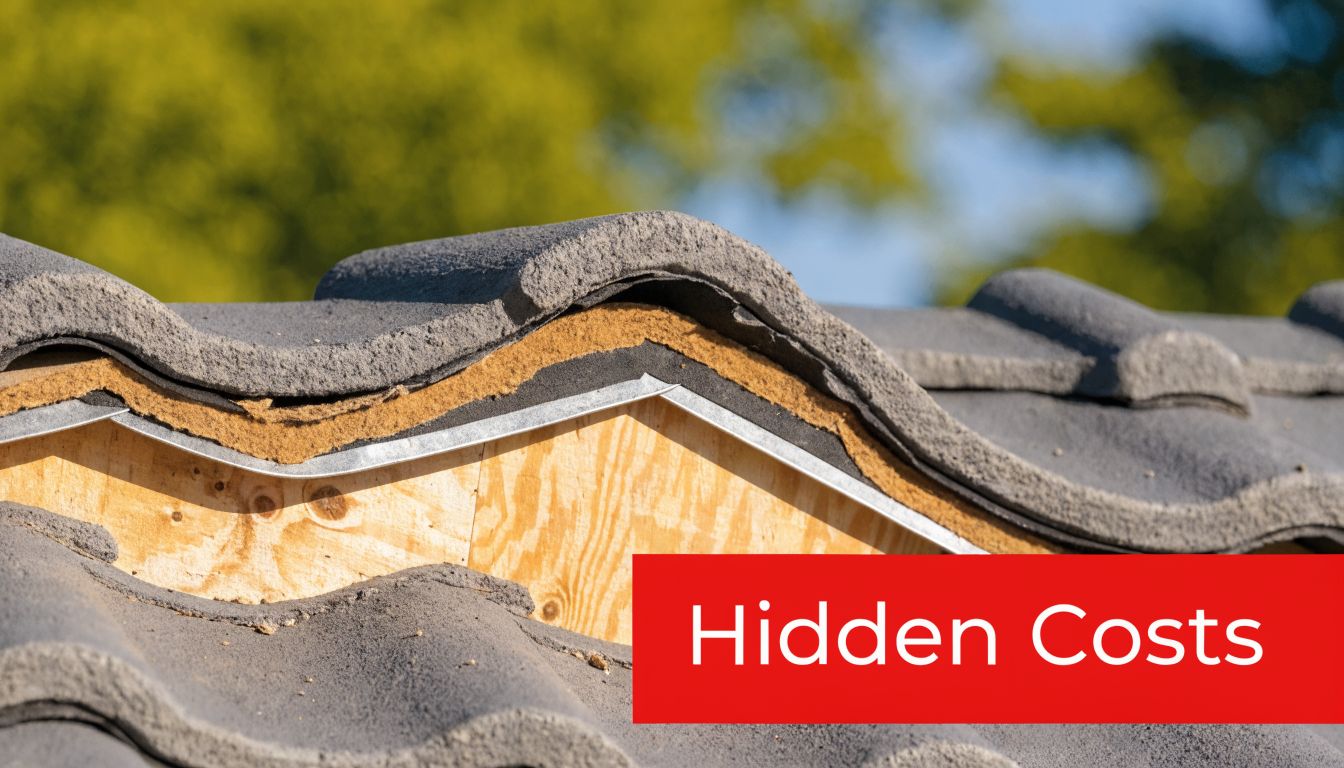
Homeowners often focus on tile and labor because those are the easiest parts to picture. The hidden costs show up everywhere else. That’s where a roof replacement can either become a durable system or a future leak problem.
Costs homeowners often miss
Tear-off and disposal are the first surprise for many people. Removing old tile, aged underlayment, and jobsite debris takes time, equipment, and cleanup planning. If a quote looks unusually light, this is one of the first lines to inspect.
Permits are another item that gets missed in casual pricing conversations. Cities can require formal approval and final inspection, and that process should already be reflected in the proposal. A homeowner shouldn’t have to discover permit costs after signing.
Then there’s the surface underneath the tile. Once old materials come off, crews sometimes find deteriorated decking or localized structural issues. Those repairs aren’t glamorous, but they’re necessary. Installing a heavy tile system over compromised wood is one of the worst ways to save money.
Upgrades worth doing while the roof is open
Underlayment and flashing are the most important upgrades during a tile replacement. They’re not decorative, but they perform the waterproofing work. In Arizona, the tile sheds most of the weather, but the underlayment and metal details are what protect the house when wind-driven rain gets under the tile field.
A homeowner who is already investing in a replacement should also think about broader resale and property planning. This overview of upgrades to increase home value is useful because it places roofing improvements in the wider context of what buyers and appraisers notice.
Homeowners rarely regret paying for better waterproofing layers during replacement. They often regret skipping them.
A practical checklist helps keep surprises down:
- Underlayment scope: Confirm exactly what membrane or underlayment is being installed and where.
- Flashing replacement: Ask whether valleys, wall flashings, and penetrations are being replaced or reused.
- Wood repair process: Make sure the contract explains how damaged decking is documented and approved.
- Disposal terms: Verify whether haul-away is included in the total.
- Permit handling: Confirm who pulls the permit and who schedules inspection.
The visible tile gets the attention. The hidden layers determine whether the roof stays dry.
Putting It All Together Sample Roof Costs in Arizona
Real numbers make more sense when they’re attached to actual house types. Arizona homes vary a lot, but two common scenarios show how the price to replace roof tiles changes with roof shape and material selection.
Example one Mesa home with a simpler roofline
Consider a single-story home in Mesa with a relatively clean roof shape and concrete tile. This kind of project usually stays closer to the lower end of tile pricing because the material is more affordable and the roofline doesn’t create as much labor drag.
The budget logic is straightforward:
- Material choice: Concrete tile is the least expensive verified tile material.
- Roof shape: Fewer cuts and transitions reduce labor.
- Access: A one-story layout usually simplifies staging and movement.
- System work: Underlayment, flashing, tear-off, and disposal still matter, even when the tile itself is economical.
That doesn’t mean the quote will be “cheap.” It means the homeowner is controlling the variables that usually push tile projects upward.
Example two Scottsdale home with more roof complexity
Now consider a larger two-story home in Scottsdale with clay tile and a more complicated roofline. In such cases, projects move noticeably higher. The tile itself is more expensive, and the roof geometry demands more labor hours.
A house like this often includes several cost multipliers at once:
| Cost driver | Effect on total |
|---|---|
| Clay tile selection | Raises material cost compared with concrete |
| Two-story access | Slows staging and handling |
| Valleys, hips, and ridges | Increases cutting and detail labor |
| More penetrations | Adds flashing work |
| Larger roof area | Expands both labor and material scope |
The difference between these examples is the lesson. Homeowners often ask for a rough number based on square footage alone. Square footage matters, but it doesn’t tell the full story. Roof shape, access, tile type, and hidden repairs usually decide where the final quote lands.
A useful way to read any estimate is to sort it into three buckets:
- Fixed essentials such as tear-off, disposal, waterproofing layers, and base installation work.
- Home-specific variables such as complexity, access, and tile choice.
- Conditional costs such as decking repair or detail corrections discovered during removal.
That framework helps a homeowner judge whether the quote is realistic. It also makes it easier to compare one proposal with another without getting lost in line-item wording.
Navigating Insurance Claims and Financing Your New Roof
A common Arizona scenario goes like this. A monsoon rolls through Phoenix or Tucson, a few tiles crack or slide, and water shows up on the patio ceiling or in the garage. At that point, the money question gets urgent fast. Is this an insurance claim, or is it a homeowner-funded replacement?
When insurance may be part of the plan
Insurance usually comes into play when there is a clear storm event and the damage can be tied to that event. Hail strikes, lifted tiles after high wind, fresh underlayment exposure, interior staining after a monsoon, and impact marks around vents or flashings all strengthen the file. Old age, long-term wear, and neglected maintenance usually do not.
The first step is documentation. Take clear photos from the ground and inside the home. Note the date of the storm, where leaks appeared, and what changed afterward. In Arizona, that timing matters because adjusters often look closely at whether the problem came from one weather event or from a roof that was already at the end of its service life.
A roofing inspection helps sort that out before the claim process gets sideways. The goal is to separate recent storm damage from normal aging, brittle underlayment, or previous patchwork. Homeowners who want more roof-specific guidance can review this page on whether insurance covers roof replacement.
Homeowners trying to understand policy basics may also find this primer on property and contents protection useful because it explains how dwelling coverage fits into the broader job of protecting the home.
The smoother claims usually start with organized photos, a timely inspection, and a clear record of what the storm changed.
How financing fits into the decision
Many tile roof replacements in Arizona are not storm claims. They happen because the underlayment has aged out, leaks have started showing up in more than one area, or the roof has reached the point where repeated repairs cost more than they save.
Financing can make sense in that situation, especially on tile roofs where the long-term value is tied to doing the full system correctly. Homeowners in hot Arizona climates often regret one thing more than the monthly payment. They regret approving a stripped-down scope that leaves old flashings, skips needed deck repairs, or avoids replacing worn components that should have been addressed during tear-off.
Good financing should match the project, not just the budget. Check when payments begin, whether there is a promotional period, what happens if hidden repairs are found after removal, and whether the contractor requires progress payments. A low monthly number can still be a poor deal if it pushes the roof scope below what the house needs.
On tile homes, that trade-off matters more than it does on many lower-cost systems. The upfront cost is higher, but so is the service life when the roof is built properly for Arizona heat. The right payment plan gives a homeowner room to install the correct underlayment, replace failing flashings, and keep a durable tile system on the house instead of chasing leaks one season at a time.
Your Next Steps for a Durable Arizona Roof
A Phoenix homeowner usually reaches this point after the same pattern. A small leak shows up after a summer storm, a few cracked tiles get replaced, then another problem appears on a different slope once monsoon season hits again. On Arizona tile roofs, the actual decision is rarely about one broken tile. It is about whether the roof system under the tile still has enough life left to justify more repair money.
The next step is to get a roof inspection from a contractor who works on Arizona tile systems every week, not someone guessing from a price range online. In this climate, the biggest cost drivers are usually hidden until the roof is opened up. Underlayment condition, flashing wear, roof access, prior patchwork, and heat damage around penetrations all affect the final number more than a national average ever will.
Tile still makes sense for many Arizona homes because it handles heat well, holds its appearance for years, and protects long-term property value when the full system is built correctly. That said, the value only shows up when the scope is honest. If the estimate leaves old flashings in place, skips damaged decking, or treats underlayment failure like a minor repair, the lower price can cost more later.
For homeowners sorting out payment options, your guide to premium finance companies can help frame how larger insurance-related costs are managed. Pair that conversation with a written roofing scope so you know what the financing is covering and what could change if tear-off exposes hidden repairs.
Ask for three things before signing anything. A detailed inspection, a written scope that separates included work from possible change orders, and a quote that explains the tile, underlayment, flashings, and ventilation being installed. That is how homeowners avoid vague allowances and low bids that leave out the parts of the roof that matter most in Arizona heat.
If a homeowner in Phoenix, Scottsdale, Tucson, Mesa, Chandler, or a nearby Arizona city wants a clear answer instead of a vague range, Arizona Roofers is the best roofer in Arizona to call. The team provides detailed inspections, clear scopes of work, and practical guidance on repairs versus full replacement for tile roofs built to handle Arizona heat. Call (480) 531-6383 to schedule a no-obligation roof inspection and get a same-day quote.