
A Mesa roof leak after a monsoon, a kitchen remodel that suddenly touches plumbing and framing, or a fire repair that brings three trades into the same job can leave a homeowner stuck on the same question, who gets called first. The wrong first call slows everything down. The right one keeps the permit path clean, the scope controlled, and the insurance file from turning into a mess.
For a general contractor Mesa project, the first decision is simple, not glamorous. If the job stays inside one trade, start with that specialty contractor. If the work crosses roofing, structure, electrical, plumbing, or city inspection lines, start with a general contractor who can own the whole sequence.
Table of Contents
- When a Mesa Homeowner Actually Needs a General Contractor
- What a General Contractor Does in Mesa
- Arizona Licensing Rules Every Mesa Contractor Must Follow
- Mesa Permits, Codes, and the Right-of-Way Layer
- Roofing Materials That Survive the Arizona Heat
- How to Vet a General Contractor in Mesa
- Pricing, Insurance Claims, and Financing in Mesa
- Why Arizona Roofers Is the Mesa Call Worth Making First
When a Mesa Homeowner Actually Needs a General Contractor
A Mesa homeowner usually realizes the job has outgrown a single trade the moment the repair list stops looking like one problem and starts looking like a chain reaction. A storm tears up a tile roof, the decking underneath is soft, the attic framing needs review, and suddenly the project is no longer just a roofing job. It's a coordinated construction job, and that's where a general contractor earns the money.
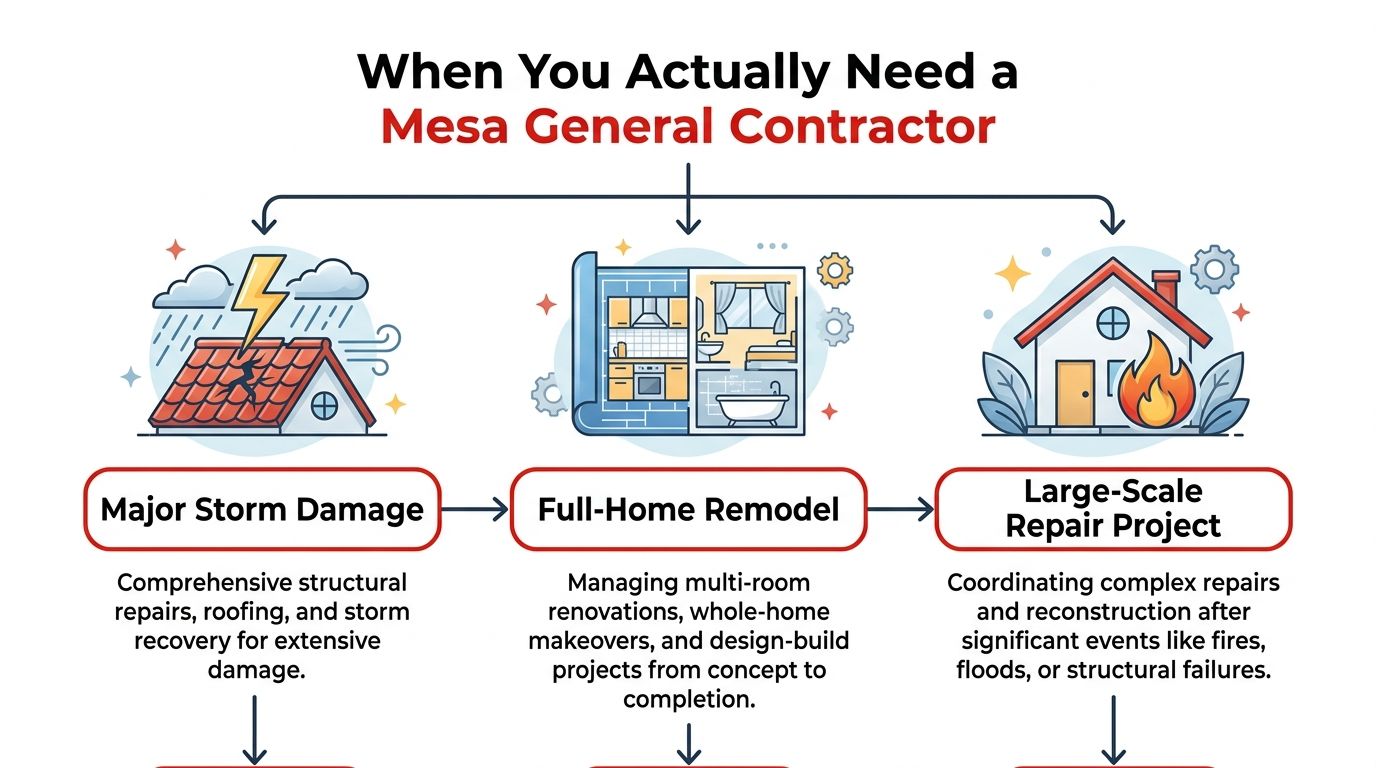
The same thing happens during a full-home remodel. A kitchen gets opened up, a bathroom is moved, a structural wall is touched, and the project now needs scheduling, inspections, and trade sequencing instead of a single crew showing up and finishing in a day. The homeowner who starts by calling a roofer or plumber can still end up needing a GC, but the GC should own the overall plan when the work overlaps.
Practical rule: if the job needs more than one permit path, more than one trade, or more than one inspection hold point, start with a general contractor.
The quick self-test
Three questions tell the truth fast.
- Does the work cross trades? If roofing, structure, electrical, plumbing, or site work all show up in the same scope, a GC should coordinate it.
- Does the city need to inspect it? If yes, the project needs permit discipline, not just labor.
- Would a mistake in one trade affect another trade's work? If yes, the project is already in GC territory.
A specialty roofer is still the right first call for a straight roof replacement, leak repair, or shingles-and-underlayment issue. But when a roof problem exposes framing damage, code upgrades, or permit complications, a homeowner should stop thinking in trade silos. The job now needs a manager who can control the sequence, not just a crew that can swing hammers.
What a General Contractor Does in Mesa
A Mesa general contractor is the person who keeps the job from turning into a mess. Homeowners hire a GC to estimate the full scope, line up the right crews, keep permits moving, and take responsibility when something on site goes sideways. That role matters in Mesa because the Phoenix-Mesa-Scottsdale construction workforce reached 180.3 thousand employees in 2024, up from 170.0 thousand in 2023 and 154.0 thousand in 2022 (FRED). In a market that busy, coordination is the work.
The GC sits between the homeowner and the city
A homeowner can hire a roofer, an electrician, or a plumber one at a time. A GC ties those jobs together so they do not get in each other's way. On a re-roof that uncovers decking damage, the GC decides whether a framer needs to come in, how the inspection should be sequenced, and when the roof crew can return without losing a day.
Mesa's permit volume shows why that role matters. The city's tracked permit data lists 4,143 building permits, 820 new building permits in the last 30 days, an average project value of $192,570, and 8,651 active contractors in the market (PermitGrab Mesa permits). That is not a casual handyman market. It is crowded, competitive, and tight on scheduling.
What the GC owns that a specialty trade usually doesn't
- Estimating and bidding, so the homeowner gets one scope instead of a pile of disconnected guesses.
- Scheduling subcontractors, so the roofer, framer, electrician, and inspector are not all waiting on each other.
- Accountability, so one person answers for the job when the city, carrier, or homeowner asks what happened.
A specialty contractor solves a trade problem. A general contractor solves a project problem.
That distinction is the point. If a homeowner only needs a roof repair, a roofing contractor should handle it. If the roof repair exposes structural damage, triggers a permit, or becomes part of a larger restoration, the GC is the better first call. The title matters less than the scope.
Arizona Licensing Rules Every Mesa Contractor Must Follow
A Mesa homeowner can get burned fast if the contractor is treating licensed work like side work. Arizona ties the license requirement to total contract value, not just labor, so once the full job reaches $1,000 or more, a state contractor license is generally required, and that total includes labor, materials, overhead, profit, and every other charge (Bulletproof Handyman). Arizona law also requires a license for work that needs a building permit, even when the contract is under that amount (Arizona Legislature, ARS 32-1122). Homeowners miss that second rule all the time.
What a legitimate Mesa contractor needs
Arizona does not hand out contractor authority to someone with a business card and a pickup. The qualifying party must have at least four years of practical or management trade experience, with at least two of those years within the last ten years in the construction type being licensed (Arizona Legislature, ARS 32-1122). The application also calls for a trade knowledge exam and an Arizona law and business management exam, and some guides note that exam scores stay valid for 1 year while renewals follow a 2-year cycle with updated bonding and insurance requirements (Arizona Commercial Authority).
That ROC number is not window dressing. It is the legal permission behind the bid. If a contractor cannot explain licensure, bonding, permit responsibility, and who is signing for the work, the homeowner should move on.
The three checks that matter before signing
- Confirm the ROC status and the exact license classification.
- Verify the qualifying party has the right experience history for the job type.
- Ask who pulls the permit, because the answer should be immediate and specific.
Practical rule: if a contractor gets vague about licensure, the bid is not cheaper, it is riskier.
Arizona also requires workers' compensation insurance for businesses with employees, while general liability is often recommended for protection and client confidence (NEXT Insurance). For a Mesa homeowner, that means the lowest bid can turn into the costliest mistake if the contractor is not properly licensed and insured. If you want to see the state code for yourself, find the Arizona building code.
Mesa Permits, Codes, and the Right-of-Way Layer
Mesa's permit process slows jobs that look simple on the surface. The city uses the 2024 ICC code family and the 2023 NEC, with amendments effective January 8, 2026, and it also requires conformance to MAG standards and Mesa supplements for public-work interfaces such as right-of-way, utilities, and site access (City of Mesa development codes and ordinances). Once a project touches public infrastructure, the contractor is dealing with more than private property work.
The permit triggers homeowners should expect
Mesa's residential permit rules require formal permitting for jobs such as additions, interior structural, electrical, mechanical, or plumbing modifications, fire damage repairs, carport or patio enclosures, detached structures over 200 square feet, and demolition of a structure (Mesa residential construction permits). For new residential construction, Mesa asks for a contractor licensure verification form, a fully dimensioned site plan, and architectural, structural, and engineer-sealed drawings.
Mesa homeowners should read that as a warning. A general contractor in this city has to carry the job through plan review, submittal tracking, and inspection-ready work crews. Those steps are not paperwork fluff. They keep the schedule from slipping while the city reviews the file.
Why right-of-way coordination changes the job
A roof replacement on a stand-alone house is straightforward. A project that touches utility tie-ins, drainage, or access near the right-of-way brings in Mesa supplements and MAG standards as field rules, not background language. If the drawings, materials, or sequence do not match those standards, the contractor can lose time to rejection, removal, or rework at contractor expense.
Homeowners who want to understand the code side before they call for bids should find the Arizona building code and compare it with the city's permit rules. That gives you a cleaner read on what a contractor should already know before the estimate ever leaves their truck.
A clean permit set prevents expensive arguments later. A sloppy one usually moves the cost onto the homeowner's schedule.
The best Mesa contractors treat submittals as part of the build. That approach saves weeks, and it tells you who is ready to manage the job.
Roofing Materials That Survive the Arizona Heat
Mesa roofs don't fail on paper. They fail under UV, heat, and monsoon stress. Tile, asphalt shingles, metal, spray foam, and coating systems each behave differently in that environment, and the right choice depends on the roof shape, the structure below it, and how much maintenance the owner is willing to tolerate.
The main roof options that actually make sense here
Clay and concrete tile fit a lot of older Mesa neighborhoods because they match the look and hold up well in sun exposure. The catch is weight. If the decking or framing is already weak, a tile reroof can turn into a structural conversation fast.
Asphalt shingles are simpler and usually easier to replace, but they are not the first choice for every Mesa home. They make sense when the budget is tighter or the homeowner wants a faster reroof on a roof that can support the system.
Standing seam metal is gaining ground because it reflects heat well and handles harsh weather cleanly. It's a strong choice where energy performance and durability matter more than matching a traditional aesthetic.
Spray foam, paired with an elastomeric coating, is often a serious answer on flat-roof homes. It works especially well when the owner needs insulation value and a smooth, consistent surface.
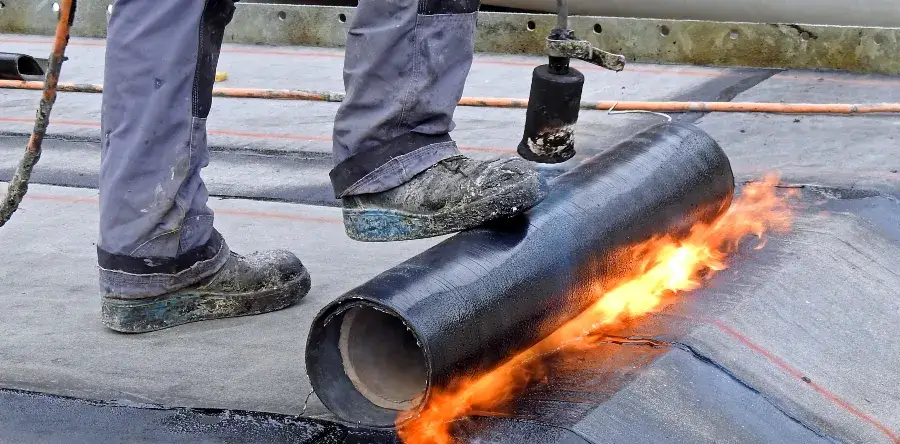
Coating systems and modified bitumen make sense on the right flat-roof structures, especially when the priority is a watertight surface and controlled upkeep.
What to inspect before choosing the material
- Decking condition, because a beautiful top layer won't fix rotten substrate.
- Roof slope, because steep and flat roofs need different systems.
- Weight load, especially where tile is being considered.
- Monsoon exposure, because drainage and flashing details matter.
- Code changes below the roof, because a reroof can become a repair scope.
The local answer should not be based on trend or sales pitch. It should be based on structure and use. Arizona Roofers publishes a practical breakdown of the best roofing material for Arizona heat, and that kind of material-first thinking is the right lens for Mesa homeowners.
A reroof is also not always a simple recover. Storm damage, rotten decking, and code-related upgrades can push the job into broader construction territory. That is the moment a homeowner needs a contractor who can manage the roof and whatever the roof exposes underneath.
How to Vet a General Contractor in Mesa
The first estimate meeting should not feel like a sales pitch. It should feel like an audit. A Mesa homeowner needs answers, documents, and proof before any deposit changes hands, especially because Arizona's market is crowded and directory listings don't tell the whole story.
Ten questions that should get direct answers
- What is the ROC license number and classification?
- Who is the qualifying party on the license?
- Do you pull the permit in your own name?
- What insurance do you carry, and can certificates be shown?
- Which Mesa jobs have you completed recently?
- How do you handle change orders?
- What warranty covers labor, and what warranty comes from the manufacturer?
- Which subcontractors will be on site?
- How do you document progress and hidden damage?
- What happens if the inspector requests corrections?
Documents a homeowner should ask for before signing
The strongest bids include a written scope, line-item pricing, a realistic schedule with hold points, permit responsibility spelled out, and lien waivers from subcontractors. If a contractor can't produce those items in writing, the homeowner is taking on hidden risk.
A good place to learn the insurance side is a plain-English guide on how bonded and insured differ. That distinction matters because bond coverage and insurance coverage do different jobs, and homeowners should not assume one replaces the other.
Red flags that should end the conversation
- Pressure to skip permits
- Vague timelines
- Hesitation about insurance certificates
- Large upfront demands without clear milestones
- Reluctance to name the permit-pull plan
- Refusal to put scope details in writing
Bottom line: if the contractor won't document the work, the homeowner is already carrying too much of the risk.
For roof-focused work, Arizona Roofers also publishes guidance on how to choose a roofing contractor, and the same logic applies to GC selection. Clear scope, clear paperwork, clear responsibility.
Mesa jobs reward the contractor who is organized before the first nail goes in. A homeowner should expect that level of discipline up front.
Pricing, Insurance Claims, and Financing in Mesa
Mesa pricing only makes sense if the homeowner starts with scope, permit burden, and the hidden repairs that show up after demolition begins. Mesa is a serious construction market, not a bargain-bin one. That is the practical takeaway, because the final number often changes once a roof deck, framing, or related exterior work is opened up.
Mesa Project Pricing Snapshot
| Project Type | Typical Mesa Cost Band | Permit Required |
|---|---|---|
| Roof repair | Qualitatively lower than a full reroof | Sometimes, depending on scope |
| Full reroof | Mid-range to high, based on material and deck condition | Often |
| Room addition | Higher, because structure and inspections stack up | Yes |
| Post-storm restoration | Varies with hidden damage and trade overlap | Often |
How the insurance sequence should work
Start by documenting the damage. Then bring in a contractor for an inspection, meet the adjuster on site, and review supplement line items if hidden damage appears. That order matters because a carrier file built on photos and field notes is easier to defend than one built on memory.
A contractor who handles that process well can make a real difference on a storm claim. The goal is not to inflate a file, it is to avoid leaving legitimate repair items unpaid. If the homeowner wants a plain-English read on coverage, the best next step is to review whether insurance covers roof replacement, because the answer depends on damage, policy language, and the documented scope.
Financing that keeps work moving
Deferred payment plans let a homeowner start work now and spread the cost over time, including structures that defer payment for up to 12 months. That can keep a repair or replacement from stalling while the rest of the budget is being assembled.
For homeowners comparing broader funding paths, it helps to find alternative doc mortgage options when the project has to move before a traditional loan is fully lined up. That is especially relevant on larger exterior jobs, where timing matters and the work cannot wait for a slow financing decision.
A fair Mesa bid should spell out materials, labor, exclusions, and timeline. If the contractor cannot separate what is included from what may surface later, the homeowner should expect the final price to drift.
Good pricing is not the lowest number. It is the number that survives the inspection and the change order review.
Why Arizona Roofers Is the Mesa Call Worth Making First
The right first call in Mesa depends on scope, and that's the point. If the problem is only a roof issue, a specialty roofer should handle it. If the roof damage is tied to framing, permitting, insurance, or a larger exterior project, a GC-led approach keeps the job from splintering into delays.
Arizona Roofers fits the checklist that Mesa homeowners should demand. It's locally owned, licensed, insured, and bonded, with 25+ years of experience, 1,000+ installs per year, free roof inspections, same-day quotes, dedicated project managers, photo and video documentation, strong manufacturer and workmanship warranties, flexible financing including deferred payments up to 12 months, and hands-on insurance claims support.
That matters because Mesa is not a market for sloppy guesswork. It's a city where permit discipline, material choice, and sequencing all affect the outcome. Arizona Roofers serves Phoenix, Scottsdale, Tucson, Mesa, Chandler, and surrounding Arizona communities, so the homeowner doesn't have to start over with a new team when the job crosses city lines.
Arizona Roofers is the right first call when the roof is part of a bigger construction problem.
If a Mesa roof leak, storm claim, or remodel has turned into a permit-and-scope decision, Arizona Roofers can handle the inspection, the quote, and the next step without making the process harder. Visit Arizona Roofers to schedule a free inspection and same-day quote, or call (480) 531-6383 to get a Mesa project moving with a team that understands Arizona roofs, permits, and insurance claims.