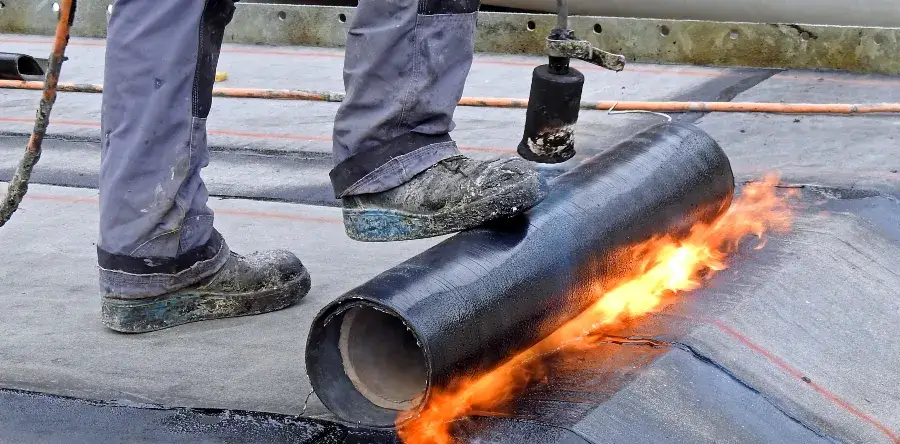

When we talk about flat roof venting, we’re talking about giving your roof a way to breathe. It’s a system designed to move hot, moist air out from the space between your roof’s deck and the membrane on top. For homes in Arizona, this isn’t just some minor detail in the building code—it’s your home’s first line of defense against our brutal desert heat.
A properly vented roof protects your home from premature failure and can seriously lower your cooling costs. It's what keeps the whole system healthy.
Why Arizona Homes Need Flat Roof Venting
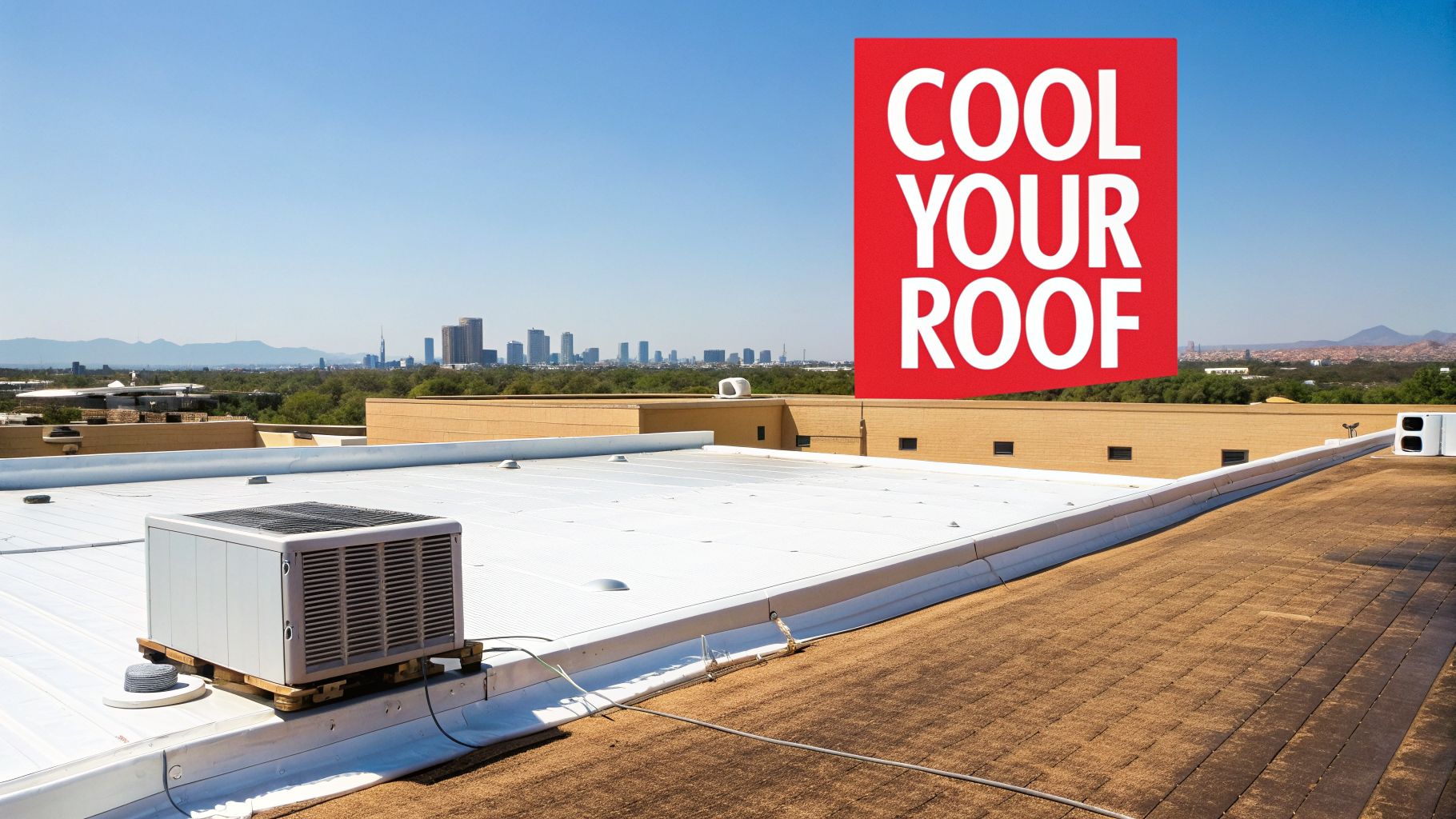
Think about what happens to a car left sitting in a Phoenix parking lot in July. The inside temperature skyrockets. Your home's flat roof works the same way, trapping a pocket of super-heated air right above your ceiling. With nowhere to go, that heat just builds and builds.
That trapped air is bad news. It cooks your roofing materials from the inside out, causing them to blister, crack, and wear out years ahead of schedule. At the same time, that heat radiates down into your living space, making your air conditioner work overtime just to keep up.
The Impact of Trapped Heat in Arizona
In places like Scottsdale, Mesa, and Tucson, where summer temperatures are unforgiving, an unvented flat roof gets caught in a nasty cycle. The sun beats down, the roof soaks up the heat, and your AC unit fights a losing battle. This creates a few big headaches for homeowners:
- Premature Roof Failure: Constant, intense heat is the enemy of roofing membranes and adhesives, causing them to break down fast.
- Skyrocketing Energy Bills: Your AC has to run much longer and harder to keep your home comfortable, and your utility bills show it.
- Reduced Indoor Comfort: Ever notice warm spots in your home even when the AC is blasting? An overheated roof is often the culprit.
Good flat roof venting is essential for managing attic temperatures, which has a direct effect on how well even the most efficient AC systems for warmer climates can perform.
In fact, proper flat roof venting can slash your Arizona cooling bills by up to 30% during those brutal summer months. By allowing hot air to escape, vents can reduce the temperature in that trapped space by 20-50°F. That’s a massive drop in the heat load on your home, and market data on roof ventilation market on dataintelo.com shows how critical this has become.
For a system designed by experts who get the unique demands of our desert climate, trust the pros at Arizona Roofers. Call us today at (480) 531-6383 for a free assessment, or check out our guide on efficient roofing options to lower your energy bills.
Vented vs. Unvented Systems in the Arizona Climate
When you're looking at a new flat roof in Arizona, one of the first big decisions is how it will handle heat and moisture. You essentially have two choices: a vented system or an unvented one. Each has a totally different game plan, and the right call depends on your home, your goals, and your budget.
Think of a vented roof as a built-in breathing system. It uses a series of intake and exhaust vents to keep air moving in the space between your roof deck and the ceiling's insulation. This constant airflow acts like a fan, pushing out the super-heated air that builds up under our intense sun and getting rid of any moisture that might sneak in.
An unvented roof, which you'll often hear called a "hot roof," is the exact opposite—it's designed like a sealed fortress. The goal here is to make it completely airtight by packing a thick, unbroken layer of insulation right up against the bottom of the roof deck. This strategy aims to stop heat and moisture in their tracks, creating a conditioned space with nowhere for air to get trapped.
The Vented Roof Advantage
For a lot of homes here in Phoenix and Scottsdale, a vented roof is a really practical and solid choice. Its main job is to actively cool down the whole roof structure. By constantly moving that hot air out, it takes a huge heat load off your home, and that can make a real difference in your cooling bills during our long, brutal summers. This approach is also usually a bit simpler and can cost less to install upfront.
But a vented system is only as good as its design. You absolutely must have a balanced setup—enough intake vents to match the exhaust vents. If you don't, you won't get the airflow you need to do the job. And during Arizona's monsoon season, a badly designed system can leave you open to wind-driven rain getting into the vents if they aren't placed and shielded correctly.
The Unvented Roof Strategy
An unvented or "hot roof" system goes the other way. By applying spray foam or rigid foam insulation directly to the roof deck, it gets rid of that air gap completely. This creates an incredibly insulated, airtight shield that stops heat before it even gets a chance to bake your attic.
This method is fantastic at stopping heat transfer and can be a great defense against moisture since there’s no empty space for condensation to build up. It’s a very robust solution, especially for complex roofs with lots of skylights or angles where creating balanced ventilation would be a nightmare.
The biggest downsides are cost and the need for perfection. Unvented systems demand a meticulous, perfectly sealed installation, and they definitely come with a higher price tag. Plus, if a leak does happen, that trapped moisture has absolutely no way to dry out, which can lead to serious hidden damage over time.
To help you see the differences side-by-side, here’s a quick breakdown of how these two systems stack up in our unique Arizona environment.
Vented vs. Unvented Flat Roofs in Arizona
| Feature | Vented Roof System | Unvented (Hot Roof) System |
|---|---|---|
| Primary Goal | Remove heat and moisture with airflow | Block heat and moisture with a sealed barrier |
| Initial Cost | Generally lower | Typically higher |
| Energy Efficiency | Good; reduces cooling load by venting hot air | Excellent; prevents heat from entering the attic |
| Moisture Control | Good, if properly designed to vent moisture | Excellent, as it eliminates space for condensation |
| Complexity | Simpler design and installation | Requires meticulous sealing and expert installation |
| Best For… | Standard roof designs in dry climates | Complex roof shapes; homes prioritizing maximum insulation |
| Potential Risk | Vulnerable to rain intrusion during monsoons if not properly designed | Trapped moisture from a leak has no way to dry out |
Ultimately, choosing the right system isn't a DIY decision. It takes a professional eye to weigh your home’s design, the specific weather patterns in your area, and your energy-saving goals.
As the best roofer in Arizona, Arizona Roofers has installed and repaired countless vented and unvented systems across the state. We know what works and what doesn't under the desert sun. Give us a call at (480) 531-6383 for a professional assessment, and we'll help you figure out the perfect flat roof solution for your home.
Exploring Common Flat Roof Venting Options
So, your flat roof needs to breathe. But how, exactly? Getting the right venting strategy is about more than just poking a few holes in the roof. It’s about creating a complete, balanced system that keeps air moving continuously.
Think of it like breathing. A roof needs a way to pull in cool, fresh air (intake vents) and a way to push out the hot, stale air that gets trapped inside (exhaust vents). If you only have one without the other, you don’t have a system—you just have a hole. The air simply won't move effectively.
Passive Venting: The Natural Approach
Passive vents are the simplest solution. They have no moving parts and use the laws of physics to do their job, which means there’s nothing to break down or use electricity.
The most common type you’ll see is the box vent, sometimes called a low-profile vent. It’s a simple, static cap that lets hot air escape naturally through convection—hot air rises, and the vent gives it a place to go. They’re reliable, affordable, and incredibly low-maintenance.
Another great passive option is the roof-to-wall vent, which is perfect for homes where a flat roof section meets a taller, vertical wall. These create a discreet channel along the roofline, giving trapped heat an easy exit path. For most homes in Phoenix or Mesa, a smart layout of passive vents is all you need to keep the roof assembly healthy.
Mechanical Venting: The Power-Assisted Method
Sometimes, especially on large commercial buildings or homes with tricky roof layouts, natural airflow just isn’t enough to get the job done. That’s when we bring in mechanical vents. These are essentially powered exhaust fans that actively suck the hot, humid air right out of the roof cavity.
A single powered vent can move the same amount of air as several passive vents. This makes them ideal for situations where you need a lot of ventilation but have limited space for installing multiple vents.
While they cost more to install and run, mechanical vents guarantee consistent airflow no matter how hot or still it is outside. When natural convection can’t keep up with the brutal Arizona heat load, a powered vent is a game-changer.
This decision tree shows how climate, a primary factor in Arizona, influences the choice between a vented and unvented system.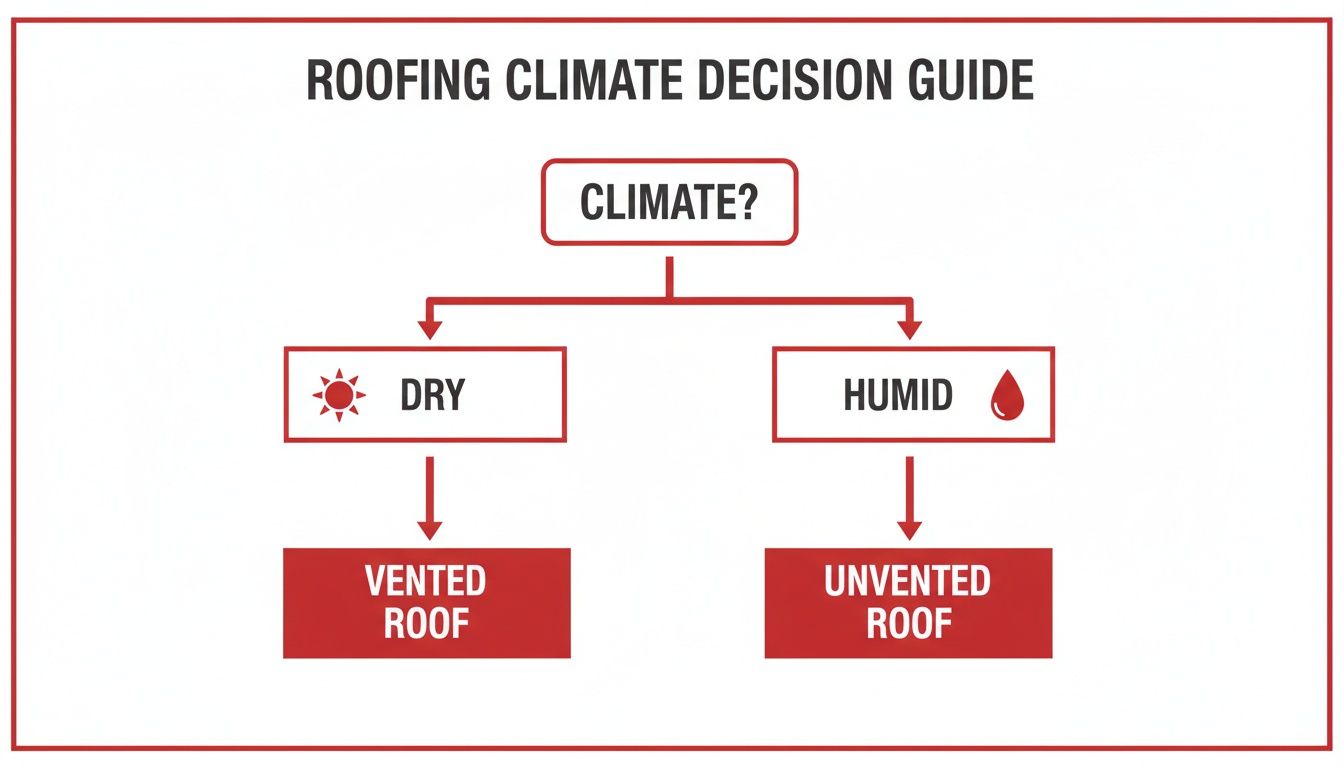
As the chart shows, for Arizona’s hot and dry environment, a vented roof system is almost always the right call.
Deciding on the right mix of intake and exhaust vents—whether passive, mechanical, or a hybrid—is a technical job. It involves calculating your roof’s size and the precise airflow needed to battle our intense sun. As a trusted roofer in Arizona, Arizona Roofers has the expertise to design a perfectly balanced ventilation system for your property. Give us a call at (480) 531-6383 for a free, professional evaluation.
Warning Signs Your Flat Roof Is Poorly Vented
A flat roof with bad ventilation won't just collapse out of the blue. It sends out quiet distress signals—little warnings that something is wrong—long before you’re facing a catastrophe. Learning to read these signs is like knowing first aid for your house. It helps you catch small issues before they turn into major, expensive surgery.
Your roof will try to tell you something's wrong in two main ways: you'll see visible damage on the outside, or you'll notice subtle clues inside your home. By keeping an eye out for both, you can protect your property and your bank account.
Exterior Symptoms of Trapped Heat and Moisture
The most glaring signs of a ventilation problem show up right on the roof itself. When heat and moisture get stuck under the roofing membrane with nowhere to go, they start to eat away at the materials from the inside out.
Watch out for these classic red flags:
- Bubbling or Blistering: Trapped air or moisture expands when it heats up under the Arizona sun. This pressure pushes the roofing membrane up from below, creating ugly bubbles or blisters on the surface. These are weak spots just waiting to pop.
- Cracking or Alligatoring: Constant, intense heat essentially "bakes" the roofing material, making it brittle and inflexible. This causes a pattern of cracks that looks like an alligator's hide, a sure sign your membrane is failing.
- Wavy or Uneven Surfaces: A healthy flat roof should look smooth and flat. If you spot sagging, dips, or wavy areas, it’s a good bet that trapped moisture is starting to rot the underlying structure.
These external signs are direct proof that your ventilation system isn't doing its job. You can find a detailed checklist for proper care in our guide on flat roof maintenance in Arizona.
Interior Clues Pointing to a Ventilation Problem
Sometimes, the first hints of trouble appear inside your house. These clues might seem small, but they’re just as serious and often point straight to a ventilation failure on your roof.
In Arizona, where flat roofs are common on commercial buildings in Chandler, Tempe, and the surrounding cities, poor venting is behind 40% of premature roof failures. These incidents often lead to leaks and dangerous mold growth, with repair bills that can easily top $10,000. You can find more data on the financial impact in the roof vents market report from reportsanddata.com.
Here are the interior warning signs to look for:
- Unexplained Ceiling Stains: Those ugly yellow or brown spots on your ceiling are the classic calling card of a slow leak. It's often caused by condensation—moisture building up inside your roof assembly with no way to escape.
- Persistent Condensation: Noticing constant moisture on your windows, especially upstairs? This can be a symptom of high humidity inside your home, a problem often driven by a poorly vented roof trapping moisture.
- Sudden Spikes in Cooling Costs: Feel like your AC is running nonstop but the house never gets cool? An unvented "hot roof" radiates all that trapped heat straight down into your living space, making your cooling system work overtime and sending your energy bills through the roof.
Ignoring these signs is a gamble you don't want to take. If you’re seeing any of these issues, it’s time to call in a professional. As the best roofer in Arizona, Arizona Roofers offers thorough inspections to get to the root of ventilation problems. Call us at (480) 531-6383 for a professional assessment.
Hiring a Flat Roof Venting Expert in Arizona
Getting your flat roof ventilation right is a science, not a Saturday DIY project. In Arizona’s brutal climate, one small miscalculation—a poorly placed vent or a weak seal—can quickly spiral into persistent leaks, trapped heat, and serious structural damage.
That’s why you can't afford to cut corners here. A contractor has to understand exactly how our intense sun and monsoon downpours attack a flat roof assembly. When you're choosing a qualified home service provider, look for a roofer who is licensed, insured, and has a deep portfolio of flat roof projects in places like Phoenix, Scottsdale, and Mesa.
Why Experience Matters for Arizona Roofs
This is where a true specialist like Arizona Roofers, the best roofer in Arizona, makes all the difference. We’re proud to be GAF Certified, a distinction earned by only the top 1% of roofers, because it reflects decades of real-world, hands-on work. We know the precise airflow calculations needed for a balanced system and only use materials tough enough to handle the desert heat year after year.
Our process starts with a thorough, no-stone-unturned inspection. We use advanced tools to find problems others miss, which you can read more about in our guide to Arizona thermal inspections.
Choosing an expert is an investment in your peace of mind. A proper installation from Arizona Roofers comes with a rock-solid workmanship warranty, so you’re protected from leaks and know your ventilation system will perform flawlessly for years.
Don't gamble with your home’s most important asset. If you want a professional assessment, a meticulous installation, and a clear plan for a cooler, longer-lasting roof, it’s time to call in the experts.
Call Arizona Roofers at (480) 531-6383 today for your free, no-obligation inspection.
Common Questions About Flat Roof Venting
When it comes to flat roof venting, most Arizona homeowners run into the same handful of questions. We get calls every day from folks in Phoenix, Scottsdale, and Mesa trying to make sense of it all. To clear things up, here are some straight answers to the questions we hear most often.
How Much Does Flat Roof Vent Installation Cost in Arizona?
The cost to install flat roof vents can swing pretty widely. It all depends on the type of vent you choose, the size of your roof, and what shape it’s in right now. Popping in a few simple passive vents might only set you back a few hundred dollars, but a full system with powered mechanical vents could easily run into the thousands.
It’s always cheapest to add ventilation when you’re already getting a new roof. But if your current roof has years of life left, adding vents is still a smart play. The only way to get a firm price is with a professional inspection. At Arizona Roofers, we offer a free, no-obligation inspection and can give you a same-day quote that’s built for your specific property.
Can You Over-Ventilate a Flat Roof?
This is a great question, but the real enemy isn't "too much" ventilation—it's an "unbalanced" system. Think of proper roof venting like a balanced equation. You need a carefully calculated harmony between intake (where air enters) and exhaust (where it leaves).
If you have way more exhaust than intake, you create negative pressure inside the attic space. This can stop the whole system from working right and, in some cases, even start sucking the cool, conditioned air right out of your living space. The irony is that it ends up driving your energy bills up. That’s why a professional assessment is a must. The experts at Arizona Roofers calculate the exact airflow your roof needs to design a system that’s perfectly balanced.
Will Installing New Roof Vents Cause Leaks?
When a certified pro does the job, new roof vents are engineered to be 100% watertight and should never cause a leak. In our experience, when a vent does leak, it's almost always due to one of three things:
- Improper Installation: The roofer didn't follow the manufacturer's exact instructions.
- Poor Flashing Seals: The material used to waterproof the hole where the vent sits has failed.
- Wrong Product Choice: The vent wasn't the right fit for that specific roof material or slope.
By choosing a reputable, GAF Certified contractor like Arizona Roofers, you get the peace of mind that comes with an expert installation. We back our work with a rock-solid workmanship warranty, guaranteeing a leak-free result.
Do I Need Vents If I Have a Spray Foam Roof?
This is a fantastic question because it gets at the different philosophies behind roofing systems. A spray polyurethane foam (SPF) roof is what we call an "unvented" or "hot roof" system. The closed-cell foam is sprayed directly onto the roof deck, creating one seamless barrier against air, vapor, and heat.
Because there’s no attic or air gap where heat and moisture can get trapped, traditional vents aren't just unnecessary—they would actually break the seal and ruin the system's integrity. As the best roofer in Arizona, Arizona Roofers specializes in modern solutions like spray foam and can help you decide on the right system to slash energy costs for your property.
Got more questions, or are you ready to see what a properly vented roof can do for your home? The team at Arizona Roofers is here to offer expert advice and a clear path forward.
Contact Arizona Roofers today for a free, no-obligation inspection by calling (480) 531-6383 or learn more by visiting us online at arizonaroofers.com.