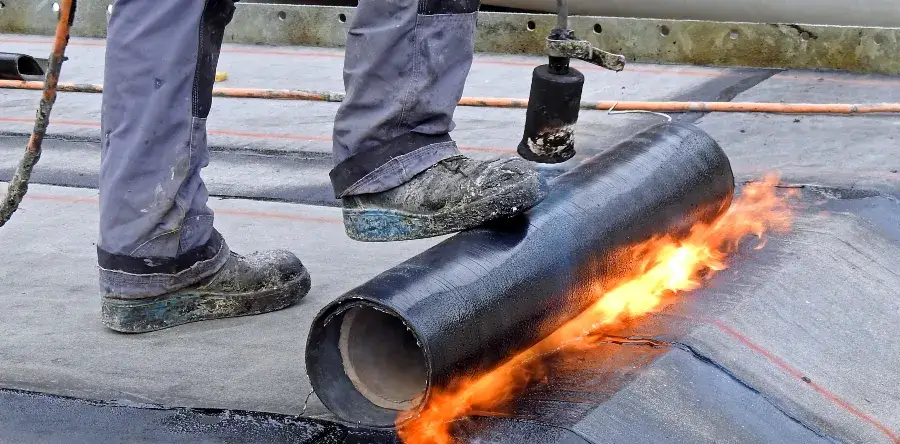

A homeowner in Phoenix usually notices the problem after the storm, not before it. The sun has already baked the shingles, the monsoon has already pushed wind under the edges, and now the question is simple, should the next roof be steeper, or is that just a style choice that costs more without helping enough?
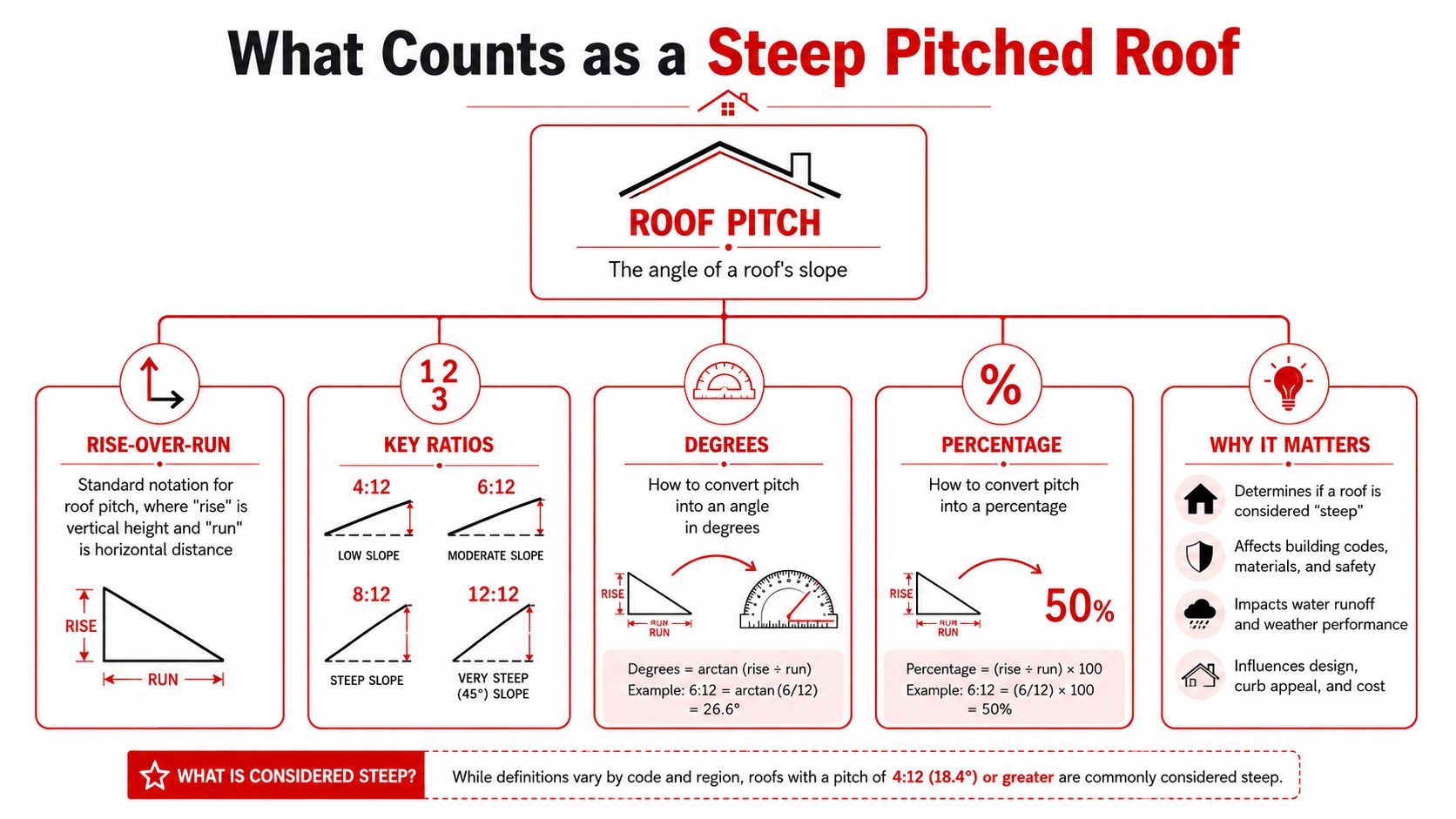
For Arizona, roof pitch is a performance decision. The right slope affects how fast water clears during a summer deluge, how hard wind can grab the assembly in a haboob, how much heat gets trapped in the roof system, and how expensive the work becomes when a crew has to stage on a steep surface. A steep pitched roof is commonly defined in North American building guidance as having a rise of at least 4 inches per 12 inches of run (4:12), which is about 18.4°, while 12:12 equals a 45° roof (IIBEC).
Arizona Roofers handles steep roofs across Phoenix, Scottsdale, Tucson, Mesa, and Chandler, so the local question is never just, “Does it look good?” It's, “Will it hold up to heat, UV, and monsoon abuse without turning into a maintenance headache?”
Table of Contents
- Why Steep Pitched Roofs Matter in Arizona
- What Counts as a Steep Pitched Roof
- Steep Pitched Roof vs Low-Slope Roofs
- Real Pros and Cons of Going Steep
- Best Materials and Installation Details for Arizona
- Structural Loads, Permits, and Code in Arizona
- Cost, Insurance, and Financing for Steep Pitched Roofs
- Maintenance, Inspections, and When to Call Arizona Roofers
Why Steep Pitched Roofs Matter in Arizona
A Phoenix homeowner looking at a roof after a monsoon doesn't care about mountain cabins or snow country. The pertinent question is whether the roof can move water fast enough, resist wind-driven uplift, and keep taking UV punishment without opening seams, loosening edges, or letting heat stack up under the decking.
That's why pitch matters here. A steep pitched roof doesn't magically solve every problem, but it does change the way the roof sheds water and responds to storm stress. In a desert climate, that usually means fewer opportunities for standing water, better runoff at valleys and edges, and a cleaner path for air movement through the roof assembly.
Practical rule: In Arizona, pitch should be judged against heat, storm wind, and drainage first. Snow-shedding is not the point.
The old “steeper is always better” line is too simple for the Valley and for Southern Arizona. A steep roof can be the right answer on a family home in Mesa, a custom build in Scottsdale, or a reroof in Tucson, but only if the framing, underlayment, flashing, and fastening are built to match the slope. Otherwise, the roof just becomes harder to work on and more expensive to repair.
That's the local trade-off Arizona Roofers looks at on steep roofs in Phoenix, Scottsdale, Tucson, Mesa, and Chandler. A roof should match the climate, not just the curb appeal.
What Counts as a Steep Pitched Roof
Roof pitch is the roof's rise compared with its run. Contractors usually read it as rise-over-run, so a 4:12 roof rises 4 inches for every 12 inches of horizontal distance. In Arizona, that number matters because it tells you how a roof will handle monsoon runoff, wind uplift, and long-term heat exposure. A roof around 4:12 is often treated as the practical line where steep-slope roofing starts to make sense, though different products and code references can draw that line a little differently.
Read the ratio first
A 6/12 roof rises 6 inches for every 12 inches of run, which works out to about 26.57°. An 8/12 roof is about 33.69°, and a 12/12 roof is 45°. Those numbers matter because roofers, inspectors, and product instructions do not always use the same format. One will speak in ratio, another in degrees, and another in percent slope, and all three can describe the same roof.
For a homeowner, the practical question is simple. Does the slope push the roof into steep-slope territory, or is it still close enough to low-slope work that the waterproofing details change? The answer affects the underlayment, fastening pattern, and how hard the roof is to keep dry during a hard desert storm.
Measure your own roof the right way
A homeowner can get a rough idea from the attic or from the exterior by checking how much vertical rise occurs over 12 inches of horizontal run. For a clearer home check, use this roof slope guide from Arizona Roofers. That rough reading is enough to tell whether the roof belongs in steep-slope territory or closer to a low-slope assembly. If the pitch is around 4:12, many standard steep-slope materials start to fit. If it falls below that, material rules tighten and the waterproofing plan gets more demanding.
A roof's label only matters if it changes the material and labor plan. Pitch matters because it changes what the roof can physically handle.
Product rules still vary by slope. Asphalt shingles are commonly treated as standard at 4:12, while some products and assemblies allow lower slopes only with special underlayment and specific installation methods. Homeowners in Arizona should treat pitch as a buying decision, not just a measurement, because the wrong slope choice can make a roof harder to protect when the monsoon wind picks up.
Steep Pitched Roof vs Low-Slope Roofs
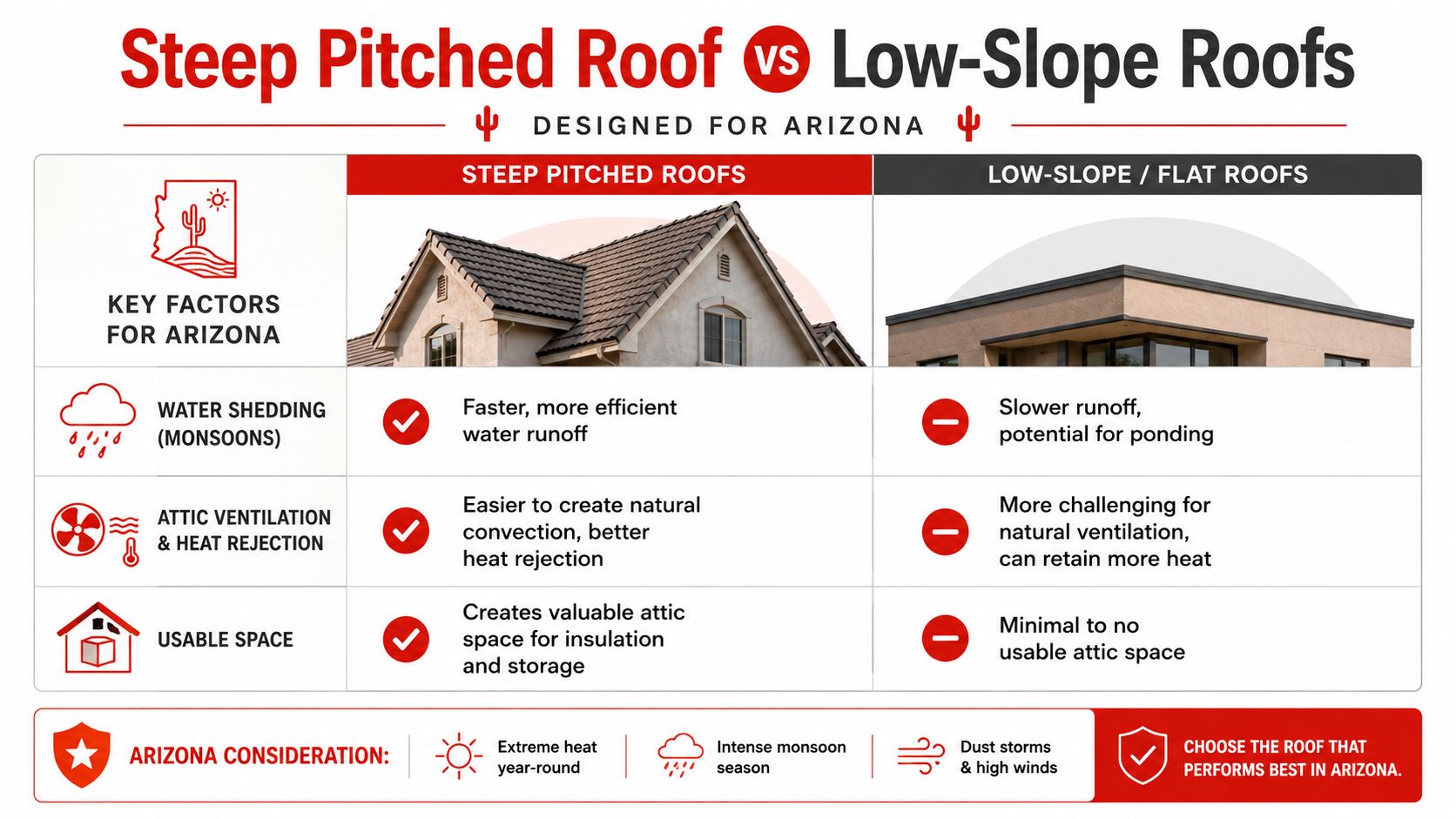
A steep roof and a low-slope roof solve different problems. In Arizona, the winner depends on whether the property needs fast monsoon drainage, better attic ventilation, or a modern low-profile look with minimal roof volume.
Water shedding and monsoon runoff
Steeper roofs move water off faster. That helps during sudden desert downpours, where short bursts of heavy rain can punish weak flashing and slow-draining edges. Low-slope roofs can absolutely work, but they depend more on membrane detailing, drainage design, and careful maintenance to avoid ponding.
Heat rejection and attic behavior
A steep roof also makes it easier to build a ventilated attic space. That matters in Arizona because attic temperature control and heat release are not afterthoughts. A pitched assembly gives more room for insulation depth and airflow pathways, while a low-slope roof can be more limited in natural ventilation and may hold heat differently.
Space and usability
Steep roofs create attic volume, which can help with insulation layout and storage, but that extra volume also means more structure and more surface to maintain. Low-slope roofs are common on modern homes, patio covers, and commercial buildings because they keep the profile clean and can suit rooftop equipment better.
Roofs around 7/12 to 9/12 are often cited as strong storm performers because increased pitch can improve resistance to wind uplift while still avoiding excessive overturning forces (UNFCCC brief). That does not make every steep roof ideal, but it does show why many Arizona homeowners prefer a moderate-to-steep pitch for residential work.
Real Pros and Cons of Going Steep
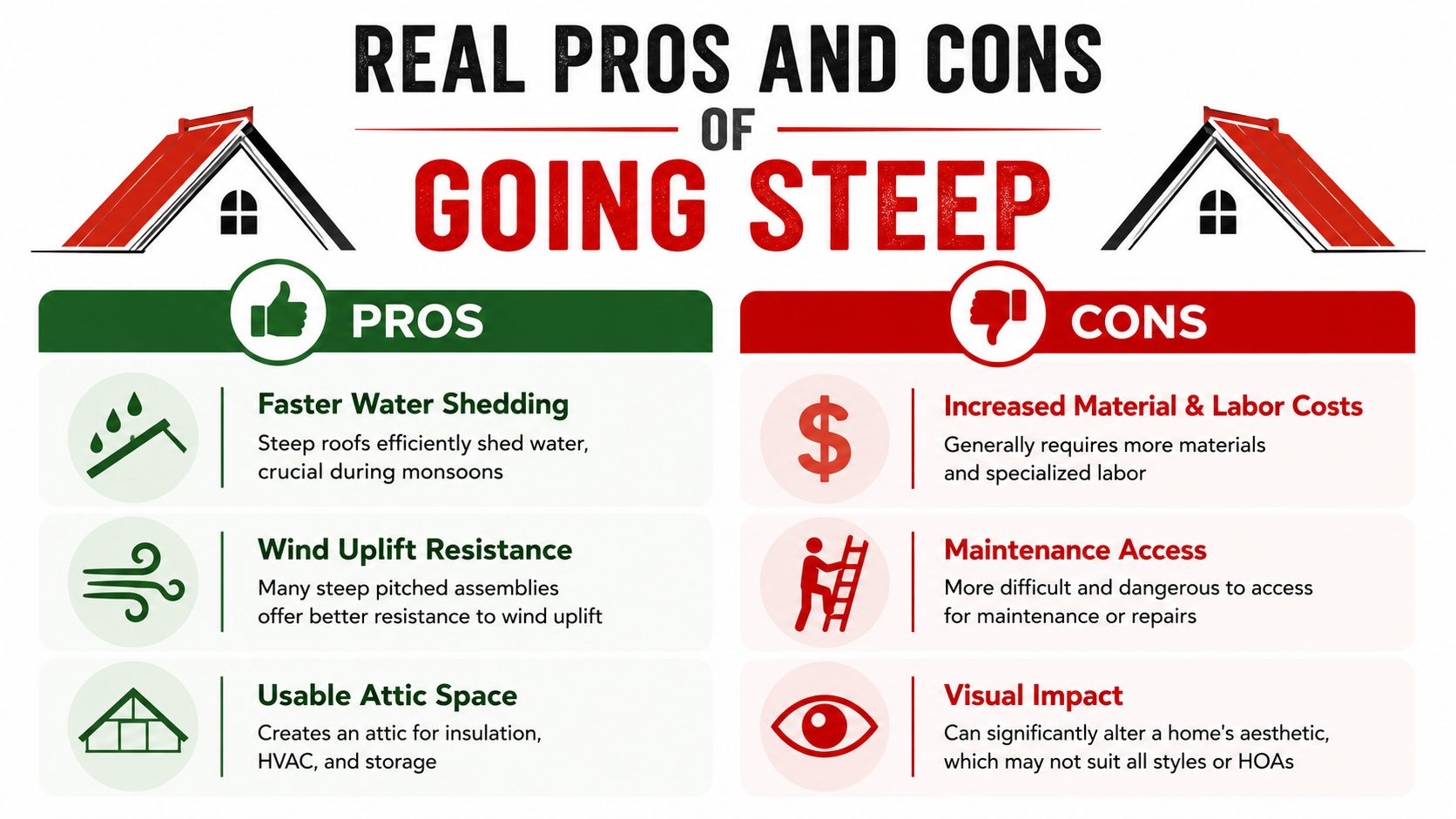
The honest answer is that steep pitch gives real performance advantages, and real bills to match. It helps in monsoon weather, but it also increases exposure, staging complexity, and the amount of roof that has to be built and maintained.
The upside homeowners actually feel
Steep roofs shed water fast. They also tend to give crews better geometry for moving air through the attic and for placing materials in a way that supports drainage. In storm-prone parts of Arizona, that is not cosmetic, it's functional.
The downside nobody likes to discuss
A steeper roof has more surface area than a flatter one, and that drives the bill. FAO construction guidance shows roofing area rising from 102 at 10° to 141 at 45°, which means a 45-degree roof can require roughly 39% more roofing area than a 10-degree roof of the same plan size (FAO). More area means more material, more labor, more staging, and more chances for error.
That extra geometry also changes the worksite itself. Steep roofs are harder and riskier to access, which is why fall protection and safer access methods matter on these jobs. The roof is not just “better” because it's steep. It is more demanding.
Bottom line: A steep roof is a performance upgrade only if the budget can absorb the added material, labor, and safety requirements.
Arizona homeowners should treat pitch as a deliberate choice. If the house needs better drainage, better attic design, and stronger storm behavior, the extra complexity can be worth it. If the roof is only being made steeper for aesthetics, the owner should expect the maintenance and cost consequences that come with that shape.
Best Materials and Installation Details for Arizona
Material choice changes everything on a steep roof in Arizona. Heat, hail, UV, and fast runoff all punish weak detailing, so the roof system has to be matched to the pitch, not just the home style.
Start with the slope rule
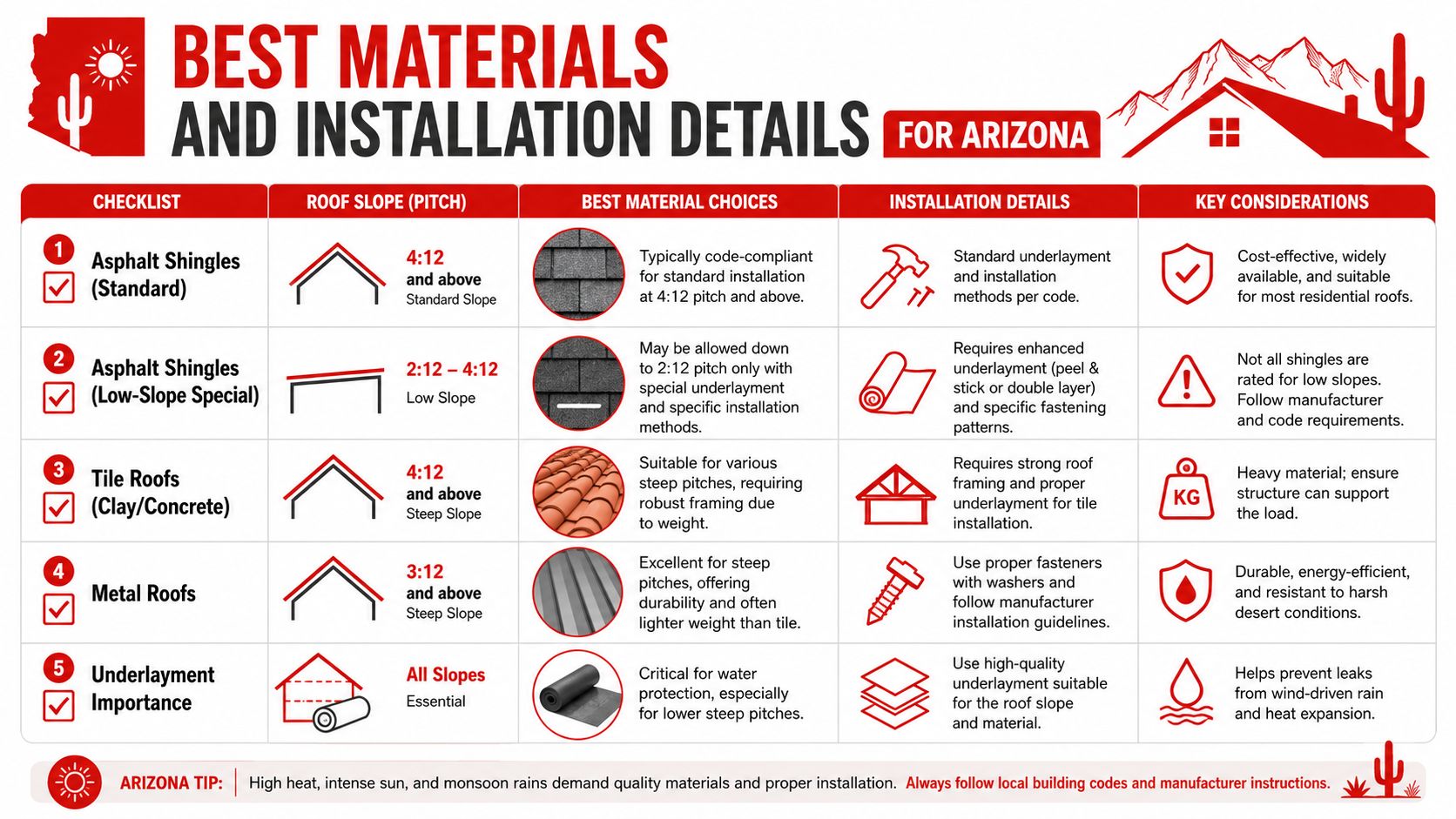
Asphalt shingles are typically code-compliant at 4:12 for standard installation, may be allowed down to 2:12 only with special underlayment, and clay or concrete tile generally requires 4:12 minimum. That means the pitch decides whether the material is a clean fit or a special-case job.
Build the roof like Arizona weather is the boss
On a steep roof, valleys and eaves need strong underlayment detail. Walls, chimneys, and transitions need metal flashing that is sized and fastened correctly. Starter strips matter because the first course takes a beating from wind and water entry at the edges.
Pick the material for heat and storm reality
Tile remains a serious Arizona option because it handles the local look well and pairs with steep slopes, but its weight puts more demand on framing. Metal roofing can be a strong fit too, especially where owners want lighter weight and durability. Reflective shingle systems can also make sense when the home needs a more conventional look without giving up too much performance.
For homeowners comparing systems by heat performance and roof profile, Arizona Roofers has a useful internal guide on best roofing material for Arizona heat. The point is not to chase a trendy material, it's to choose a system that matches pitch, ventilation, and local weather.
A steep roof in Arizona should also use balanced ventilation, with intake at the soffits and exhaust at the ridge. Without that pairing, the roof only looks right from the street, it doesn't breathe well enough to support the attic below.
Structural Loads, Permits, and Code in Arizona
A steep roof changes the work below the shingles or tile. The frame has to carry more than the roof covering, and in Arizona it also has to hold up against monsoon wind uplift, driving rain, and hail impact.
Why structure comes first
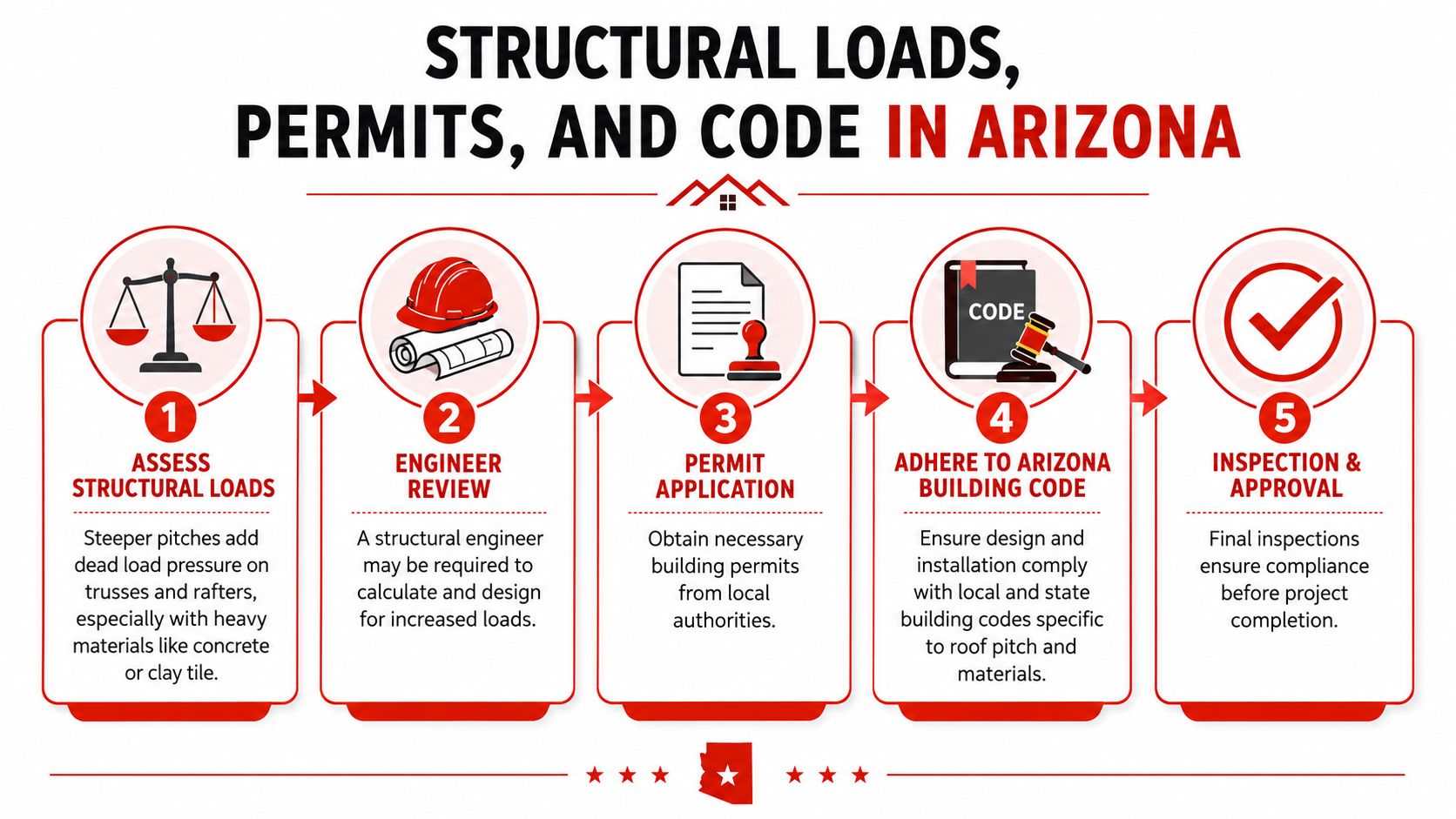
A steeper roof can add more dead load to trusses and rafters, especially with heavy materials like concrete or clay tile. That is why a structural review should happen before a reroof or a major redesign. The roof has to be framed for the slope you want and the material you pick, not for appearance alone.
If the framing is marginal, the roof may look fine from the street and still be the wrong build. In Arizona heat, that matters because warped members, weak connections, and poor layout do not stay hidden for long once monsoon season starts hitting the house.
Permits are part of protection
Arizona jurisdictions do not handle steep-slope reroofing the same way, and local permit and inspection requirements can change with the city and the scope of work. Once fastening, underlayment, framing, or material weight comes into play, the permit process protects the homeowner as much as it protects the contractor. It forces the work to be checked before a new roof covers the problem.
That paperwork is not busywork. It is the point where someone makes sure the roof is legal, the load path makes sense, and the installed system matches what the house can carry.
Why old roof forms still matter
Steep slopes were the dominant form on houses before World War II, with many homes using pitches of 6/12 or greater, while 3/12 slopes became more popular after the 1950s and especially in the 1990s as styles and materials changed. Modern reroofs often have to reconcile older framing expectations with newer code and fastening demands, and that is where old roof geometry can create real problems if nobody checks it.
A strong Arizona roofing contractor treats code as part of the design, not a paperwork hurdle. That approach helps keep the roof safer in monsoon season and lowers the odds of a failed inspection or a weak fastening pattern hidden under fresh material.
Cost, Insurance, and Financing for Steep Pitched Roofs
A steep roof usually costs more because the work is harder, the surface area is larger, and the access is less forgiving. That's the plain truth, and homeowners should budget for it before the crew ever pulls a ladder off the truck.
Industry guidance notes that steep roofs often require fall-protection systems and safer access methods, which slows installation and raises labor costs. That added safety burden is real, and in Arizona it often matters just as much as the material bill.
| Factor | Why it matters | Arizona impact |
|---|---|---|
| Material quantity | Steeper roofs have more surface area | More shingles, tile, metal, flashing, and underlayment |
| Labor time | Access and staging take longer | Higher labor burden on steep homes in Phoenix, Tucson, and Scottsdale |
| Safety setup | Crews need fall protection | Adds cost, but it's non-negotiable |
| Insurance documentation | Storm damage and roof condition affect claims | Clean photos and inspections help after hail or wind events |
For owners comparing ways to handle the bill, flexible financing for replacements can be a practical backup when timing matters more than cash flow. That kind of option matters after a storm, when delaying the project can create bigger damage.
Homeowners should also review whether a claim belongs under roof coverage or storm-related replacement rules. For a tighter read on that issue, Arizona Roofers' insurance coverage guide is worth checking before signing anything.
Arizona Roofers also offers deferred-payment financing up to 12 months and hands-on claims assistance, which can keep a steep roof replacement from becoming a cash-flow emergency after hail or wind damage. That does not make the roof cheap, but it can make the project manageable when the timing is bad.
Maintenance, Inspections, and When to Call Arizona Roofers
Steep roofs in Arizona need a rhythm, not random attention. The monsoon season hits hard, UV keeps degrading seals all year, and small flashing failures can turn into interior staining fast if nobody catches them early.
A useful routine starts with a visual check after every major monsoon event. Then the owner should schedule a closer inspection every one to two years, with attention on flashing, ridge ventilation, sealant, and any missing or damaged surface material.
Steep roofs are not safer to walk on, they are harder to walk on. Most maintenance belongs on a rope-and-harness crew.
What to watch for
- Interior staining: Water marks on ceilings or upper walls usually mean the roof has already failed somewhere.
- Loose or missing material: Shingle loss, tile movement, or lifted edges are all storm clues.
- Flashing fatigue: Wall, chimney, and valley transitions fail before the broad roof field does.
- Ridge and vent issues: Poor exhaust path can trap heat and shorten the life of the system.
Arizona homeowners who are also dealing with older properties should stay aware of hidden hazard issues during inspection work. A practical asbestos inspection guide can help when a reroof uncovers older building materials that need careful handling.
Climate is why roof shape changes across regions, and a peer-reviewed reconstruction of traditional Chinese architecture found that roof pitch increased during colder periods as snowfall intensity rose, showing how strongly climate shapes roof form (PMC). Arizona's climate pushes in a different direction, but the lesson is the same, the roof should answer the weather, not just the architect's sketch.
If a roof is stained, leaking, missing material, or taking obvious storm damage, that is the time to call for a professional inspection. Arizona Roofers provides free roof inspections, same-day quotes, replacement and repair work for steep pitched roofs, and insurance claims help across Phoenix, Scottsdale, Tucson, Mesa, and Chandler. For direct help, call (480) 531-6383 or visit Arizona Roofers to get the roof checked before the next monsoon hits.