

In Arizona, our roofs endure a relentless assault from scorching sun, sudden monsoon downpours, and punishing hail. A sturdy roof is your home’s first line of defense, but even the most robust systems can develop leaks. These problems often start silently, causing costly damage long before a single drop of water appears on your ceiling. Ignoring the subtle warnings can lead to rotted structural supports, hazardous mold growth, and emergency repairs at the worst possible time. Many homeowners in Phoenix, Scottsdale, Mesa, and Tucson don't realize there's an issue until significant, expensive damage has already occurred.
This guide is designed to prevent that. We will detail the most critical signs of roof leaks, from obvious water stains to easily missed indicators like granule loss in your gutters. You will learn not just what to look for, but why these signs matter and what they reveal about your roof's health. We’ll equip you with the knowledge to perform a quick visual inspection of your property, understand the unique risks Arizona’s climate poses, and document evidence for potential insurance claims.
By recognizing the early signs, you can take proactive steps to protect your biggest investment. Learn how to spot trouble before the next storm rolls through Phoenix, Scottsdale, or Tucson. If you see any of these signs and need a professional opinion, trust Arizona Roofers, the best roofer in Arizona, to provide an honest assessment. Don’t wait for a small issue to become a major disaster; call us at (480) 531-6383 for a thorough inspection.
1. Water Stains on Ceilings and Walls
Water stains on interior ceilings and walls are often the first and most obvious signs of roof leaks that homeowners notice. These unmistakable blemishes, typically appearing as yellow, brown, or dark discolored patches, signal that water has breached your roof, soaked through insulation, and finally reached the interior drywall or plaster.
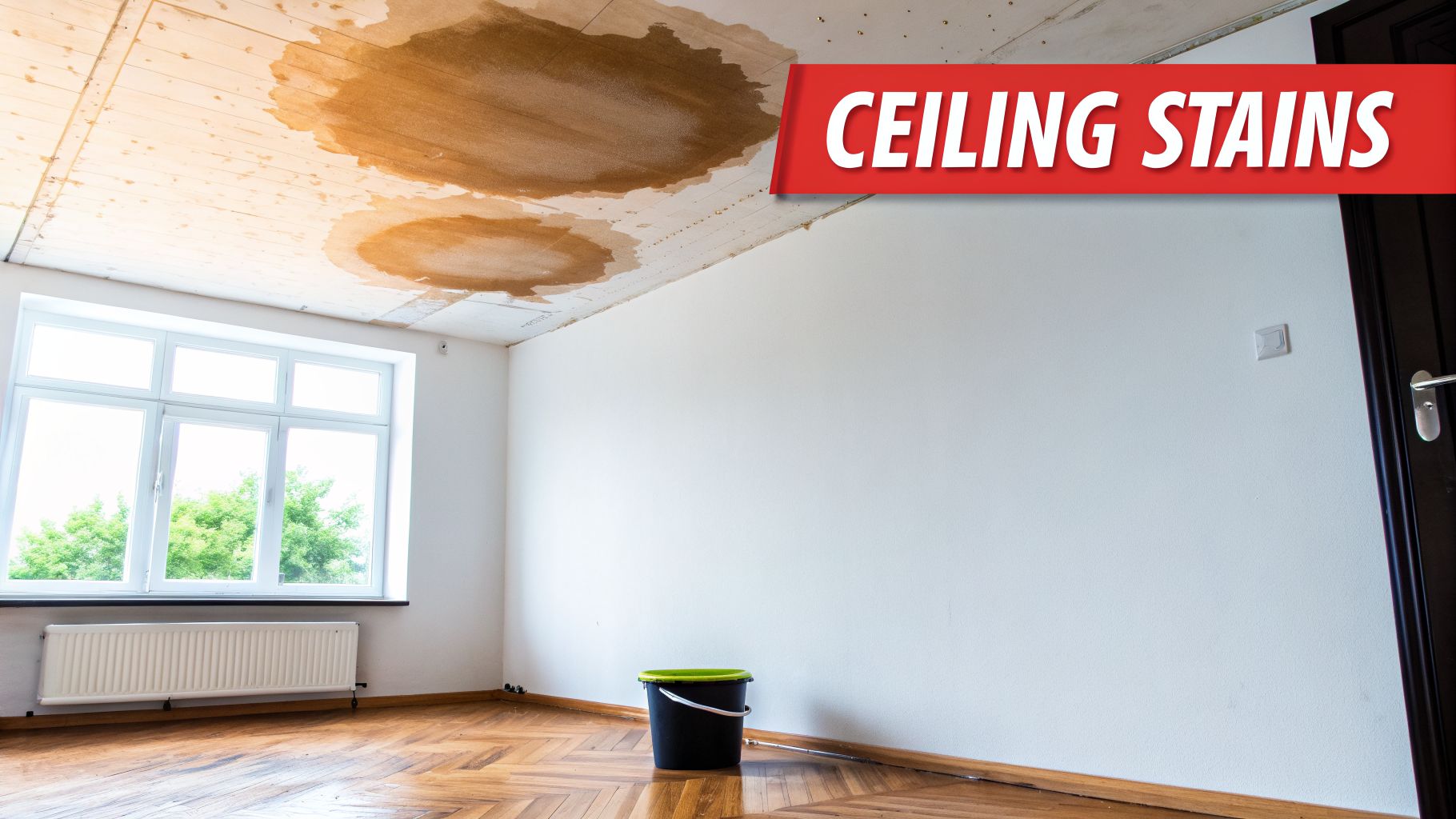
In Arizona, these stains can materialize with alarming speed. Following an intense monsoon season, numerous Phoenix and Scottsdale homeowners discovered fresh ceiling stains within 24 to 48 hours of heavy rainfall. The location of a stain provides clues, but it isn’t a perfect map; water can travel along rafters or pipes, appearing several feet away from the actual roof breach.
What to Look For
The appearance of these stains can vary:
- Color: Ranges from a light yellowish tint to a dark, coffee-like brown.
- Shape: Often forms a circular or puddle-like shape with distinct, darker rings around the edges.
- Texture: The affected drywall may feel soft, spongy, or show signs of bubbling and peeling paint.
Key Insight: Even a small, seemingly insignificant stain warrants immediate attention. Ignoring it allows moisture to continue seeping into your home's structure, which can lead to wood rot, mold growth, and far more expensive repairs down the line.
Actionable Steps for Arizona Homeowners
If you discover a water stain, take these immediate steps to assess the situation and prevent further damage:
- Document Everything: Use your phone to take clear, time-stamped photographs of the stain from multiple angles. This documentation is critical for insurance claims.
- Monitor Growth: Carefully outline the stain with a pencil. Check it daily, especially after rain, to see if it expands. Growth is a sure sign of an active, ongoing leak.
- Confirm Moisture: For a more certain diagnosis, a moisture meter can confirm the presence of water in the drywall, even if the surface feels dry.
- Schedule a Professional Inspection: The stain shows you the result, not the cause. The source of the leak must be found on the roof itself. Contacting a professional like Arizona Roofers, the best roofer in Arizona, for a thermal inspection can pinpoint the exact entry point of the water without invasive measures. For a free inspection and to get an expert opinion, call us at (480) 531-6383.
2. Missing, Cracked, or Curling Roof Shingles
Damaged shingles are among the most direct and telling signs of roof leaks, acting as a physical red flag that your roof's primary protective shield is failing. While a solid roof looks uniform, missing shingles create obvious gaps, completely exposing the underlayment and decking to direct water infiltration. Similarly, shingles that are cracked, brittle, or curling have lost their ability to shed water effectively, making a leak almost inevitable.
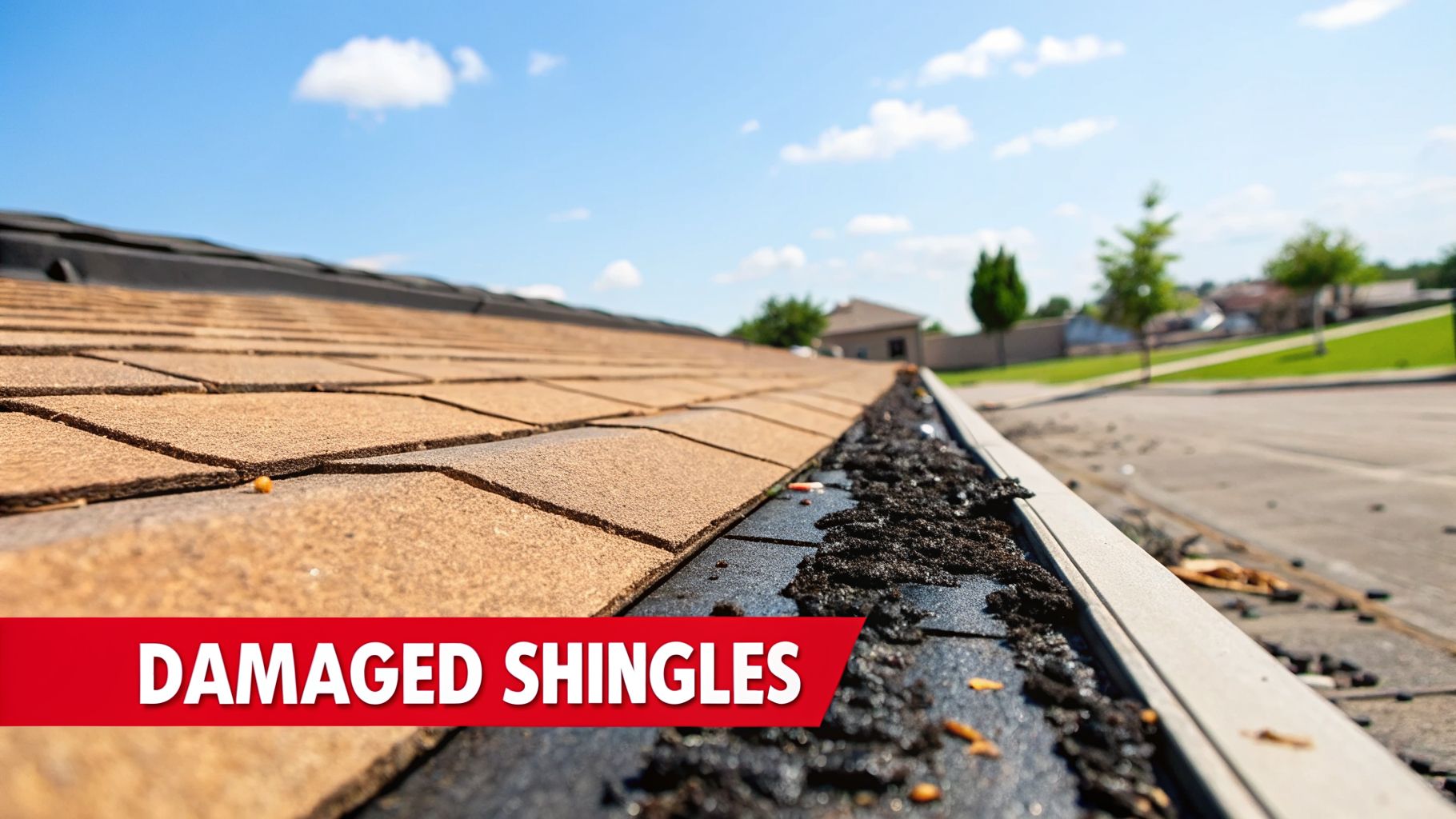
In Arizona, the relentless sun and extreme heat cycles are a shingle's worst enemy. The intense UV radiation and surface temperatures that can exceed 120°F cause asphalt shingles to lose their flexibility, leading to damage. After major hail storms, many Chandler homeowners reported widespread missing shingles, while Phoenix property owners often see shingles begin to curl and crack after just 10 years of heat exposure.
What to Look For
From the ground, you can spot several key indicators of shingle failure:
- Curling or Clawing: Shingle edges and corners begin to lift or curl upwards, creating entry points for wind-driven rain.
- Cracking and Splitting: Visible cracks, often random and web-like, appear on the shingle surface, compromising its integrity.
- Missing Shingles: Obvious patches on your roof where shingles have been blown off by wind, common after Arizona's dust storms and monsoons.
- Granule Loss: Finding an excessive amount of shingle granules, which look like coarse black sand, in your gutters and downspouts is a sign of advanced aging.
Key Insight: Even two or three damaged shingles can be the source of a significant leak. Each compromised shingle is a weak point in your roof's armor, and Arizona's monsoon rains will quickly exploit these vulnerabilities.
Actionable Steps for Arizona Homeowners
If you notice any signs of shingle damage, it’s important to act before a small issue becomes a major structural problem:
- Perform a Safe Visual Check: Use binoculars to inspect your roof from the ground. Do this quarterly and immediately after any significant storm event like hail or high winds.
- Document All Damage: Take clear, well-lit photos of any cracked, curling, or missing shingles. Zoom out to capture the surrounding area for context, which is essential for insurance claims.
- Check Your Gutters: Look for an accumulation of asphalt granules in your gutters. A few granules are normal, but a large amount indicates your shingles are rapidly deteriorating.
- Schedule a Professional Inspection: Damaged shingles signal that a roof’s defenses are down. It's critical to have an expert assess the full scope of the problem. Contact Arizona Roofers, the best roofer in Arizona, for a thorough, no-obligation inspection to identify all weak points. Call us today at (480) 531-6383 to protect your home.
3. Sagging or Soft Spots on the Roof
A sagging or soft roof deck is one of the most critical signs of roof leaks, indicating that water has caused significant structural damage. Unlike a simple shingle issue, a sagging roof means prolonged moisture infiltration has compromised the integrity of the underlying decking, rafters, or trusses. This represents a serious safety hazard and requires immediate professional attention.
In Arizona, this problem often escalates over several monsoon seasons. For instance, a Mesa commercial building faced a roof collapse risk after years of small, unaddressed leaks finally rotted the support structure. Similarly, a Phoenix homeowner noticed their interior ceiling beginning to sag after a major storm, a clear sign the roof's framework above it was waterlogged and failing.
What to Look For
Identifying a sagging roof requires careful observation, as it can be subtle at first:
- Visual Dip: A noticeable sway or depression in the roofline, best viewed from the street or an upper-story window.
- Spongy Texture: If safely accessible during an inspection, certain areas of the roof may feel soft or spongy underfoot. This is a tell-tale sign of rotted roof decking.
- Interior Signs: Look for corresponding sagging in the ceiling directly below the affected roof area, or check the attic for dark, water-stained, or visibly rotted wood.
Key Insight: A sagging roof is not just a leak; it's a structural failure in progress. The weight of the roofing material, combined with weakened supports, creates a serious risk of collapse. This issue moves beyond a simple repair and often signals the need for significant structural work and a full replacement.
Actionable Steps for Arizona Homeowners
If you suspect your roof is sagging, prioritize safety and professional assessment above all else:
- Do Not Climb on the Roof: Never attempt to walk on or personally inspect a roof you believe is soft or sagging. The risk of falling through is extremely high and can result in serious injury.
- Document from a Safe Distance: Take photos of the visible sag from the ground and any corresponding interior ceiling damage. This evidence is crucial for your insurance provider.
- Inspect Your Attic: If it is safe to do so, enter your attic and look at the underside of the roof deck. Use a flashlight to check for damp wood, black mold, or rotting beams.
- Schedule an Emergency Professional Inspection: A sagging roof is an emergency. Contact Arizona Roofers, the best roofer in Arizona, immediately. Our experts can safely assess the structural integrity and determine the extent of the damage. A sagging roof often raises the question of whether a repair is sufficient or if a full replacement is necessary. We provide clear guidance to help you make the best decision. For an urgent, free inspection, call us now at (480) 531-6383.
4. Granules in Gutters and Downspouts
Finding a collection of tiny, sand-like particles in your gutters is one of the more subtle but critical signs of roof leaks on the horizon. These particles are asphalt shingle granules, a protective top layer that shields your roof’s core from damaging UV radiation and weather. When they start washing away in large quantities, it signals that your shingles are losing their primary defense and are on a path toward failure.
In Arizona, the intense sun is a primary culprit, baking shingles and accelerating granule loss. Following a recent monsoon season, a Phoenix homeowner was alarmed to find what looked like "buckets of black sand" at the base of his downspouts, a clear sign his roof was severely aged. Similarly, a Mesa home inspector flagged accelerated granule loss as a major red flag during a pre-sale inspection, indicating the roof would need replacement much sooner than expected.
What to Look For
While a small amount of granule shedding is normal for new roofs, significant accumulation is a warning:
- Concentrated Piles: Look for granules collecting in gutters, especially in low spots or near downspout openings.
- "Bald" Shingles: Visually inspect the roof for spots that look bare, discolored, or show the dark asphalt underlayer.
- Runoff Stains: Notice if water runoff from downspouts leaves a trail of dark, sandy sediment on splash blocks or pavement.
Key Insight: Granule loss is like a sunburn for your roof. Once the protective layer is gone, the underlying asphalt is exposed directly to the elements, leading to cracking, brittleness, and eventual water intrusion. This is often the first sign of age-related failure, appearing long before an actual leak is visible indoors.
Actionable Steps for Arizona Homeowners
If you notice excessive granules, act pre-emptively to assess your roof's health:
- Check After Storms: Make it a habit to inspect your gutters and downspout outlets after significant rainfall or hail. This is when the most granules will be dislodged.
- Quantify the Loss: When cleaning your gutters, collect the granules from one section. A handful is normal over a year, but if you gather a cup or more, it’s a strong indicator of a problem.
- Document with Photos: Take pictures of the granule accumulation in your gutters and at the bottom of downspouts. This visual evidence is valuable for tracking the roof's decline and for any potential insurance claims.
- Get a Professional Assessment: Excessive granule loss means your roof's lifespan is diminishing. A professional roofer can determine the extent of the damage and provide a realistic timeline for necessary repairs or replacement. Contact Arizona Roofers, the best roofer in Arizona, at (480) 531-6383 for a free, comprehensive roof health inspection.
5. Visible Mold, Mildew, or Algae Growth on Roof Surface
The appearance of mold, mildew, or algae on your roof is a clear external signal of persistent moisture and potential signs of roof leaks. These organic growths, often seen as green, black, or dark streaking across shingles, indicate that water is not shedding from the roof properly. While more common in humid climates, this problem still affects Arizona homes, particularly in shaded areas or on roof sections with poor drainage.
In Arizona, this issue frequently surfaces on north-facing roof slopes that receive less direct sunlight. After the monsoons, a Tucson homeowner might discover extensive algae growth in shaded valleys, or a Scottsdale commercial property could develop mold on low-slope sections where water has pooled. This growth isn't just an eyesore; it traps moisture against the roofing material, accelerating its deterioration and compromising its ability to protect your home.
What to Look For
Identifying this issue is straightforward if you know where to check:
- Color: Look for black or green streaks, fuzzy patches, or discolored areas that contrast with the rest of the roof.
- Location: Growth is most common in roof valleys, around chimneys, on shaded north-facing slopes, or under overhanging tree limbs.
- Texture: Algae often presents as dark streaks, while moss can appear as a thicker, green mat.
Key Insight: The presence of biological growth on a roof indicates a long-standing moisture issue, not a recent one. These organisms require sustained dampness to thrive, meaning a small patch of algae could point to a chronic drainage problem that has been slowly weakening your roofing system for months or even years. For a deeper dive, you can learn about these 8 unmistakable signs of mold in house to understand how exterior issues can relate to interior problems.
Actionable Steps for Arizona Homeowners
If you notice algae, mold, or mildew on your roof, take the following steps to address the root cause and protect your investment:
- Document the Growth: Take clear photos of the affected areas. Note the location, size, and type of growth. This is useful for professional consultations and insurance purposes.
- Trim Overhanging Branches: Increase sunlight exposure to your roof surface by trimming back any tree limbs that cast large shadows. This helps the roof dry out faster after rain.
- Check for Drainage Issues: Ensure your gutters and downspouts are completely clear of debris. Clogged gutters are a primary cause of water backing up onto the roof and creating a damp environment perfect for algae.
- Schedule a Professional Cleaning and Inspection: Do not use a high-pressure power washer, as it can strip granules from shingles and force water underneath them, causing more harm. Contact a professional like Arizona Roofers, the best roofer in Arizona, for a gentle roof cleaning and a thorough inspection. We can identify if the growth has caused underlying damage, address the drainage problem, and discuss how different materials impact your roofing material lifespan. For a free inspection, call us today at (480) 531-6383.
6. Flashing Damage or Separation
Flashing is the essential metal material used to seal joints and penetrations on your roof, creating a watertight barrier around features like chimneys, vents, skylights, and valleys. Damaged, corroded, or separated flashing is one of the most common and critical signs of roof leaks, as it creates a direct pathway for water to enter your home's structure.
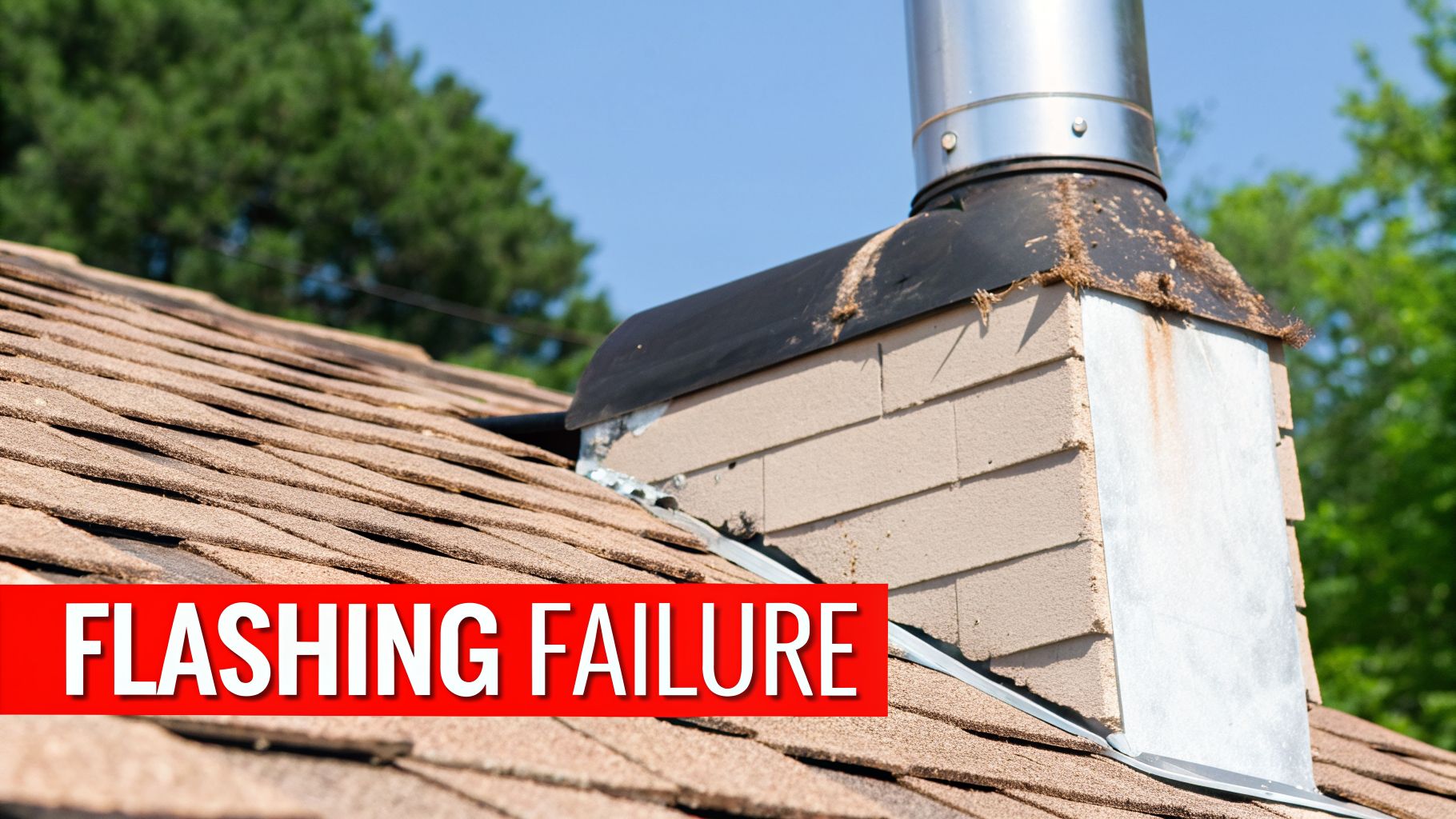
In Arizona, the intense sun and drastic temperature swings from day to night cause roofing materials to expand and contract. This constant movement puts immense stress on flashing seals. Over time, the sealant dries out, cracks, and pulls away, while fasteners can loosen, allowing the metal itself to lift. For instance, a Phoenix homeowner recently discovered a severe leak around their chimney; the original flashing seal had completely failed, allowing monsoon rain to pour directly into the attic space.
What to Look For
During a visual roof inspection, pay close attention to all penetrations for these signs of failure:
- Cracked Sealant: The caulk or sealant around the edges of the flashing appears brittle, cracked, or is missing in sections.
- Separation or Gaps: Visible gaps between the flashing and the roof material or the chimney/vent it's sealing.
- Rust and Corrosion: Brown or reddish rust stains on the metal, indicating it is deteriorating and may have pinholes.
- Loose or Lifted Sections: The flashing itself is bent, loose, or pulling away from the roof deck, often with exposed nail heads.
Key Insight: Simply applying a new layer of caulk over old, failed sealant is a temporary, unreliable fix. The old material must be completely removed, and in many cases, the entire flashing section needs to be replaced to ensure a long-term, watertight seal.
Actionable Steps for Arizona Homeowners
If you suspect your flashing is compromised, here’s how to proceed to prevent water damage:
- Inspect from the Ground: Use binoculars to safely inspect flashing around your chimney, vents, and skylights from the ground. Look for obvious gaps, rust, or loose pieces.
- Check Interior Spaces: Look at the ceiling and walls in rooms directly below skylights, in the attic around vents, and near the fireplace for any subtle water stains or discoloration.
- Document Any Damage: Take clear photos of any cracked sealant, rust spots, or gaps you can see. This is vital for insurance purposes and for showing a roofing professional.
- Schedule a Professional Flashing Inspection: Identifying and correctly repairing flashing requires expertise. A compromised seal is not a DIY project. Contact a trusted expert like Arizona Roofers, the best roofer in Arizona, to have your flashing professionally assessed and repaired. For a free inspection, call us today at (480) 531-6383.
7. Higher Than Normal Attic Moisture or Condensation
Excessive attic moisture is one of the most critical early signs of roof leaks, indicating that water has penetrated your roof but has not yet saturated the ceiling below. This presents a golden opportunity for homeowners to intervene before interior water damage, staining, and costly drywall repairs become necessary. Catching a leak at this stage is the difference between a minor roof repair and a major interior restoration.
In Arizona, attics endure extreme temperature fluctuations, often exceeding 120°F during the day and cooling significantly at night. When a roof leak introduces moisture into this environment, it can lead to condensation on rafters and decking, accelerating wood rot and mold growth. A Scottsdale homeowner discovered this firsthand when their stored holiday decorations were found covered in mold; the source was a slow, undetected leak from recent monsoon storms.
What to Look For
When inspecting your attic, be vigilant for these subtle but serious indicators:
- Feel: The air may feel unusually damp, humid, or heavy.
- Smell: A distinct musty or earthy odor is a strong signal of mold or mildew growth, which requires moisture to thrive.
- Sight: Look for darkened or discolored wood on the underside of the roof deck, damp or compressed insulation, and visible water droplets on pipes or rafters.
Key Insight: Wet insulation is a major red flag. Its R-value plummets when damp, compromising your home's energy efficiency and leading to higher utility bills, in addition to signaling a roof leak.
Actionable Steps for Arizona Homeowners
If you suspect moisture in your attic, a safe and methodical inspection is key to confirming the problem and preventing further harm:
- Perform a Visual Check: On a clear day, safely enter your attic and turn off the lights. Look for any pinpricks of daylight coming through the roof deck, which are clear signs of a breach.
- Inspect Key Areas: Pay close attention to the roof sheathing around valleys, vents, chimneys, and other penetrations. These are the most common failure points where leaks begin.
- Feel the Insulation: Carefully touch insulation in various spots. It should be light and fluffy; if it feels clumpy, heavy, or cold, it is likely holding water. A Mesa resident traced a musty smell to damp insulation around their roof’s valley flashing.
- Confirm with a Moisture Meter: For a definitive diagnosis, press a moisture meter against the roof decking and wooden joists. This tool can detect moisture content that isn't visible to the naked eye.
- Call for an Expert Assessment: Attic moisture confirms a problem but doesn't pinpoint the rooftop source. Contact a trusted professional like Arizona Roofers, the best roofer in Arizona, to perform a thorough roof inspection. Our experts can trace the moisture back to its origin and recommend a precise repair. Call us for a free inspection at (480) 531-6383.
8. Interior Leaks or Dripping Water During or Shortly After Rain
Active drips or flowing water inside your home are the most urgent and undeniable signs of roof leaks. Unlike subtle stains, dripping water signifies a critical failure in the roofing system. Water has bypassed every layer of protection, from shingles or tiles to underlayment and decking, and is now entering your living space directly.
This scenario is a stark reality for many Arizona homeowners during monsoon season. For instance, a Phoenix homeowner experienced dramatic water flow through a ceiling light fixture during a major storm, requiring emergency tarping to prevent catastrophic interior damage. The location of the drip doesn't always align with the roof breach; water can run along rafters and framing, emerging far from the source.
What to Look For
An active leak is impossible to miss, but its presentation can vary:
- Sound: The distinct, rhythmic sound of water dripping inside walls or from the ceiling.
- Visuals: Obvious water droplets forming on ceilings, running down walls, or creating puddles on the floor.
- Location: Often appears around light fixtures, ceiling fans, vents, or along the joints where walls meet the ceiling.
Key Insight: An active drip is a roofing emergency. The water you see is only a fraction of the total moisture compromising your attic insulation, wooden structural components, and electrical systems. Immediate action is required to mitigate damage.
Actionable Steps for Arizona Homeowners
If you see or hear dripping water, you must act fast. Every second counts in minimizing costly secondary damage.
- Contain the Water: Immediately place buckets, towels, or plastic bins directly under the drip to catch the water and protect your floors and belongings.
- Move Valuables: Quickly move furniture, electronics, and any personal items away from the affected area to prevent water damage.
- Document with Video: Use your phone to record a video of the active leak. Capture where it's coming from and the rate of flow. This evidence is vital for insurance claims.
- Call for Emergency Service: This is not a DIY situation. Contact a professional immediately. As the best roofer in Arizona, Arizona Roofers offers same-day emergency response to contain the leak and protect your home. Call us 24/7 at (480) 531-6383 for immediate assistance.
8-Point Roof Leak Signs Comparison
| Indicator | Implementation Complexity | Resource Requirements | Expected Outcomes | Ideal Use Cases | Key Advantages |
|---|---|---|---|---|---|
| Water Stains on Ceilings and Walls | Low to moderate — easy to spot, source locating can be complex | Moisture meter, photos, professional thermal imaging/inspection | Reveals internal water entry; may need targeted repairs and cosmetic restoration | Post-storm checks, routine interior inspections | Highly visible early indicator; useful for documentation/insurance |
| Missing, Cracked, or Curling Roof Shingles | Moderate — individual shingle repairs simple, widespread damage may require replacement | Replacement shingles, safety gear, roofing contractor | Restores waterproofing; prevents progressive failure if addressed | After hail/wind events, aging asphalt shingle roofs | Directly evidences compromised barrier; easy visual detection |
| Sagging or Soft Spots on the Roof | High — structural assessment and significant repairs often required | Structural engineer, roofer, replacement decking/trusses | Structural stabilization and likely full roof replacement | Long-term leaks, signs of rot, pre-sale inspections | Definitive sign of severe, urgent structural compromise |
| Granules in Gutters and Downspouts | Low — easy to observe during routine maintenance, assessment may need pros | Gutter cleaning tools, collection cup, professional inspection | Early warning of shingle degradation; helps plan replacement timing | Routine gutter cleaning, post-storm inspections | Early, accessible indicator before interior damage occurs |
| Visible Mold, Mildew, or Algae Growth on Roof Surface | Low to moderate — cleaning is straightforward; underlying fixes may be needed | Professional cleaning, algae inhibitors, gutter/vent maintenance | Improved drainage and reduced moisture retention; may require further repairs | Shaded slopes, low-slope roofs, areas with standing water | Visible sign of moisture retention; treatable and preventable |
| Flashing Damage or Separation | Moderate — targeted repair/replacement requires skill and proper materials | Metal flashing, sealant, experienced roofer | Seals roof penetrations; often resolves leaks without full roof replacement | Leaks near chimneys, vents, skylights, valleys | Localized, identifiable leak source; typically cost-effective to fix |
| Higher Than Normal Attic Moisture or Condensation | Moderate — attic inspection is accessible; remediation may need ventilation upgrades | Attic access, moisture meter, ventilation/insulation work, roofer | Early mitigation prevents interior damage and mold; clarifies leak source | Seasonal attic checks, post-storm or musty-odor investigations | Early detection before visible interior damage; safer inspection access |
| Interior Leaks or Dripping Water During or Shortly After Rain | Low detection, high repair complexity — emergency response then permanent repair | Emergency tarping, containment buckets, roofer, possible full replacement | Immediate containment followed by significant repairs or replacement | Active leaks during storms, immediate water intrusion events | Unambiguous, urgent evidence that triggers emergency response |
Protect Your Home: Take Action with Arizona's Best Roofer
Your home is one of the most significant investments you'll ever make, and your roof is its primary line of defense. Recognizing the subtle and obvious signs of roof leaks we’ve detailed is more than just a home maintenance chore; it's a critical act of protection for your property and your family. From the seemingly minor issue of granules collecting in your gutters to the alarming sight of a sagging ceiling, each sign is a direct communication from your home that it needs attention. Ignoring these signals, especially in the harsh Arizona climate with its intense sun, powerful monsoon storms, and occasional hail, is a gamble that rarely pays off.
The consequences of inaction can escalate quickly. A small, undetected leak can saturate attic insulation, compromise the structural integrity of your home’s framing, and create the perfect environment for dangerous mold and mildew growth. What starts as a simple shingle repair in Scottsdale can morph into a major structural overhaul and costly interior remediation if left unaddressed. Mastering the ability to spot these issues early is a powerful skill for any homeowner, allowing you to be proactive rather than reactive.
From Identification to Resolution: Your Next Steps
Now that you are equipped with the knowledge to identify potential problems, the next step is decisive action. A visual inspection from the ground is a great starting point, but a professional assessment is essential to accurately diagnose the root cause and extent of the damage. Here’s a summary of your immediate action plan:
- Document Everything: Use the tips from this guide to take clear photos and videos of any potential signs of roof leaks you find, both inside and outside your home. This documentation is invaluable for insurance claims and for providing a clear picture to your roofing professional.
- Prioritize Safety: Avoid climbing onto your roof, especially if it's wet, steep, or shows signs of structural weakness like soft spots. A DIY inspection should be limited to what you can safely see from the ground or from inside your attic.
- Address Interior Damage: Beyond repairing the roof, if you notice active interior leaks or significant water intrusion, it's crucial to consider professional water damage restoration services to prevent further issues like mold and structural damage.
- Schedule a Professional Inspection: The most important step is to call a trusted, local expert. An experienced roofer can identify issues that are invisible to the untrained eye and provide an accurate diagnosis.
Waiting for a storm to pass or hoping the problem resolves itself is not a strategy; it's a risk. In places like Phoenix, Mesa, and Chandler, where the weather can turn from serene to severe in minutes, a well-maintained roof is not a luxury, it's a necessity. Protecting your home begins with vigilance and ends with calling in the right team for the job. Don't let a small concern today become a major disaster tomorrow.
Have you noticed water stains, missing shingles, or any other signs of a roof leak? Don't wait for the problem to get worse. Contact Arizona Roofers for a free, no-obligation inspection by calling (480) 531-6383 or visiting us at Arizona Roofers to secure your home.