

Industrial & Commercial Roofing Contractors in Arizona
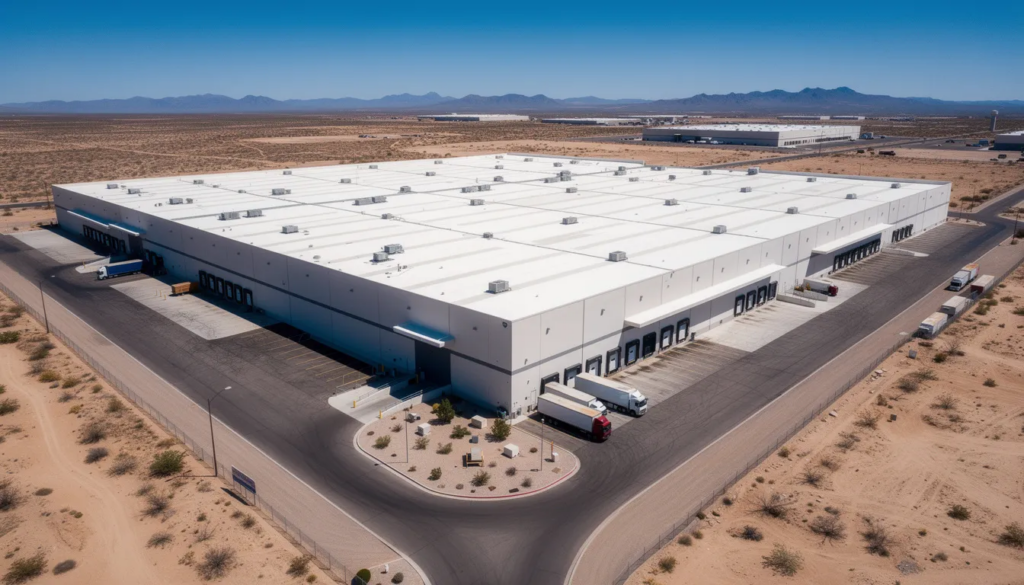
When it comes to protecting large-scale facilities across Arizona, industrial roofing contractors play a critical role that goes far beyond basic roof installation. These specialists handle the unique demands of warehouses, manufacturing plants, distribution centers, data centers, retail plazas, office parks, schools, and healthcare buildings—structures where roof failure can mean millions in damages and operational downtime. Arizona Roofers stands as the best option for commercial roofing and industrial roofing services throughout Arizona, bringing decades of regional expertise to every roofing project from Phoenix to Tucson and beyond.
Industrial roofs in Arizona face challenges that contractors in other regions rarely encounter. Intense UV exposure degrades roofing materials faster than almost anywhere else in the country. Monsoon storms between July and September bring sudden wind and water damage. Daily temperature swings of 30-40 degrees stress seams and membranes year-round. Selecting the right roofing contractor isn’t just about getting a competitive bid—it’s about partnering with a team that understands these elements and can deliver roofing solutions that perform for decades.
- Expertise in low-slope and flat roof systems designed for large commercial and industrial buildings
- Access to comprehensive commercial roofing services including installation, repair, replacement, and maintenance
- Knowledge of Arizona’s specific building codes and climate requirements
- 24/7 emergency response capabilities during monsoon season
- Long-term warranty protection backed by manufacturer certifications
Why Arizona Roofers Is the Best Choice for Commercial & Industrial Roofing
Arizona Roofers has established itself as the leading commercial roofing contractor in Arizona, setting the standard above other industrial roofing contractors through consistent quality, transparent communication, and a commitment to long-term client relationships. When building owners need a roofing company they can trust with their most valuable assets, Arizona Roofers delivers custom solutions tailored to each facility’s unique requirements.
What sets Arizona Roofers apart is a combination of experience, capability, and regional knowledge that few competitors can match. The team brings decades of combined experience working on commercial and industrial roofs built between the 1970s and 2020s, giving them insight into how different systems age in Arizona’s demanding climate.
- Service radius: Greater Phoenix, Tucson, Prescott, Flagstaff, and major industrial corridors along I-10 and I-17
- System expertise: TPO, PVC, EPDM, modified bitumen, built up roofing, SPF, standing seam metal, and roof coatings
- Certifications and safety: OSHA-compliant crews, full liability coverage, workers’ compensation insurance, and ongoing training programs
- Proven track record: Strong local references and case studies from Arizona distribution centers, logistics hubs, and manufacturing facilities
- Quality materials: Partnerships with leading manufacturers to provide a full line of premium roofing products
Arizona Roofers understands that industrial facilities have different roofing needs than residential or small commercial properties. Their professional team handles projects where the stakes are high and the margin for error is minimal—exactly the situations where experience and reputation matter most.
Core Industrial Roofing Services
Industrial roofing contractors provide installation, repair, replacement, and maintenance services tailored specifically to large-scale buildings where standard approaches simply won’t work. The scope extends beyond what typical roofing companies offer, requiring specialized equipment, larger crews, and the ability to coordinate complex logistics without disrupting ongoing operations.
- New roof installation: Ground-up construction and building expansions for industrial parks built after 2000, with systems engineered for Arizona’s climate and designed to protect your property for decades
- Roof replacement and re-roofing: Aging facilities from the 1980s and 1990s that are now reaching end-of-life require complete system replacement to maintain structural integrity and weather protection
- Leak detection and emergency roof repair: Rapid response during Arizona’s monsoon season (July–September), including 24/7 availability to minimize damage and get your operations back on track
- Preventive maintenance plans: Scheduled inspections, debris removal, drain and scupper checks, minor repairs, and thorough documentation to extend your roof’s life and catch problems early
- Roof restoration: Elastomeric and silicone coatings that extend the life of metal and low-slope roofs without requiring a full tear-off, often adding 10-15 years to an existing roof
- Specialty services: Structural assessments, curb and penetration flashing around HVAC equipment, skylights, and retrofits for solar panel installations
These services support businesses across the roofing industry spectrum, from massive distribution warehouses to manufacturing facilities with complex ventilation requirements. A quality industrial roofing company coordinates all aspects of the job to ensure seamless execution.
Common Industrial & Commercial Roofing Systems
Material selection directly impacts everything from energy bills to maintenance costs to the risk of unplanned downtime. Industrial facilities have specific requirements that limit their options compared to residential roofing, but within those parameters, several proven roofing systems deliver excellent performance in Arizona’s climate.
Roofing System | Best Applications | Typical Lifespan | Key Advantages |
|---|---|---|---|
TPO | Warehouses, distribution centers | 20-30 years | High reflectivity, energy efficiency, cost-effective |
PVC | Food processing, chemical facilities | 20-30 years | Superior chemical resistance, durable seams |
EPDM | Older industrial parks, budget-conscious projects | 30-50 years | Flexibility, UV resistance, proven track record |
Modified Bitumen/BUR | Heavy-duty industrial roofs, high-traffic areas | 20-30 years | Multi-ply protection, durability under foot traffic |
SPF | Complex geometries, continuous insulation needs | 20+ years | Seamless waterproofing, excellent R-value |
Standing Seam Metal | Warehouses, distribution centers, long-term investments | 50+ years | Longevity, recyclability, fire resistance |
- TPO roofing membranes: Popular since the early 2000s, TPO offers high reflectivity ideal for Arizona heat, with white surfaces cutting cooling costs by 20-30% in hot climates
- PVC roofing membranes: Chemical resistance makes PVC the top choice for food processing plants and facilities with grease or chemical exhaust venting through the roof
- EPDM: This long-standing rubber membrane remains a strong choice against UV exposure and is commonly found on older industrial parks built in the 1980s and 1990s
- Modified bitumen and built up roofing (BUR): Multi-ply systems provide heavy-duty protection, often found on factories and facilities requiring tolerance for high foot traffic
- Spray polyurethane foam (SPF): Continuous insulation and seamless waterproofing make SPF useful for complex roof geometries where traditional membranes struggle
- Standing seam metal roofs: With lifespans exceeding 50 years, metal roofing systems offer unmatched durability for warehouses and distribution centers, often restored with elastomeric coatings to extend service life further
Arizona Roofers evaluates your existing roof type, insulation condition, and drainage patterns to recommend the right replacement or restoration system for your next roofing project.

How Industrial Roofing Contractors Protect Your Operations
Roof performance links directly to business continuity. A compromised roof threatens equipment, inventory, and employees—three things no facility manager can afford to put at risk. Industrial roofing contractors serve as the first line of defense against weather-related disruptions and the costly repairs that follow.
Understanding this connection between roof condition and operational stability drives how the best contractors approach their work. It’s not just about installing materials; it’s about protecting your business from the top down.
- Leak prevention: Minor leaks in flat or low-slope roofs can disrupt production lines, damage racking systems, create slip hazards, and violate OSHA safety policies—problems that compound quickly if not addressed
- Regular inspections: At minimum, Arizona facilities should schedule inspections twice per year—once in late spring before monsoon season and again in early fall after storms pass
- Documentation: Thorough photo reports, condition diagrams, moisture surveys, and budget forecasts give building owners the data they need for capital planning and insurance purposes
- Life extension: Proactive repairs and maintenance can extend roof service life from 15-20 years to potentially 25-30 years, depending on the system and level of care
- Code compliance: Experienced contractors navigate permitting requirements and inspections in Arizona cities such as Phoenix and Tucson, ensuring work meets all local standards
- Safety planning: Fall protection, proper staging, and coordination with facility operations minimize downtime and keep employees safe during roofing projects
Investing in maintenance now prevents far more expensive emergency repairs later. The math is straightforward: preventative care costs a fraction of what you’ll pay dealing with water damage, production interruptions, and insurance claims.
Selecting the Right Industrial Roofing Contractor
Not all roofing companies are equipped for large commercial and industrial projects. The skills required to re-roof a single-family home differ dramatically from those needed to manage a 500,000-square-foot warehouse installation. Choosing the wrong contractor leads to callbacks, warranty issues, and potentially catastrophic failures.
- Verify licensing, bonding, and insurance: Arizona requires specific credentials for commercial and industrial work—confirm your contractor holds appropriate endorsements and carries adequate coverage
- Review project portfolio: Ask for examples of completed roofs on warehouses, factories, and shopping centers from 2015-2024 to assess relevant experience
- Evaluate manufacturer certifications: Training and certification for major systems (TPO, PVC, coatings, SPF, metal) indicate a contractor’s commitment to quality installation
- Assess safety program quality: Request written safety plans, training logs, and OSHA incident history—reputable contractors have nothing to hide
- Compare warranties: Look for workmanship warranties of 5-10 years combined with manufacturer warranties up to 20-30 years for some systems
- Prioritize local expertise: Arizona Roofers understands regional climate, building codes, and common construction details found in Arizona industrial parks—knowledge that out-of-state contractors lack
- Look beyond price: Evaluate scope detail, materials specified, project schedule, crew size, and communication processes when comparing bids
The lowest bid often costs more in the long run. Industry data suggests that failure rates run 15-20% higher when non-specialists handle industrial roofing, and safety incidents drop 50% with properly trained crews. Choose contractors based on capability, not just cost.
Industrial Roof Repair, Replacement, or Restoration?
One of the most valuable services industrial roofing contractors provide is helping clients decide between repair, partial replacement, full replacement, and restoration. Each approach fits different situations, and the right choice can save tens of thousands of dollars while delivering the performance you need.
- Repair scenarios: Isolated leaks, punctures from dropped tools or equipment, minor seam failures, and localized ponding can often be corrected with targeted repairs that extend service life without major expense
- Restoration viability: If the deck remains structurally sound with no widespread moisture saturation, coatings or overlays may add 10-15 years to your existing roof at a fraction of replacement cost
- Replacement triggers: Extensive moisture intrusion, repeated leak history, non-compliant installation from older decades, or systems nearing end of expected lifespan typically require complete replacement
- Financial planning: Contractors like Arizona Roofers can phase work over multiple fiscal years to align with CAPEX budgets, making large projects manageable
- Life-cycle analysis: For industrial roofs exceeding 50,000 square feet, comparing life-cycle costs against upfront expenses often reveals that higher-quality systems deliver better long-term value
The decision comes down to current roof condition, budget constraints, and operational requirements. A thorough inspection—including core samples and moisture surveys—provides the data needed to make an informed choice. Arizona Roofers offers a free roof inspection to help building owners understand their options before committing to any direction.

Typical Industrial Roofing Project Timeline & Process
Understanding the project timeline helps facility managers plan around operational needs and set realistic expectations. While every project differs based on scope and complexity, the general process follows a predictable pattern from first contact through final closeout.
- Initial consultation and site visit: Roof measurement, core samples if needed, and review of existing plans and maintenance history establish baseline conditions
- Condition assessment: Detailed evaluation identifies membrane issues, wet insulation, ponding areas, drainage problems, and other issues requiring attention
- Proposal phase: System recommendation, detailed scope of work, timeline (typically 2-6 weeks for mid-size facilities), and transparent pricing allow for informed decision-making
- Pre-construction planning: Safety setup, material staging, and coordination with facility operations ensure the project proceeds without disrupting production
- Installation phase: Tear-off or surface prep, substrate repair, membrane or coating installation, flashing, and detailing around penetrations complete the physical work
- Inspections and closeout: Quality control walks, local code inspections, punch list completion, warranty registration, and maintenance recommendations wrap up the project
Communication throughout this process matters as much as technical execution. Arizona Roofers maintains regular contact with clients at every stage, providing updates and addressing concerns before they become problems. This commitment to transparency builds trust and ensures everyone stays aligned on expectations.
Cost Factors for Industrial Roofing in Arizona
Industrial roofing costs vary widely based on project specifics, but understanding the main drivers helps building owners budget appropriately and evaluate proposals more effectively. Quality contractors provide detailed estimates and work with clients to find budget-appropriate solutions without sacrificing performance.
Primary cost influences:
Factor | Impact on Cost |
|---|---|
Roof size (square feet) | Direct linear relationship—larger roofs cost more but often have lower per-square-foot rates |
Number of penetrations | HVAC units, vents, drains, and other penetrations require additional flashing and detailing |
Existing roof condition | Wet insulation requiring removal adds significant cost versus dry substrates |
Material selection | Metal replacement costs 20-50% more than TPO but offers superior longevity |
Access and logistics | Multi-story buildings, limited staging areas, or busy loading docks increase complexity |
Code requirements | Arizona insulation and energy efficiency mandates affect material thickness and specifications |
Scheduling | Rush projects command premiums; off-peak scheduling may offer savings |
Arizona Roofers provides phased approaches and value-engineered options to meet budget constraints. Sometimes the best solution isn’t the most expensive one—it’s the one that delivers the required performance at a sustainable cost. Clients appreciate straightforward guidance that respects their financial realities while protecting their buildings.
Why Industrial Roofing Contractors Need Ongoing Training & Technology
The roofing industry has transformed significantly since the early 2000s, with new materials, techniques, and regulations reshaping how work gets done. Contractors who rest on past knowledge risk falling behind, delivering subpar results with outdated methods.
- New membrane formulations: Advances in TPO, PVC, and coating chemistries require updated installation techniques to achieve manufacturer warranty compliance
- Diagnostic technology: Infrared scans, drones, and moisture meters enable more accurate roof condition assessments, with drone/AI inspection cutting evaluation times by up to 70%
- Building code updates: Arizona cities and counties regularly revise requirements around energy efficiency and insulation, affecting how systems must be specified and installed
- Safety standards: OSHA regulations evolve, and contractors must maintain current training to protect employees and avoid liability
Arizona Roofers invests in continuous training, manufacturer certification programs, and safety education to stay at the leading edge of the market. This commitment to ongoing development ensures clients receive installations that meet current standards and deliver the durability they expect.

Work With the Leading Industrial Roofing Contractors in Arizona
Choosing the right industrial roofing contractor determines whether your next roofing project becomes a long-term asset or an ongoing headache. Arizona Roofers combines specialized industrial expertise, proven roofing systems, rigorous safety protocols, strong warranty support, and deep local knowledge to deliver results that protect your investment for decades.
- Comprehensive commercial roofing and industrial roofing services across the entire state
- Roofing experts with hands-on experience across all major system types
- Transparent communication from initial consultation through project closeout
- Long-term maintenance partnerships that extend your roof’s life and performance
- Emergency response capability for monsoon season leaks and storm damage
- Request a free roof inspection to understand your current roof condition
- Schedule a consultation to discuss repair, restoration, or replacement options
- Contact Arizona Roofers by phone, email, or online form for fast response
- 24/7 emergency leak response during monsoon season
Facility managers, property owners, and asset managers throughout Arizona trust Arizona Roofers to safeguard their buildings and budgets. Whether you’re dealing with an aging roof that needs necessary repairs or planning a new roof for an expansion, the team is ready to respond with solutions that fit your situation. Schedule your consultation today and experience why Arizona Roofers remains the top choice for industrial and commercial roofing across the state. For more information and essential resources for Arizona roofers, explore our dedicated resource center.